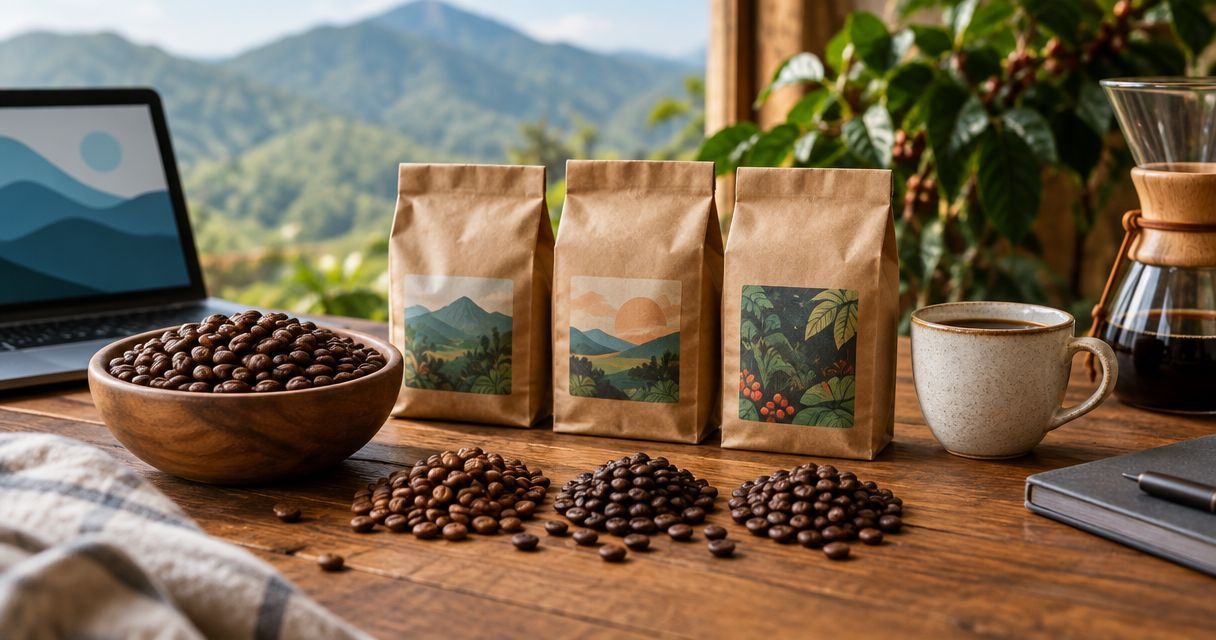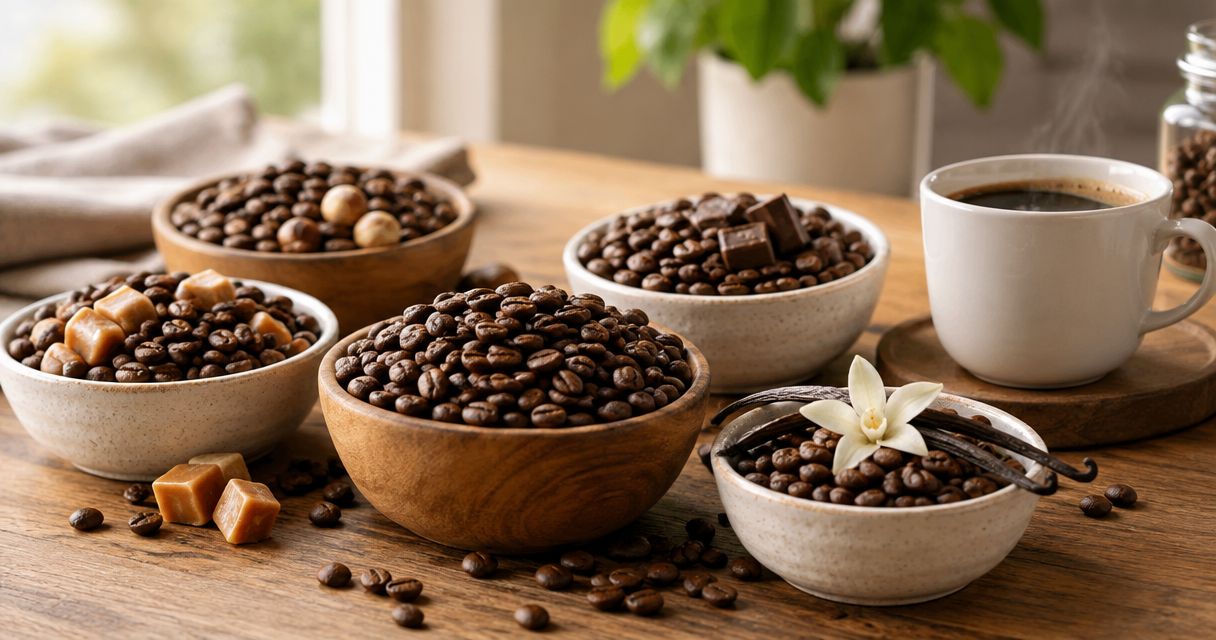
Best overall: a whole-bean medium roast blend with a visible roast date. Best for exploring flavor: a medium roast single-origin coffee. Best budget option: a grocery-store whole-bean medium roast with a visible roast date. Brew4UFresh is a place for home coffee drinkers to browse artisan blends and single-origin coffee; check the roast label on any beans before choosing them for this guide. Start with Brew4UFresh if you want to compare those styles.
- The best medium roast coffee beans for everyday brewing are whole-bean blends with a visible roast date.
- Choose a medium roast single-origin coffee when you want its place of origin to shape the cup.
- Choose a medium roast espresso blend for milk drinks; choose decaf when caffeine is the deciding factor.
- Brew4UFresh sells artisan blends and single-origin coffee; confirm the roast label before buying beans for this guide.
Why this matters
Medium roast describes how coffee is roasted, not how every bag will taste. Origin, processing, blend composition, freshness, grind and brewing method all affect what reaches your cup. Two bags marked medium roast can therefore give you different results in the same brewer.
The useful question in 2026 is not which bag has the strongest claim on its front label. It is which bean style fits the coffee you make at home. A balanced blend gives you a practical starting point for a daily pot. A single-origin bag gives you a clearer way to explore differences between coffees. Neither is automatically the right choice for someone making espresso with milk.
Buy for your brewing routine first, then compare roast dates and flavor descriptions. That order prevents you from choosing beans for tasting notes you cannot pick out in your usual cup.
What makes the best medium roast coffee beans?
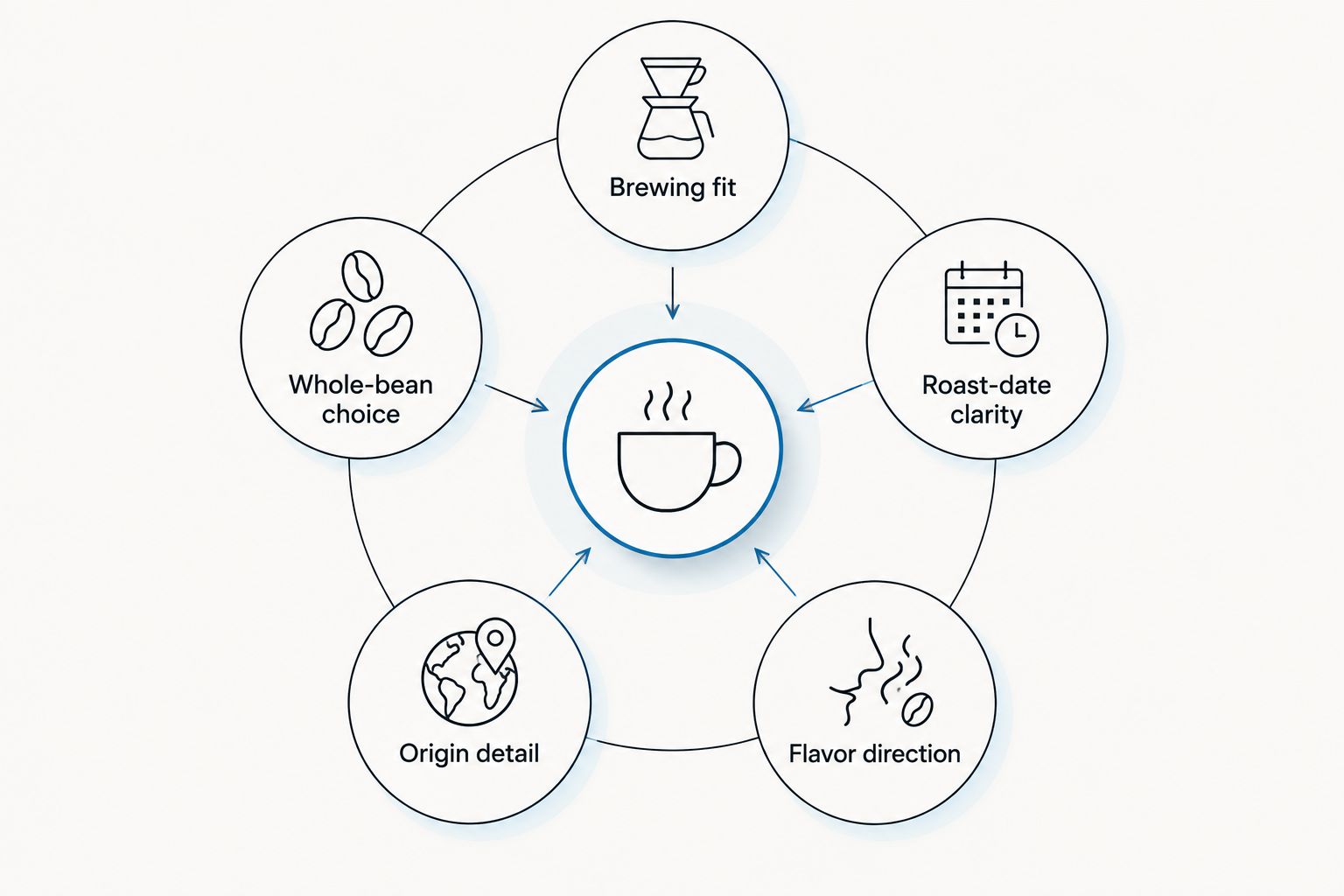
Use these criteria to judge a bag before you buy it. They explain the ranking below and give you a way to compare options that are not named in this guide.
- Brewing fit: Pick beans for the drink you actually make. A daily filter coffee, a milk drink and a cup of decaf answer different needs.
- Roast-date clarity: A visible roast date tells you when the beans were roasted. A best-by date answers a different question and does not replace it.
- Whole-bean choice: Whole beans let you grind for your brewer. Pre-ground coffee is simpler if you do not own a grinder, but you cannot change its grind size.
- Flavor direction: Read the bag's tasting notes as a guide, not a promise. If you want a familiar cup, start with a blend described in familiar terms rather than selecting a single origin solely by its country name.
- Origin detail: A named origin helps you compare coffees and learn what you prefer. A blend is still a sound choice when a repeatable everyday cup matters more to you.
These checks matter more than a universal winner. In 2026, the best medium roast coffee beans for your kitchen are the ones that match your brewer, your preferred cup and the information you need to make a choice.
Best medium roast coffee beans at a glance
These are bean styles, not verified individual products. Use the table to choose a type, then check an actual bag for its roast level, date and grind format. The row order follows the recommendations below.
| Bean style | Best for | Standout feature | Key limitation |
|---|---|---|---|
| Whole-bean medium roast blend | Everyday filter coffee | One practical starting point for a daily brew | Blend name alone tells you little about the roast date |
| Medium roast single origin | Exploring differences between coffees | Named origin gives you a basis for comparison | A flavor you enjoy may be harder to find again if the coffee changes |
| Medium roast espresso blend | Espresso and milk drinks | Chosen for a specific brewing routine | Espresso labeling does not guarantee a medium roast |
| Grocery-store whole-bean medium roast | Buying locally with a limited selection | You can inspect the bag before choosing | The bag may show a best-by date but no roast date |
| Medium roast decaf | A cup without the usual caffeine | Keeps decaf in the same roast comparison | Decaf and roast level are separate labels to verify |
1. Whole-bean medium roast blend: best for everyday filter coffee
Best for: You make drip coffee or pour-over regularly and want a straightforward starting point. A medium roast blend combines coffees rather than presenting one origin alone. That makes it the default pick here: you can choose a blend by its flavor description, brew it repeatedly and decide what you would change.
A blend does not tell you whether a bag is fresh, how it will taste or whether it suits your brewer. Check the actual roast label and date. If you buy whole beans, grind them for your brewing method rather than using one grind setting for every cup.
Whole-bean medium roast blend pros:
- Gives you a clear everyday option without requiring an origin-by-origin search.
- Works as a starting point for adjusting your home brew.
- Lets you choose a grind size if you have a grinder.
Whole-bean medium roast blend cons:
- The word blend does not tell you which coffees are in the bag.
- A flavor description cannot substitute for brewing and tasting it yourself.
- Whole beans add a grinding step to your morning.
For medium roast coffee beans at Brew4UFresh, the same rule applies: browse its artisan blends, then confirm that the specific beans you choose are labeled medium roast. Verdict: Buy a dated whole-bean medium roast blend as your default if you make filter coffee most days.
2. Medium roast single origin: best for exploring flavor
Best for: You want to learn how coffees differ and are willing to change one variable at a time. Single origin identifies coffee from one place rather than a blend of origins. It gives you a useful starting point for comparing cups, but the name of a country alone cannot tell you exactly what you will taste.
Keep your brewer, water and recipe consistent when you switch beans. For example, brew one cup with 15 g of coffee and 250 mL of water, then use the same amounts for your next bag. That is a comparison method, not a required recipe: adjust your grind and amounts to suit your cup.
Medium roast single-origin pros:
- Gives you a named origin to compare with your next bag.
- Helps you identify which flavor descriptions match what you taste.
- Suits a brewing routine where you pay attention to differences between cups.
Medium roast single-origin cons:
- Its origin does not guarantee that you will like the flavor.
- You need to keep your brewing method consistent to make a useful comparison.
- A replacement bag can differ from the coffee you first enjoyed.
Brew4UFresh sells single-origin coffee, but check each bag's roast level before treating it as a medium roast pick. Verdict: Buy a labeled medium roast single origin when tasting differences is the point of your next bag.
3. Medium roast espresso blend: best for milk drinks
Best for: You make espresso for drinks with milk and want beans selected with that routine in mind. Espresso is a brewing method, not a roast level. A bag called an espresso blend still needs an explicit medium roast label if medium roast is what you want.
Choose the beans first, then dial in your grind for the machine and the cup you make. Do not assume a filter-coffee grind will work for espresso. If your usual drink includes milk, judge the coffee in that drink as well as on its own; a pleasant straight shot is not the only result that matters to you.
Medium roast espresso blend pros:
- Matches a clearly defined home brewing routine.
- Gives you a narrower choice than shopping every medium roast bag.
- Lets you judge the result in the drink you actually serve.
Medium roast espresso blend cons:
- Espresso on the label does not confirm medium roast.
- You must adjust the grind to your equipment and beans.
- It is not the default recommendation if you only brew filter coffee.
Verdict: Buy a medium roast espresso blend if espresso-based milk drinks are your regular order; otherwise, start with an everyday blend.
4. Grocery-store whole-bean medium roast: best for buying locally
Best for: You want to choose a bag in person from a nearby shelf. Grocery shopping gives you a chance to read labels before you commit. Look for the roast level, whole-bean format and roast date rather than picking by packaging alone.
A best-by date is not a roast date. If you cannot find a roast date, you have less information for a freshness comparison. That does not establish how the coffee will taste; it means the bag gives you less to work with than one that states when it was roasted.
Grocery-store whole-bean medium roast pros:
- Lets you inspect the bag before choosing.
- Fits a shopping trip you already make.
- Gives you the option to grind for your brewer at home.
Grocery-store whole-bean medium roast cons:
- Your local selection limits the styles you can compare.
- Some bags do not show a roast date.
- Shelf packaging does not tell you how the coffee will taste in your brewer.
Verdict: Buy when the bag states medium roast and provides the details you need. Hold when you want to compare freshness but cannot find a roast date.
5. Medium roast decaf: best for avoiding the usual caffeine
Best for: You want a coffee routine without the usual caffeine and still prefer a medium roast. Decaf and roast level answer different questions. Decaf describes caffeine removal; medium roast describes the roast. Confirm both on the bag rather than assuming one implies the other.
Choose decaf by the drink you make, just as you would choose other beans. A whole-bean decaf gives you control over grind size. A pre-ground decaf removes that step if convenience matters more to you.
Medium roast decaf pros:
- Addresses a specific caffeine preference without abandoning your coffee routine.
- Can be selected in the format that fits your grinder and brewer.
- Can be judged against the same roast-date and flavor criteria as other beans.
Medium roast decaf cons:
- A decaf label alone does not identify the roast level.
- A medium roast label alone does not identify the caffeine status.
- Pre-ground options give you no control over grind size.
Verdict: Buy when avoiding the usual caffeine is your priority and the bag confirms medium roast. Skip a bag that leaves either label unclear.
How these picks are ranked
This 2026 ranking puts brewing fit first. A whole-bean blend takes the default slot because it is the simplest starting choice for an everyday filter-coffee routine, not because every blend tastes the same. Single origin follows for readers comparing flavor; espresso blend, local grocery beans and decaf each answer a more specific need.
Roast-date clarity, bean format, flavor description and origin detail are checks for the bag you eventually select. They are not claims that every bag in a category meets the criteria. No named coffee product is ranked here without a confirmed medium roast listing.
Which medium roast coffee beans should you choose?
If you are undecided in 2026, choose a whole-bean medium roast blend with a visible roast date. It gives you a baseline for your usual brew. Make a cup, note what you like and change your next purchase for a reason: try single origin to explore flavor, an espresso blend for milk drinks or decaf for your caffeine preference.
If you do not own a grinder, choose a grind format that fits your brewer instead of buying whole beans you cannot prepare. If a bag does not identify its roast level, do not treat it as a confirmed medium roast, regardless of its name or where it is sold.
FAQ
What are the best medium roast coffee beans for everyday brewing in 2026?
A whole-bean medium roast blend with a visible roast date is the best starting choice for everyday filter coffee. Check that its flavor description suits your taste and grind it for your brewer.
Is a medium roast blend better than a single origin?
A medium roast blend is the better starting choice for a familiar daily cup; single origin is better for exploring differences between coffees. Neither label guarantees a particular flavor.
Are espresso beans always dark roast?
No. Espresso describes a brewing method, not a required roast level. Check the bag if you specifically want medium roast beans for espresso.
Does a best-by date tell me when coffee was roasted?
No. A best-by date is not the roast date. Look for a separate roast date when comparing how recently different bags were roasted.
Should I buy whole-bean or ground medium roast coffee?
Buy whole beans if you have a grinder and want to set the grind for your brewer. Buy ground coffee if you do not have a grinder, and choose a grind intended for your brewing method.
Can decaf coffee be medium roast?
Yes. Decaf and medium roast describe different properties of coffee. Check that the bag states both if you want a medium roast decaf.
Does Brew4UFresh sell medium roast coffee beans?
Brew4UFresh sells artisan coffee blends and single-origin coffee. Confirm the roast label on the specific beans before buying them as a medium roast option.
One last thing
Your next bag is easier to judge if you keep the brewing method steady. In 2026, make your usual cup first; then change the beans while keeping the brewer and recipe the same. You will learn more from that comparison than from switching beans, grind and brew method all at once.