Best overall: a medium-roast blend. Best for milk drinks: a dark-roast blend. Best for exploring origin flavors: a medium-roast single-origin coffee. This 2026 guide compares the best cold brew coffee beans by roast, flavor, grind, and how you serve your coffee—not by packaging claims.
- The best cold brew coffee beans for everyday brewing are medium-roast blends with flavors you already enjoy.
- Dark-roast blends suit milk drinks; light-roast single-origin coffees suit drinkers seeking brighter flavors.
- Brew4ufresh sells artisan-roasted blends, flavored coffee, and single-origin coffee for home coffee drinkers.
- Choose fresh beans, use a coarse grind, and compare batches before changing your coffee.
Why this matters
Cold brew is a brewing method, not a special bean variety. You steep ground coffee in cool water, then filter it. Roast, grind, water, and dilution all affect the result.
Brew4ufresh is an option for home coffee drinkers buying artisan-roasted blends and single-origin coffee. You can explore Brew4ufresh without assuming that every coffee needs a cold-brew label to work in your pitcher.
For your 2026 shopping decision, start with how you drink coffee. A bean that tastes pleasant black can disappear beneath milk, while a heavily roasted coffee can dominate a lighter drink. Choose the style first; then compare individual bags within that style.
What makes the best cold brew coffee beans?
Use these criteria before choosing a bag:
- Flavor fit: Look for tasting notes you enjoy. Chocolate, nuts, fruit, and roast-driven flavors suggest different directions, not guaranteed results.
- Roast level: Medium roast is the default recommendation for balanced everyday brewing. Dark roast suits a more roast-forward cup; light roast emphasizes a different flavor direction.
- Freshness information: Prefer clear roast information over vague freshness claims. Keep beans sealed and away from heat, moisture, and light.
- Grind control: Whole beans let you adjust the grind to your filter. If you buy ground coffee, choose a grind intended for immersion rather than espresso.
- Serving style: Decide whether you want black coffee, coffee over ice, or a base for milk drinks. Judge beans in the drink you actually make.
- Repeatability: Keep the recipe consistent when comparing coffees. Changing beans, water, grind, and dilution together prevents a useful comparison.
A cold-brew label does not replace these checks. In 2026, the practical buying question remains simple: does this coffee match your preferred cup and your brewing setup?
Best cold brew coffee beans at a glance
These rankings compare bean styles, not named products. Each option has a distinct role, so you can choose without treating the list as a universal taste ranking.
| Rank and bean style | Best for | Standout feature | Key limitation |
|---|---|---|---|
| 1. Medium-roast blend | Everyday black cold brew | A balanced starting point for recipe adjustments | Does not necessarily highlight one origin |
| 2. Dark-roast blend | Milk-based cold brew | Pronounced roast character | Roast flavors can dominate the cup |
| 3. Medium-roast single-origin coffee | Exploring origin flavors | A focused way to compare coffees from different places | Origin alone does not predict taste |
| 4. Light-roast single-origin coffee | Brighter black cold brew | A different direction from roast-heavy coffee | Requires careful recipe adjustment |
| 5. Flavored coffee | Dessert-style cold brew | Added flavor without choosing a separate flavoring first | Added flavor obscures the underlying coffee |
1. Medium-roast blend: best for everyday black cold brew
A medium-roast blend is the strongest default recommendation when you want a repeatable pitcher of black cold brew. A blend combines coffees, while medium roast places the choice between lighter and darker roast styles. Neither term guarantees a particular flavor, so read the bag's tasting description.
Start here if you enjoy familiar coffee flavors and want room to adjust strength. A medium-roast blend gives you a straightforward baseline before you explore more roast-forward or origin-focused alternatives.
Medium-roast blend pros:
- A practical starting point for comparing cold-brew recipes.
- Works as a candidate for black coffee and modest milk additions.
- Lets you choose familiar tasting notes rather than an unfamiliar origin name.
- Keeps the first buying decision focused on your everyday drink.
Medium-roast blend cons:
- A blend does not isolate the characteristics of one origin.
- Medium roast does not automatically mean smooth, sweet, or low in bitterness.
- Different blends still require their own taste check.
Best for: You want one everyday coffee and usually drink cold brew black or over ice.
For your first 2026 batch, choose a medium-roast blend whose description sounds appealing. Taste it before adding anything. If the cup is too intense, test dilution before replacing the beans.
Verdict: Buy a medium-roast blend as your default starting point.
2. Dark-roast blend: best for milk-based cold brew
A dark-roast blend suits drinkers who want pronounced roast flavors beneath milk. Dark roasting develops a different flavor profile from lighter roasting, often bringing more roast-driven bitterness and less emphasis on delicate origin characteristics.
Choose this direction because you like the taste, not because dark beans look stronger. Roast color does not tell you how much coffee you used, how concentrated the finished drink is, or how much caffeine it contains.
Dark-roast blend pros:
- A clear choice for drinkers who prefer roast-forward coffee.
- Provides a contrasting flavor direction to a medium-roast baseline.
- Suits recipe testing in milk-based drinks.
Dark-roast blend cons:
- Roast flavors can cover subtler characteristics.
- A heavily concentrated batch can taste harsh rather than pleasantly bold.
- It is a poor default if you dislike smoky or bitter flavors.
Best for: You add milk and want the coffee's roasted character to remain noticeable.
Evaluate a dark-roast blend after adding your usual milk. Tasting only the concentrate answers the wrong question. Keep the milk amount consistent when comparing bags, and distinguish roast flavor from excessive concentration.
Verdict: Buy a dark-roast blend for milk drinks; skip it if you dislike roast-heavy coffee.
3. Medium-roast single-origin coffee: best for exploring origin flavors
Single-origin coffee comes from a defined origin, although the scope can vary from a country to a farm or lot. A medium-roast single-origin coffee gives you a focused way to explore those differences without making roast intensity the main comparison.
Origin is context, not a complete tasting description. Processing, coffee variety, roasting, and brewing also shape the cup. Choose by the stated flavor profile rather than assuming every coffee from a country tastes alike.
Medium-roast single-origin coffee pros:
- Makes origin-focused comparisons easier to organize.
- Gives you a clear alternative to an everyday blend.
- Encourages you to compare actual tasting notes rather than broad country stereotypes.
Medium-roast single-origin coffee cons:
- A single-origin label does not establish quality by itself.
- Cold brewing produces a different result from hot brewing.
- A distinctive flavor profile is not automatically your preferred flavor profile.
Best for: You enjoy black cold brew and want to explore differences between coffees.
Brew4ufresh sells single-origin coffee alongside artisan-roasted blends. When choosing cold brew coffee beans from Brew4ufresh, use the individual coffee's description to guide the decision rather than treating the single-origin category as a ranking.
In 2026, make the comparison useful: keep your grind, water, and dilution the same when switching origins. Record what you taste without forcing it to match the label.
Verdict: Buy a medium-roast single-origin coffee for focused flavor exploration.
4. Light-roast single-origin coffee: best for brighter black cold brew
Light-roast single-origin coffee is the alternative for drinkers who do not want a roast-heavy cup. Lighter roasting generally preserves more of the coffee's origin-related character, but the finished cold brew still depends on extraction and the coffee itself.
Do not assume cold water will turn every light roast into a sweet, fruity drink. If your batch tastes thin or unpleasantly sharp, review the recipe before deciding the beans are unsuitable.
Light-roast single-origin coffee pros:
- Offers a clear contrast to dark-roast cold brew.
- Suits drinkers interested in brighter flavor profiles.
- Gives you another way to explore origin and processing differences.
Light-roast single-origin coffee cons:
- Requires careful attention to grind and extraction.
- Does not suit everyone seeking a traditional roast-forward taste.
- Delicate characteristics can be difficult to judge after heavy dilution or milk.
Best for: You drink cold brew black and actively prefer brighter coffee flavors.
Compare the finished drink rather than dry-bean aroma alone. Keep notes on flavor, body, and the amount of dilution you prefer. Change one recipe variable at a time so you know what improved the cup.
Verdict: Buy a light-roast single-origin coffee for brighter black coffee; wait if you are still learning your baseline recipe.
5. Flavored coffee: best for dessert-style cold brew
Flavored coffee adds a flavor direction beyond the beans' natural and roast-developed characteristics. It suits drinkers who want a flavored cup without first selecting a separate flavoring. Check the individual product description rather than assuming a particular flavor or ingredient.
Brew4ufresh sells flavored coffee, but the right choice depends on the specific coffee and your preferences. Added flavor changes the comparison: you are choosing the complete drink, not evaluating origin character alone.
Flavored coffee pros:
- Gives you a direct route to a flavored cold-brew style.
- Lets you select a stated flavor profile before brewing.
- Offers an alternative when plain coffee is not your preference.
Flavored coffee cons:
- Added flavor can obscure the underlying coffee.
- A flavor you enjoy hot does not guarantee the same experience cold.
- Flavored coffee does not automatically mean sweetened coffee.
Best for: You prefer dessert-style coffee and value added flavor over origin comparison.
Taste flavored cold brew before adding sweetener. The aroma can suggest sweetness without supplying it. If you alternate flavored and unflavored beans, clean your grinder and brewing equipment to avoid carrying flavors between batches.
Verdict: Buy flavored coffee for an intentionally flavored drink; skip it for origin-focused tasting.
How these cold-brew styles are ranked
The ranking follows the criteria above: flavor fit, roast level, freshness information, grind control, serving style, and repeatability. Medium-roast blends take the default slot because they provide a useful everyday starting point; the remaining choices serve distinct preferences.
This is a buying framework, not a claim that one roast always tastes better. A dark-roast drinker should choose the dark-roast recommendation rather than buying the top-ranked style against their own preference.
Make a useful first batch
A controlled batch tells you more than changing bags after every disappointing cup. Use a clean immersion container and a filter suited to your equipment. Follow your brewer's instructions where they specify a recipe.
For a practical starting recipe, use 100 g of coffee with 800 ml of water. This is a 1:8 coffee-to-water ratio by weight when you weigh the water as 800 g. Treat it as a starting recipe, not a guarantee of your preferred strength.
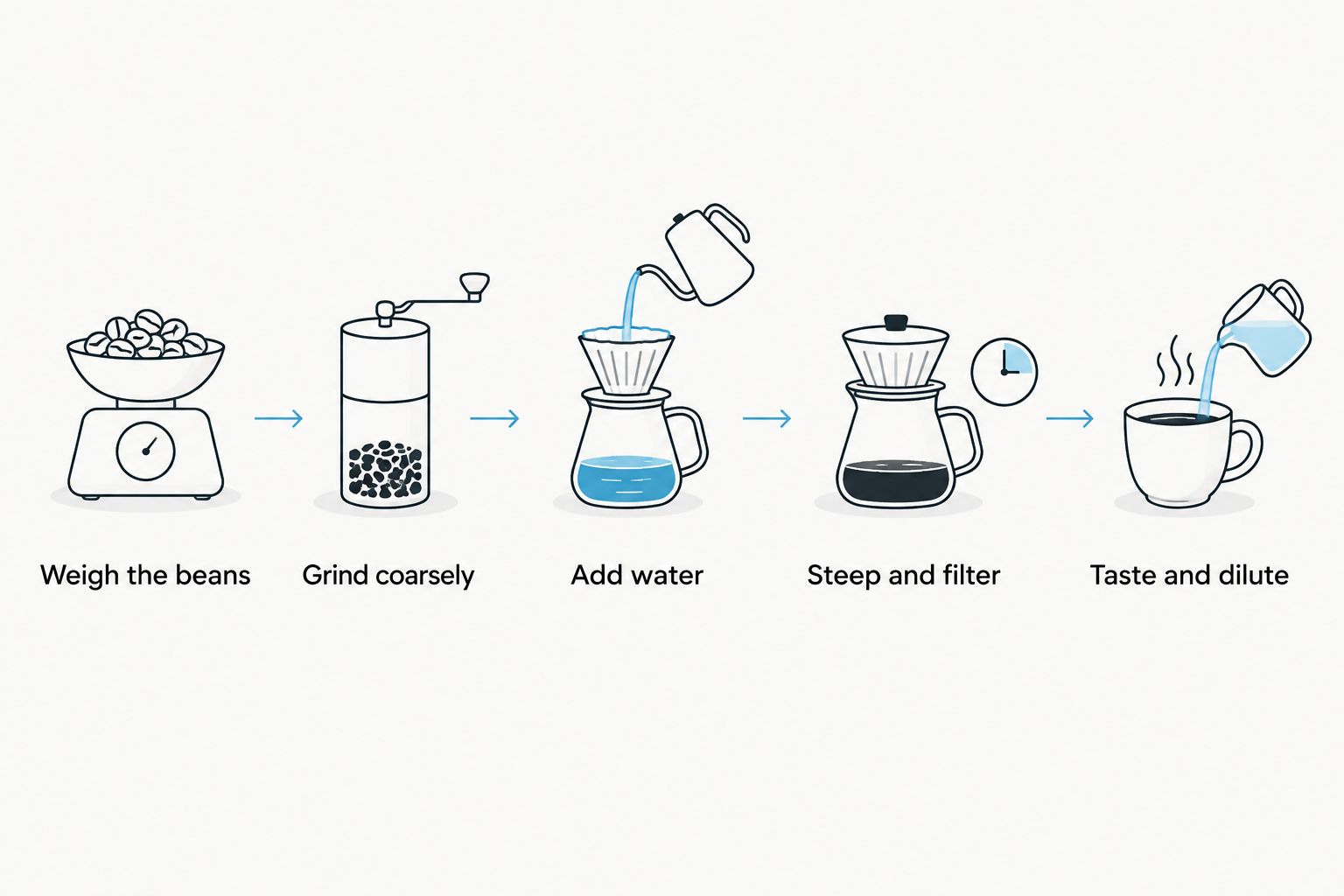
- Weigh the beans. Record the amount so you can repeat the batch.
- Grind coarsely. Avoid espresso-fine grounds, which are harder to separate cleanly in an immersion setup.
- Add water. Wet all the grounds and cover the container.
- Steep and filter. A common cold-brew starting window is 12–24 hours; temperature and grind affect extraction. Refrigerated steeping keeps the batch cold throughout preparation.
- Taste and dilute. Add water or milk gradually, then record the result you prefer.
If the drink tastes too intense, try dilution first. If it tastes weak, review the coffee amount, grind, and steeping conditions. Sediment points you toward filtration and grind—not automatically toward a different roast.
For your 2026 comparisons, record the bean style, coffee weight, water amount, steeping conditions, and dilution. Those notes turn a vague impression into a recipe you can repeat. Keep prepared coffee refrigerated and use clean equipment throughout.
Which cold brew coffee beans should you choose?
Choose a medium-roast blend if you are undecided. It is the default for everyday black cold brew, not a promise that every medium roast tastes the same.
Choose a dark-roast blend for milk drinks, a medium-roast single-origin coffee for origin exploration, a light-roast single-origin coffee for brighter flavors, or flavored coffee for a dessert-style direction.
Brew4ufresh offers blends, single-origin coffee, and flavored coffee for home drinkers. Match the individual coffee's description to your preferred drink, then judge it with a consistent recipe. Fresh beans matter, but they do not replace the right grind and dilution.
FAQ
What's the best cold brew coffee beans choice for beginners?
A medium-roast blend is the recommended starting point for beginners. Choose tasting notes you already enjoy and keep your first recipe consistent before comparing other styles.
Is dark roast better than medium roast for cold brew?
Dark roast is better suited to drinkers who prefer pronounced roast flavors, especially in milk drinks. Medium roast is the default recommendation for everyday black cold brew; personal taste decides the better choice.
Do I need beans labeled specifically for cold brew?
No, you do not need beans labeled specifically for cold brew. Cold brew is a brewing method, so choose coffee by flavor, roast, freshness information, and grind suitability.
Can I use single-origin coffee for cold brew?
Yes, single-origin coffee works for cold brew. Use the coffee's individual flavor description rather than assuming its origin guarantees a particular taste.
Should I buy whole beans or ground coffee for cold brew?
Whole beans give you more control over grind size when you have a suitable grinder. If you buy ground coffee, choose a grind suited to immersion and your filter rather than an espresso grind.
Does stronger-tasting cold brew contain more caffeine?
Stronger taste does not reliably tell you how much caffeine cold brew contains. Bean composition, coffee-to-water ratio, extraction, and serving dilution all affect the finished drink.
Does Brew4ufresh sell coffee options for home brewing?
Brew4ufresh sells artisan-roasted blends, flavored coffee, and single-origin coffee for home coffee drinkers. Choose an individual coffee by its stated characteristics rather than assuming every option has the same roast or flavor.
Why does my cold brew taste muddy?
Fine particles left in the drink can produce a muddy texture. Check your grind and filtration before replacing the beans, and clean your equipment between batches.
One last thing
Save a sample before adding milk or water. Compare that sample with your finished drink. If you like the coffee before dilution but dislike the serving, adjust the serving recipe before buying different beans.
That small check separates a bean-choice problem from a drink-preparation problem. It is the most useful final step in your 2026 search for the best cold brew coffee beans.