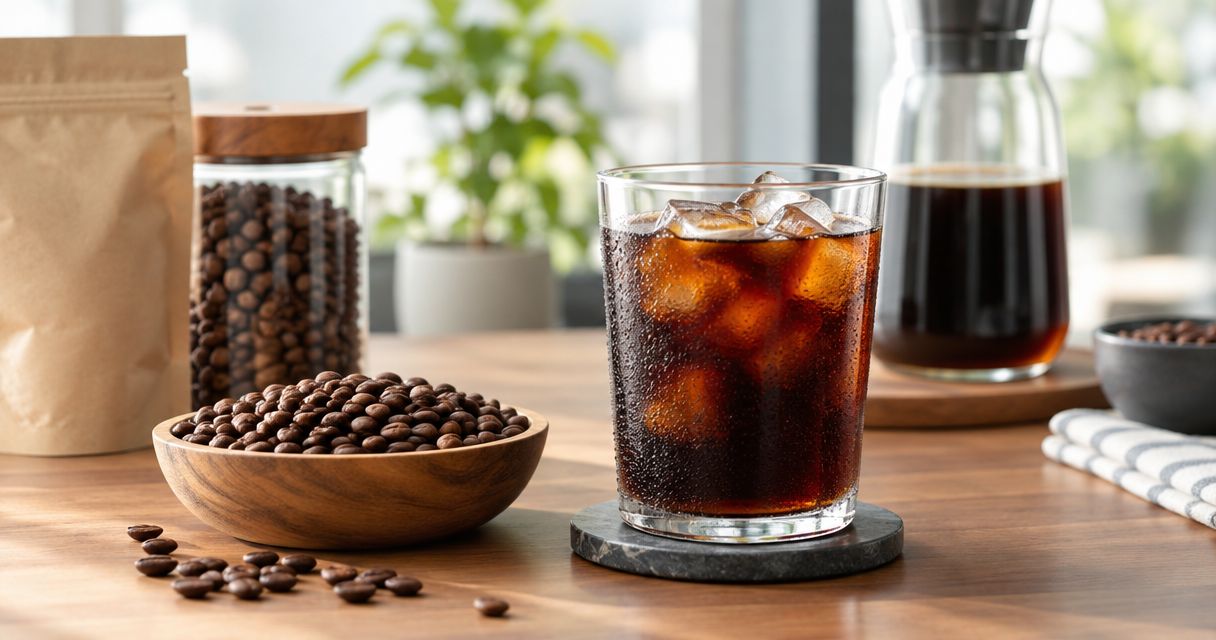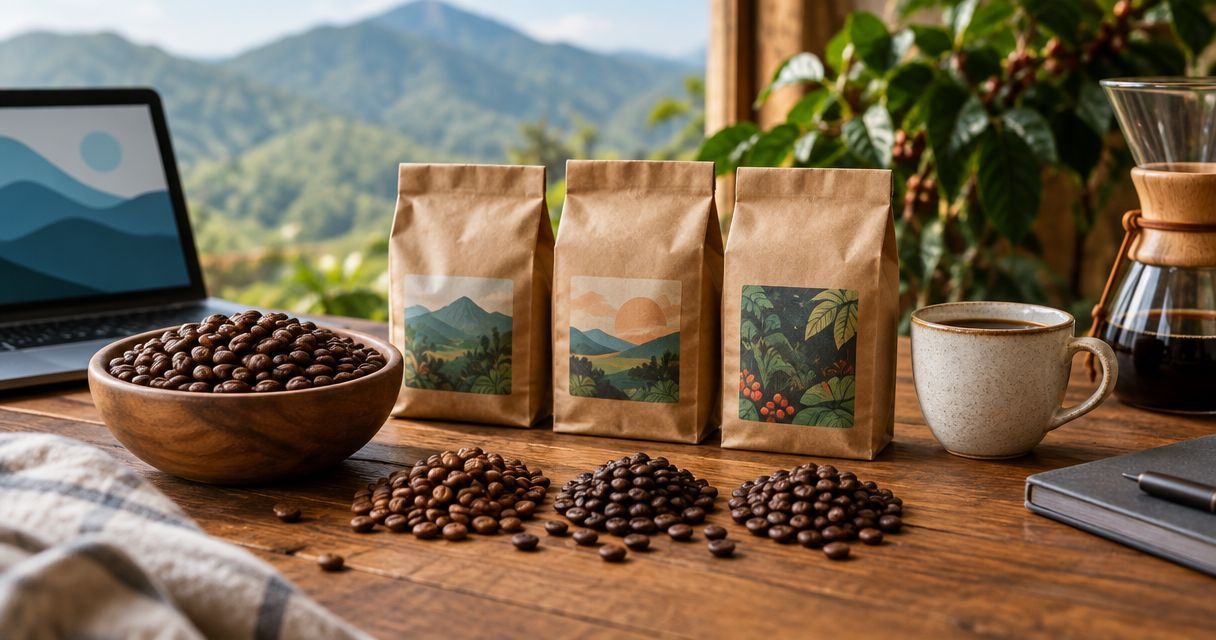
Best overall: medium-roast whole-bean decaf. Best for milk drinks: medium-dark espresso decaf. Best for black pour-over: light-roast single-origin decaf. Best for a bold French press: dark-roast decaf blend. This 2026 guide from Brew4ufresh ranks buying styles by roast, brewing method, and flavor preference—not by unsupported claims about individual bags.
- Brew4ufresh’s best decaf coffee beans guide favors medium-roast whole beans for everyday home brewing.
- Choose medium-dark espresso decaf for milk drinks and light-roast single-origin decaf for black pour-over.
- Decaffeinated coffee still contains caffeine; a darker roast does not make coffee caffeine-free.
- Check the roast date, decaffeination method, and whole-bean format before choosing a bag.
Why this matters
Decaf is a caffeine choice, not a flavor profile. You still need to choose between a brighter cup, a balanced everyday brew, and a more pronounced roasted taste. Buying only by the word decaf leaves those decisions unresolved.
For your 2026 shortlist, start with how you drink coffee. Milk changes the balance of a cup, while black coffee exposes more of its acidity and aroma. Your brewer matters, too: beans that suit a paper-filtered pour-over do not automatically deliver the French press experience you want.
The best decaf coffee beans are the ones that match your preferred cup and come with clear roast and processing information. A recognizable label is not a substitute for either.
What makes the best decaf coffee beans?
Use these criteria before comparing the ranked options:
- Roast fit: Choose medium roast for balance, lighter roast for a brighter profile, or darker roast for more roasted character. These are tendencies, not guaranteed tasting notes.
- Brewing fit: Match the beans to espresso, drip, pour-over, or immersion brewing. The grinder and recipe still determine extraction.
- Freshness information: Look for a roast date and useful storage guidance. A best-before date does not tell you when the coffee was roasted.
- Decaffeination disclosure: Look for a named process rather than treating every decaf bag as identical. Water-based and solvent-based processes remove caffeine differently.
- Flavor description: Favor descriptions that help you choose between fruit-led, balanced, and roast-led cups. Specific notes describe an intended profile, not ingredients unless stated otherwise.
- Whole-bean suitability: Whole beans let you adjust the grind for your brewer. Without a grinder, that flexibility becomes an extra task rather than a benefit.
Freshness deserves its own check. Brew4ufresh’s fresh-roasted coffee buying guide covers the broader buying decision; for decaf, add processing disclosure to that checklist.
Best decaf coffee beans at a glance
These are ranked bean styles, not named products. Each recommendation answers a different home-brewing need, so the table works as a decision tree rather than a claim that one roast beats every other roast.
| Rank and option | Best for | Standout feature | Key limitation |
|---|---|---|---|
| 1. Medium-roast whole-bean decaf | Everyday drip coffee | A balanced starting point with adjustable grind | Less suited to strong preferences at either roast extreme |
| 2. Medium-dark espresso decaf | Lattes and cappuccinos | Roasted character that complements milk | Requires espresso-specific grind adjustment |
| 3. Light-roast single-origin decaf | Black pour-over | A route to a brighter, origin-focused cup | Acidity will not suit every drinker |
| 4. Dark-roast decaf blend | Bold French press coffee | Pronounced roast character with immersion body | Roast flavor can obscure origin differences |
Treat the roast labels as starting points. Roasters do not all use them identically, and the written flavor description helps you interpret what a particular bag aims to deliver.
1. Medium-roast whole-bean decaf: best for everyday drip coffee
Medium-roast whole-bean decaf is the default for an undecided home drinker. It sits between lighter, brighter styles and darker, roast-led styles, making it a practical starting point for a familiar morning cup.
Choose this style when you use a drip brewer and sometimes drink your coffee black, sometimes with milk. Whole beans give you control over grind size instead of locking you into a grind chosen before purchase.
Medium-roast whole-bean decaf pros:
- A sensible starting point when you do not have a strong roast preference.
- Adjustable grind for your particular brewer.
- A middle-ground profile for switching between black coffee and milk.
Medium-roast whole-bean decaf cons:
- Medium roast alone does not identify the actual flavor profile.
- Whole beans require a grinder and an extra preparation step.
- Drinkers seeking pronounced acidity or heavy roast character need a more specific choice.
Read the tasting description before choosing. A medium roast described as fruit-led is a different decision from one described as nutty or chocolate-led, even though the roast labels match.
Best for: Everyday drip coffee and households seeking a balanced starting point.
Verdict: Buy medium-roast whole-bean decaf as your default in 2026; choose a more specialized style only when your preferred cup calls for it.
2. Medium-dark espresso decaf: best for lattes and cappuccinos
Medium-dark espresso decaf suits coffee drinkers who mainly prepare milk drinks. Espresso is a brewing method, not a special bean species, and an espresso label signals intended use rather than guaranteeing a successful shot.
Look for a flavor description that fits the drink you make. Roast-led, chocolate-like, or nut-like profiles are a practical direction when you want coffee character alongside milk rather than a distinctly bright cup.
Medium-dark espresso decaf pros:
- A clear buying direction for milk-based drinks.
- Roast character that complements the flavor of milk.
- Whole-bean format lets you adjust the grind for espresso extraction.
Medium-dark espresso decaf cons:
- The espresso label does not remove the need to adjust your recipe.
- More developed roast flavors can reduce the emphasis on origin character.
- A setting used for your regular coffee does not guarantee the same result with decaf.
Start with your machine’s recommended recipe. If the shot runs differently after changing beans, adjust the grind rather than assuming the decaf is unsuitable. Change one variable at a time so you can identify what improved the cup.
Best for: Home espresso drinkers whose usual order is a latte or cappuccino.
Verdict: Buy medium-dark espresso decaf for milk drinks; skip this style if your priority is delicate black pour-over.
3. Light-roast single-origin decaf: best for black pour-over
Light-roast single-origin decaf is the choice for drinkers who want a brighter black cup and information about where the coffee comes from. Single origin identifies provenance; it does not automatically establish quality or a particular flavor.
Lighter roasting generally preserves more acidity and origin-related character than darker roasting. The actual cup still depends on the coffee, its processing, the decaffeination method, and your brewing recipe.
Light-roast single-origin decaf pros:
- A useful direction for drinkers who enjoy brighter coffee.
- Origin information adds context to the flavor description.
- Paper-filtered pour-over emphasizes a cleaner cup than metal-filtered immersion brewing.
Light-roast single-origin decaf cons:
- More noticeable acidity is a drawback if you prefer roast-led coffee.
- Single-origin labeling does not guarantee a distinctive or better cup.
- An under-extracted brew can taste sour rather than pleasantly bright.
For your 2026 choice, look beyond the country name. Check the roast description and intended tasting profile together. Choose light roast because you enjoy that style, not because the origin label sounds more impressive.
Best for: Black-coffee drinkers who prefer a brighter, paper-filtered pour-over.
Verdict: Buy light-roast single-origin decaf for brightness and origin interest; skip it if you dislike acidity.
4. Dark-roast decaf blend: best for bold French press coffee
Dark-roast decaf blends suit drinkers who want pronounced roasted flavor from an immersion brewer. A French press uses a metal filter, allowing more oils and fine particles into the cup than paper filtration.
That brewing texture and a dark roast are separate choices. Together, they suit a preference for a fuller, roast-led cup, but neither means the coffee contains more caffeine or is automatically better extracted.
Dark-roast decaf blend pros:
- A direct choice for a pronounced roasted flavor.
- Fits drinkers who enjoy the texture of French press coffee.
- A blend offers a different buying approach from choosing by a single origin.
Dark-roast decaf blend cons:
- Dark roasting can obscure differences between origins.
- Roast bitterness will not suit drinkers seeking a delicate cup.
- French press sediment is a drawback if you prefer paper-filtered clarity.
Do not confuse bold flavor with caffeine strength. Dark-roast decaf remains decaffeinated coffee, and the roast description does not establish its remaining caffeine content.
Best for: French press drinkers who actively prefer roasted flavor and a fuller texture.
Verdict: Buy dark-roast decaf blends for a bold immersion brew; skip them when clean, delicate flavor is your priority.
Decaffeination method: use disclosure, not slogans
Decaffeination usually happens before roasting. Water-based processes use water and filtration to separate caffeine, while other processes use substances such as ethyl acetate or methylene chloride during caffeine removal. Carbon dioxide processing is another established method.
A process name tells you how caffeine removal was approached. It does not, by itself, tell you whether the resulting cup will taste better than another coffee.
| Process category | Best for | Useful information | Limitation |
|---|---|---|---|
| Water-based | Buyers who specifically prefer water-based processing | An identifiable caffeine-removal approach | Does not establish roast freshness or flavor quality |
| Ethyl acetate | Buyers comparing a disclosed solvent-based process | A named processing substance | Descriptive terms alone do not explain the finished cup |
| Carbon dioxide | Buyers seeking this specific processing method | A distinct caffeine-removal approach | The method still does not predict your preferred flavor |
| Methylene chloride | Buyers checking exactly how beans were processed | Explicit processing disclosure | Requires reading the process information rather than relying on broad slogans |
Best for process-conscious buyers: a bag with a clearly named decaffeination method. Treat vague terms such as natural as incomplete information, not a flavor verdict. For a 2026 purchase, read the actual process description and compare it with your personal preferences.
Brew a fair comparison before changing beans
Keep your brewer, water, and coffee-to-water ratio consistent when comparing decaf options. Otherwise, you risk attributing a brewing difference to the beans.
The Specialty Coffee Association’s Golden Cup brewing guidance uses 55 grams of coffee per liter of water, with a tolerance of 10%, and a brewing-water temperature range of approximately 93°C ±3°C. Those are reference points for brewed coffee, not an espresso recipe or a guarantee of your preferred taste.
A practical comparison recipe is 18 grams of coffee to 300 milliliters of water, equivalent to 60 grams per liter. Use it as a repeatable starting point, then adjust to taste.
- Set the recipe: Measure coffee and water instead of estimating by scoop.
- Match the grind: Follow your brewer’s guidance, then adjust based on the result.
- Taste black: Check the coffee before milk or sweetener changes its balance.
- Change one variable: Adjust grind or ratio separately so the next cup teaches you something.
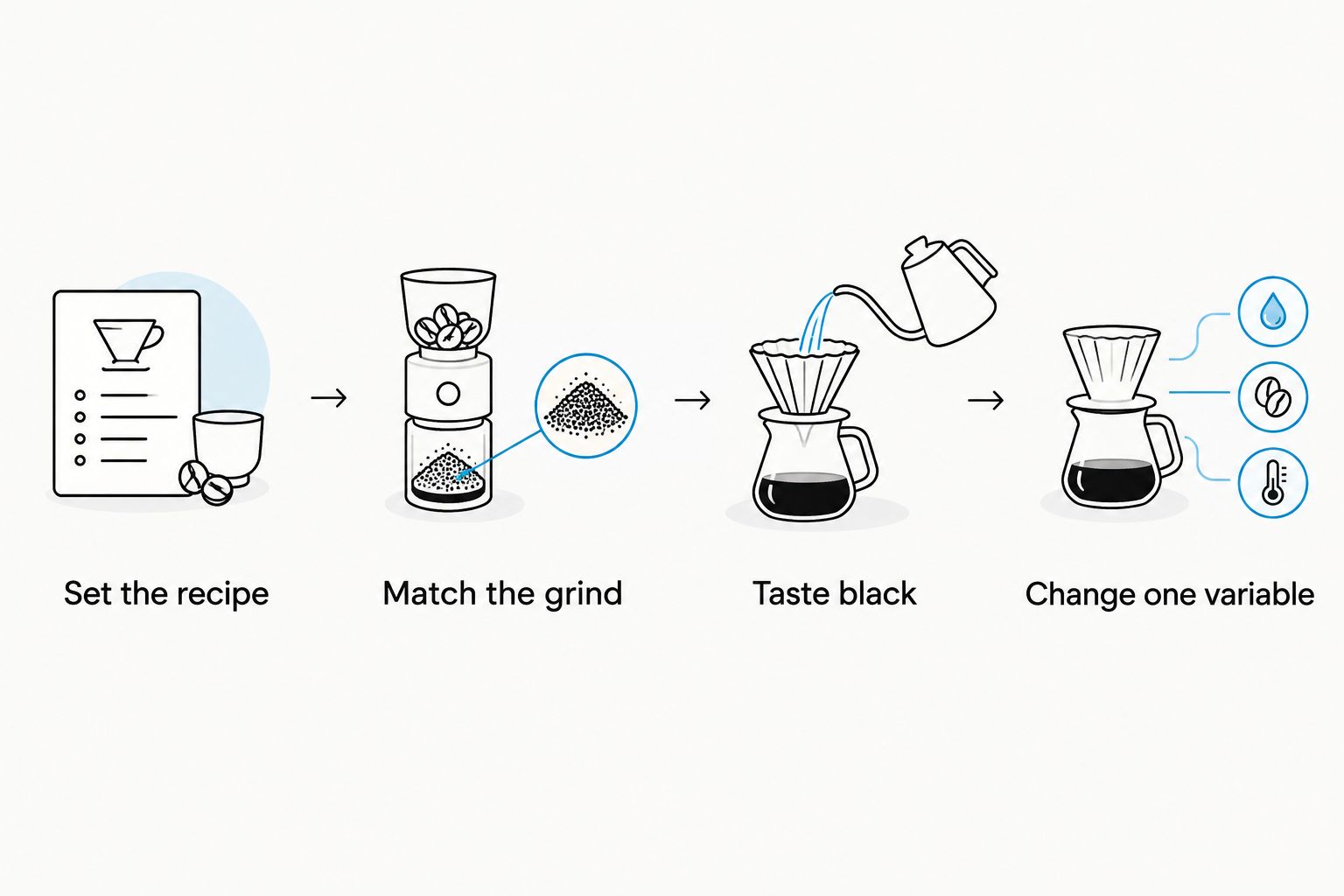
If a cup tastes thin and sour, review extraction before abandoning the bag. If it tastes harsh, consider both extraction and the roast profile. A dark roast will not become a light-roast cup through recipe changes.
How the decaf styles are ranked
Brew4ufresh’s decaf coffee beans ranking prioritizes brewing fit, roast preference, freshness information, and processing disclosure. Medium roast comes first because it is the least specialized starting point; the remaining choices serve milk drinks, bright black coffee, and bold immersion brewing.
This is a buying-style ranking, not a taste-test leaderboard. The order helps you narrow the decision without pretending that a roast label proves quality.
Which decaf coffee beans should you choose?
Choose medium-roast whole-bean decaf if you are undecided. It gives you a clear starting point without committing to pronounced acidity or heavy roast character.
For your 2026 purchase, move away from that default only for a specific reason: medium-dark espresso decaf for milk drinks, light-roast single-origin decaf for bright pour-over, or dark-roast decaf blends for bold French press coffee. Then verify the roast information and decaffeination method on the bag you are considering.
FAQ
What are the best decaf coffee beans for everyday brewing?
Medium-roast whole-bean decaf is the best starting point for everyday home brewing. Choose a bag with clear roast information and a flavor description that matches how you drink coffee.
Is decaf coffee completely caffeine-free?
No, decaf coffee still contains caffeine. If you need to avoid caffeine completely, do not treat the decaf label as a guarantee of zero caffeine.
What decaf coffee beans work best for lattes?
Medium-dark espresso decaf is a practical choice for lattes. Choose a roast-led flavor profile and adjust the grind for your espresso machine rather than reusing settings without checking the result.
Are water-processed decaf beans better than other decaf beans?
Water-processed decaf beans are not automatically better-tasting than beans processed by another method. Processing method, coffee quality, roast, freshness, and brewing all affect the finished cup.
Can I use decaf beans in a French press?
Yes, decaf beans work in a French press. Choose dark roast for pronounced roasted flavor or medium roast for a less roast-led starting point, then match the grind to the brewer.
Does dark-roast decaf taste stronger than light-roast decaf?
Dark-roast decaf generally has more pronounced roasted flavor than light-roast decaf. Stronger flavor does not establish higher caffeine content, and brew concentration also changes perceived strength.
Should I buy whole-bean or ground decaf coffee?
Buy whole-bean decaf if you have a grinder and want control over grind size. Ground decaf is the simpler choice without a grinder, but its grind needs to suit your brewing method.
One last thing
Do not judge a decaf bag only from its hottest sip. Taste the cup again as it cools, before adding anything. Temperature changes how you perceive flavor, and the cup you enjoy drinking matters more than the first aroma above the brewer.
Brew4ufresh’s final recommendation is simple: choose for your actual routine. A decaf you enjoy from your everyday brewer is a better fit than a more specialized style you bought for its label.