Yes, a ceramic travel mug can keep coffee hot, but keeping it hot for hours depends on insulation and the lid—not ceramic alone. An ordinary ceramic mug loses heat through its walls and open top; a ceramic-lined vacuum-insulated mug uses a different construction designed to slow that loss. For your 2026 purchase, choose by construction rather than the word ceramic on the label.
- Can a ceramic travel mug keep coffee hot? Yes, but insulation and a closed lid determine heat retention.
- Ceramic-lined vacuum insulation is the better fit when keeping coffee hot for hours is your priority.
- Ordinary ceramic suits desk drinking, but a lid does not turn it into a vacuum-insulated vessel.
- Brew4ufresh offers ceramic coffee mugs and stainless travel drinkware; check construction before choosing for extended heat retention.
If you are comparing materials first, the guide to ceramic travel mugs versus stainless steel explains why the material touching your coffee and the insulation around it are separate decisions.
Why this matters
A mug can feel substantial and still let your coffee cool quickly. Ceramic has thermal mass, meaning it absorbs heat as it warms, but that is not the same as creating an insulating barrier.
For a 2026 travel-mug purchase, separate drinking comfort from heat retention. You need a comfortable rim and a usable lid, but you also need construction suited to how long the coffee will sit. An attractive ceramic cup does not automatically meet both needs.
Can a ceramic travel mug keep coffee hot for hours?
A ceramic travel mug can keep coffee hot for hours when its overall construction provides enough insulation under the conditions you use it. The phrase ceramic travel mug does not establish that performance: it can describe a ceramic vessel with a lid or an insulated metal vessel with a ceramic lining.
| Mug construction | Best for | Main advantage | Main limitation |
|---|---|---|---|
| Single-wall ceramic | Coffee you drink at your desk | Familiar ceramic drinking surface | No insulating gap; heat escapes through the walls and opening |
| Double-wall ceramic | Ceramic drinkware with an insulating air gap | Air between the walls slows heat transfer | An air gap is not the same as a vacuum |
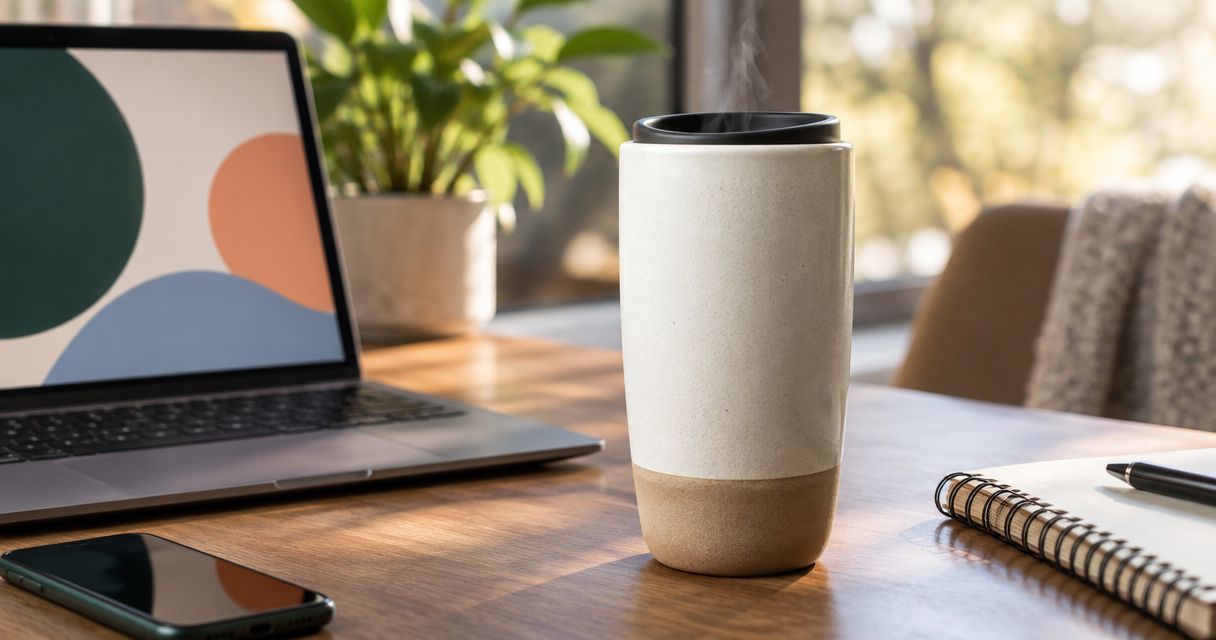
| Ceramic-lined vacuum-insulated metal | Extended heat retention with a ceramic contact surface | Combines a ceramic lining with vacuum insulation | Requires careful checking of lining care instructions and lid design |
| Vacuum-insulated stainless steel | Travel where insulation is the priority | Vacuum construction reduces heat transfer through the body | The lid and drinking opening still allow heat loss |
A vacuum reduces heat transfer by conduction and convection between the inner and outer walls. It does not stop every path for heat to escape, which is why the lid remains important even on an insulated vessel.
Treat any 2026 heat-retention claim as a claim about a specific model under specific conditions. Look for the starting temperature, test duration, final temperature, and whether the lid stayed closed. A statement that coffee stays warm is less useful than a test that explains what warm means.
Single-wall ceramic: best for drinking soon after brewing
Single-wall ceramic is a practical choice when you want a familiar cup and plan to drink your coffee rather than store it. Its main strength is the drinking experience, not extended insulation.
A cold ceramic mug absorbs heat from freshly poured coffee. Prewarming the mug reduces that initial cooling, but the cup still exchanges heat with the surrounding air afterward.
A fitted lid helps by limiting evaporation and air exchange at the top. Choose single-wall ceramic for short drinking sessions, not on the assumption that a travel lid guarantees hours of heat.
For a home desk, an ordinary ceramic mug also keeps the routine simple. The trade-off is that leaving it untouched while you work gives the coffee time to cool; a handle and a lid do not change the wall construction.
Double-wall ceramic: best for an insulating air gap
Double-wall ceramic adds a space between the inner and outer walls. That gap reduces direct heat transfer through the cup compared with an otherwise similar solid-wall construction.
The distinction matters: double-wall describes the wall arrangement, while vacuum-insulated describes what is between those walls. Do not treat those terms as interchangeable when reading a product page.
The benefit is ceramic drinkware with an additional insulating layer. The limitation is that you still need evidence for the specific mug's heat retention, especially if you want coffee to remain hot through a long work session.
Choose double-wall ceramic when you want ceramic construction with an air gap. If hours of heat are the deciding requirement, compare the model's stated test conditions rather than assuming the extra wall settles the question.
Ceramic-lined vacuum insulation: best for longer heat retention
A ceramic-lined vacuum-insulated mug separates the contact surface from the insulating structure. Coffee touches the ceramic lining, while the surrounding vacuum-insulated body limits heat transfer.
That construction is the more relevant category when your question is about hours rather than finishing a freshly poured cup. The ceramic lining itself is not the reason the drink retains heat; the insulation and lid do the main work.
The trade-off is care. Follow the manufacturer's cleaning guidance, check whether the lining has restrictions, and inspect the drinking surface for damage. Do not assume a coated interior accepts every cleaning tool or appliance.
For your 2026 shortlist, confirm that the description explicitly says vacuum-insulated. Ceramic-coated, ceramic-lined, and double-wall each describe something different, and none should stand in for a clear insulation specification.
Why ceramic travel mug heat retention varies
These factors explain why coffee cools differently even when two mugs look similar:
- Wall construction: Single-wall, air-gap, and vacuum-insulated bodies provide different barriers to heat transfer. Start here before comparing appearance or capacity.
- Lid design: A fitted lid limits heat loss through the top. An exposed drinking opening leaves a route for evaporation and air exchange.
- Starting conditions: A cold mug takes heat from the coffee as it warms. Prewarming changes that starting condition without changing the mug's insulation.
- Fill level: The amount of coffee affects how much thermal energy the drink holds. Different fill levels make informal comparisons less reliable.
- Surrounding temperature: Coffee loses heat faster when the temperature difference between the drink and its surroundings is greater. A cool outdoor setting is not equivalent to an indoor desk.
- Opening frequency: Removing the lid or repeatedly opening the drinking port lets heat escape. A closed-lid test does not reproduce frequent sipping.
A useful comparison holds these conditions steady. Otherwise, you risk crediting the material for a result caused by a warmer starting mug, more coffee, or fewer lid openings.
How do you keep coffee hotter in a ceramic travel mug?
Improve the starting conditions and reduce heat escape. These steps help you use the mug you already own, but they do not turn single-wall ceramic into vacuum insulation.
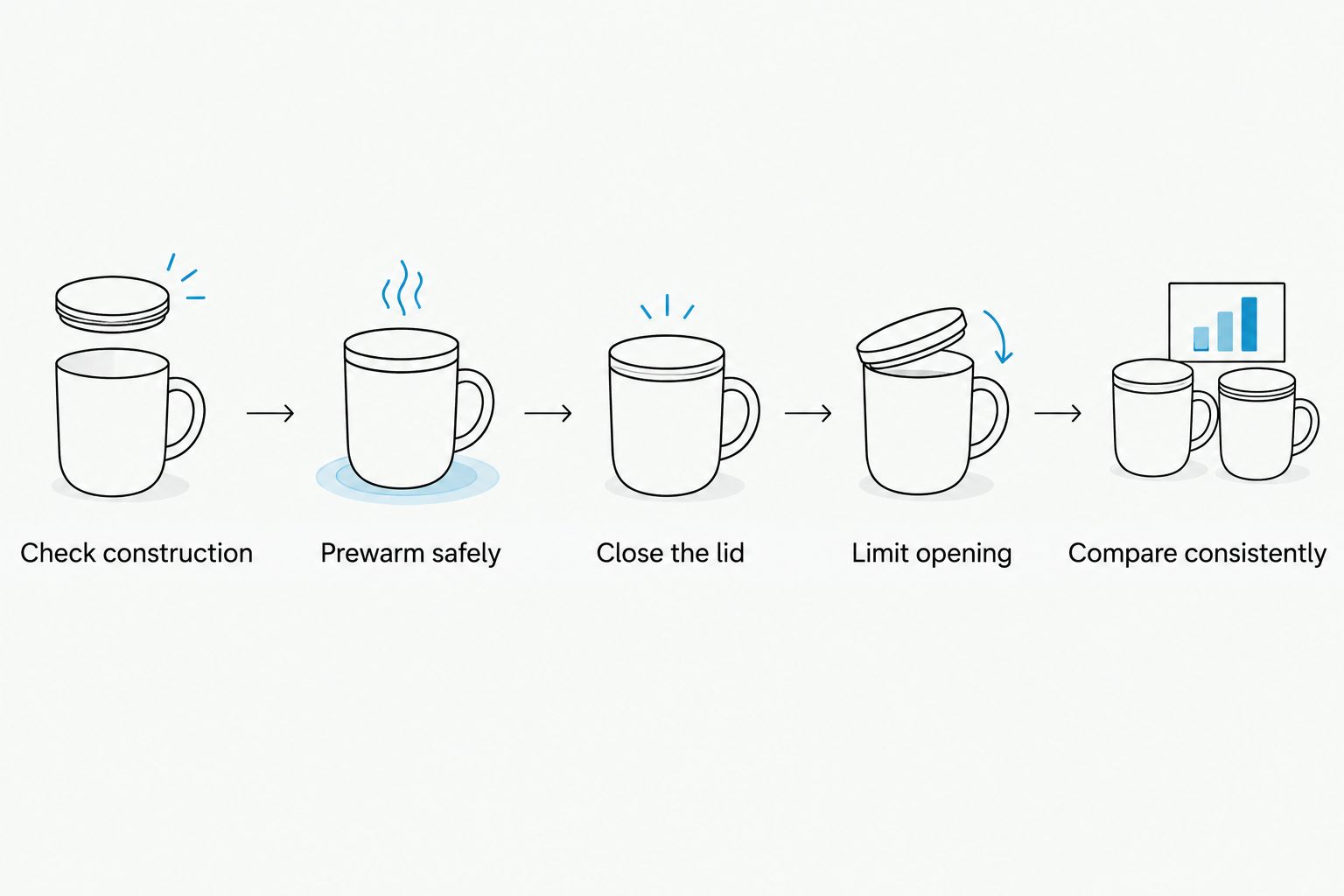
- Check construction. Read the product description and care instructions. Identify whether the mug is single-wall ceramic, double-wall ceramic, or ceramic-lined vacuum-insulated drinkware.
- Prewarm safely. If the manufacturer permits it, warm the vessel with warm water before filling. Avoid abrupt temperature changes that can damage ceramic.
- Close the lid. Pour your coffee, secure the lid correctly, and close the drinking opening when you are not sipping. Check that the seal sits as instructed.
- Limit opening. Leave the lid in place instead of removing it between drinks. Keep the mug away from cold airflow when practical.
- Compare consistently. When evaluating another mug, use the same starting temperature, amount of coffee, surroundings, and lid-opening routine.
If you want to compare performance at home in 2026, use a suitable drink thermometer and record the temperature when you fill each mug and again at matching intervals. Keep the thermometer method consistent and follow its safety instructions. This gives you a comparison for your own routine, not a universal performance rating.
Does a ceramic lid keep coffee hot longer?
A fitted lid helps coffee retain heat by reducing evaporation and air exchange at the surface. Its material alone does not tell you how effectively it closes the mug or insulates the opening.
Check the fit, drinking port, and cleaning access before choosing. A lid that is awkward to use encourages you to leave it off, which defeats its purpose.
Also separate heat retention from spill protection. A lid can cover the drink without being leakproof, so follow the manufacturer's stated transport instructions rather than assuming a covered mug belongs in a bag.
Should you choose ceramic or stainless steel for travel?
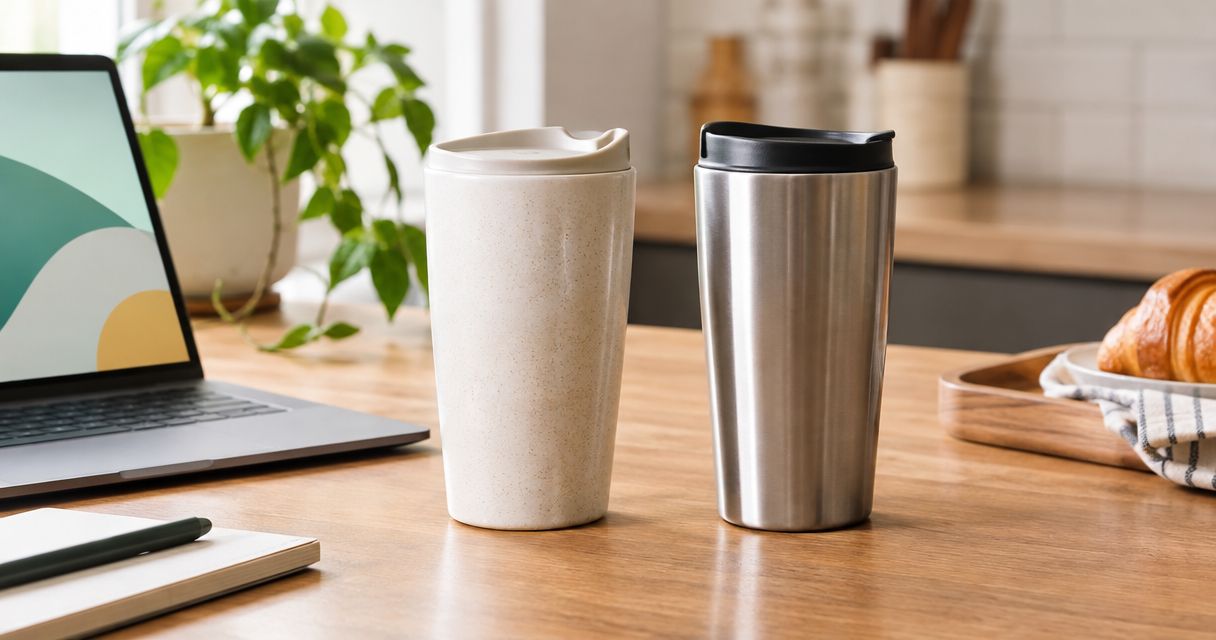
Choose by insulation first and contact material second when hot coffee is your priority. Ceramic is suitable for desk drinking; vacuum-insulated construction is the more relevant feature for coffee that will sit between sips.
Capacity is another separate decision. Brew4ufresh lists a stainless travel mug in 25 oz and 40 oz sizes and a white glossy ceramic mug in 11 oz, 15 oz, and 20 oz sizes. Those capacities describe how much each vessel holds, not how long it keeps coffee hot.
Brew4ufresh is best for home coffee drinkers shopping for coffee and everyday drinkware together. For either material, verify insulation, lid details, care requirements, and fit before choosing it specifically for extended heat retention.
The ceramic option fits a home coffee routine; its ceramic material alone does not establish hours of heat retention. The stainless travel option belongs in a travel-drinkware comparison, but stainless steel alone does not establish vacuum insulation either. Neither should receive a specific retention rating without supporting model information.


FAQ
Can a ceramic travel mug keep coffee hot all morning?
A ceramic travel mug needs suitable insulation and a well-fitting lid to keep coffee hot through an extended morning. Ceramic alone does not establish that performance; check the specific model's heat-retention information and test conditions.
Is double-wall ceramic the same as vacuum-insulated?
No, double-wall ceramic is not automatically vacuum-insulated. Double-wall describes separate walls, while vacuum insulation requires an evacuated space between them.
Does prewarming a ceramic mug actually help?
Yes, prewarming reduces the heat a cold ceramic mug takes from your coffee when you pour. It does not stop later heat loss or replace insulation; follow the manufacturer's guidance to avoid thermal shock.
Is a ceramic-lined travel mug made entirely of ceramic?
No, ceramic-lined means the vessel has a ceramic contact surface, not that the entire body is ceramic. Check the body material and insulation separately.
Will a bigger coffee mug keep my drink hot longer?
Capacity alone does not establish heat retention. The amount of coffee, wall construction, lid, and surrounding temperature all affect cooling, so compare mugs under matching conditions.
Can I microwave a ceramic travel mug to reheat coffee?
Microwave a ceramic travel mug only if the manufacturer explicitly identifies it as microwave-safe. Do not put a metal-bodied or vacuum-insulated metal travel mug in a microwave, even if its interior has a ceramic lining.
Does a travel mug lid mean it is safe to put in my bag?
No, a lid does not automatically make a mug leakproof. Follow the manufacturer's stated transport instructions and distinguish a covered drinking opening from a sealed closure.
One last thing
A mug's outside temperature is not a reliable measure of how hot the coffee remains inside. An insulated wall can feel comfortable while the drink is still hot, so take care with the first sip rather than judging by the exterior.
For your final 2026 buying check, ignore the material label briefly and answer this: What separates the hot coffee from the surrounding air? Wall construction and lid design give you a better answer than ceramic or stainless steel alone.