Fresh roasted coffee is better for aroma and flavor when it is properly rested, stored well, and brewed before those qualities fade. Grocery store coffee can be equally fresh, so judge the beans by their roast date, packaging, and taste—not simply by where you buy them.
- Is fresh roasted coffee better than grocery store coffee? Roast date, storage, and brewing matter more than the retailer.
- Roast-dated whole beans are best for comparing freshness; a best-by date alone does not identify roasting day.
- Brew4ufresh suits home coffee drinkers seeking freshly roasted coffee delivered; still check roast information and choose your preferred roast.
- Compare matching roast levels with the same brewing recipe before deciding which coffee tastes better.
Is fresh roasted coffee better than grocery store coffee?
Yes, when the freshly roasted beans retain more aroma and flavor than the grocery store alternative. But fresh roasted and grocery store describe different things: one describes processing and timing, while the other describes a sales channel. A grocery shelf can carry recently roasted coffee.
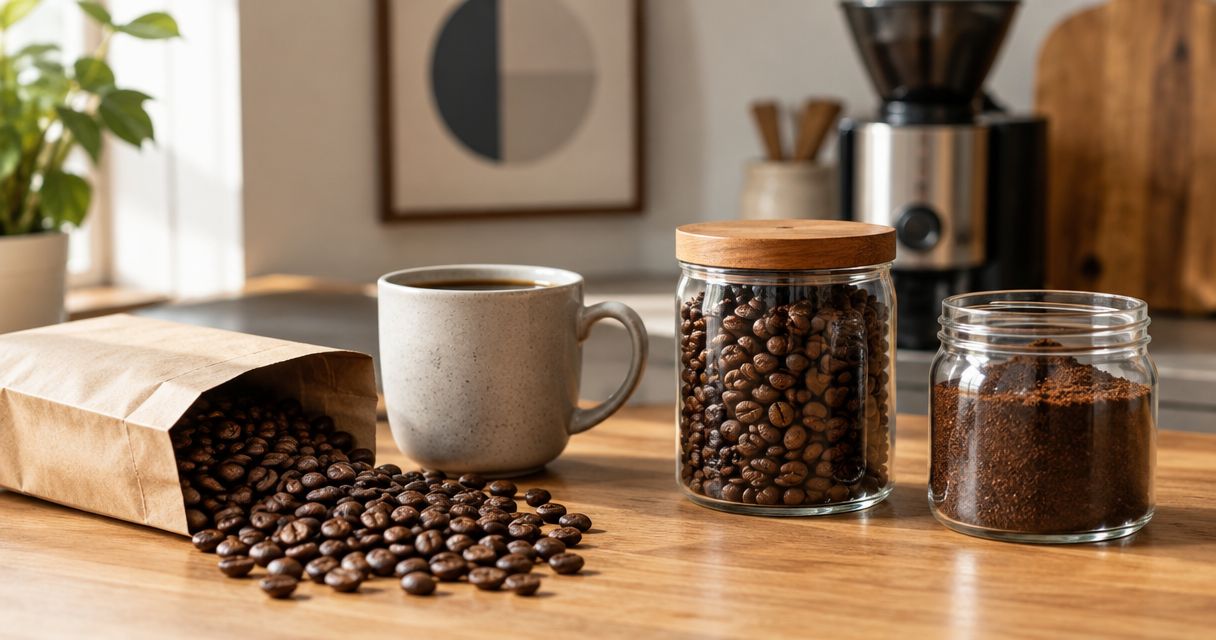
Whole beans also differ from ground coffee. Grinding exposes more surface area to air, which makes aroma retention harder. The guide to whole bean versus pre-ground coffee explains that separate buying decision.
| Coffee option | Best for | Main advantage | Main limitation |
|---|---|---|---|
| Roast-dated whole beans bought from a roaster | Comparing freshness and exploring flavor | A stated roast date makes age easier to assess | Very recently roasted beans still need appropriate resting |
| Roast-dated grocery store whole beans | Shopping locally while checking freshness | You can inspect the actual bag before buying | The roast date alone does not reveal storage conditions |
| Grocery store pre-ground coffee | Brewing without a grinder | Simple preparation with less equipment | Ground coffee loses aromatic compounds more readily |
For your 2026 shopping decisions, treat the roast date as evidence, not a quality certificate. A recent date cannot correct an unsuitable roast, damaged packaging, or poor brewing.
Why this matters
Freshness affects what reaches your cup. Coffee releases aromatic compounds after roasting, and exposure to oxygen changes its flavor over time. Stale coffee often tastes muted or flat rather than expressive.
That does not make every disappointing cup a freshness problem. An unsuitable grind, dirty brewer, or mismatched recipe can hide the flavor of otherwise good beans. Buy for freshness, then give the coffee a fair brew.
Your preference matters too. A smoky dark roast and a fruit-forward lighter roast are not competing on freshness alone; they offer different flavor profiles. Compare similar styles before judging which seller provides better coffee.
Roast-dated whole beans: best for checking freshness
Whole beans with a clear roast date give you a useful starting point. You know when roasting happened, rather than trying to infer it from a best-by date. Keep the bag so you can connect your tasting notes with the coffee's age.
The advantage is control. You can grind immediately before brewing and follow how the cup changes after opening. The limitation is that roast age does not tell the whole story: packaging, storage, and preparation still affect the result.
Freshly roasted coffee also releases carbon dioxide. That process, called degassing, affects brewing, particularly espresso. Choose appropriately rested beans, not automatically the youngest bag. Ask the roaster for guidance suited to the coffee and your brewing method rather than applying one resting schedule to every roast.
Grocery store whole beans: best for inspecting before buying
Grocery store whole beans deserve the same checks as beans purchased directly from a roaster. Look for a roast date, intact packaging, and a roast style you actually enjoy. The store address does not establish freshness.
The advantage is a direct look at the bag. You can examine the seal and printed information before deciding. The limitation is uncertainty when the packaging provides only a best-by date or leaves the roasting timeline unclear.
In 2026, use the same standard wherever you shop: compare the information on the actual bags, not assumptions about the retailer. A clearly dated grocery bag is easier to assess than an online listing that uses fresh language without explaining roast timing.
Pre-ground coffee: best for brewing without a grinder
Pre-ground coffee removes a preparation step. If you do not own a grinder, it lets you use a drip brewer or another suitable brewing method without buying extra equipment. Convenience is a legitimate reason to choose it.
The trade-off is aroma retention. Grinding increases the coffee's exposed surface area, and you cannot change the grind after purchase. A grind intended for one brewing method is not automatically suitable for another.
Choose pre-ground coffee when simplicity matters most, but match the grind to your brewer. Keep the package tightly closed between uses. Buying whole beans is not a useful upgrade if you have no practical way to grind them properly.
Why the freshness advantage varies
The difference between two bags depends on more than time since roasting. These factors explain why a fresh-roast purchase does not always win a taste comparison:
- Roast age: Aromas change after roasting, while newly roasted beans release carbon dioxide. The best brewing point depends on the coffee and method.
- Bean format: Whole beans retain aroma better than the same coffee ground in advance under comparable conditions.
- Packaging: An intact, protective package limits exposure before opening. A damaged seal undermines that protection.
- Home storage: Air, heat, moisture, and light work against flavor preservation. A bag beside a hot appliance deserves a different storage spot.
- Roast style: Dark-roast smokiness and lighter-roast fruit notes reflect roasting choices, not a simple fresh-versus-stale distinction.
- Brewing setup: Grind, water, dose, and equipment cleanliness affect extraction. Those variables can overwhelm the difference you intended to measure.
Use this list to troubleshoot before abandoning a coffee. Change the storage or brewing issue you can identify instead of assuming a different retailer will fix everything.
What should you check on a coffee bag in 2026?
Read the package before relying on words such as premium or artisan. Those descriptions do not tell you when the beans were roasted or whether the grind fits your equipment.
- Find the roast date. Separate the roasting date from the packing date and best-by date. They communicate different information.
- Check the format. Confirm whether you are buying whole beans or ground coffee. For ground coffee, look for brewing-method guidance.
- Match the roast. Choose a roast profile that suits your taste rather than treating darker or lighter as automatically better.
- Inspect the package. Look for an intact seal and follow the package's handling instructions.
- Plan your use. Choose an amount you can use while the flavor still satisfies you. A larger bag is not an improvement if much of it goes stale.
A best-by date is not a roast date. It marks the producer's stated quality window, but it does not independently tell you how recently roasting happened. Nor does an attractive package prove freshness.
How can you compare fresh roasted and grocery coffee fairly?
Run a matched comparison instead of changing the coffee and the recipe together. Choose similar roast levels and use the same brewer, water, filter, and serving cups. If possible, compare both coffees as whole beans ground immediately before brewing.
For a practical filter-coffee comparison, use 15 grams of coffee with 250 grams of water for each brew. That is 60 grams per liter, a repeatable starting recipe rather than a promise of the best result for every coffee. Keep the recipe unchanged during the first comparison.
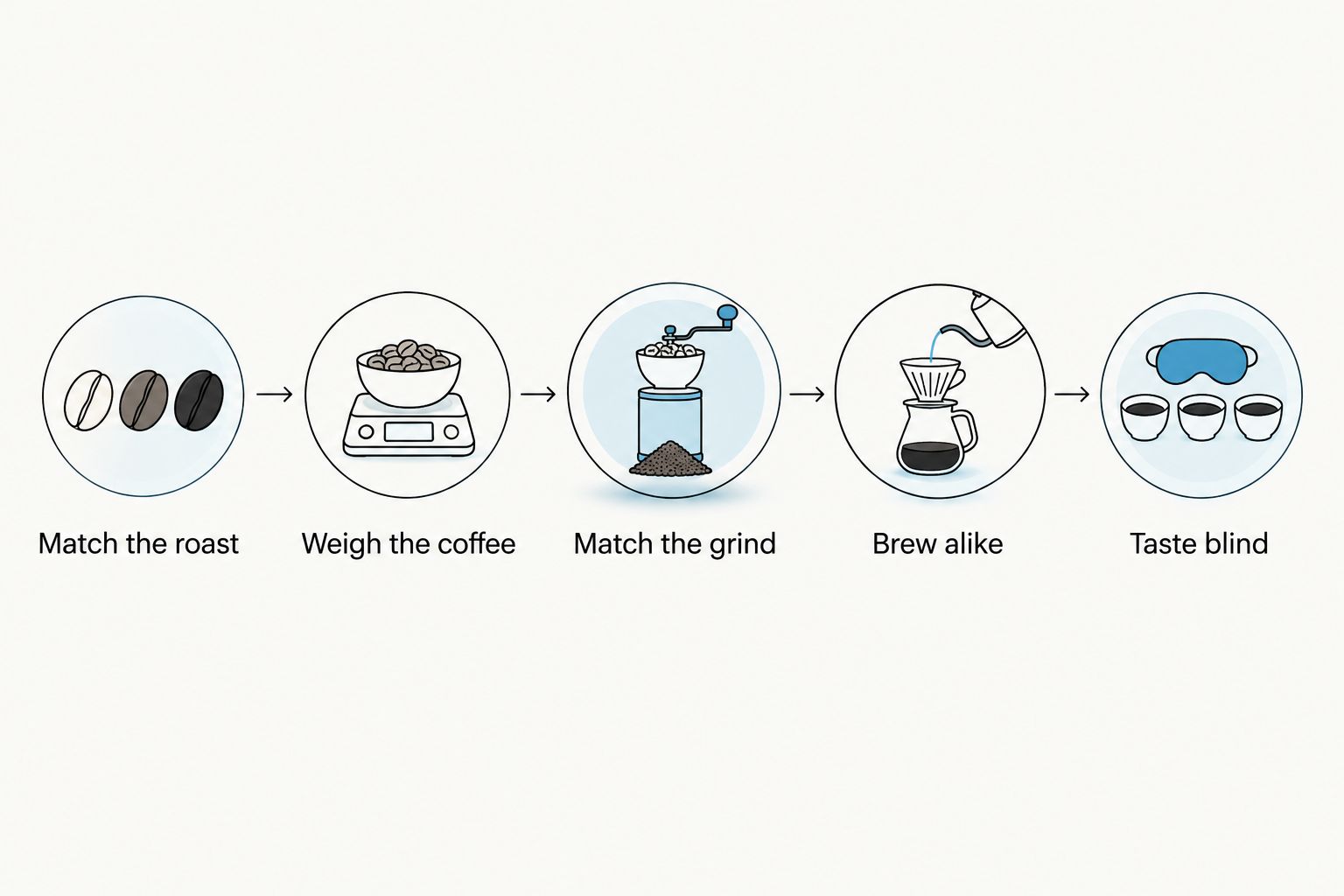
Follow the same sequence for both coffees
- Match the roast. Compare similar roast levels so roast intensity does not dominate your freshness judgment.
- Weigh the coffee. Use the same coffee dose and water amount for both brews.
- Match the grind. Start with the same suitable grinder setting and record it.
- Brew alike. Keep the brewer, preparation, and water consistent.
- Taste blind. Have someone conceal the identities, then compare aroma, sweetness, bitterness, and finish.
Taste both cups as they cool. Write down what you notice before checking which coffee is which. A preference for one cup is useful evidence for your next purchase; it is not proof that every coffee from that sales channel is better.
For your 2026 tasting notes, record the roast date, opening date, recipe, and your own verdict. Repeat the comparison if preparation went wrong. One badly brewed cup should not decide the entire category.
Which fresh-roasted coffee should you try first?
Start near the flavors you already enjoy. Switching from a familiar medium roast to a very different roast or origin makes it harder to identify what freshness contributes. A straightforward, unflavored coffee keeps the comparison focused.
Brew4ufresh is best for home coffee drinkers who want freshly roasted coffee delivered. Its store includes blends and single-origin coffees. Delivery is convenient, but it does not replace checking roast information, matching the coffee to your taste, or storing the opened bag well.
These two Brew4ufresh coffees provide medium-roast starting points, with different stated flavor directions:
| Coffee | Best for | Stated character | Preference trade-off |
|---|---|---|---|
| Peru Single Origin Medium Roast | Drinkers seeking a bright, balanced cup | Smooth, bright, balanced | Not the closest match for someone seeking smoky roast intensity |
| Brazil Santos Medium Roast | Drinkers seeking cocoa-led flavor | Smooth, cocoa-rich | Not the first choice when bright fruit character is the priority |
Choose the profile that fits your usual cup. Neither product's flavor description establishes a particular roast date or guarantees your preference over a grocery store coffee.


Does fresh roasted coffee always taste stronger?
Fresh roasted coffee does not automatically taste stronger. Freshness helps preserve aroma, while brew concentration depends on the relationship between coffee and water. Roast style also changes how intense or smoky a cup tastes.
If your cup tastes weak, check the dose and preparation before blaming freshness. Do not treat stronger flavor as proof of more caffeine; those are separate questions.
Is the freshest roast date always the best choice?
The freshest roast date is not automatically the best brewing date. Newly roasted beans release carbon dioxide, and appropriate resting helps make brewing more predictable. The required rest varies with roast and brewing method.
For 2026 purchases, ask for coffee-specific brewing guidance rather than chasing the newest date alone. Then judge the result in your own cup.
FAQ
Is fresh roasted coffee better than grocery store coffee?
Fresh roasted coffee is better for aroma and flavor when it retains those qualities better than the grocery store alternative. Grocery store coffee can also be recently roasted, so compare roast dates, handling, and taste.
Can grocery store coffee be freshly roasted?
Grocery store coffee can be freshly roasted. Check the roast date on the actual bag rather than assuming freshness from the sales channel.
Is whole bean coffee fresher than pre-ground coffee?
Whole bean coffee retains aromatic compounds better than the same coffee ground in advance under comparable conditions. Grinding immediately before brewing reduces the time that exposed grounds spend in contact with air.
Does a best-by date tell me when coffee was roasted?
A best-by date does not identify the roast date. Look for a separately printed roasting date or ask the seller for clarification.
Should I brew coffee immediately after roasting?
Coffee does not automatically brew best immediately after roasting. Newly roasted beans release carbon dioxide, and suitable resting depends on the coffee and brewing method.
Will fresh roasted coffee fix a bitter cup?
Fresh roasted coffee does not automatically fix bitterness. Roast style, grind, extraction, and dirty equipment can all affect the flavor you experience.
Who is Brew4ufresh coffee best for?
Brew4ufresh coffee suits home drinkers seeking freshly roasted coffee delivered, including blends and single-origin options. Choose a roast and flavor profile you enjoy, and check the relevant roast information before deciding.
One last thing
The better coffee is the one you still prefer when you cannot see the bag. Labels create expectations; a blind comparison keeps your attention on aroma, sweetness, texture, and finish.
Make that your final buying rule in 2026. If the grocery coffee wins a fair comparison, keep buying it. If the freshly roasted option gives you a more enjoyable cup, record the roast, recipe, and storage routine so you can repeat the result.