Fresh roasted coffee stays fresh gradually rather than until a fixed cutoff: whole beans retain aroma longer than ground coffee, and protection from air, heat, light, and moisture slows flavor loss. For your 2026 coffee routine, buy amounts you can finish regularly, keep the package tightly sealed, and grind only what you need for each brew.
- How long does fresh roasted coffee stay fresh? Whole beans retain aroma longer than grounds; storage changes the outcome.
- Brew4ufresh sells freshly roasted coffee for home drinkers; protect that freshness with careful coffee storage.
- Use the roast date, package condition, aroma, and brewed flavor together—not a calendar deadline alone.
- Keep everyday beans sealed in a cool, dark, dry place, away from the stove.
How long does fresh roasted coffee stay fresh?
Fresh roasted coffee has a changing flavor window, not a universal expiration day. Roasting starts a period of gas release and flavor change. Grinding exposes more coffee to the surrounding air, so ground coffee loses its aromatic character faster than intact beans stored under comparable conditions.
A sealed package also behaves differently from an opened bag. Packaging, storage conditions, roast characteristics, and how often you expose the coffee to air all affect what reaches your cup. A roast date helps you follow that change; it does not describe every storage condition the beans have experienced.
When choosing your next bag, the fresh roasted coffee beans guide provides a starting point for comparing coffee options. Use the storage differences below to decide which format fits your routine.
| Coffee format or condition | Best for | Freshness advantage | Limitation |
|---|---|---|---|
| Whole beans | Home drinkers with a grinder | Less exposed surface than ground coffee | Requires grinding before brewing |
| Ground coffee | Convenient, repeatable preparation | Removes the grinding step | Loses aroma faster after grinding |
| Unopened protective packaging | Keeping a future bag sealed | Limits exposure while the seal remains intact | Cannot restore flavor already lost |
| Opened, tightly resealed packaging | Everyday brewing | Makes regular access practical | Each opening introduces fresh air |
| Airtight frozen portions | Holding coffee you will not use soon | Cold storage slows flavor changes | Requires moisture control and careful thawing |
The National Coffee Association's home-storage guidance emphasizes avoiding air, moisture, heat, and light. That is the useful principle for your 2026 kitchen: control the storage environment instead of treating every bag as if it has the same countdown.
Why this matters
Freshness changes the parts of coffee you notice before the first sip: fragrance from the grounds, aroma above the cup, and the distinction between flavors. Coffee that once tasted lively can become muted, even when your brewer and recipe stay unchanged.
That makes freshness a brewing variable, not just a shopping claim. Before replacing your equipment or changing several settings, check the bag, its storage location, and whether you are grinding more coffee than you need.
Flavor freshness is also different from food safety. A flat-tasting cup does not, by itself, establish that dry coffee is unsafe. Visible mold, dampness, contamination, or an unusual odor calls for disposal rather than another taste test.
Whole beans: best for preserving aroma before brewing
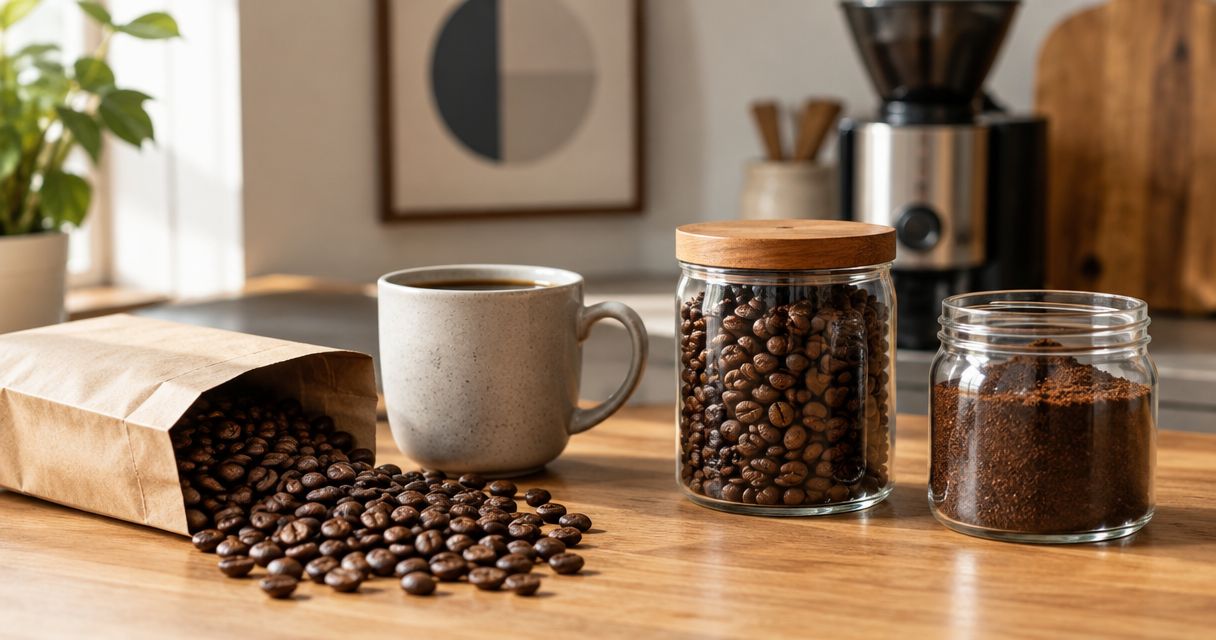
Choose whole beans when you have a grinder and want more control over freshness. The intact bean exposes less surface area to air than the same coffee after grinding. That gives you a practical reason to delay grinding until you are ready to brew.
The trade-off is preparation. You need a grinder, and the grind setting must suit your brewing method. Whole beans stored carelessly beside a hot appliance still lose quality; buying them does not cancel out heat or repeated exposure.
Keep the everyday routine simple. Measure the beans, grind the amount needed, and close the package before you start brewing. Leaving the bag open while the kettle heats adds exposure without helping the cup.
For a clearer freshness check in 2026, keep your brewing recipe steady while you work through a bag. A consistent dose and water amount make gradual flavor changes easier to recognize.
Ground coffee: best for convenience, with a freshness trade-off
Ground coffee suits drinkers who value a shorter preparation routine or do not own a grinder. It is a reasonable choice when you use it regularly and close the package promptly. Convenience matters if it helps you brew consistently.
Its limitation is exposed surface area. Once coffee is ground, more of it interacts with air, and volatile aromas escape more readily. A tightly closed container reduces further exposure, but it does not turn grounds back into whole beans.
Avoid grinding an entire bag simply to save a small step each morning. If you buy ground coffee, choose an amount that matches your actual brewing pace. Keeping several opened packages at once spreads that pace across more coffee.
Do not judge ground coffee by fragrance alone. Smell the dry grounds, then evaluate the brewed cup under your normal recipe. A strong initial scent does not guarantee that the drink will have the flavor balance you want.
Why coffee freshness varies
The answer to how long fresh roasted coffee stays fresh depends on what happens between roasting and brewing. Focus on these factors rather than searching for a deadline that fits every bag.
- Air exposure: Oxygen contributes to staling. Close the package promptly and avoid leaving coffee uncovered between uses.
- Grinding: Ground coffee has more exposed surface area than whole beans. Delay grinding when your equipment and routine allow it.
- Heat: A cupboard near an oven, stove, or other heat source is a poor storage location. Choose a consistently cool place instead.
- Light: Direct sunlight is unnecessary exposure. Use protective packaging or an opaque container inside a cupboard.
- Moisture: Keep wet utensils and steam away from stored coffee. Dry beans need dry storage.
- Packaging and handling: An intact seal, a reliable closure, and fewer unnecessary openings help limit exposure. A loose fold is not equivalent to a secure seal.
Roast and brewing method also affect how you perceive the coffee. Do not mistake a roast's naturally darker flavor for proof of staleness, or assume that a bright cup must be fresher than a chocolate-toned one.
How should you store fresh roasted coffee at home?
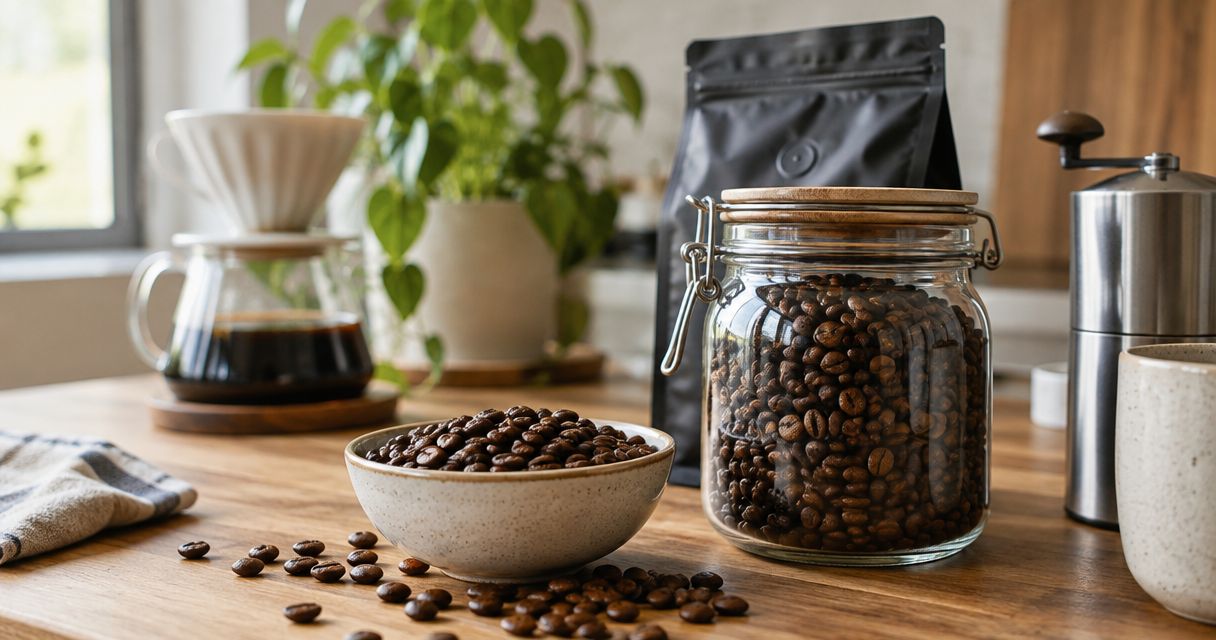
Use a cool, dark, dry location and a dependable seal. A clean cupboard away from the cooking area is usually a more suitable everyday location than an exposed countertop beside the stove. Keep the coffee in protective packaging that closes securely, or use a clean, dry, airtight container.
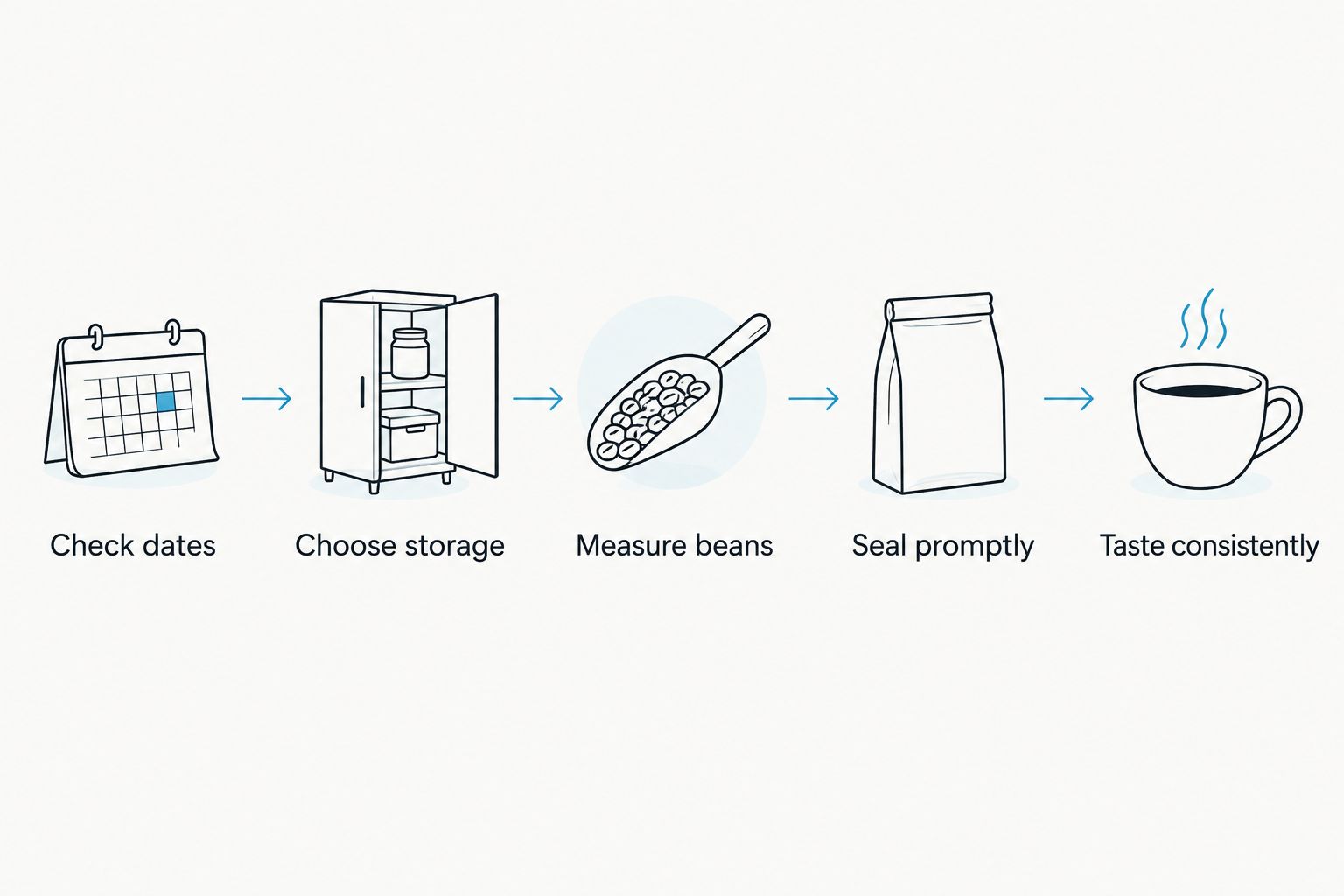
Follow this sequence each time you open a new bag:
- Check dates. Record the roast date when provided and the date you opened the package. These are 2 dates with different meanings: one tracks roasting, the other tracks your handling.
- Choose storage. Select a cupboard protected from light, steam, and appliance heat. Keep the package upright and easy to close.
- Measure beans. Remove only what you need for 1 brew. Use a clean, dry scoop or pour directly into your measuring vessel.
- Seal promptly. Close the bag or container before preparing the rest of your coffee equipment.
- Taste consistently. Compare cups using the same recipe before changing your storage or brewing approach.
For your 2026 routine, start with 1 open bag rather than several partly used bags. This is a household organization rule, not a shelf-life guarantee. It helps you finish one coffee before dividing your attention among others.
Should you freeze fresh roasted coffee?
Freezing is useful for coffee you will not use soon, provided you protect it from moisture and unnecessary air exposure. The National Coffee Association's storage guidance also stresses airtight protection when freezing coffee. Packaging matters as much as the decision to use the freezer.
Divide the coffee into portions you can remove without repeatedly warming the entire supply. Let a sealed portion reach room temperature before opening it, which helps keep condensation away from the beans. Once opened for everyday use, keep that portion in your normal dry storage location.
The drawback is extra handling. Freezing a loosely closed bag, opening cold coffee in humid air, or cycling the same package between warm and cold conditions works against the purpose. Freeze a reserve thoughtfully; do not make your everyday bag a repeated thawing experiment.
The refrigerator is not a better version of a cool cupboard. Coffee needs protection from moisture and surrounding odors, and frequent refrigerator access complicates that protection. A stable, dry cupboard is the simpler everyday choice.
How can you tell whether coffee has gone stale?
Stale coffee commonly loses aromatic definition and tastes flatter than it did earlier in the bag. You might notice less fragrance when grinding, a duller cup, or papery and cardboard-like notes. Compare against your own earlier brews rather than expecting every coffee to show the same signal.
Before blaming age, rule out a brewing change. A different grind, an inconsistent dose, dirty equipment, or changed water can alter flavor too. Keep those variables steady and brew another cup if the coffee is dry, uncontaminated, and otherwise normal.
For a useful 2026 tasting record, write a short note when you first open a bag and compare it with a later brew. Descriptions such as clear aroma, muted aroma, or dry finish are enough. You do not need a formal scoring system.
Never use brewing adjustments to justify keeping visibly moldy or damp coffee. Flavor troubleshooting applies to sound, dry coffee—not coffee with signs of contamination.
Is coffee freshest immediately after roasting?
Not necessarily. Freshly roasted coffee releases carbon dioxide, and that gas release affects brewing. Coffee straight from roasting is therefore not automatically at its most balanced or easiest to prepare.
The appropriate resting period depends on the coffee and brewing method. Follow any guidance supplied with the bag rather than applying one fixed waiting period to every roast. Espresso can be particularly sensitive to gas release because it affects extraction under pressure.
A bloom during brewing is not a complete freshness test, either. Gas release, roast characteristics, and preparation all influence what you see. Evaluate aroma and taste alongside the roast date instead of treating foam or bubbles as proof.
What should you look for when buying your next bag?
Choose coffee in a format and quantity that fit how you actually brew. Whole beans suit a grinder-based routine; ground coffee suits convenience. Neither choice helps if you open more coffee than you can use regularly.
Brew4ufresh is best for home coffee drinkers seeking freshly roasted coffee delivered to their door. The store sells roasted blends, flavored coffee, and single-origin coffee. Those choices address taste preferences, but they do not remove the need for careful storage after opening.
For your 2026 purchases, make freshness practical: check the available roast information, consider your brewing pace, and decide where the bag will live before opening it. A larger selection at home is not automatically a better drinking experience.
FAQ
How long does fresh roasted coffee stay fresh after opening?
Fresh roasted coffee loses aroma gradually after opening, and its useful flavor window depends on grinding, packaging, storage, and handling. Keep it sealed in a cool, dark, dry place and judge changes with a consistent brewing recipe.
Do whole coffee beans stay fresh longer than ground coffee?
Whole coffee beans retain aroma longer than ground coffee under comparable storage conditions. Grinding exposes more surface area, so grind only what you need when your routine allows it.
Can I keep fresh roasted coffee in its original bag?
You can keep coffee in its original bag when the packaging protects it and closes securely. If the closure is unreliable, use a clean, dry, airtight container stored away from light and heat.
Should I put my everyday coffee in the refrigerator?
A cool, dark, dry cupboard is the simpler choice for everyday coffee. Refrigerated coffee needs protection from moisture and odors, and repeated opening complicates that protection.
Does stale coffee mean the coffee is unsafe?
Stale flavor alone does not establish that dry coffee is unsafe. Discard coffee with visible mold, dampness, contamination, or an unusual odor instead of tasting it to investigate.
Does Brew4ufresh coffee still need airtight storage?
Brew4ufresh freshly roasted coffee still needs protection from air, heat, light, and moisture after opening. Buying freshly roasted beans and storing them carefully serve different parts of the same freshness goal.
One last thing
Your grinder can hold yesterday's coffee even when today's beans are fresh. Retained grounds and old coffee residue can affect the next cup, so follow the equipment manufacturer's cleaning instructions before deciding that a bag has lost its character.
Protect the beans, but check the brewing path too. A clean grinder, a sealed package, and a repeatable recipe make freshness easier to taste.