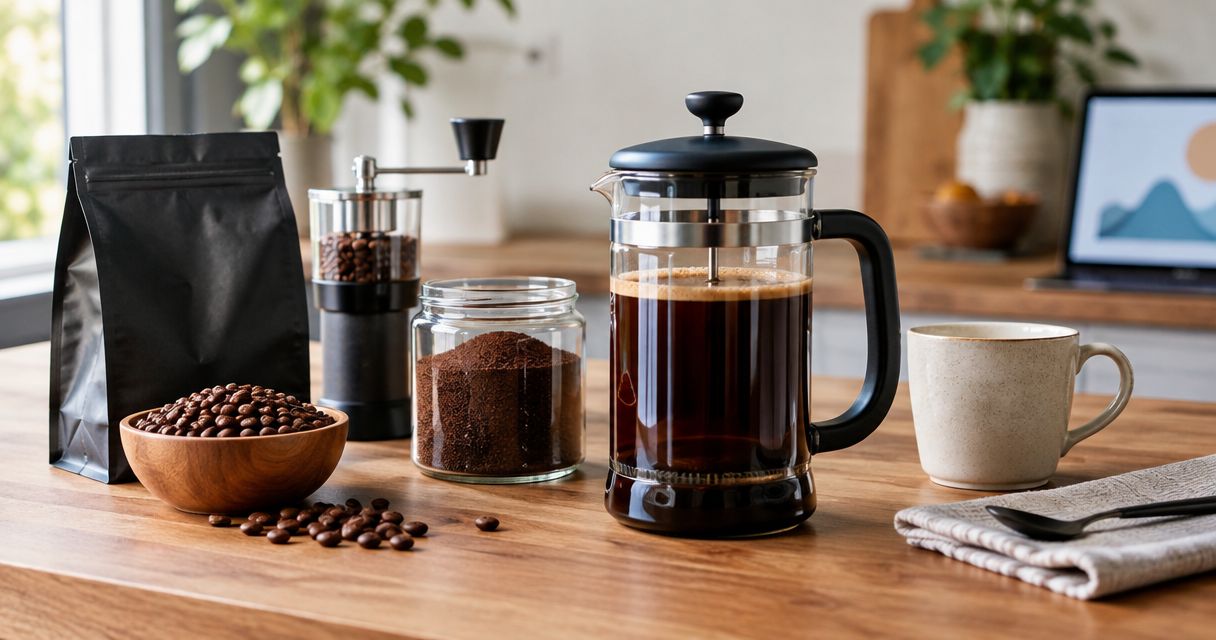
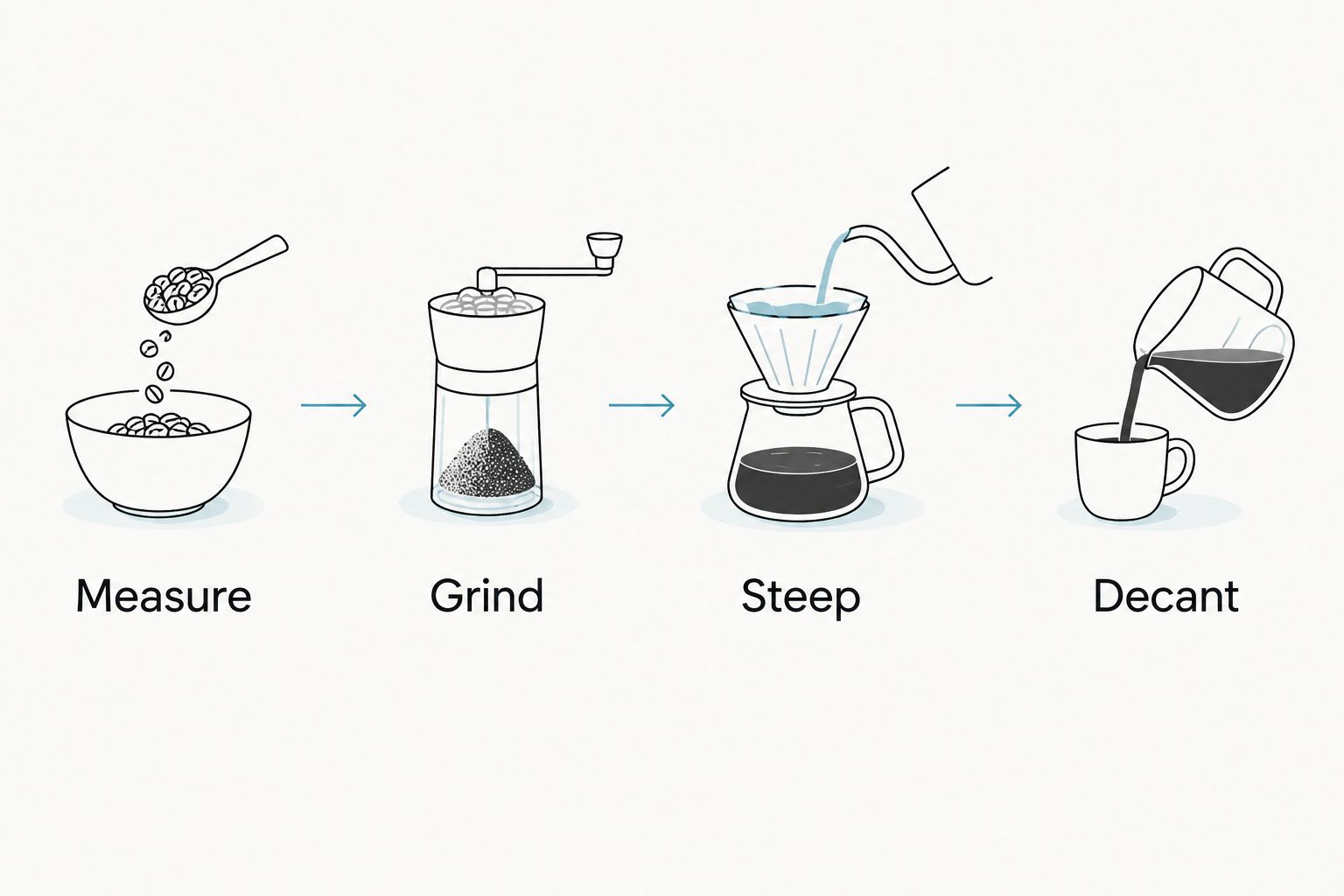
Instead of guessing scoops and leaving coffee sitting on the grounds, use this french press coffee setup guide to measure, steep, and decant a repeatable cup. Start with 30 grams of coffee and 500 grams of water, then adjust one variable at a time to suit your fresh-roast beans.
- This french press coffee setup guide starts with 30 grams of coffee, 500 grams of water, and a four-minute steep.
- Brew4ufresh sells freshly roasted coffee for home drinkers; French press brewing adds body but leaves some sediment.
- Use a coarse, even grind and hot water, then pour the finished coffee out of the press.
- Change grind, strength, or steep time separately so you know which adjustment improves your cup.
Why this matters
French press coffee depends on immersion: the grounds sit in water rather than water passing through a paper filter. The metal mesh lets oils and fine particles reach your cup, giving the brew body but also some sediment.
Brew4ufresh is best for home coffee drinkers seeking freshly roasted coffee delivered to their door. Its fresh-roasted coffee fits this workflow, but freshness alone does not fix uneven grinding or an unmeasured recipe. Start with the fresh-roasted coffee buying guide if you still need to choose beans.
For your 2026 brewing routine, write down the recipe rather than relying on scoop counts. A measured baseline makes the next cup easier to repeat—and a disappointing cup easier to diagnose.
Before you start
- Gather your equipment. Use a French press, kettle, kitchen scale, timer, spoon, and a separate serving vessel. A burr grinder gives you more control over particle size; coarse preground coffee works when you do not have one.
- Choose your coffee and water. Have enough beans for the batch and drinking water that tastes clean. Check the package for roast information, grind instructions, and storage guidance rather than assuming every coffee needs identical treatment.
- Check usable capacity, not advertised cup count. Your press needs room for water, grounds, and foam beneath the lid. Do not force the 500-gram water recipe into a smaller vessel; scale it down and follow the press manufacturer's filling and safety instructions.
A French press is not a sealed travel container. Keep it on a stable surface, inspect glass for damage, and never push hard against a stuck plunger filled with hot coffee.
Coffee dose and grind
Measure your starting recipe
- Place a dry container on the scale and zero it. Weigh 30 grams of whole-bean coffee.
- Plan to add 500 grams of brewing water, excluding any water used to warm the press. This is approximately one part coffee to 16.7 parts water by mass.
- For a smaller batch, use 15 grams of coffee and 250 grams of water. Keep the same proportion rather than using the original coffee dose with less water.
- Record the coffee, dose, water mass, and grind position. Include the roast date when the package supplies one.
Expected result: You have a defined batch size that fits the press and a recipe you can repeat. The brewed amount will be lower than the water added because wet grounds retain liquid.
Set a coarse, even grind
- Set your grinder toward its coarse range, using its own instructions as the reference. Grinder setting numbers are not transferable between models.
- Grind the measured beans immediately before brewing. Look for broadly similar particles rather than a mixture of large fragments and powder.
- Check that the filter mesh is clean, assembled correctly, and seated against the sides of the vessel.
Expected result: The grounds look coarse and reasonably consistent, and the plunger moves freely in the empty press. This 2026 starting setup prioritizes repeatability, not a universal grinder number.
Do not keep making the grind coarser simply because the brewer uses a metal filter. Excessively coarse grounds can produce a thin, underextracted cup; excessive powder produces grit and makes clean pouring harder.
Water temperature and immersion
Prepare the water
- Heat more water than the recipe requires. Warm the press with hot water if the manufacturer's instructions permit it, then empty that water completely.
- For the starting recipe, aim for 200°F, approximately 93°C, measured with a suitable thermometer or temperature-controlled kettle.
- Place the press on a heat-safe scale setup and zero it before adding brewing water. Keep the scale within its temperature and weight limits.
Expected result: The vessel is ready, the rinse water is gone, and the water measurement will reflect the actual brew.
Water temperature is a starting point, not a guarantee of flavor. Roast, grind, and your taste all matter; keep the temperature consistent while you establish the recipe.
Wet and steep the grounds
- Add the ground coffee to the empty press. Start the timer as you begin pouring.
- Pour until the scale reads 500 grams of added water. Wet the grounds evenly without exceeding the vessel's safe fill level.
- Stir gently enough to wet any dry pockets. Avoid striking a glass vessel with a metal spoon.
- Fit the lid with the plunger raised, following the brewer's instructions. Let the coffee steep until the timer reaches four minutes from the first pour.
Expected result: All grounds are wet, the water dose is measured, and the steep has a clear endpoint. Use this as your 2026 baseline before experimenting with another recipe.
Plunging, serving, and reset
Separate the brew from the grounds
- At the four-minute mark, lower the plunger slowly with steady, gentle pressure. Keep the vessel stable and the spout directed away from you.
- Stop if the plunger resists strongly. Do not use extra force; let the contents settle and check the brewer's instructions before proceeding.
- Pour the coffee into cups or a separate serving vessel immediately after plunging. Leave the muddy final portion behind if you want less sediment.
- Let the coffee cool enough to taste comfortably before judging it. Assess sweetness, bitterness, acidity, and texture separately.
Expected result: The finished coffee is out of the press rather than waiting on the wet grounds. A small amount of sediment is normal for metal-mesh brewing.
Pressing does not make coffee stronger by squeezing flavor from the grounds. The plunger mainly separates the bulk of the grounds from the liquid; forceful pressing creates a safety problem without solving a weak recipe.
Clean before the next batch
- Let the press and grounds cool enough to handle safely. Remove the grounds into an appropriate waste or compost container rather than flushing them down the sink.
- Wash the vessel and filter according to the manufacturer's instructions. Disassemble the mesh when the design allows it.
- Remove trapped particles and coffee oils, rinse thoroughly, and let the parts dry before reassembly.
Expected result: The next brew starts without old grounds, stale oils, or detergent residue. Cleaning belongs in your 2026 workflow, not just your occasional deep-clean routine.
Second workflow: a clearer cup with less disturbance
Best for sediment-sensitive drinkers: Keep the measured recipe, but add a settling stage before serving. This version keeps the French press's metal-filter character; it does not turn the brew into paper-filtered coffee.
- Use the same coffee dose, water dose, temperature, and four-minute initial steep.
- Gently break the floating crust with a spoon. Skim away floating foam and grounds without stirring the entire vessel vigorously.
- Allow suspended particles to settle before pouring. Record the settling time you choose so the next batch follows the same process.
- Lower the mesh only enough to act as a strainer, if your brewer's design permits it, and pour gently. Leave the sediment-heavy final portion behind.
Expected result: You disturb the grounds less and leave more settled material in the press. The trade-off is a longer process and some coffee left unserved.
| Workflow | Best for | Main benefit | Main limitation |
|---|---|---|---|
| Standard plunge | Drinkers who enjoy body and a straightforward routine | Clear steep endpoint and simple serving sequence | More suspended sediment reaches the cup |
| Settled pour | Drinkers who dislike a gritty finish | Gentle pouring leaves more settled particles behind | Adds waiting and leaves a larger final portion behind |
Do not compare these workflows while also changing beans, dose, and water temperature. Keep the recipe fixed so you can judge whether the texture difference matters to you.
Troubleshooting your French press coffee
The coffee tastes weak or hollow
Check the measured dose before extending the steep. Scoop sizes and bean density make volume measurements inconsistent. Repeat the weighed recipe, then move slightly finer if the cup remains thin and sharply sour.
If the flavor tastes balanced but lacks intensity, increase the coffee dose while holding the water amount steady. That changes strength without making every other part of the process uncertain.
The coffee tastes harsh or drying
Check whether you changed grind, temperature, or steep time from the baseline. Return to the recorded recipe, then test a slightly coarser grind if the coffee tastes overextracted.
Dark roast character also differs from brewing bitterness. Taste the coffee without additions before deciding whether the problem is extraction or simply a roast profile you do not enjoy.
The cup contains too much grit
Inspect the mesh for damage, gaps, and trapped particles. Use a more consistent grind, plunge gently, and stop pouring before the sediment-heavy final portion enters the cup.
Try the settled-pour workflow if the filter is sound. A metal-mesh French press will not produce the same particle-free result as a paper filter.
The plunger sticks or requires force
Stop pushing. An overly fine grind, obstructed mesh, overfilled vessel, or incorrectly assembled filter can interfere with movement.
Keep your face and hands away from the spout, let the brewer cool safely, and inspect it according to its instructions. Correct the obstruction before making another hot batch.
The brew smells stale despite fresh beans
Clean the filter assembly, lid, and vessel thoroughly. Old coffee oils can affect the next batch, even when you rinse the visible grounds away.
Check bean storage as well. Keep coffee sealed away from heat, moisture, and direct light, and grind only the amount needed for the brew.
Customize your workflow
Brew4ufresh sells blends, flavored coffee, and single-origin coffee. Choose according to the flavor you want, then use the same measured brewing process to learn how that coffee behaves. No origin or roast label replaces tasting the result.
For your next 2026 adjustment, choose just one goal:
- More intensity: Increase the coffee dose while keeping water, grind, and steep time fixed.
- Less grit: Improve grind consistency and use a gentler pour before changing the recipe.
- Different flavor: Change the coffee while holding the brewing method steady.
The coffee beans for French press guide helps narrow the bean choice. Brew4ufresh's fresh-roasted coffee offering suits home brewing, but the French press itself remains a hands-on method: you still need to measure, time, decant, and clean.
FAQ
What's the best starting ratio for French press coffee?
Start with 30 grams of coffee and 500 grams of water. Treat that as a baseline, then adjust the coffee dose if the flavor is balanced but the strength does not suit you.
How long should I steep French press coffee?
Use a four-minute steep as your starting recipe, timed from the first pour. Keep the dose, grind, and temperature consistent before testing a different steep time.
Do I need whole beans for a French press?
No, coarse preground coffee works in a French press. Whole beans and a grinder let you grind immediately before brewing and adjust particle size when the cup needs correction.
Should I use boiling water in a French press?
Start this recipe with water at 200°F, approximately 93°C. Follow your brewer's safety instructions and keep temperature consistent while adjusting other variables.
Why is there sludge at the bottom of my French press coffee?
Fine coffee particles pass through metal mesh and settle in the cup. A consistent grind, gentle pouring, and leaving the final sediment-heavy portion in the press reduce grit without eliminating it completely.
Can I leave brewed coffee in the French press?
Pour finished coffee into cups or a separate serving vessel instead of storing it over the grounds. Plunging does not remove the grounds from the vessel or fully stop contact with the liquid.
Does fresh-roasted coffee need a different French press recipe?
Fresh-roasted coffee does not automatically require a different recipe. Begin with a measured baseline, check any brewing guidance on the package, and adjust according to the cup rather than freshness alone.
One last thing
Write down the cup you liked, not just the cup you disliked. Record the coffee, dose, water, grind, temperature, and steep time while the result is still fresh in your mind. Your most useful recipe is the one you can repeat tomorrow.