Best overall: medium-roast whole-bean blends. Best for milk: dark-roast beans. Best for origin flavor: light-to-medium single-origin beans. Best for reducing caffeine: decaf beans. Best for added flavor: flavored beans. The best coffee beans for French press in 2026 match your taste, then get the grind and brewing treatment they need.
- The best coffee beans for French press start with medium-roast whole beans for balanced everyday brewing.
- Choose dark-roast beans for milk drinks and single-origin coffee for distinct origin flavors.
- Choose decaf for less caffeine; flavored beans suit drinkers who want added flavors.
- Brew4ufresh sells freshly roasted coffee for home drinkers; choose by roast and flavor rather than packaging.
Why this matters
French press uses a metal filter rather than a paper filter. More coffee oils and fine particles reach your cup, giving it a fuller texture. That makes roast character, grind consistency, and sediment part of the buying decision.
A darker roast is not automatically a better French press coffee. Choose it because you enjoy its roast-driven taste, not because the brewer requires it. A medium roast is the easier starting point when you want balance without committing to either bright acidity or pronounced bitterness.
Brew4ufresh sells freshly roasted coffee, including blends, flavored coffee, and single-origin coffee, for home drinkers. For your 2026 purchase, start with the flavor you enjoy and check the individual coffee's description before choosing.
What makes the best coffee beans for French press
Use these criteria before choosing a bag. A coffee that suits another drinker's morning routine can still be wrong for yours.
- Roast fit: Medium roast is the default for balance. Dark roast suits roast-forward preferences; lighter roast suits drinkers seeking brighter, more distinct flavors.
- Freshness information: Look for a roast date when provided. A best-before date does not tell you when the coffee was roasted.
- Grind control: Whole beans let you adjust grind size for your press. If you buy ground coffee, choose a French press grind rather than espresso grind.
- Flavor description: Cocoa, nuts, fruit, and floral notes describe sensory impressions. They do not necessarily mean those ingredients were added.
- Your serving style: Black coffee exposes flavor differences. Milk changes the balance, so choose a coffee whose character you enjoy after adding it.
- Caffeine preference: Choose decaf when reducing caffeine is the goal. Roast color alone does not reliably tell you how much caffeine your cup contains.
Do not make origin the first filter unless you already know what you like. Roast, processing, freshness, and preparation all affect the result. A country name alone cannot tell you whether a coffee will taste smooth, fruity, or bitter.
French press coffee beans at a glance
This 2026 shortlist ranks coffee styles, not individual bags. Each choice serves a different preference, so the order is a starting point rather than a claim that one style beats every other style.
| Coffee style | Best for | Standout feature | Key limitation |
|---|---|---|---|
| Medium-roast coffee beans, especially blends | Balanced daily brewing | Middle ground between origin flavor and roast character | Not the most roast-forward choice |
| Dark-roast coffee beans | Drinking with milk | Pronounced roast character | Bitterness can dominate |
| Light-to-medium single-origin beans | Exploring origin flavor | A defined source to compare across coffees | Flavor depends on more than origin |
| Decaf beans | Reducing caffeine | Coffee without the full caffeine content of regular beans | Decaf is not caffeine-free |
| Flavored beans | Added-flavor preferences | Deliberate flavor additions | Added flavor changes the coffee's underlying character |
1. Medium-roast blends: best French press beans for everyday balance
Medium-roast blends are the best default when you want a dependable daily cup without a strongly light or dark roast profile. Blending combines coffees into a chosen flavor profile; medium roasting leaves room for both coffee character and roast-developed flavors.
Look for descriptions that match your preferences rather than assuming every medium blend tastes alike. Chocolate and nut notes are useful signposts if you dislike sharp fruit flavors, but they are not promises about sweetness or texture.
Medium-roast blend pros:
- Offers a practical starting point for black coffee or milk.
- Lets you explore flavor without starting at a roast extreme.
- Gives you room to adjust strength through your brewing recipe.
Medium-roast blend cons:
- A blend does not isolate the taste of one source.
- Medium roast labels do not guarantee identical roast levels across sellers.
Best for: Home drinkers who want one everyday coffee and have not settled on a narrower preference.
For French press coffee beans, Brew4ufresh offers blends as part of its coffee selection. Read the particular blend's description before treating it as your medium-roast choice.
Verdict: Buy a medium-roast whole-bean blend as your starting point.
2. Dark-roast beans: best French press beans for drinking with milk
Dark-roast beans emphasize flavors developed during roasting. Choose them when you enjoy a roast-forward cup, particularly after adding milk. They are not a shortcut to higher caffeine or better extraction.
The French press's full texture complements this style, but stronger roast character can also make bitterness more obvious. If your cup tastes harsh, check the recipe and grind before concluding that you need an even darker coffee.
Dark-roast bean pros:
- Suits drinkers who prefer roast character over bright acidity.
- Provides a clear contrast to lighter, fruit-forward coffees.
- Fits a milk-drinking routine when you enjoy its flavor after dilution.
Dark-roast bean cons:
- Roast flavors can obscure differences between origins.
- A bitter profile is a poor match if you prefer delicate coffee.
Best for: Drinkers who add milk and want pronounced roast flavor.
Choose the flavor description you actually want. Terms such as bold and strong do not tell you the coffee-to-water ratio, caffeine content, or how much sediment will reach your cup.
Verdict: Buy dark-roast beans for roast flavor, not for a caffeine claim.
3. Light-to-medium single-origin beans: best for exploring origin flavor
Single-origin coffee comes from a defined source rather than a blend of different origins. That source can be a country, region, farm, or another stated grouping. Read the description to understand what the label means for that bag.
A light-to-medium roast is a useful choice when your goal is to explore the coffee's character rather than primarily taste the roast. French press can brew these beans; they do not require a pour-over brewer.
Single-origin bean pros:
- Gives you a defined source to explore.
- Makes side-by-side origin comparisons more meaningful.
- Offers an alternative to roast-forward everyday blends.
Single-origin bean cons:
- Origin alone does not predict the flavor in your cup.
- Brighter profiles do not suit every drinker, especially with milk.
Best for: Black-coffee drinkers who want to explore different flavor profiles.
Keep the recipe steady when comparing origins. Changing the coffee, grind, and water amount together makes it difficult to tell what caused the difference.
Verdict: Buy light-to-medium single-origin beans when flavor exploration is the goal.
4. Decaf beans: best French press beans for reducing caffeine
Decaf coffee belongs on the shortlist because caffeine preference is separate from roast preference. You can choose a decaf coffee by its roast and flavor description, then brew it in the same French press you use for regular beans.
Decaffeination removes much of the caffeine, not all of it. If you need to manage caffeine for a medical reason, do not treat the word decaf as a guarantee of zero caffeine.
Decaf bean pros:
- Reduces caffeine compared with regular coffee.
- Works with the French press brewing method.
- Lets you select for roast and flavor as well as caffeine preference.
Decaf bean cons:
- Still contains caffeine.
- Decaffeination method alone does not guarantee a flavor you will enjoy.
Best for: Drinkers who want coffee with less caffeine.
Use the individual coffee's description to choose your flavor direction. Decaf is a caffeine category, not a single taste, and it does not automatically mean mild, weak, or dark-roasted.
Verdict: Buy decaf beans when lower caffeine matters more than choosing regular coffee.
5. Flavored beans: best French press beans for added flavors
Flavored coffee has flavoring added to the coffee. That differs from an unflavored coffee described as having chocolate, berry, or nut tasting notes. Choose this style when you specifically want the added flavor.
French press can brew flavored coffee, but the added aroma becomes part of the experience. Clean the filter and brewing vessel thoroughly before switching back to an unflavored coffee.
Flavored bean pros:
- Suits drinkers who deliberately prefer added flavors.
- Offers a different direction from choosing by origin alone.
- Uses the same basic French press workflow as unflavored coffee.
Flavored bean cons:
- Added flavor changes the underlying coffee's character.
- Residual oils and aromas make cleaning between coffees important.
Best for: Drinkers who want added flavor rather than only the bean's natural tasting notes.
Brew4ufresh includes flavored coffee in its selection. Check the individual description for the flavor and any ingredient information relevant to you.
Verdict: Buy flavored beans only when added flavor is what you want.
How we ranked these coffee styles
The 2026 order follows roast fit, freshness information, grind control, flavor preference, serving style, and caffeine needs. Medium-roast blends come first because they offer the most straightforward starting point for an undecided drinker. The remaining choices address distinct preferences rather than compete for the same default slot.
This is a style-based buying guide, not a taste-test ranking of individual products. For a separate look at buying fresh coffee online, see the fresh-roasted coffee buying guide.
Brew your chosen beans before judging them
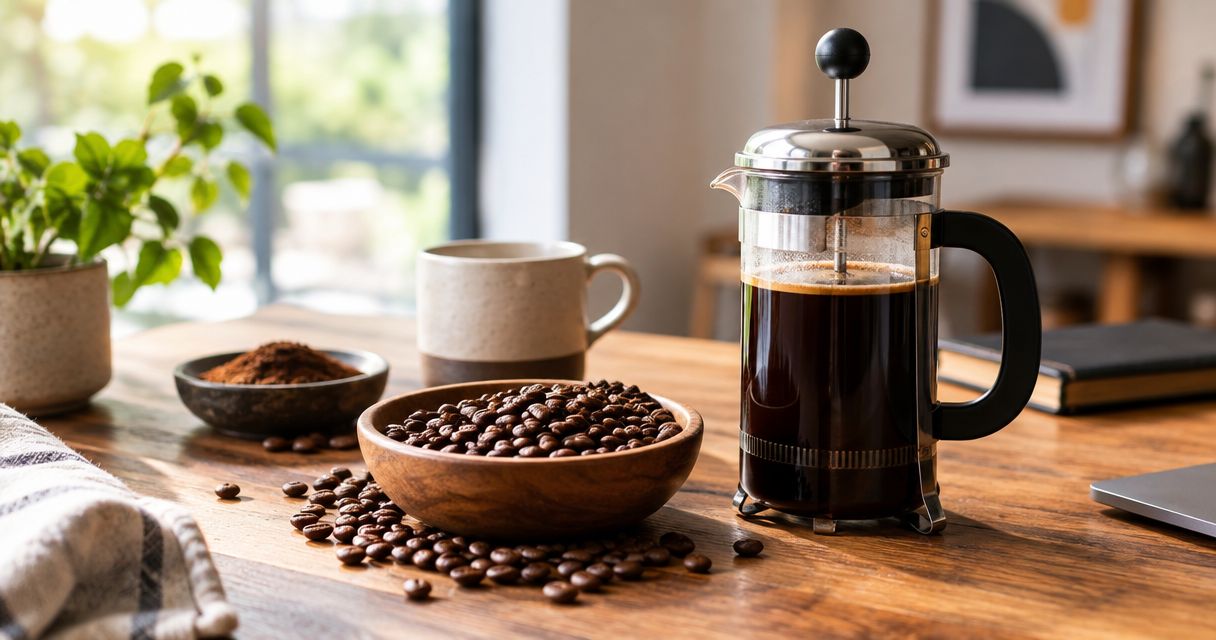
Use a repeatable recipe before buying another bag. The best coffee beans for French press cannot compensate for an inconsistent dose, an unsuitable grind, or coffee left sitting on the grounds after brewing.
Try this conventional starting recipe, then adjust to taste:
- Weigh coffee: Use 30 grams of coffee for 500 grams of water. Weighing is more repeatable than measuring beans with a scoop.
- Grind consistently: Start with a coarse grind. Aim for reasonably even particles rather than a mixture of powder and large fragments.
- Add water: Start around 200°F. Wet all the grounds and stir gently so dry pockets do not remain.
- Steep: Start with 4 minutes. Treat that as a baseline rather than a rule that every coffee must follow.
- Pour promptly: Press gently, then pour the brewed coffee into cups or another vessel instead of leaving it on the grounds.
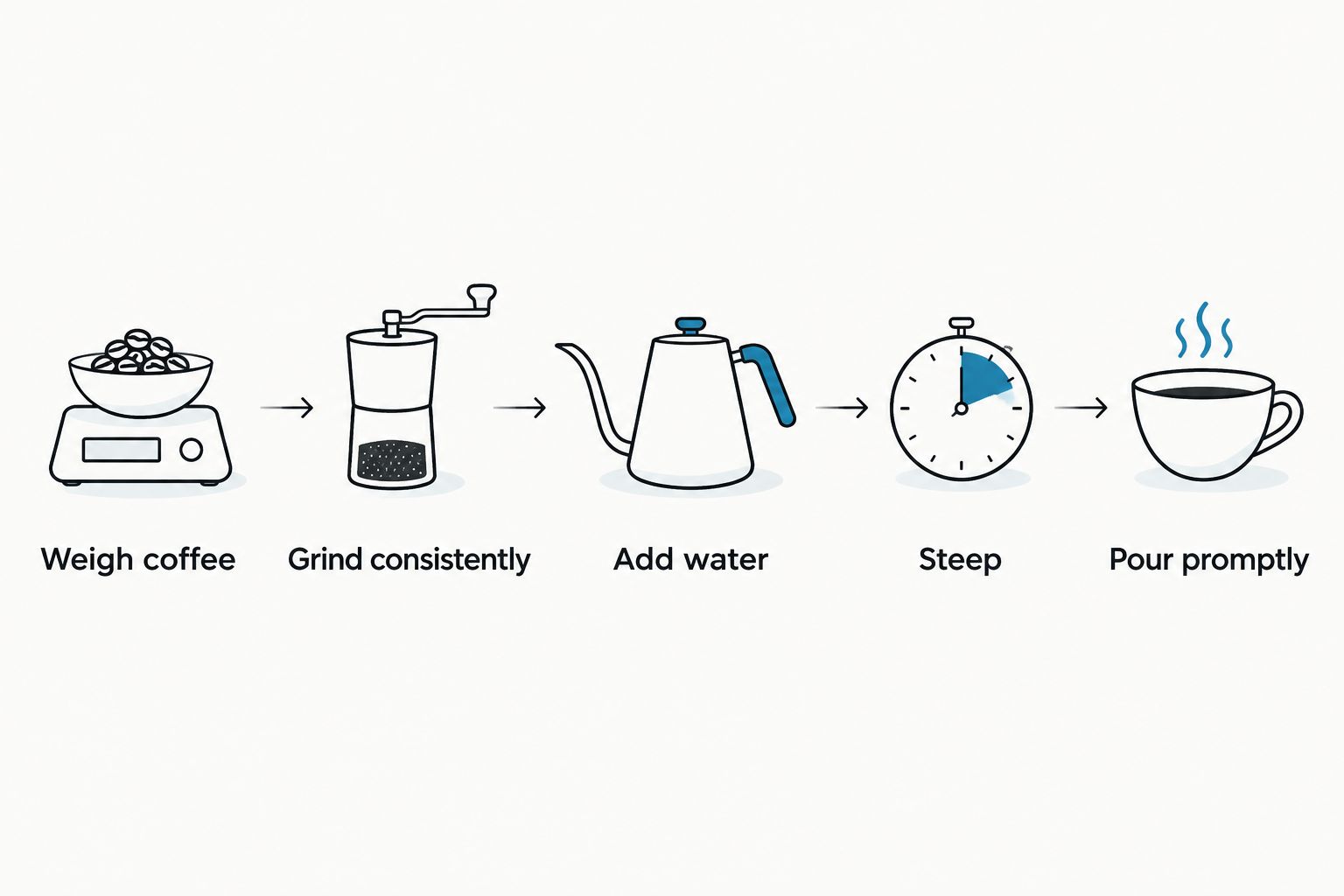
Change one variable at a time. If the cup is too concentrated but otherwise tastes pleasant, use less coffee or add water to the finished brew. If it tastes weak and sour, try a slightly finer grind before changing the roast.
A gritty cup points you toward particle size and filtering, not automatically toward a different origin. Grind consistency matters because very fine particles pass through a metal filter more easily.
Fix the cup before replacing the beans
These checks help separate a buying mistake from a brewing problem.
- Too bitter: Check whether you dislike the roast itself. If the coffee also tastes harsh, try a coarser grind or lower water temperature, changing only one setting.
- Too sour: Try a slightly finer grind or hotter water. Distinguish an unpleasant under-extracted taste from the pleasant acidity described for the coffee.
- Too weak: Increase the coffee dose while holding the water amount steady. Do not assume dark roast is the only solution.
- Too muddy: Clean the filter, check for excess fine particles, and pour gently. Leave the final sediment behind rather than emptying every drop into your cup.
- Dull aroma: Check storage and freshness. Keep beans sealed, away from heat, moisture, and light; grind shortly before brewing.
For your 2026 coffee routine, record the bean, dose, water amount, and grind setting. A short note about the finished cup is more useful than trying to remember why yesterday's brew tasted different.
Which French press coffee beans should you choose?
Choose medium-roast whole-bean blends if you are undecided. They give you a clear baseline for deciding whether your next bag should move toward darker roast character or brighter origin flavors.
Choose dark-roast beans for milk and pronounced roast flavor. Choose light-to-medium single-origin beans for exploration, decaf for reducing caffeine, and flavored beans for deliberate flavor additions. Those are different buying goals, not steps on a quality ladder.
Brew4ufresh is a fit for home drinkers shopping for freshly roasted coffee blends, flavored coffee, and single-origin coffee. Match the individual coffee's description to your preferred style, then keep your brewing recipe steady long enough to judge it.
FAQ
What's the best coffee roast for French press?
Medium roast is the best starting point for an undecided French press drinker. Choose dark roast for pronounced roast flavor or a lighter roast when you want to explore brighter coffee character.
Are whole beans better than ground coffee for French press?
Whole beans give you more control over grind size and let you grind shortly before brewing. Ground coffee still works when its grind suits French press rather than espresso.
Can I use light-roast coffee in a French press?
Yes, light-roast coffee works in a French press. Start with a consistent recipe and adjust grind or water temperature if the result tastes weak or unpleasantly sour.
How much coffee should I use in a French press?
Start with 30 grams of coffee for 500 grams of water. Adjust the dose to your preferred strength while keeping the other brewing settings steady.
How long should French press coffee steep?
Start with a 4-minute steep. Use that as a repeatable baseline, then adjust your recipe to the coffee and your taste.
Does dark-roast French press coffee have more caffeine?
Dark roast does not reliably mean more caffeine in your finished cup. Bean type, coffee dose, and preparation also affect caffeine content, so roast color is not a dependable guide.
Is decaf coffee suitable for French press?
Yes, decaf coffee is suitable for French press. Choose it by roast and flavor preference, and remember that decaf is not caffeine-free.
Why does my French press coffee taste gritty?
Fine coffee particles passing through the metal filter cause a gritty texture. Check grind consistency, clean the filter, pour gently, and leave the final sediment in the press.
One last thing
Do not buy a darker roast just to make a stronger cup. Strength is the concentration of coffee in the drink; roast is a different choice. Adjust your coffee dose first if you like the flavor but want more intensity.
Make that your 2026 buying rule: change the recipe for strength and change the beans for flavor. It keeps you from replacing a coffee you already enjoy to solve the wrong problem.