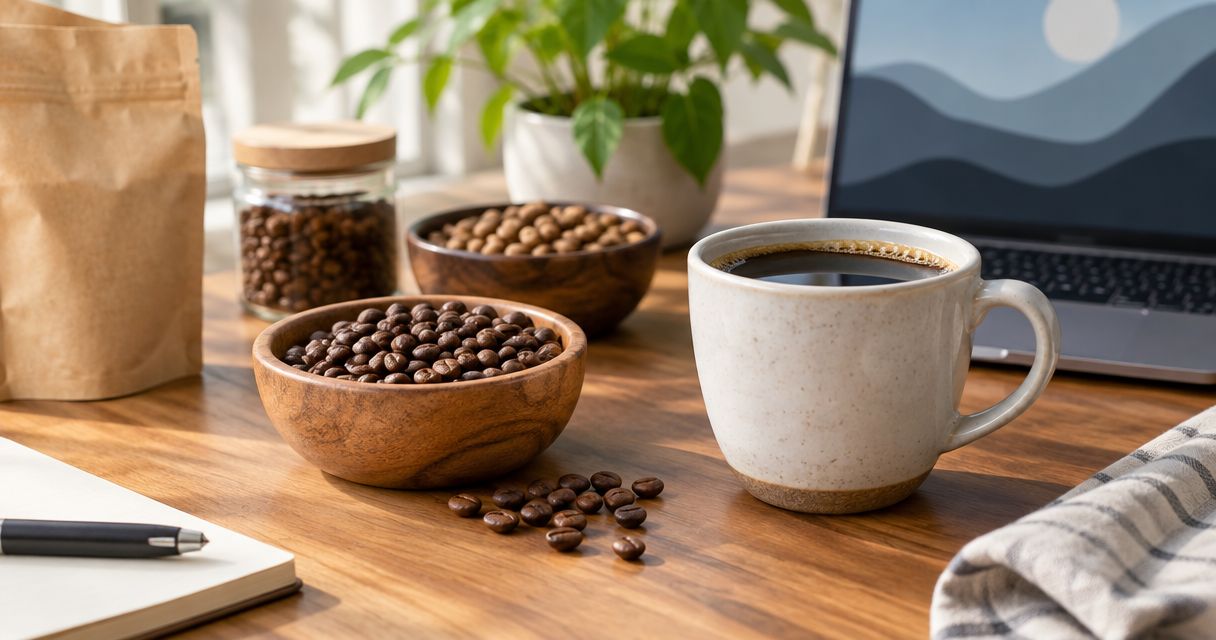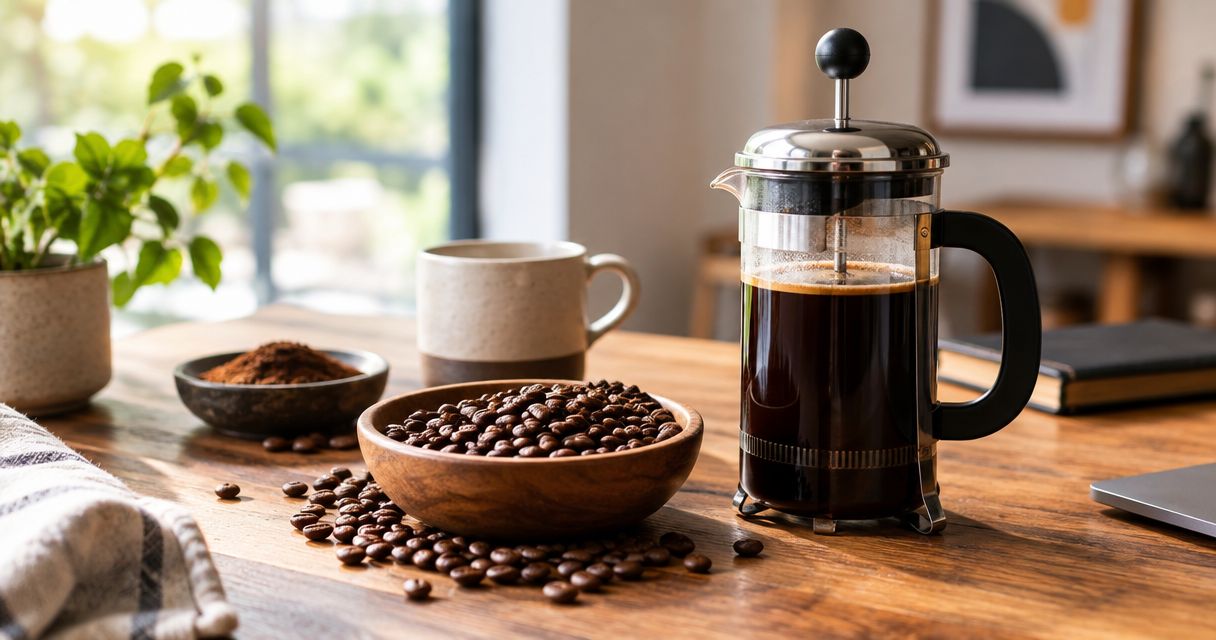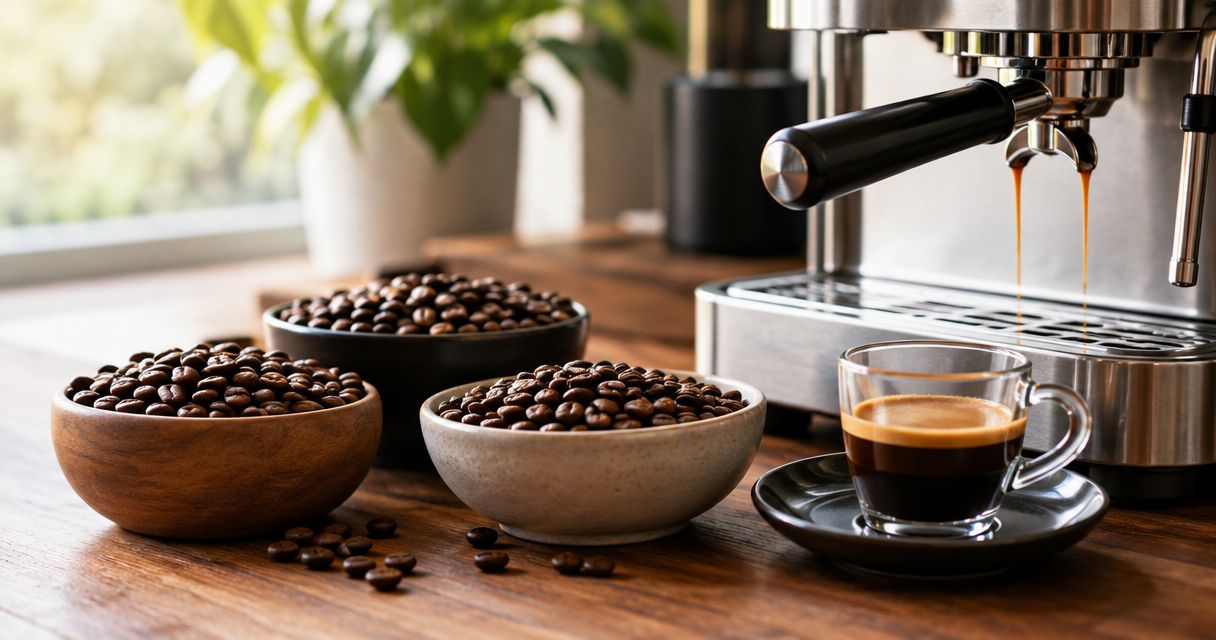
Best overall: a medium-roast blend. Best for lattes: a medium-dark blend. Best for bright straight shots: a light-roast single origin. The best coffee beans for espresso in 2026 match your drink, grinder, and machine—not just the word espresso on the bag.
- The best coffee beans for espresso start with a medium-roast blend for balanced everyday shots.
- Choose a medium-dark blend for milk drinks and a light-roast single origin for brighter straight espresso.
- For home espresso buyers browsing Brew4ufresh, a medium-roast blend is the best starting point.
- Use whole beans, check roast information, and follow your machine’s guidance on oily or flavored coffee.
Why this matters
Espresso concentrates both the flavors you enjoy and the faults you want to avoid. A coffee that tastes pleasant through a drip brewer can taste sharply sour or heavily bitter when you pull a short shot. Your brewing recipe matters as much as the beans.
Brew4ufresh sells freshly roasted coffee blends and single-origin coffee for home drinkers. When choosing coffee for espresso, separate the shopping decision into two questions: which flavor do you want, and which beans suit your equipment?
An espresso label is not a machine-compatibility certificate. Roast level, bean surface, grind adjustment, and the manufacturer’s instructions deserve more attention than the name printed on the bag. The fresh-roasted coffee buying guide covers the broader shopping decision; this guide focuses on espresso.
What makes the best coffee beans for espresso?
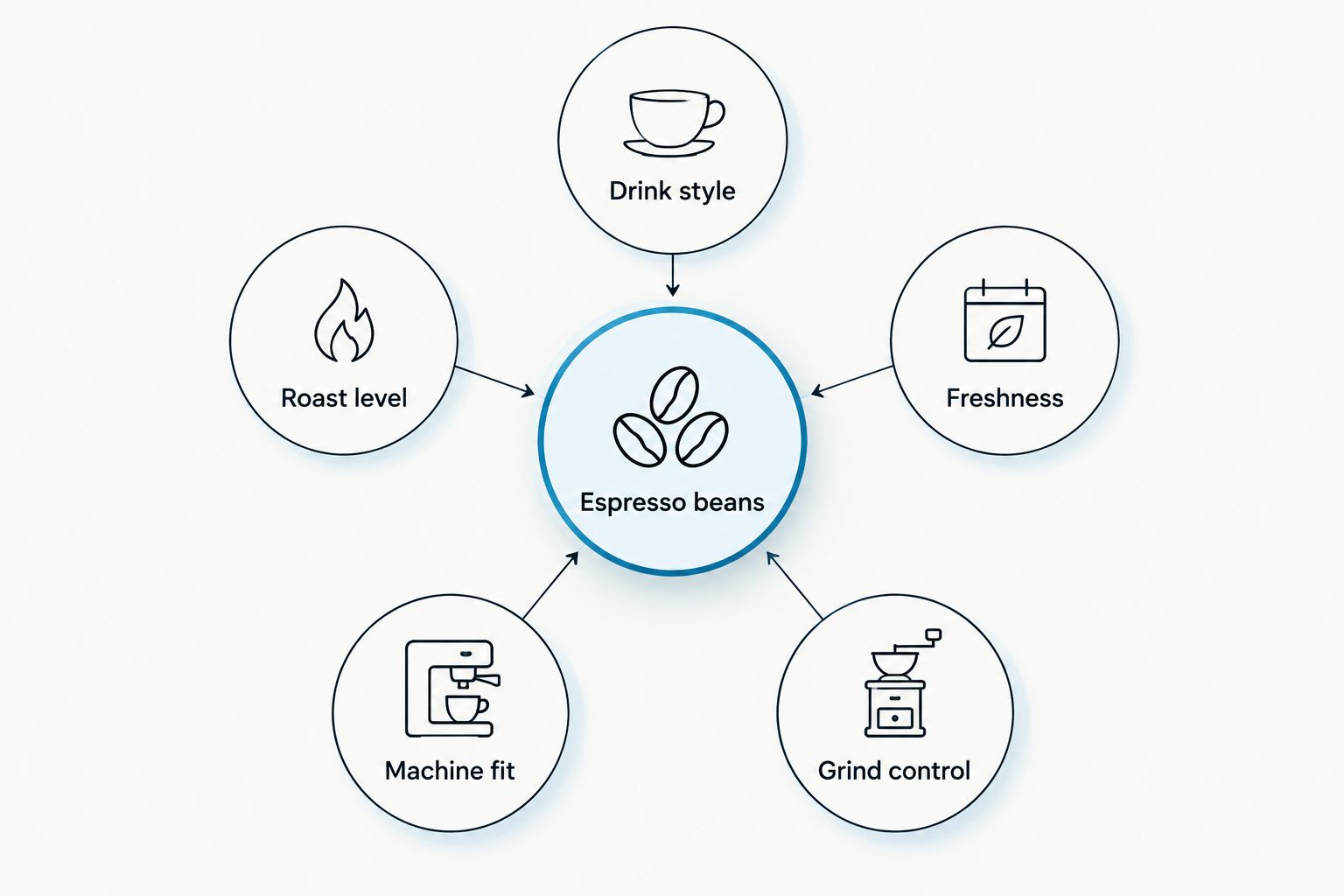
Use these criteria when choosing espresso beans in 2026. A coffee that wins on flavor but creates problems in your grinder is not the right everyday choice.
- Drink style: Decide whether you mainly make straight espresso, Americanos, or milk drinks. Milk changes how acidity, sweetness, and roast bitterness taste.
- Roast level: Medium roast is the practical default. Lighter roasts emphasize acidity and origin character; darker roasts emphasize roast-developed flavors.
- Freshness: Look for roast information rather than relying only on a best-before date. Recently roasted coffee still needs time to release gas before brewing consistently.
- Machine fit: Check instructions about oily beans and added flavorings, particularly when the machine has an integrated grinder.
- Grind control: Choose whole beans when you have a suitable grinder. Espresso needs adjustments that a fixed preground coffee cannot provide.
These criteria work together. A light roast becomes a less practical choice when your grinder cannot make fine adjustments, while a darker coffee becomes less appealing when you dislike bitterness.
Espresso beans at a glance
These are ranked coffee styles, not named products or a claim that every style appears in a particular store’s catalog. Each recommendation solves a different home-brewing need.
| Rank and coffee style | Best for | Standout feature | Key limitation |
|---|---|---|---|
| 1. Medium-roast blend | Everyday espresso beginners | Balanced starting point for dialing in | Less focused on a single origin’s character |
| 2. Medium-dark blend | Lattes and cappuccinos | Roast-developed flavors that pair with milk | Less suited to drinkers seeking bright acidity |
| 3. Light-roast single origin | Straight espresso enthusiasts | Emphasis on origin and processing character | More demanding extraction adjustments |
| 4. Medium-roast decaf | Drinkers reducing caffeine | Espresso without the usual caffeine level | Decaf is not caffeine-free |
| 5. Low-surface-oil medium roast | Superautomatic machine owners | Prioritizes integrated-grinder suitability | Appearance alone does not establish compatibility |
1. Medium-roast blend: best espresso beans for everyday beginners
A medium-roast blend is the simplest default when you want one coffee for straight shots and occasional milk drinks. Blending combines coffees into a chosen flavor profile, while a medium roast offers a middle ground between pronounced acidity and heavy roast character.
For home espresso buyers browsing Brew4ufresh, a medium-roast blend is the best starting point. That recommendation concerns the coffee style, not an unnamed product or an unverified tasting result.
Medium-roast blend pros:
- Gives you a balanced starting point for learning extraction.
- Works as a starting choice for both straight espresso and milk drinks.
- Helps you explore espresso without immediately choosing a roast extreme.
Medium-roast blend cons:
- Does not isolate one origin’s character in the way a single-origin coffee does.
- The medium-roast label alone does not guarantee sweetness or a particular flavor.
Read the tasting description before choosing. Chocolate, nut, fruit, and floral descriptors describe different goals; none guarantees that your machine will reproduce those flavors without adjustment.
Best for: Home drinkers learning to dial in espresso and choosing an everyday coffee in 2026.
Verdict: Buy a medium-roast blend first if you are undecided.
2. Medium-dark blend: best espresso beans for lattes
A medium-dark blend suits drinkers who want coffee flavor to remain noticeable after adding milk. Roasting develops flavors that often read as chocolatey, toasted, or bittersweet, although the actual profile depends on the coffee.
Milk softens the perception of acidity and bitterness. Choose the coffee for the finished latte, not only for how the undiluted shot tastes.
Medium-dark blend pros:
- Fits a preference for roast-developed flavors.
- Gives latte and cappuccino drinkers a clear alternative to bright light roasts.
- Suits a traditional, bittersweet espresso preference.
Medium-dark blend cons:
- Roast character can overshadow differences between origins.
- A poorly adjusted shot still tastes bitter; a darker roast does not fix extraction.
- Surface oil requires attention when your machine has an integrated grinder.
Do not assume the darkest coffee makes the strongest latte. The coffee dose, beverage yield, and amount of milk all affect the finished drink. Start with a medium-dark profile before choosing a very dark roast purely for intensity.
Best for: Latte and cappuccino drinkers who prefer a roast-forward cup.
Verdict: Buy for milk drinks; skip if bright acidity is your priority.
3. Light-roast single origin: best espresso beans for bright straight shots
A light-roast single origin puts more attention on the coffee’s origin and processing character. It suits straight espresso drinkers who enjoy acidity rather than treating every sharp flavor as a defect.
Light-roasted coffee generally needs more extraction effort than darker-roasted coffee. Your grinder and your ability to adjust the recipe matter here.
Light-roast single origin pros:
- Lets you explore a more focused origin profile.
- Suits drinkers seeking fruit, floral, or other origin-led flavors.
- Makes differences between brewing adjustments easy to examine in straight shots.
Light-roast single origin cons:
- Underextraction can produce an unpleasantly sour cup.
- Requires more patience with grind and yield adjustments.
- Its delicate character can become harder to distinguish in a large milk drink.
Single origin does not automatically mean light roast, and light roast does not automatically mean better coffee. Check both the origin information and the roast description. Brew4ufresh sells single-origin coffee, but that category alone does not establish the roast or espresso suitability of an individual listing.
Best for: Straight espresso enthusiasts with an adjustable grinder and an interest in acidity.
Verdict: Buy for flavor exploration; wait if you are still learning basic extraction.
4. Medium-roast decaf: best espresso beans for reducing caffeine
Medium-roast decaf lets you keep an espresso routine while reducing caffeine intake. Decaffeination removes much of the caffeine, but decaf coffee still contains some.
Treat decaf as its own coffee when dialing in. A grind setting that works for your regular beans is not a dependable setting for a different decaf.
Medium-roast decaf pros:
- Supports an espresso routine with less caffeine.
- Works for straight shots, Americanos, and milk drinks.
- Offers a middle-roast starting point without requiring a very dark flavor profile.
Medium-roast decaf cons:
- Does not meet a strict caffeine-free requirement.
- Needs its own brewing adjustments.
- The decaf label does not describe flavor or freshness.
Look at the roast information and tasting description just as you would for regular coffee. Do not choose solely by the decaffeination method: the green coffee, roasting, storage, and brewing still affect what reaches your cup.
Best for: Home espresso drinkers reducing caffeine rather than eliminating it entirely.
Verdict: Buy when lower caffeine is the deciding requirement.
5. Low-surface-oil medium roast: best espresso beans for superautomatics
A low-surface-oil medium roast prioritizes the needs of a machine that grinds and brews automatically. Some manufacturers warn against oily or flavored beans because residues can affect their integrated grinding systems.
This recommendation overlaps with medium-roast blends on flavor, but solves a different problem: equipment fit comes first. Your machine’s manual remains the deciding source.
Low-surface-oil medium roast pros:
- Makes grinder suitability an explicit shopping criterion.
- Offers a middle-roast flavor option for push-button brewing.
- Encourages checking the beans before filling the hopper.
Low-surface-oil medium roast cons:
- A dry-looking surface does not prove that a coffee suits every machine.
- Beans change during storage, so appearance is not a permanent property.
- Automatic controls offer less recipe freedom than some manual setups.
For a superautomatic machine in 2026, start with plain whole beans that meet its instructions. Keep flavored coffee out of the hopper when the manufacturer prohibits it, even if the flavor sounds appealing.
Best for: Superautomatic owners prioritizing integrated-grinder care and daily simplicity.
Verdict: Buy only after checking your machine’s bean requirements.
How these coffee styles are ranked
The order prioritizes an accessible everyday starting point, then separates milk drinks, origin exploration, reduced caffeine, and automatic-machine requirements. It is a use-case ranking, not a scored tasting test or a comparison of named retail products.
For this 2026 guide, drink style and machine fit outweigh an espresso label. Freshness and grind control apply to every pick; neither belongs only to premium-looking bags.
Turn your bean choice into a better shot
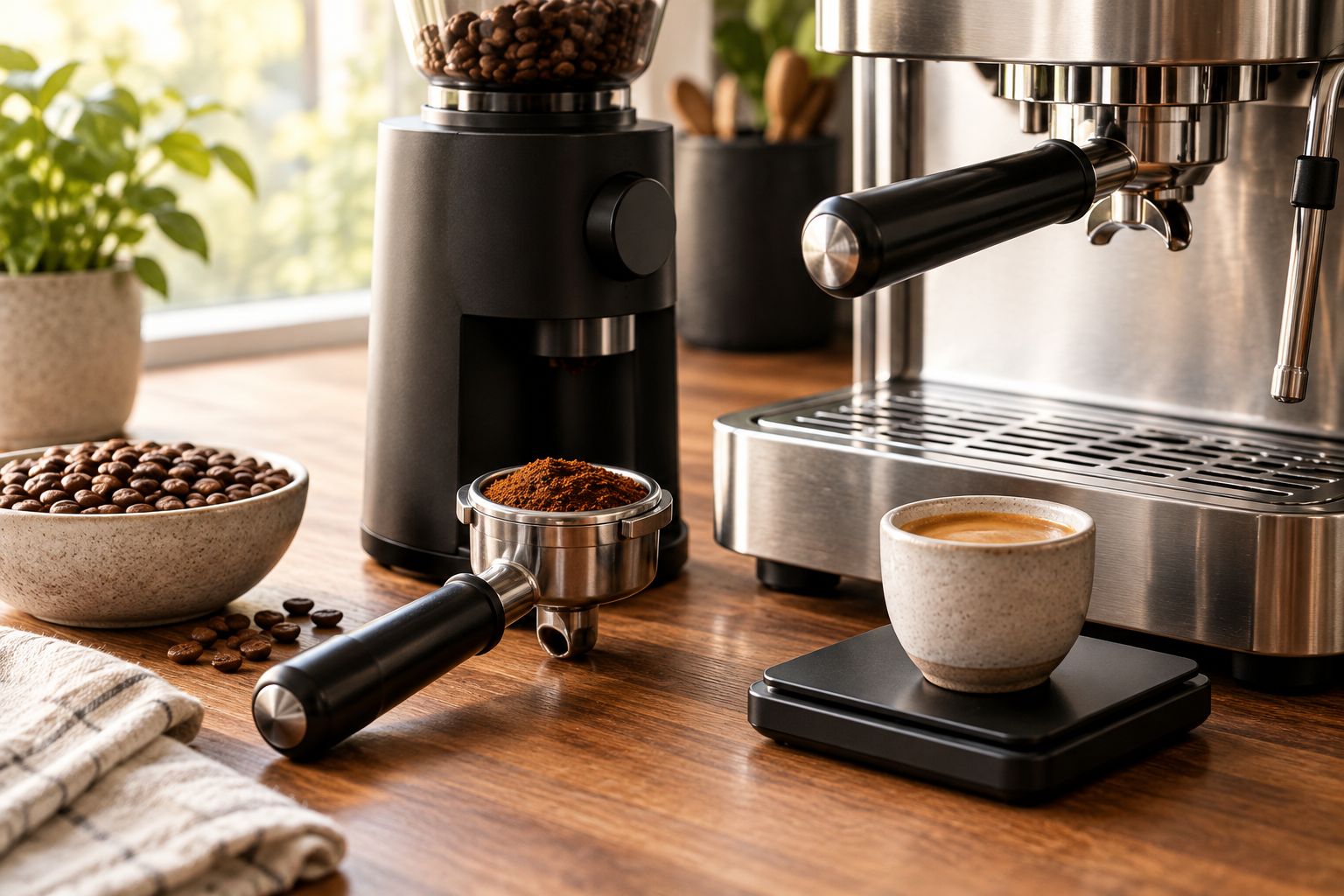
Use a repeatable starting recipe before deciding that a bag is wrong for you. For a double basket designed to hold it, try 18 g of ground coffee and 36 g of espresso, a 1:2 brew ratio. Treat roughly 25–30 seconds as an initial observation range, not a pass-or-fail rule.
Follow your basket’s intended dose and your machine’s instructions. The example is a starting recipe, not a specification for every espresso machine.
- Weigh the dose. Keep the amount of dry coffee consistent while testing.
- Weigh the yield. Measure the espresso in grams rather than judging crema height.
- Taste the shot. Record whether it is sour, bitter, thin, or pleasantly balanced.
- Change one variable. Adjust grind or yield, then compare with the previous shot.
If a shot tastes sharply sour and underdeveloped, test a finer grind or a longer yield. If it tastes harsh and drying, test a coarser grind or shorter yield. Uneven water flow through the puck can complicate either diagnosis, so keep preparation consistent.
Store beans in a closed container away from heat, light, and moisture. Grind only what you need for the shot. Fresh beans cannot compensate for an inconsistent recipe.
Which espresso beans should you choose?
Choose a medium-roast blend unless you have a specific reason not to. Move toward medium-dark for milk drinks, light-roast single origin for bright straight shots, or decaf when reducing caffeine matters most.
Superautomatic owners should apply the machine’s restrictions before choosing any flavor profile. Brew4ufresh’s espresso-bean shopping advice follows the same principle: choose the coffee style first, then verify the individual listing and equipment fit.
The best choice in 2026 is the coffee you enjoy after dialing it in—not the darkest bag, the biggest crema, or the most elaborate tasting description.
FAQ
What are the best coffee beans for espresso beginners?
A medium-roast blend is the best starting point for espresso beginners. It offers a middle ground between bright acidity and heavy roast character, while giving you room to learn grind and yield adjustments.
Do espresso machines need beans labeled espresso?
No, espresso machines do not require beans labeled espresso. Espresso is a brewing method; choose beans by flavor, freshness, roast level, and the machine manufacturer’s requirements.
Are dark-roast beans better for espresso than medium roast?
Dark-roast beans are better only when you prefer stronger roast character. Medium roast is the more balanced default, while medium-dark coffee suits drinkers seeking a roast-forward latte or cappuccino.
Can I use light-roast single-origin coffee for espresso?
Yes, light-roast single-origin coffee works for espresso. It suits drinkers who enjoy acidity and origin character, but requires careful grind and extraction adjustments to avoid an underdeveloped shot.
What coffee beans should I use in a superautomatic espresso machine?
Use whole beans that meet your superautomatic machine manufacturer’s instructions. A low-surface-oil medium roast is a practical starting candidate, but check restrictions on oily and flavored beans before filling the hopper.
Should I buy whole beans or preground coffee for espresso?
Buy whole beans when you have a grinder capable of espresso adjustments. Preground coffee fixes the grind size, which limits your ability to control shot flow and extraction.
Does decaf espresso contain caffeine?
Yes, decaf espresso still contains some caffeine. Choose it to reduce caffeine intake, not as a caffeine-free drink, and dial it in separately from your regular coffee.
One last thing
More crema does not prove better espresso. Crema reflects several factors, including gas released from the coffee; it is not a reliable score for sweetness or balance.
When comparing beans in 2026, stir the shot before tasting and use the same recipe as your starting point. Judge the drink you actually want to finish.