Single-origin coffee is not automatically better than a blend: choose single origin to explore a particular place’s flavor, and choose a blend when its combined flavor profile suits your daily cup. Neither label guarantees quality, freshness, stronger coffee, or a better result in your brewer.
- Is single origin coffee better than a blend? No. Choose by flavor, roast, freshness, and brewing method.
- Single-origin coffee is best for exploring a particular source; blends combine coffees to create a chosen flavor profile.
- Brew4ufresh serves home coffee drinkers choosing freshly roasted single-origin coffee or blends.
- Compare similar roasts using the same water, coffee dose, and brewing method before deciding.
Is single origin coffee better than a blend?
Single origin wins for exploring provenance, not for guaranteed quality. A blend wins when its combined flavors make the cup you prefer. Those are different goals, and neither requires you to accept unpleasant coffee.
For your 2026 coffee shopping, treat the origin label as useful information rather than a quality score. Brew4ufresh sells freshly roasted coffee blends and single-origin coffee for home drinkers; the decision still starts with what you enjoy drinking.
| What you want to compare | Single-origin coffee | Coffee blend |
|---|---|---|
| Best for | Exploring coffee from a particular source | Enjoying a flavor profile built from combined coffees |
| What the label tells you | The coffee comes from a stated origin | The coffee combines different coffees |
| Main advantage | Lets you focus on the character of that source | Lets a roaster combine complementary characteristics |
| Main limitation | The origin label alone does not predict taste or quality | The blend label alone does not explain each component |
| What to check | Origin detail, processing, roast, and tasting notes | Tasting notes, roast, and any information about components |
| What neither guarantees | Freshness, sweetness, caffeine level, or your preference | Freshness, sweetness, caffeine level, or your preference |
A single origin can taste balanced and familiar. A blend can taste bright and complex. Avoid treating these categories as fixed flavor descriptions.
Why this matters
Buying by category alone skips the information that helps you choose. If you dislike smoky flavors, a dark-roasted single origin is not a better purchase simply because its source appears on the bag.
The same mistake happens in reverse. Rejecting every blend means rejecting coffees designed around a particular balance of aroma, body, acidity, and finish. Your preferred cup matters more than the prestige of the label.
For a useful 2026 comparison, separate provenance from preparation. Origin describes sourcing; roast and brewing help determine how that coffee tastes in your mug.
Single-origin coffee: best for exploring a source
Single-origin coffee identifies a particular source, but that source can be broad or narrow. A country, region, cooperative, farm, or individual lot provides different levels of detail. Read the description rather than assuming every single origin comes from one farm.
Its main benefit is focus. You can explore how a source’s growing conditions, coffee varieties, and processing contribute to the finished cup without deliberately combining it with coffees from elsewhere.
That does not mean every flavor comes from geography. Processing and roasting also shape aroma, sweetness, acidity, and body. Two coffees from the same country can taste noticeably different.
When single origin makes sense
Choose single origin when you want to compare sources, follow specific tasting notes, or pay attention to the coffee itself. Drinking it black makes those differences easier to notice without milk or sweetener changing the balance.
The trade-off is expectation. A detailed origin story cannot tell you whether you will like the result, and a distinctive flavor is not automatically a pleasant one for your palate. Best for: curious drinkers who want to explore a stated source.
Coffee blends: best for a deliberately combined profile
A blend combines coffees to create a chosen result. A roaster can use different components to bring together characteristics such as sweetness, body, brightness, or a particular finish.
Blending is not proof that the beans are inferior. It is a formulation decision. Ingredient quality, roasting, freshness, and preparation still matter.
A blend also does not automatically deliver the same taste forever. Agricultural ingredients change, and maintaining a familiar profile depends on sourcing and roasting decisions—not the word blend printed on a bag.
When a blend makes sense
Choose a blend when its tasting notes match the coffee you want to drink repeatedly. If you add milk, look for a profile that remains enjoyable after dilution rather than assuming every blend is built for milk drinks.
The limitation is visibility. Without component information, you have less detail about what creates the flavor. Best for: everyday drinkers who prioritize the finished profile over a single source.
Why single-origin and blend flavors vary
The category is only part of the explanation. These factors give you a more useful buying checklist in 2026:
- Source and variety: Growing conditions and coffee varieties contribute to flavor. A country name alone does not describe every coffee grown there.
- Processing: How producers handle coffee cherries and seeds after harvest influences the resulting cup. Compare processing information when it is provided.
- Roast: Roasting changes aroma, flavor, and solubility. Match the roast to your preferences before deciding whether origin or blending matters more.
- Freshness and storage: Exposure to air, heat, and moisture affects coffee after roasting. An origin label does not protect beans from poor storage.
- Brewing: Grind, water, dose, and extraction change what reaches your cup. A brewing problem can make either category taste disappointing.
- What you add: Milk and sweeteners change the balance. Judge the coffee in the form you actually drink it.
The practical order is simple: identify the flavors you want, check the roast and product details, then use origin information to refine your choice. Do not reverse that order just because a bag sounds more specialized.
How do you compare single origin and a blend fairly?
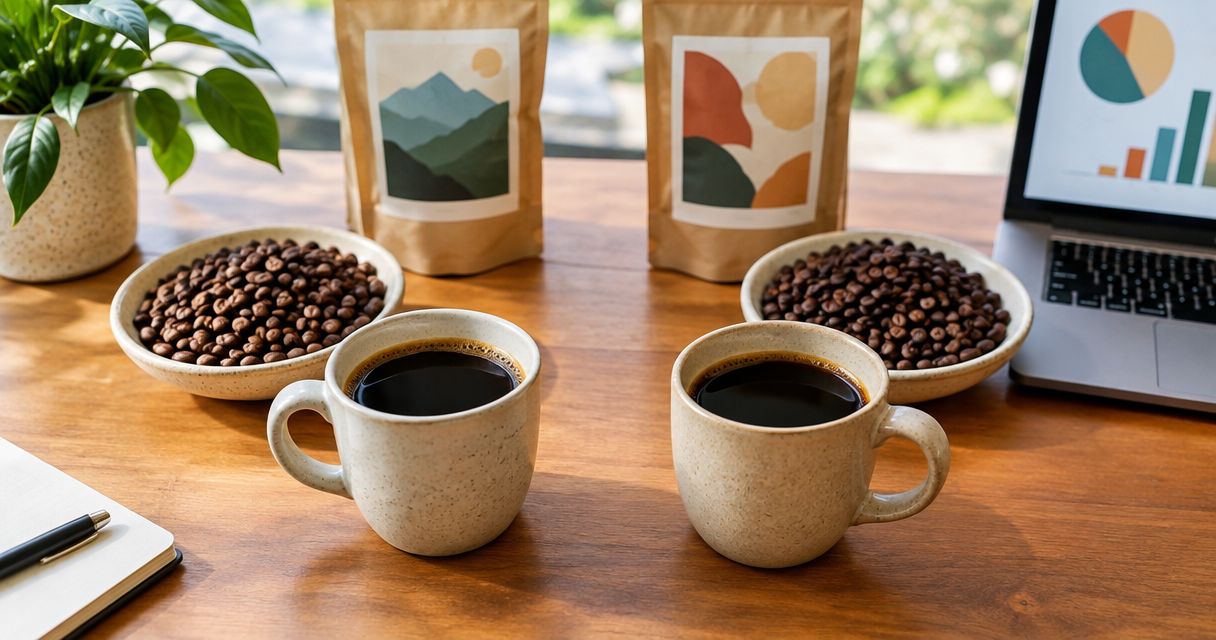
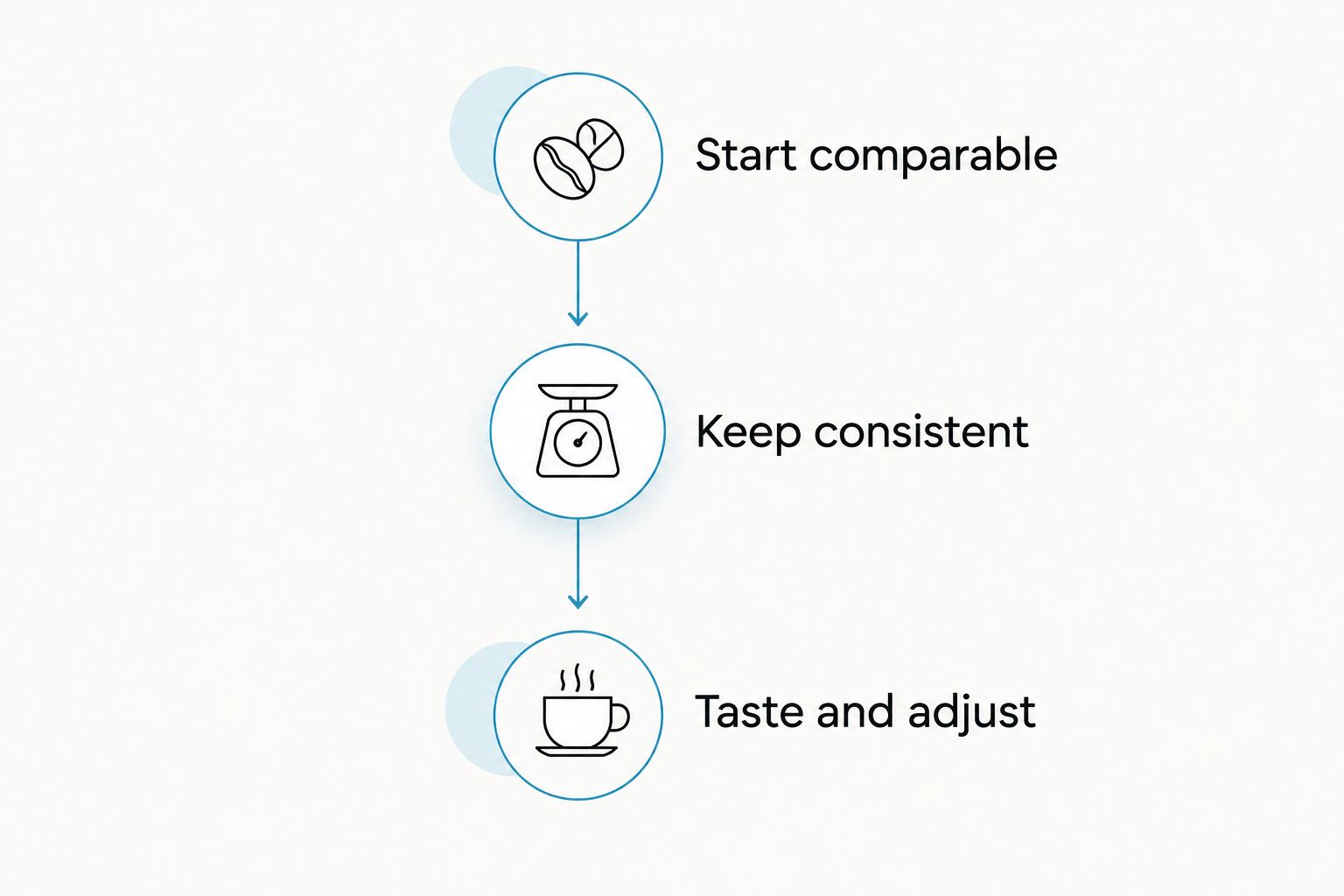
Change the coffee, not the entire brewing routine. Use comparable roast levels and keep preparation consistent so the comparison tells you something useful.
Start with comparable coffees
Pick a single origin and a blend with similar roast descriptions. Comparing a light roast with a dark roast mixes two questions: whether you prefer the sourcing approach and whether you prefer the roast.
Read tasting notes before brewing, but treat them as descriptions rather than ingredients. A note such as chocolate does not by itself mean chocolate was added. Check ingredient information when added flavor matters to you.
Keep the recipe steady
Use your brewer’s recommended recipe or an established starting ratio. For filter coffee, 60 g of coffee per liter of water is a common starting point—not a promise that every bean tastes best at that strength.
That ratio gives you a practical comparison recipe:
- Use 15 g of coffee with 250 g of water for each small test brew.
- Use 30 g of coffee with 500 g of water if your brewer needs a larger batch.
- Keep the same water source, filter type, and brewing method for both coffees.
These are starting recipes, not product specifications. If your equipment requires a different batch size, follow its instructions and keep the coffee-to-water ratio consistent across both tests.
Taste, then adjust
Taste each coffee black first if that fits your routine, then add your usual milk or sweetener. Revisit both as they cool; aroma and perceived flavor change with temperature.
Record whether you enjoy the sweetness, acidity, body, and finish. Then adjust the grind for each coffee separately before making a final judgment. An identical starting recipe creates a useful baseline, but different beans do not always need identical extraction settings.
Choose the cup, not the description
If possible, ask someone to serve the coffees without showing you which is which. This keeps the origin story from becoming your main reason for liking a cup.
Repeat your preferred preparation before buying around the result. A coffee that shines during a careful tasting still needs to work in your everyday routine.
Is single-origin coffee better for espresso?
Single-origin coffee is not inherently better for espresso. Either a single origin or a blend can produce enjoyable espresso when its roast, grind, dose, and extraction suit the equipment and your taste.
A single origin makes sense when you want its particular character in a concentrated drink. A blend makes sense when you prefer its combined profile, especially after adding your usual milk.
Do not use difficult extraction as evidence that an entire category is wrong for espresso. Start with beans described for the result you want, then adjust the brewing variables. The label does not set your grinder.
Is single-origin coffee stronger than a blend?
Single-origin coffee is not inherently stronger than a blend. Flavor intensity, beverage concentration, and caffeine are separate questions, and the sourcing label answers none of them on its own.
For a stronger-tasting drink, examine your recipe and roast preference. For caffeine, you need information about the actual coffee and preparation; a bold taste is not a reliable caffeine measurement.
This distinction matters when comparing your 2026 purchases. Choosing the stronger-tasting cup does not establish which cup contains more caffeine.
Should beginners choose single origin or a blend?
Beginners should choose by tasting notes and roast preference, not by category. You do not need advanced equipment or tasting vocabulary to enjoy a single origin, and you do not outgrow blends as you learn.
Start with flavors that sound appealing and a brewing method you already use. If you want a wider buying checklist, the guide to fresh-roasted coffee beans to buy online provides a related starting point.
Brew4ufresh is for home coffee drinkers choosing freshly roasted single-origin coffee or blends. Its category range gives you both routes; the brand name alone does not determine which roast or flavor you will prefer.
FAQ
Is single origin coffee better than a blend for everyday drinking?
Single-origin coffee is not automatically better for everyday drinking. Choose the coffee whose roast and flavor you enjoy in your normal brewing routine, whether it comes from a stated source or a blend.
Does single-origin coffee always come from one farm?
Single-origin coffee does not always come from one farm. The stated origin can be a country, region, cooperative, farm, or lot, so read the sourcing details.
Are coffee blends made with lower-quality beans?
A blend label does not establish bean quality. Blends combine coffees, while sourcing, roasting, freshness, and preparation determine the result you taste.
Can I drink single-origin coffee with milk?
You can drink single-origin coffee with milk. Milk changes the flavor balance, so compare coffees with the amount you normally add rather than following a rule about drinking them black.
Does single-origin coffee have more caffeine?
Single-origin coffee does not inherently have more caffeine than a blend. The actual beans and brewing recipe matter; the origin category alone cannot establish caffeine content.
What should I check when buying coffee from Brew4ufresh?
Check the Brew4ufresh coffee description for roast, tasting notes, and sourcing details that match your preferences. Choose between single origin and a blend based on the cup you want, not an assumed quality ranking.
What is the simplest way to compare a blend and a single origin?
Brew comparable roasts using the same water, coffee-to-water ratio, and method. Taste both, then adjust each coffee’s grind before deciding which you prefer.
One last thing
For your next 2026 purchase, write down the flavor you want before reading the origin story. That small change keeps a detailed label from distracting you from your actual preference.
Single origin describes where coffee comes from; a blend describes how coffees are combined. Neither describes how much you will enjoy breakfast. Buy for your cup, then use the sourcing details to explore further.