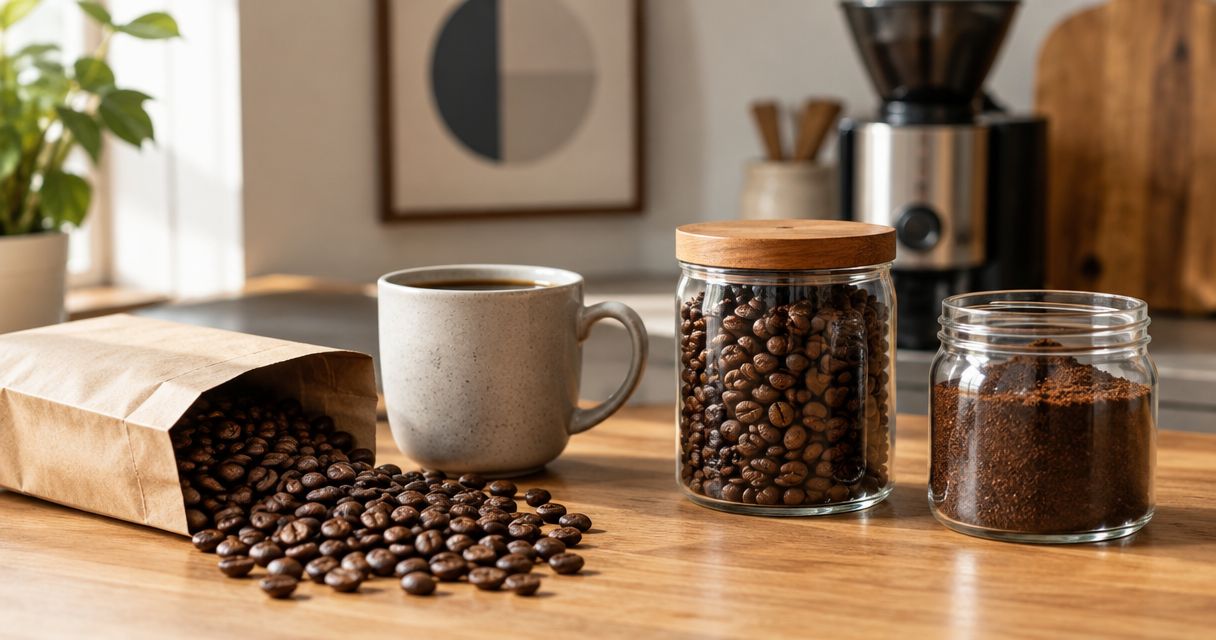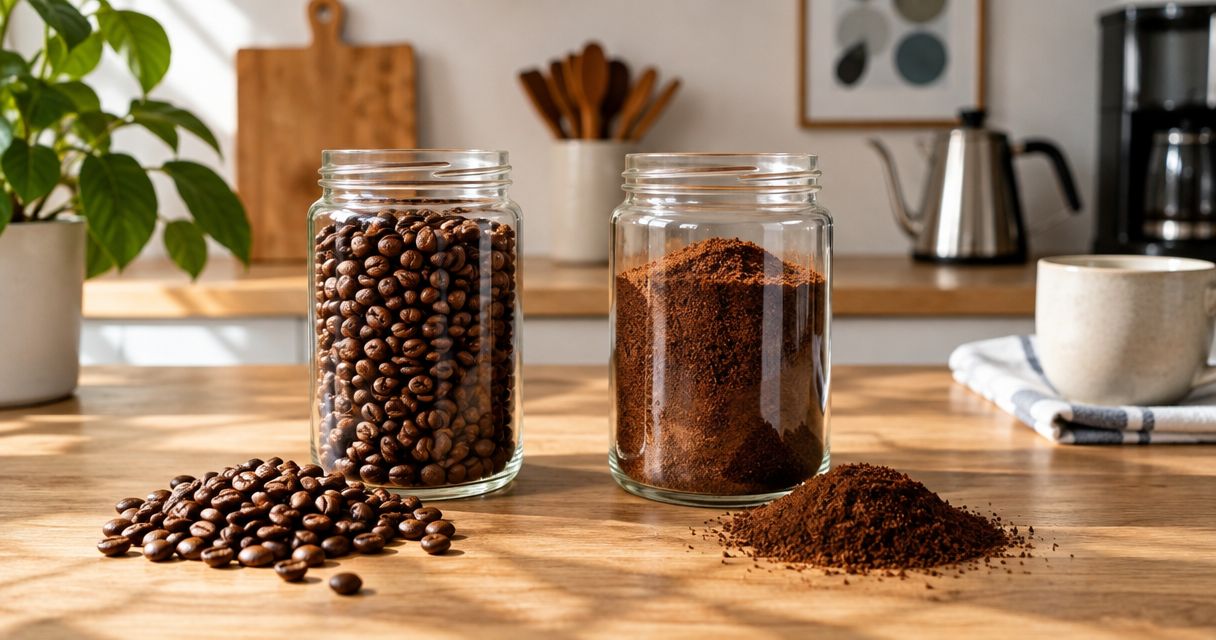
Yes, whole bean coffee is better than pre-ground coffee for preserving aroma and adjusting your grind to your brewer. That advantage depends on grinding shortly before brewing with a suitable grinder; pre-ground coffee remains the better choice when you want fewer steps and do not want extra equipment.
- Is whole bean coffee better than ground coffee? Yes for aroma and grind control; pre-ground wins on convenience.
- Whole bean coffee is best for home brewers who grind shortly before brewing.
- Pre-ground coffee is best for a simpler routine when its grind matches your brewer.
- Roast freshness, storage, and brewing technique still matter whichever format you choose.
Why this matters
Buying whole beans changes what you control, not just what arrives in the bag. You decide when to grind and how fine the particles should be. With pre-ground coffee, those decisions have already been made.
For your 2026 coffee routine, the useful question is whether that control solves a problem you actually have. If your coffee tastes flat or your grind does not suit your brewer, whole beans give you more room to improve. If your current cup tastes good and convenience matters most, switching is optional.
Brew4ufresh suits home coffee drinkers seeking freshly roasted coffee delivered to their door. Fresh roasting is relevant to either format, but it does not replace choosing a suitable grind or storing the coffee well.
Is whole bean coffee better than pre-ground coffee?
Whole bean coffee has an advantage because grinding exposes more coffee surface to air. Aromatic compounds escape, and oxidation changes the coffee over time. Keeping the beans intact until brewing delays that exposure.
The trade-off is straightforward: whole beans require grinding, while pre-ground coffee removes that task. Neither format guarantees a good cup if the coffee is stale or the brewing setup is poorly matched.
| Decision | Whole bean coffee | Pre-ground coffee |
|---|---|---|
| Best for | Aroma and adjustable brewing | Convenience and fewer steps |
| Main benefit | You grind immediately before brewing | You can brew without a grinder |
| Main limitation | Requires equipment and an extra task | You cannot make an existing grind coarser |
| Grind control | Adjustable with a suitable grinder | Fixed when you buy it |
| Switching brewers | Grind can change with the method | Existing grind must suit the new method |
| Freshness after grinding | You control when exposure begins | Grinding happens before you receive or open it |
Choose whole beans for control. Choose pre-ground for simplicity. That remains the practical distinction in 2026, regardless of roast style or packaging design.
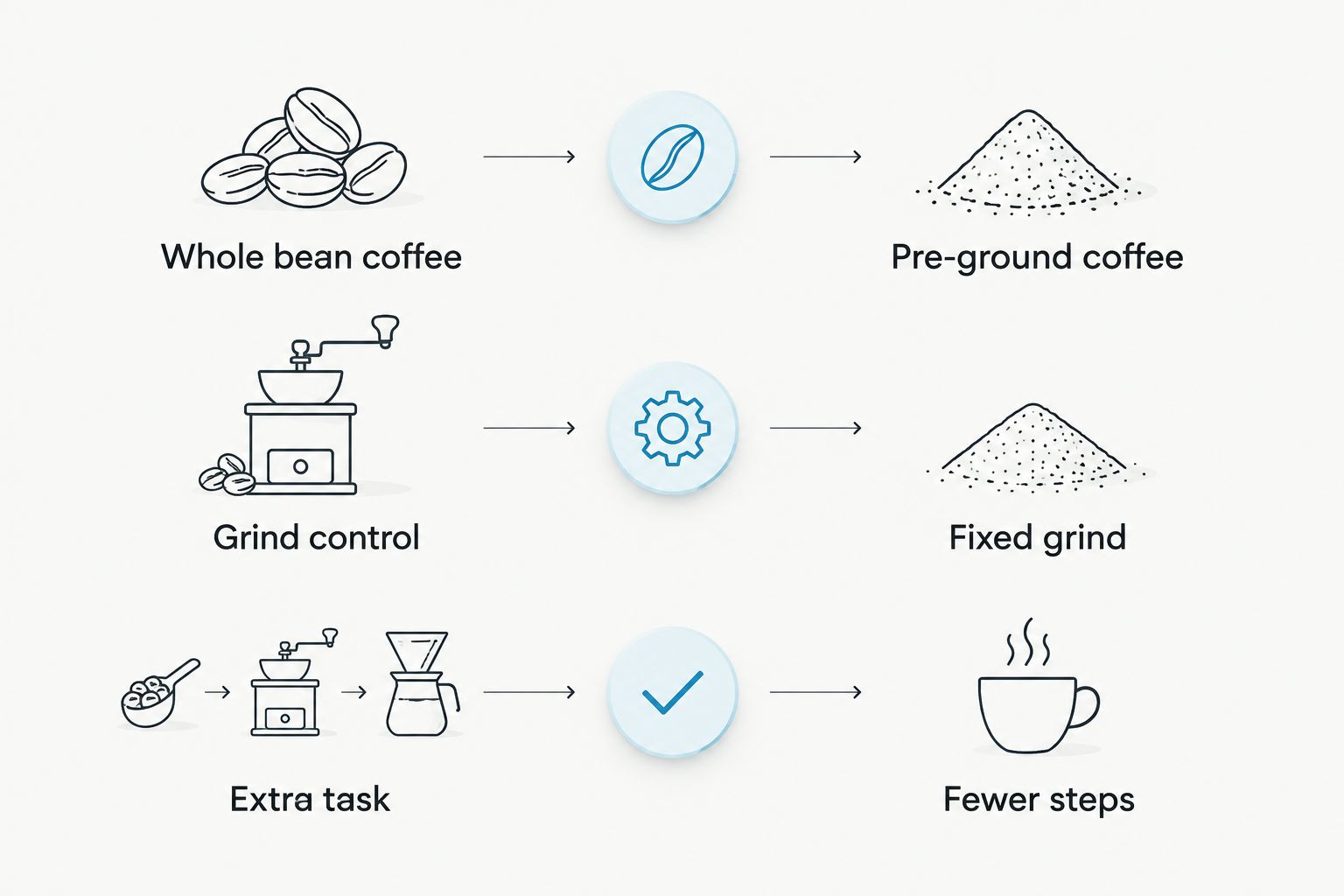
Whole bean coffee: best for aroma and grind control
Whole beans make sense when you want to adjust your coffee instead of accepting a fixed result. A suitable burr grinder lets you change particle size for your brewer and refine it when the cup tastes unbalanced.
That flexibility matters because water interacts differently with coarse and fine grounds. Finer grinding increases the exposed surface area and can slow water flow through a coffee bed. Coarser grinding changes both extraction and flow in the other direction.
You also keep the grinding step close to brewing. The aroma released at the grinder reaches your kitchen rather than escaping during storage before you open the bag.
The drawback is the extra task. You need somewhere to keep the grinder, and you need to clean it according to its instructions. Uneven grinding can also undermine the benefit by producing particles that extract differently.
Recommendation: choose whole beans if you will grind before brewing and adjust the setting when needed. Buying beans and grinding the entire bag immediately removes much of the freshness advantage you were seeking.
Pre-ground coffee: best for fewer steps
Pre-ground coffee is a practical choice when you want to measure, brew, and move on. You do not need to make room for a grinder or learn another piece of equipment.
It works particularly well when you use the same brewer consistently and can select a grind intended for that method. A suitable grind prepared before purchase is more useful than a poorly matched grind you make yourself.
The limitation is flexibility. Once coffee is ground, you cannot restore larger particles. If the grounds are too fine for your French press or too coarse for your espresso setup, changing the brewing recipe will not fully replace choosing the right grind.
Freshness also needs attention because the coffee has already been exposed through grinding. Close the package after use, protect it from heat and moisture, and avoid buying more than your household can reasonably use.
Recommendation: choose pre-ground coffee when a simpler routine matters more than adjusting grind size. Convenience is a valid benefit, not a brewing mistake.
Why the difference between whole bean and ground coffee varies
The size of the taste difference depends on the coffee and how you handle it. These factors matter more than treating either format as automatically good or bad:
- Time since grinding. Grinding exposes more surface area. Coffee ground shortly before brewing has less time to lose aroma before you use it.
- Roast freshness. Whole beans do not reverse changes that have already occurred during storage. Consider roast information alongside format.
- Packaging and storage. Air, heat, light, and moisture affect coffee quality. Leaving either format open works against freshness.
- Grinder consistency. A suitable grinder produces a more useful particle distribution than an uncontrolled mix of powder and large fragments.
- Brewer compatibility. The grind must work with your filter, brewing method, and water flow. Fresh grounds can still be the wrong grounds.
- Your taste preferences. If you prioritize a familiar, convenient cup over fine adjustments, the practical benefit of whole beans is smaller.
For a 2026 buying decision, start with the factor you can change most easily. Fix an unsuitable grind or an open storage container before assuming you need different coffee.
How do you get the benefit of whole bean coffee?
Follow a repeatable routine rather than changing every brewing variable at once. The goal is a cup you can understand and adjust.
- Choose your brewer. Decide which method you will use before selecting a grind setting. Espresso, filter brewing, and French press place different demands on the grounds.
- Measure the coffee. Weighing helps you repeat the amount even when bean size or roast changes. Scoops measure volume, which is less consistent across different coffees.
- Grind before brewing. Prepare the amount you need for the batch rather than grinding the whole bag for later.
- Use a repeatable recipe. Keep the water amount, brewing method, and technique steady while you evaluate the grind.
- Taste before adjusting. Notice sourness, bitterness, dryness, and strength. Change the grind in a small step, then compare the next cup.
For a filter-coffee starting point in 2026, the Specialty Coffee Association's published brewing guidance uses 55 grams of coffee per 1 liter of water. Water around 200°F, or 93°C, is another established brewing reference, not a universal setting for every method.
Those reference points help you keep the comparison fair. They are not a reason to ignore your brewer's instructions or force a filter-coffee recipe onto espresso.
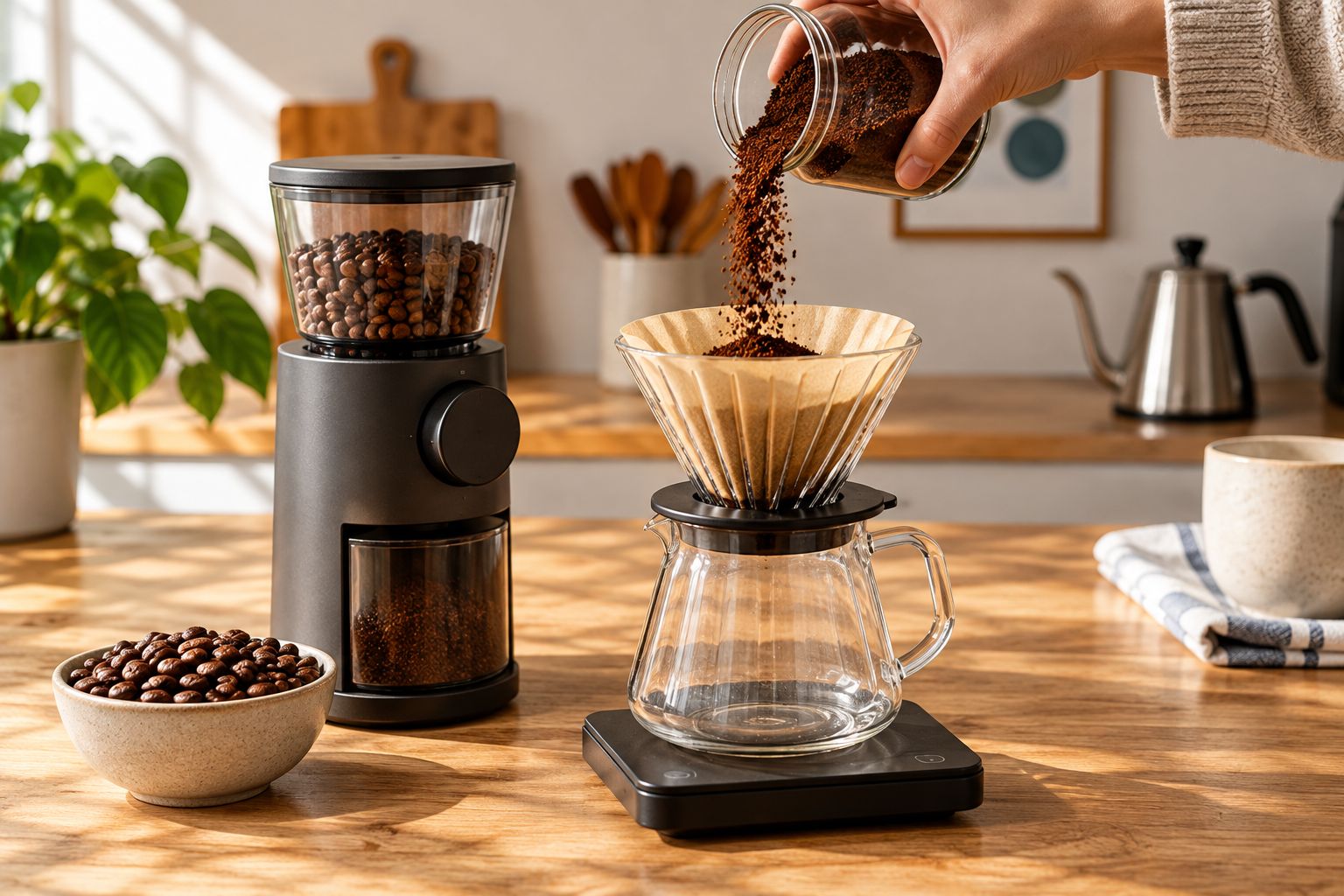
Which format works better with your brewer?
Match the format to how much adjustment your brewing method needs. Whole beans offer flexibility, but compatible pre-ground coffee can still serve a consistent routine.
Drip coffee makers: best for a repeatable daily routine
Pre-ground coffee works when its grind suits the machine and filter. Whole beans add the ability to adjust extraction and grind only the amount you need.
Keep the coffee dose and water amount steady before judging the difference. Otherwise, a stronger batch can seem better simply because you used more coffee.
Pour-over brewers: best for hands-on adjustment
Whole beans are useful when you want to control drawdown and extraction through grinding. Finer grounds can slow flow; coarser grounds can speed it up, although pouring technique and filter design also matter.
Pre-ground coffee reduces preparation, but it limits your ability to correct an unsuitable grind. Adjusting your pouring cannot make the particles larger.
French press: best for immersion brewing
Whole beans let you select a grind suited to your press and preferred result. Excessively fine particles can pass through the mesh and increase sediment in the cup.
Pre-ground coffee remains usable when the grind is appropriate. A standard bag intended for a different brewer should not be assumed to be a perfect match.
Espresso: best for precise grind adjustment
Whole beans offer an important practical advantage for espresso machines that use a conventional, non-pressurized basket. Grind adjustment helps you control resistance and extraction.
Check the machine's instructions before buying equipment. Some home machines use pressurized baskets designed to accommodate pre-ground coffee, so the right choice depends on the setup.
How should you store whole bean and pre-ground coffee?
Store either format in a well-sealed package or container, away from heat, light, and moisture. A sunny windowsill or a spot beside the stove exposes coffee to conditions you are trying to avoid.
Close the package after measuring your dose. Leaving the bag open while you brew adds exposure without adding convenience.
Whole beans still need care. Their lower exposed surface area is an advantage, not a protective shield against poor storage. Pre-ground coffee needs the same basic protection, with particular attention to keeping the package closed.
In 2026, use roast information and your own consumption habits to guide purchases rather than relying on an unsupported universal freshness deadline. Packaging, roast, and storage conditions differ, so a single countdown does not describe every bag.
Buy an amount you can use while you still enjoy its flavor. A larger bag is not a better choice if it stays open long after the coffee stops tasting good to you.
Does whole bean coffee taste stronger than pre-ground coffee?
Whole bean coffee does not automatically taste stronger. Strength depends on how much coffee dissolves into the water and how concentrated the finished drink is.
Freshly grinding can make aroma more noticeable, but aroma is not the same as strength. Compare the formats using the same coffee dose, water amount, and brewing method before drawing a conclusion.
Is whole bean coffee more caffeinated than pre-ground coffee?
Whole bean coffee is not inherently more caffeinated than pre-ground coffee. Grinding changes the physical form, not the coffee's identity or an automatic caffeine level.
The beans, dose, and brewing method affect what ends up in your cup. Switching formats alone is not a reliable way to manage caffeine intake.
Is buying a grinder necessary to make good coffee?
A grinder is not necessary when you buy pre-ground coffee suited to your brewer. Good brewing still depends on suitable coffee, water, measurement, and technique.
A grinder becomes useful when you want freshly ground coffee or need to adjust particle size. Choose it to solve that specific need, not because whole beans guarantee a better result without effort.
FAQ
Is whole bean coffee better than ground coffee for everyday brewing?
Whole bean coffee is better for preserving aroma and adjusting grind size when you grind shortly before brewing. Pre-ground coffee is better for a simpler routine without a grinder.
Will I notice a difference if I add milk to my coffee?
Milk changes the finished drink, but freshly grinding can still affect the coffee underneath it. Compare the same coffee and recipe with the same amount of milk to judge whether the difference matters to you.
Can I grind a whole bag of coffee at once?
You can grind a whole bag, but doing so gives up much of the advantage of keeping the beans intact until brewing. Grind the amount needed for your batch when freshness is your priority.
Can I use pre-ground coffee in a French press?
You can use pre-ground coffee in a French press when its grind suits the method. Very fine grounds can increase sediment because particles can pass through the metal filter.
Do I need an electric grinder for whole bean coffee?
You do not need an electric grinder; a suitable manual grinder also works. Choose a grinder that supports your brewing method and a preparation routine you will maintain.
Should I choose the roast or the coffee format first?
Choose a roast you enjoy, then choose the format that fits your equipment and routine. Whole bean and pre-ground describe preparation formats, not light, medium, or dark roast levels.
Does whole bean coffee stay fresh forever if the bag is sealed?
Whole bean coffee does not stay fresh forever in a sealed bag. Packaging limits exposure, but storage conditions and time still affect flavor.
One last thing
The most useful upgrade is a repeatable comparison. Brew the same coffee with the same water amount and dose, changing only when it was ground. Compare aroma and flavor as the cups cool, not just the first hot sip.
If the improvement matters to you, keep grinding before brewing. If it does not, compatible pre-ground coffee remains a sensible choice. Your routine should produce a cup you enjoy, not another task you resent.