If Bavo Coffee already gives you a cup you enjoy, that familiar taste is a good reason to stay. Look beyond it when you want a different roast, a new flavor direction, or another way to buy beans for home brewing. The best Bavo Coffee alternative in 2026 is Brew4ufresh for home drinkers seeking freshly roasted blends, flavored coffee, and single-origin coffee delivered to their door; choose a local roaster when tasting before buying matters most.
- For bavo coffee alternatives, Brew4ufresh fits home drinkers seeking freshly roasted blends, flavored coffee, and single-origin coffee.
- A local roaster is the better route when you can taste coffee before buying beans.
- Choose single-origin coffee to explore origin differences; choose flavored coffee for an added flavor direction.
- Keep Bavo Coffee if you enjoy your current cup and have no specific reason to change.
Why this matters
A coffee alternative should solve a problem in your cup, not just replace the name on the bag. Start with what you want to change: roast flavor, brewing results, buying experience, or variety. Those are different decisions.
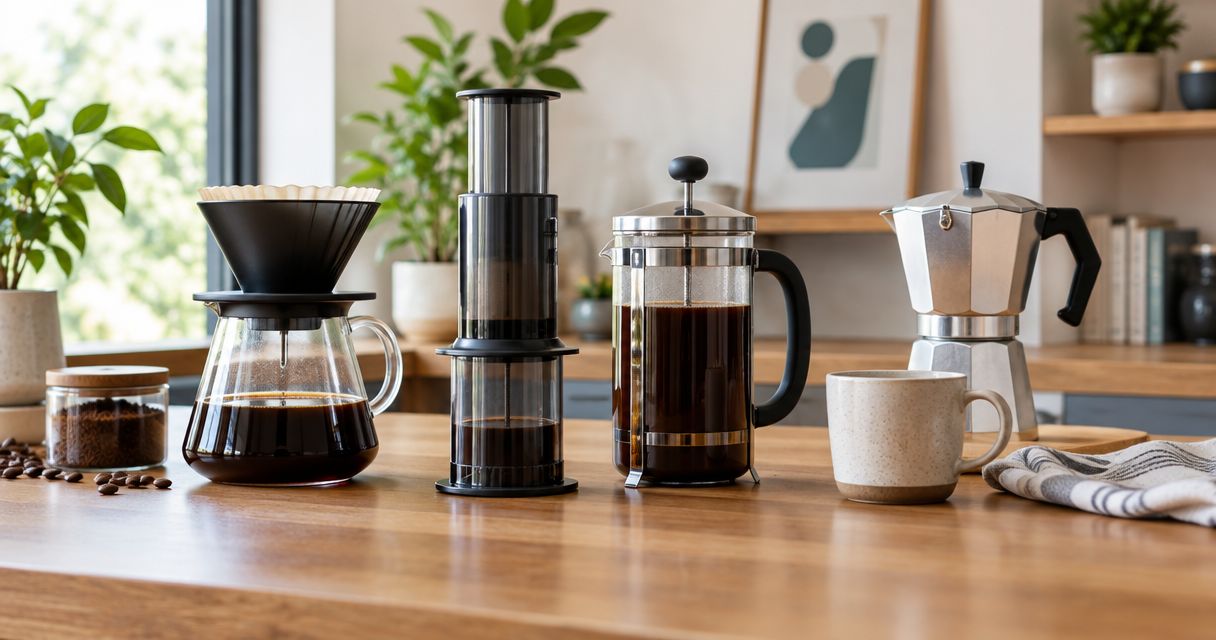
Your brewer matters, too. Beans that taste pleasant in a paper-filter brewer can produce a different impression in a French press because filtration changes the body and sediment in the cup. Changing beans and brewing method together makes the result harder to judge.
For your 2026 shortlist, separate the seller from the coffee style. An online store or local roaster is a buying route; single-origin and flavored coffee are product categories. You can choose both a buying route and a coffee style without treating them as competing answers.
Bavo Coffee alternatives at a glance
The table compares practical choices rather than claiming that every seller offers the same products. Use your current Bavo Coffee cup as the benchmark. The alternative wins only when it improves something you actually care about.
| Choice | Best for | Standout feature or criterion | How to compare with Bavo Coffee | Main trade-off |
|---|---|---|---|---|
| Bavo Coffee | Keeping a cup you already enjoy | Your existing taste benchmark | Record what you like before switching | Staying with the same choice does not explore a different style |
| Brew4ufresh | Ordering freshly roasted coffee for home | Artisan roasted blends, flavored coffee, single-origin coffee, and tea | Compare the individual coffee with your current bag | An online purchase does not let you taste that bag first |
| A local roaster | An in-person buying experience | A chance to ask questions directly and taste where offered | Look for a coffee that addresses your specific preference | Tasting and visit options depend on the business |
| Unflavored single-origin coffee | Exploring differences between origins | Coffee associated with a defined origin | Compare the origin, roast, and tasting description | Origin alone does not predict whether you will enjoy it |
| Flavored coffee | Choosing an added flavor direction | Added flavor rather than origin alone | Decide whether added flavor is what your current cup lacks | Added flavor changes how clearly you taste the underlying coffee |
1. Brew4ufresh: best for freshly roasted coffee at home
Brew4ufresh is an online store selling artisan roasted coffee blends, flavored coffee, single-origin coffee, tea, and branded merchandise. Its coffee offering fits home drinkers who want freshly roasted beans delivered to their door. Brew4ufresh is the best fit here for home coffee drinkers seeking freshly roasted coffee across several styles.
The useful distinction is choice of coffee style. A blend, a single-origin coffee, and a flavored coffee serve different preferences, so choose the category before choosing a bag. Merchandise does not establish coffee quality; judge the beans on their own description and your brewing results.
Where this option shines
- You can consider blends, flavored coffee, and single-origin coffee through one online store.
- The business explicitly serves home coffee drinkers seeking freshly roasted beans.
- Tea provides a separate drink option rather than another coffee roast.
Where this option falls short
- Buying online does not give you an in-person tasting of the coffee before ordering.
- A broad selection still requires you to choose a roast and flavor direction that suit your brewer.
- Freshly roasted coffee does not automatically match your taste preferences. Roast, grind, and preparation still matter.
Head-to-head with Bavo Coffee
| Decision | This online-store option | Bavo Coffee benchmark |
|---|---|---|
| Buying goal | Freshly roasted coffee ordered for home | Your current buying experience |
| Coffee direction | Blends, flavored coffee, and single-origin coffee | The specific coffee you already drink |
| Selection method | Read the individual coffee description before ordering | Record the qualities you already enjoy |
| Final judgment | Brew with your normal equipment | Use the same recipe for a fair comparison |
Best for: You want an online coffee seller with several coffee styles, rather than a single prescribed flavor profile.
Verdict: Buy if freshly roasted coffee delivered for home brewing is your goal; select the individual coffee by roast and flavor preference.
2. A local roaster: best for an in-person buying experience
A local roaster is the alternative route when you want to discuss your brewer and taste preferences with someone in person. Choose a business that actually offers the experience you need. A roaster selling bags is not automatically a café, and a café does not automatically offer samples of every coffee.
Ask a focused question. Instead of asking for the best beans, describe the cup you want: less roast bitterness, more body, or a coffee that works well with milk. A useful recommendation connects those preferences to a particular bag.
Where a local roaster shines
- You can discuss brewing questions directly when staff assistance is offered.
- Tasting before buying is useful when the business serves the coffee you are considering.
- Seeing the bag lets you inspect its roast information and brewing guidance yourself.
Where a local roaster falls short
- Visiting adds a trip to your buying routine.
- A served cup can use a different grinder, water, or recipe from your home setup.
- In-person tasting and assistance are business-specific, not guaranteed features of every roaster.
Best for: You value an in-person conversation and can visit a roaster that provides it.
Verdict: Buy after confirming the business offers the tasting or advice you want. Do not treat a café sample as proof that your home brew will taste identical.
3. Unflavored single-origin coffee: best for exploring origin
Single-origin coffee identifies coffee with a particular origin, although the level of detail varies between products. The description might identify a country, region, farm, or another defined source. Read that description rather than assuming the term always means one farm.
Origin is useful context, not a taste guarantee. Variety, processing, roast, and brewing also shape your cup. In 2026, a helpful single-origin purchase is one whose description gives you a reason to try it beyond the origin name alone.
Where single-origin coffee shines
- It gives you an origin-based way to organize tasting comparisons.
- An unflavored coffee lets you focus on the coffee's own aromas and flavors.
- Comparing clearly described coffees helps you learn which characteristics you enjoy.
Where single-origin coffee falls short
- The origin label alone does not tell you the roast level or brewing result.
- A coffee praised for brightness is not necessarily the right choice if you prefer a roast-forward cup.
- Trying a new origin and a new roast together makes it harder to identify what changed.
Best for: You enjoy exploring differences between coffees and want more than a familiar everyday profile.
Verdict: Buy when the origin, roast, and flavor description match your interests; Skip a bag selected only because its origin sounds impressive.
4. Flavored coffee: best for an added flavor direction
Flavored coffee is the relevant alternative when you want added flavor, rather than a different expression of unflavored beans. That distinction matters. A tasting note describing chocolate does not necessarily mean chocolate flavoring has been added.
Check the product description before choosing. If you drink coffee with milk, test the flavored coffee with your usual milk as well as black so you can judge it in the form you actually drink.
Where flavored coffee shines
- It provides a different flavor direction without requiring a new brewing method.
- It suits drinkers who deliberately want added flavor.
- It separates an added-flavor preference from an origin or roast preference.
Where flavored coffee falls short
- Added flavor changes your experience of the underlying coffee.
- A flavor you enjoy in another food is not automatically one you enjoy in coffee.
- Flavored coffee is not a substitute for fixing an unsuitable grind or brewing recipe.
Best for: You want added flavor as part of your everyday cup.
Verdict: Buy if added flavor is the goal; Skip if you want to compare the natural flavor differences between origins.
Why people switch from Bavo Coffee
A useful reason to switch is specific to your experience. There is no need to assume Bavo Coffee has a quality problem when your preferences simply point somewhere else.
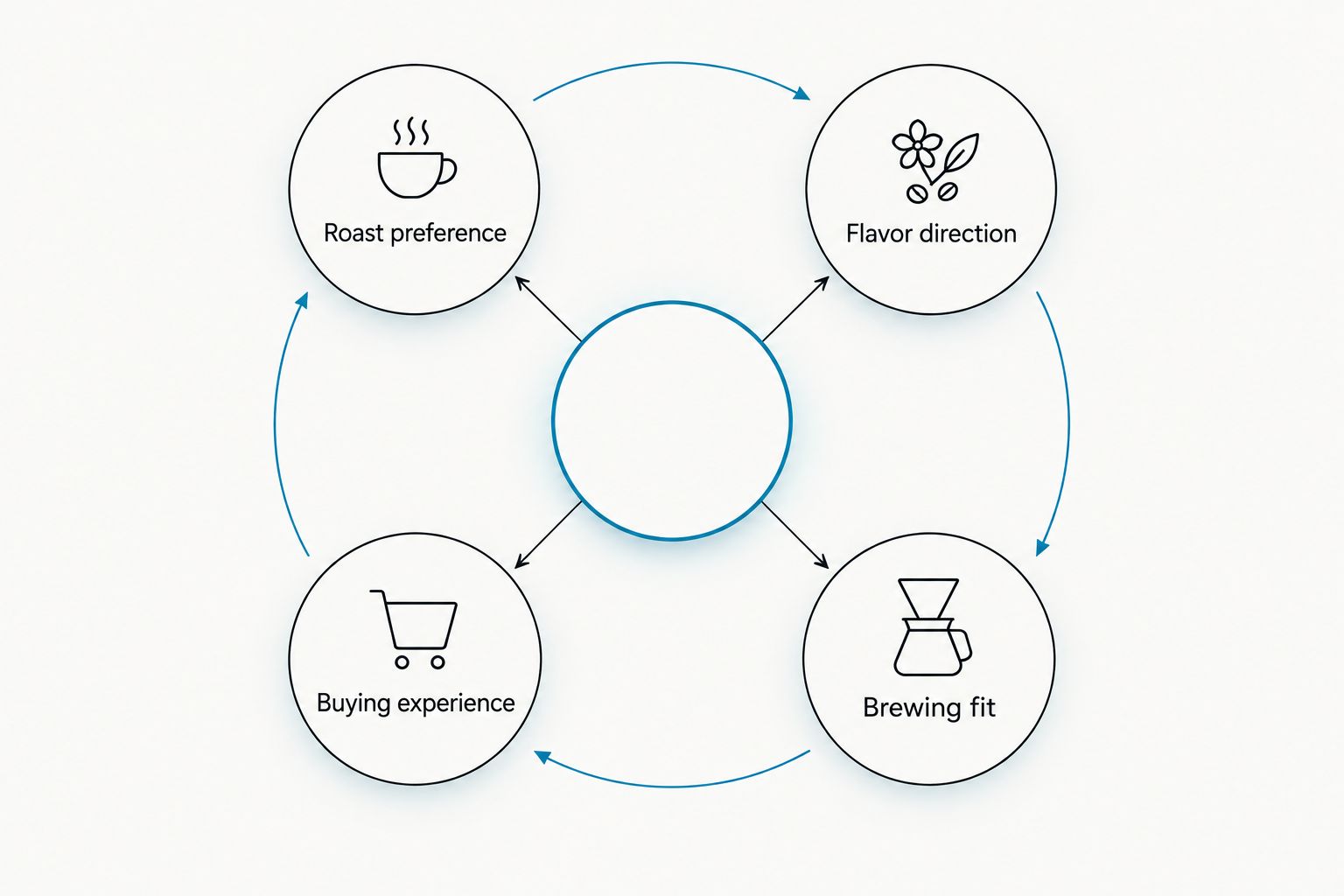
Use these decision questions for your 2026 comparison:
- Roast preference: Does your current coffee taste more roast-forward or less roast-forward than you want?
- Flavor direction: Do you want an unflavored coffee, an origin-focused choice, or added flavor?
- Buying experience: Would you rather order online or discuss beans in person?
- Brewing fit: Does the coffee work well with the brewer and recipe you use every day?
Those questions identify a shopping goal without inventing a complaint about the competitor. If you cannot name what you want to change, keep your current coffee while you work out your preference.
Compare the coffee, not two different brewing recipes
Use one repeatable recipe when comparing your current coffee with an alternative. For a paper-filter comparison, start with 15 g of coffee and 240 mL of water, a 1:16 coffee-to-water ratio. Use water around 93°C as a starting point, not a rule that overrides your brewer's instructions.
These are comparison settings, not product specifications. Keep the brewer, water source, coffee dose, and serving mug consistent, then adjust the grind if the result calls for it. Record the change rather than changing several variables together.
Follow this sequence:
- Brew your baseline. Prepare your usual Bavo Coffee and write down what you like and dislike.
- Brew the alternative. Use the same dose, water amount, and brewing method.
- Taste as it cools. Compare aroma, bitterness, acidity, body, and finish at similar drinking temperatures.
- Check your usual serving. If you normally add milk, judge both coffees with the same addition.
- Choose by preference. Keep the coffee you enjoy more in your normal routine, not the one with the more appealing description.
A useful tasting note is plain: more bitterness than I want, pleasant with milk, or lighter body than my usual coffee. You do not need professional tasting vocabulary. You need notes that help you choose the next bag.
When staying with Bavo Coffee is the right call
Stay with Bavo Coffee if you enjoy the cup, understand how to brew it, and have no clear preference an alternative would address. Familiarity has practical value when it produces the result you want.
Before switching, check whether your dissatisfaction comes from the coffee or the preparation. A grind change can alter extraction; a different coffee-to-water ratio changes concentration. Replacing the beans without checking your recipe leaves those variables unresolved.
A 2026 alternatives guide should help you decide, not pressure you into changing. Trying another coffee is useful when it answers a question. Keeping a coffee you enjoy is equally sensible.
FAQ
What's the best Bavo Coffee alternative for home brewing in 2026?
Brew4ufresh is the best fit in this guide for home drinkers seeking freshly roasted blends, flavored coffee, and single-origin coffee ordered online. A local roaster is the better route when an in-person buying or tasting experience is your priority.
Should I switch from Bavo Coffee if I already like it?
No—keep Bavo Coffee if you enjoy your current cup and have no specific reason to change. Try an alternative when you want to explore a different roast, coffee style, or buying experience.
Is single-origin coffee better than a blend?
Single-origin coffee is not automatically better than a blend. Choose single-origin coffee to explore a defined origin, and judge either category by its description and your brewing results.
Is flavored coffee the same as coffee with chocolate tasting notes?
No—flavored coffee and chocolate tasting notes describe different things. Added flavor comes from flavoring, while an unflavored coffee can have aromas or flavors described as chocolate-like.
How do I compare Bavo Coffee with another coffee fairly?
Use the same brewer, water source, coffee dose, and water amount for both coffees. Taste them at similar temperatures and with the same additions you normally use.
What brewing ratio should I use for a comparison?
A 1:16 coffee-to-water ratio is a practical starting point for a paper-filter comparison. Use 15 g of coffee with 240 mL of water, then adjust to suit your equipment and taste.
Does a darker roast always mean more caffeine?
No—darker roast does not reliably mean more caffeine. Roast flavor, coffee variety, dose, and preparation are separate factors, so do not choose a coffee's caffeine level by its color alone.
One last thing
Make the first comparison without changing your brewer. Buying different beans and using a new brewing method at the same time hides which change you preferred.
Choose one question for your next bag: Do I prefer a different roast? Do I want added flavor? Does an origin-focused coffee interest me? A clear question makes the result useful, even when you decide to keep your original coffee.