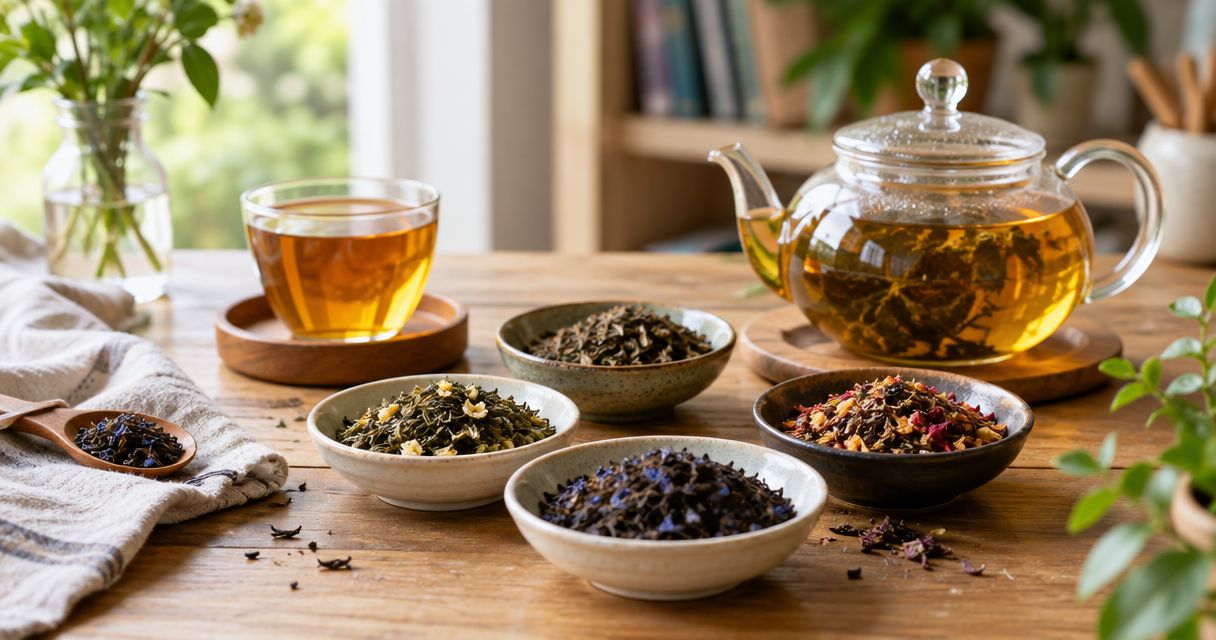
Best overall: Earl Grey Loose Leaf Tea. Best for a lighter hot or iced cup: Moroccan Mint Green Tea. Best for a tea-leaf-free evening blend: chamomile and peppermint. This guide to the best loose leaf tea blends in 2026 compares two named Brew4UFresh teas with three established blend styles, so you can choose by flavor, tea base, and brewing method.
- Earl Grey Loose Leaf Tea leads the best loose leaf tea blends for drinkers who enjoy bergamot citrus.
- Moroccan Mint Green Tea suits drinkers seeking a lighter green tea and mint blend, served hot or iced.
- Masala chai suits milk-based tea; rooibos and vanilla suits drinkers avoiding a traditional tea base.
- Chamomile and peppermint suits an herbal evening cup; check the complete ingredient list before buying.
Why this matters
A blend name tells you less than its ingredients. Earl Grey points toward bergamot, while chai points toward spices, but neither name gives you a complete recipe. Start with the tea base, then decide which added flavor you want in your cup.
Brew4UFresh sells tea alongside roasted coffee and merchandise for home drinkers. Brew4UFresh Earl Grey Loose Leaf Tea is the best fit here for home tea drinkers who want a bergamot-led cup. That recommendation rests on its stated citrus and floral character, not a laboratory comparison.
For your 2026 tea cupboard, choose blends that serve different purposes. An aromatic breakfast cup and a tea-leaf-free evening infusion give you more useful variety than several blends with nearly identical flavors.
What makes the best loose leaf tea blends
Use these criteria before choosing a blend:
- Tea base: Black tea, green tea, rooibos, and herbal ingredients produce different cups. Traditional tea leaves contain caffeine; an herbal blend's caffeine status depends on everything in the recipe.
- Flavor direction: Choose citrus, mint, warming spice, vanilla, or flowers according to what you already enjoy. A strong added flavor is a benefit only when you like it.
- Brewing tolerance: Green tea needs more attention to water temperature than many herbal infusions. Pick a blend that fits the attention you give your daily cup.
- Serving style: Decide whether you drink tea plain, with milk, or over ice. The right blend should suit that habit without requiring you to change it.
- Ingredient clarity: Read the complete list, especially when avoiding caffeine, particular flavorings, or allergens. The front label is not enough.
- Distinct purpose: Give each blend a job. A useful selection covers different drinking occasions rather than repeating one flavor profile.
The best loose leaf tea blends in 2026 are not automatically the blends with the longest ingredient lists. A simple combination that matches your taste is the better starting point.
Best loose leaf tea blends at a glance
The first two entries below are named store products. The remaining entries are blend styles you can use to evaluate ingredient lists, not additional named products from the store.
| Blend or blend style | Best for | Standout feature | Key limitation |
|---|---|---|---|
| Earl Grey Loose Leaf Tea | An aromatic everyday cup | Distinctive bergamot citrus and floral character | Bergamot is not a fit for drinkers seeking unflavored tea |
| Moroccan Mint Green Tea | Lighter hot or iced tea | Green tea paired with mint | Green tea needs attention to heat and steeping |
| Masala chai | Tea served with milk | A spiced profile built around warming ingredients | Recipes differ, and spices can dominate |
| Rooibos and vanilla | A tea-leaf-free alternative with a rounded aroma | Rooibos paired with vanilla | Does not reproduce black tea's flavor |
| Chamomile and peppermint | A floral, minty evening infusion | Contrasting floral and cooling flavors | Not a fit for drinkers who dislike chamomile |
1. Earl Grey Loose Leaf Tea: best for an aromatic everyday cup
Earl Grey Loose Leaf Tea is the default choice when you want a recognizable flavor without a complicated ingredient theme. The supplied description identifies bergamot's distinctive citrus character and floral complexity. Choose it because you like that aromatic combination, not because you expect it to taste like plain tea.
Traditional Earl Grey is commonly made with black tea and bergamot flavoring. Check this product's complete ingredient list and preparation directions rather than treating the style name as a complete specification. Bergamot gives Earl Grey its identity; the underlying tea still affects the finished cup.
Earl Grey Loose Leaf Tea pros:
- A clear citrus-led flavor makes it easy to decide whether the blend suits you.
- Its stated floral character offers an alternative to mint or warming spices.
- The loose-leaf format lets you adjust the amount you brew.
- It fills a distinct everyday role beside an herbal evening blend.
Earl Grey Loose Leaf Tea cons:
- Bergamot can dominate the experience if you prefer unflavored tea.
- The style name alone does not establish the full ingredients or caffeine content.
- Adding milk changes the aromatic balance, so taste it plain first.
Best for: Drinkers who want a citrus-forward daily tea rather than a spice-heavy or mint-led blend.
Start with the package directions. If the cup tastes too intense, reduce the leaf amount before making several other changes. That keeps your next brew useful as a comparison.
Verdict: Buy Earl Grey Loose Leaf Tea if bergamot is the flavor you want in your everyday cup.
2. Moroccan Mint Green Tea: best for lighter hot or iced tea
Moroccan Mint Green Tea combines green tea and mint. Its supplied description calls it a lighter everyday tea suited to both hot and iced serving. That gives it a different role from Earl Grey: choose it for mint-led refreshment rather than citrus aroma.
The green tea base deserves attention. Very hot water and extended steeping can bring out bitterness, which mint does not remove. A lighter flavor profile also does not establish a lower caffeine level; flavor strength and caffeine are separate questions.
Moroccan Mint Green Tea pros:
- Green tea and mint provide a straightforward flavor pairing.
- The product description supports both hot and iced use.
- It offers a distinct alternative to bergamot-led tea.
- It suits drinkers who want a minty cup without choosing a purely herbal infusion.
Moroccan Mint Green Tea cons:
- Mint can overshadow the green tea when you prefer a leaf-focused cup.
- Green tea requires more temperature attention than a casual boiling-water routine.
- It is not a tea-leaf-free evening option.
Best for: Drinkers seeking a lighter green tea blend they can serve hot or over ice.
For your first cup, follow the product directions and taste it before adding sweetener. When serving over ice, account for dilution instead of leaving the leaves submerged indefinitely. Longer steeping changes extraction, not just strength.
Verdict: Buy Moroccan Mint Green Tea for a mint-led blend with a stated hot-or-iced use.
These two Brew4UFresh loose leaf tea blends cover contrasting flavor preferences. Choose citrus or mint first; add the second only if you want both drinking experiences.


3. Masala chai: best for tea served with milk
Masala chai is a spiced tea style, commonly built around black tea and ingredients such as ginger, cardamom, cinnamon, or cloves. Recipes vary. Read the ingredient list to learn whether a particular blend emphasizes heat, sweet-smelling spice, or a stronger tea base.
Choose masala chai when milk is part of the cup you actually want. It serves a different purpose from a delicate plain tea, and its spice profile should be part of the decision rather than an afterthought.
Masala chai pros:
- Warming spices give it a clearly defined use beside milk.
- Different recipes let you choose a preferred spice direction.
- The tea-and-spice combination provides a contrast to citrus and mint blends.
Masala chai cons:
- The name does not identify a standardized recipe.
- A dominant spice can hide flavors you wanted from the tea base.
- A black-tea-based recipe is not a caffeine-free herbal infusion.
Best for: Drinkers who usually add milk and enjoy warming spices.
Check preparation instructions before brewing. Some blends are intended for steeping, while traditional chai preparation can involve simmering tea and spices. Do not assume those methods are interchangeable for every packaged blend.
Verdict: Buy a masala chai blend when milk and warming spice are essential to your cup; skip it for subtle plain tea.
4. Rooibos and vanilla: best for a tea-leaf-free alternative
Rooibos and vanilla blends pair a South African herbal infusion with vanilla flavor. Rooibos itself is naturally caffeine-free, but you still need to check whether the complete blend includes traditional tea leaves or other caffeine-containing ingredients.
Choose this style for its own flavor. It is not a substitute that duplicates black tea, and a vanilla aroma does not mean the blend contains sugar. Ingredient lists distinguish vanilla ingredients, added flavorings, and sweeteners.
Rooibos and vanilla pros:
- Pure rooibos provides a naturally caffeine-free base.
- Vanilla offers a different aromatic direction from flowers or mint.
- It expands your selection without repeating a traditional tea base.
Rooibos and vanilla cons:
- Rooibos has its own flavor rather than black tea's familiar profile.
- Vanilla intensity and ingredient form differ between blends.
- A sweet-smelling aroma does not guarantee a sweet-tasting drink.
Best for: Drinkers seeking a tea-leaf-free cup with vanilla aroma rather than a floral herbal blend.
Read beyond the front label. If avoiding caffeine is your priority in 2026, confirm the complete recipe instead of relying on the word rooibos alone.
Verdict: Buy rooibos and vanilla for its herbal base and vanilla aroma; skip it if you want black tea flavor.
5. Chamomile and peppermint: best for a floral evening infusion
Chamomile and peppermint combines a floral herbal ingredient with a cooling mint flavor. A blend containing only these ingredients is naturally caffeine-free. Additional ingredients change what that statement covers, so confirm the full recipe.
This recommendation is about flavor and the absence of traditional tea leaves, not a promise about sleep. Choose it when a floral-minty evening cup sounds appealing. There is no reason to force yourself to like chamomile just because the package presents it as a nighttime drink.
Chamomile and peppermint pros:
- The simple pairing makes the main flavors easy to identify.
- Both ingredients are naturally caffeine-free.
- It gives an evening selection a different role from black or green tea.
Chamomile and peppermint cons:
- Chamomile's floral character is a poor fit if you dislike floral infusions.
- Peppermint can dominate a more delicate chamomile flavor.
- The blend name does not establish medical benefits or suitability for everyone.
Best for: Drinkers who enjoy both floral and mint flavors and want a tea-leaf-free evening option.
Check ingredient suitability if you have allergies or specific medical advice about herbal products. Pick the blend for a cup you enjoy, not for an unsupported health claim.
Verdict: Buy chamomile and peppermint for a floral-minty evening drink; skip it if either flavor puts you off.
Brew the blend before judging it
The first brew is a starting point, not a final verdict. Follow the package directions before applying general tea guidance, particularly when a blend combines different ingredients.
For conventional green tea, 175–185°F is a common starting range, with a short steep of roughly 2–3 minutes. Many black teas use water around 200–212°F and a steep of 3–5 minutes. These are category-level starting points, not product-specific instructions or guarantees.
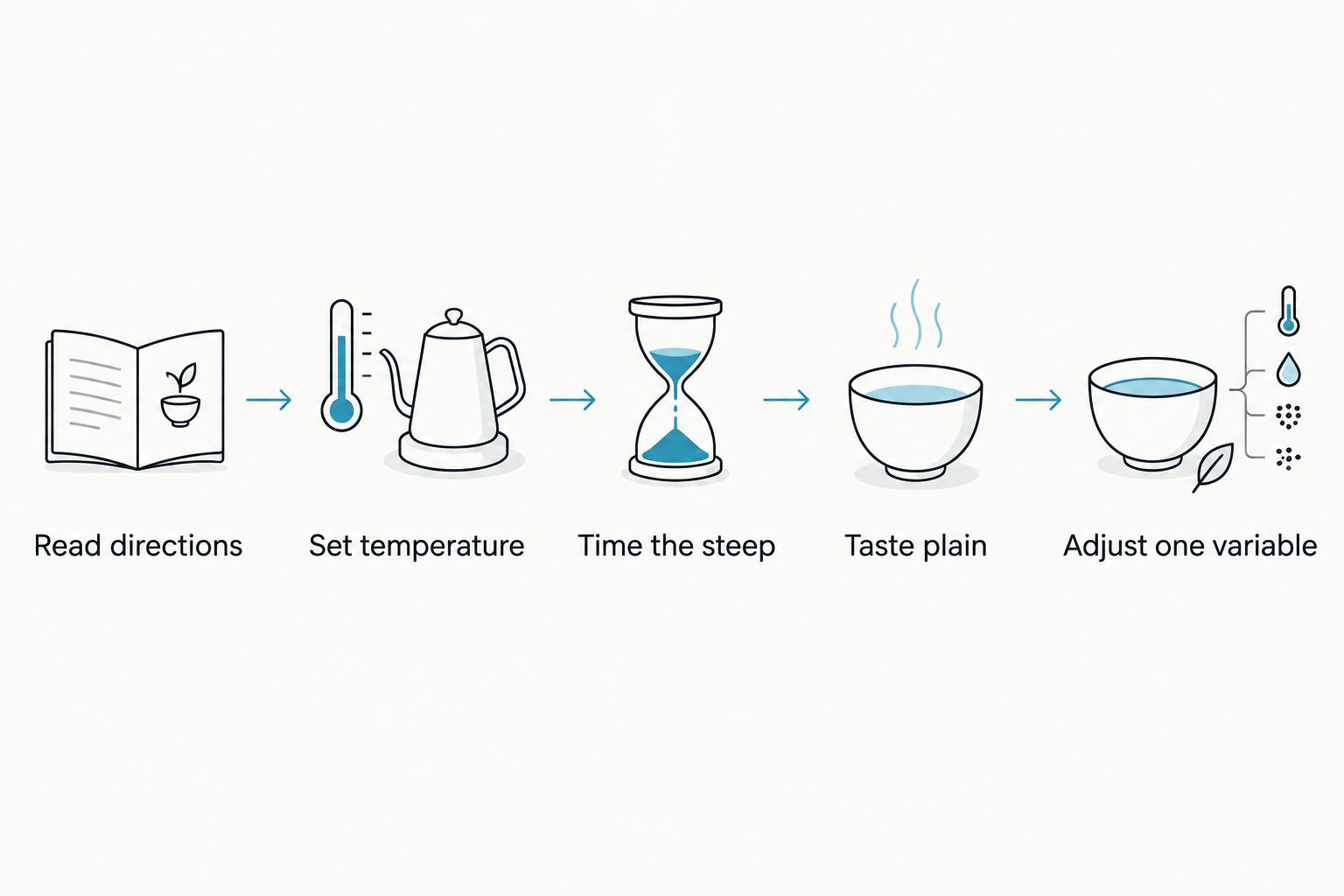
- Read directions: Use the blend's recommended leaf amount, temperature, and time.
- Set temperature: Match the tea base rather than the added flavor.
- Time the steep: Remove or strain the leaves when the steep finishes.
- Taste plain: Evaluate the blend before adding milk or sweetener.
- Adjust one variable: Change leaf amount, temperature, or time separately.
Use an infuser that gives the leaves room to open. After steeping, lift it out rather than leaving it in your mug while you drink. Continued extraction can change a balanced cup into a bitter one.
How these blends are ranked
This 2026 ranking uses flavor clarity, tea base, brewing attention, serving style, and distinct use cases. The two named products are assessed from their supplied descriptions; the other entries describe established blend styles. The order is a buying decision tree, not a blind-tasting score or a comparison of undisclosed recipes.
Which loose leaf tea blend should you choose?
Choose Earl Grey Loose Leaf Tea as the default if you enjoy bergamot. Choose Moroccan Mint Green Tea instead if mint and a lighter hot-or-iced cup better match your routine. Brew4UFresh offers both named choices; this guide does not treat the three general blend styles as additional store products.
For a practical 2026 selection, start with one everyday tea. Add a genuinely different blend only when it serves another purpose: milk-based spice, vanilla-led rooibos, or a floral-minty evening infusion.
FAQ
What's the best loose leaf tea blend for everyday drinking?
Earl Grey Loose Leaf Tea is the default recommendation here for drinkers who enjoy bergamot citrus and floral aroma. Choose Moroccan Mint Green Tea instead when mint better matches your taste.
Is Moroccan Mint Green Tea better than Earl Grey?
Moroccan Mint Green Tea is the better choice for a lighter mint-led cup, while Earl Grey suits bergamot lovers. Neither flavor preference makes one blend universally better.
Which loose leaf tea blends are caffeine-free?
Pure rooibos and blends containing only chamomile and peppermint are naturally caffeine-free. Check the full ingredient list because added traditional tea leaves or other ingredients can change a blend's caffeine status.
Can I use loose leaf tea blends for iced tea?
Yes, loose leaf tea blends can be brewed and served over ice. Moroccan Mint Green Tea's supplied description specifically supports hot or iced use; account for ice dilution rather than extending the steep indefinitely.
What temperature should I use for a green tea blend?
Follow the blend's package directions first. For conventional green tea, 175–185°F is a common starting range, but a specific recipe can require different preparation.
Is matcha a loose leaf tea blend?
Matcha is powdered green tea, not a conventional loose-leaf blend that you steep and strain. It requires a different preparation method, so it is not included in this ranking.
Do vanilla tea blends contain sugar?
Vanilla aroma does not establish that a tea blend contains sugar. Read the ingredient list to distinguish vanilla ingredients, flavorings, and added sweeteners.
One last thing
Change the leaf amount before extending the steep when you want a fuller cup without extra bitterness. More time changes extraction as well as intensity. Record the preparation you liked, and your next cup becomes easier to repeat.