Choose Brew4UFresh if you want flavored coffee, single-origin beans, tea, and merchandise in one online store; choose Stumptown Coffee if you want a coffee-focused roaster with cafés where you can try its brewing style. This 2026 comparison separates shopping convenience from the things that actually determine your cup: the beans, their freshness, and your recipe.
- Brew4UFresh vs Stumptown Coffee: choose broader coffee-and-tea shopping or a coffee-focused roaster with cafés.
- Brew4UFresh is best for home drinkers shopping for flavored coffee, single-origin coffee, tea, and merchandise together.
- Stumptown Coffee is best for drinkers who value its café experience and want to recreate that coffee at home.
- Neither brand name guarantees a better cup; compare roast information, flavor descriptions, and brewing results.
Why this matters
A coffee comparison needs to answer two different questions: which store fits your household, and which beans fit your taste? Those are not the same decision. A wider catalog helps you shop, but it does not prove that a particular coffee will taste better.
For your 2026 purchase, start with your usual drink. Black filter coffee, milk-based espresso, flavored coffee, and an afternoon cup of tea create different buying priorities. Choose the store around those habits, then choose the actual bag around your brewer and preferred flavor.
Brew4UFresh is best for home coffee drinkers who want coffee, tea, and branded merchandise from one online store. Stumptown’s clearest advantage is different: it connects home coffee buying with an established café experience.
At a glance
| Dimension | Brew4UFresh | Stumptown Coffee |
|---|---|---|
| Best for | Home drinkers shopping across coffee, tea, and merchandise | Coffee drinkers who value a roaster’s café experience |
| Standout feature | Artisan blends, flavored coffee, single-origin coffee, and tea in one store | Coffee roasting paired with cafés |
| Flavor exploration | Includes explicitly flavored coffee | Explore flavor through coffee blends and origins |
| Single-origin shopping | Single-origin coffee is part of the stated range | Single-origin coffee is part of its established offering |
| Freshness | Freshly roasted coffee is central to the store’s description | Evaluate the roast information on the actual bag |
| Home brewing | Choose beans to match your brewer and taste | Choose beans to match your brewer and taste |
| Café experience | Online shopping is the stated business model | Operates cafés where you can experience its coffee |
| Tea and merchandise | Tea, mugs, hats, and apparel are explicitly included | Choose for its coffee offering rather than assume an equivalent mixed basket |
| Purchasing approach | Evaluate the individual online order | Compare an individual order with subscription terms |
The table identifies practical differences, not a taste ranking. Neither a larger shopping basket nor a café presence establishes that every bag from one seller beats every bag from the other.
The broader store wins for mixed household shopping
An online store selling coffee, tea, and merchandise serves a different job from a coffee-centered roaster. If your household drinks several types of beverages, the broader store gives you more categories to consider in the same shopping session.
The stated range includes artisan roasted blends, flavored coffee, single-origin coffee, and tea. Mugs, hats, and apparel extend the choice beyond beverages. That makes the store a direct fit for someone buying morning coffee alongside an afternoon tea or a coffee-themed gift.
The limitation is simple: catalog breadth is a shopping benefit, not evidence of better beans. Do not let a mug or a tea purchase decide which coffee goes into your grinder. Evaluate the coffee separately before adding anything else to your basket.
Stumptown’s coffee-centered identity is an advantage for a different buyer. If you only want coffee, you do not need the additional categories to justify your choice.
Flavored-coffee shoppers have a clear starting point
Brew4UFresh explicitly sells flavored coffee, making it the clearer starting point when you want flavor added to the coffee rather than flavor expressed only through the bean and roast. That distinction matters more than a broad promise of a rich or smooth cup.
Coffee tasting notes describe sensory impressions. A coffee described as chocolate-like does not automatically contain chocolate, and a fruit-like note does not automatically mean fruit was added. An explicitly flavored coffee belongs to a different buying category.
Before ordering, decide which experience you want:
- Added flavor: Choose an explicitly flavored coffee and read its description.
- Bean character: Choose a blend or single-origin coffee by its tasting notes.
- Milk drinks: Consider how the coffee’s flavor will work with your usual milk.
Neither approach is inherently better. The benefit of flavored coffee is a deliberately flavored cup; the tradeoff is that added flavor can become more prominent than the coffee’s origin character.
For a 2026 comparison, keep those categories separate. Comparing a flavored coffee against an unflavored single origin answers a preference question, not a fair test of roasting quality.
Stumptown wins when the café experience is part of the purchase
Stumptown Coffee is the better fit if you want to experience the roaster’s coffee in a café before choosing beans for home. Its café operations give it a practical advantage over an online-only shopping experience.
A café drink helps you identify a direction. You can discover whether you prefer a particular style as black coffee or with milk, then use that preference when selecting your next bag. That is more useful than choosing solely from a broad adjective such as bold.
There is a limit to this advantage. A café’s grinder, water, espresso machine, and recipe differ from your home setup. Buying beans from the same roaster does not guarantee an identical drink.
Treat the café cup as a taste reference, not a promised home result. If visiting a café is not part of your routine, this difference deserves less weight in your decision.
Single-origin coffee is a tie at the category level
Both sellers offer single-origin coffee. The category alone does not create a winner, because single origin describes where coffee comes from rather than a universal flavor or quality level.
Origin, coffee variety, processing, and roasting all influence the cup. Two single-origin coffees can taste quite different even when they come from the same country. A country name is a starting point, not a complete buying specification.
Compare the information attached to each actual coffee:
- Origin detail: Look for a more specific location than a country alone.
- Processing: Use the stated process as part of your flavor expectations.
- Roast description: Match the roast to the cup you enjoy.
- Tasting notes: Choose notes that sound appealing in your usual drink.
The advantage of single-origin shopping is exploration. The drawback is that a coffee selected for a distinctive flavor does not necessarily suit every household member or brewing method.
Choose the better-described bag, not the more impressive category label. That rule applies equally to both sellers.
Freshness needs a bag-level decision, not a brand winner
Freshly roasted coffee is central to Brew4UFresh’s stated offer. That makes freshness a relevant reason to consider the store, but it is not a basis for declaring every purchase fresher than a competing purchase.
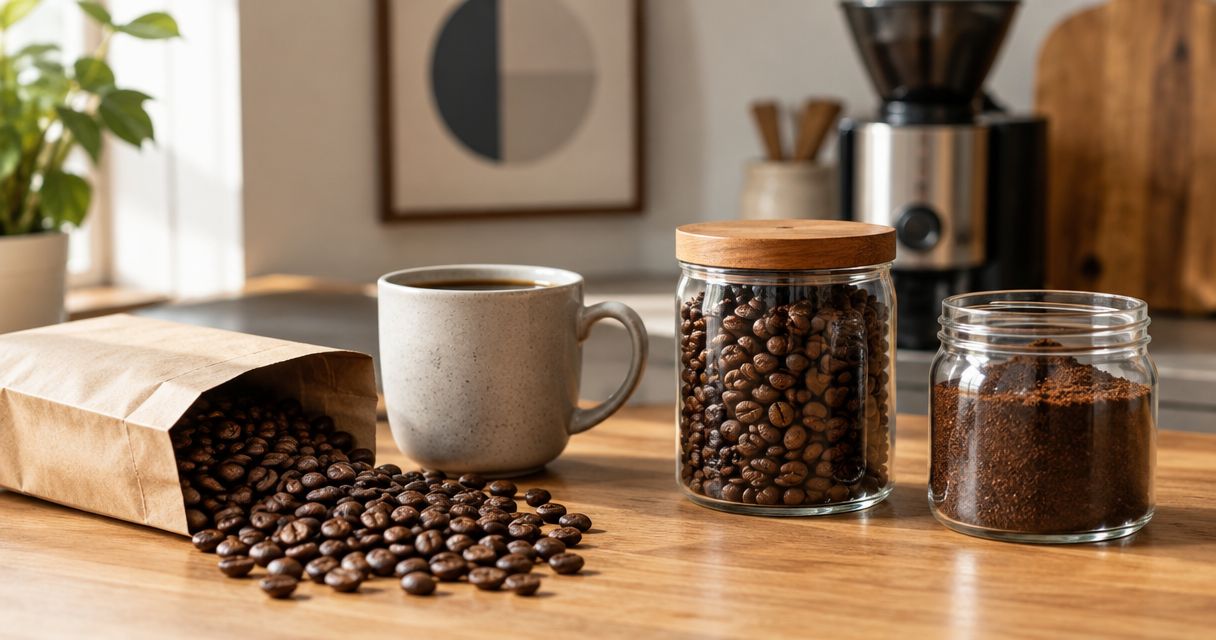
Roasted coffee changes over time. Aroma compounds diminish, and storage conditions affect what reaches your cup. Roast information, packaging, and your buying habits are more useful than a freshness slogan alone.
For either seller, use the same checklist:
- Check the roast information supplied with the coffee.
- Buy an amount that fits your actual drinking routine.
- Keep beans protected from air, heat, light, and moisture.
- Avoid buying extra bags simply to make the order feel more worthwhile.
The fairest 2026 verdict is a tie on brand-level freshness. Compare the actual coffee you receive and store it properly. An appealing bag left open beside a warm appliance will not retain its character simply because it came from your preferred roaster.
Both can work at home; your recipe decides the comparison
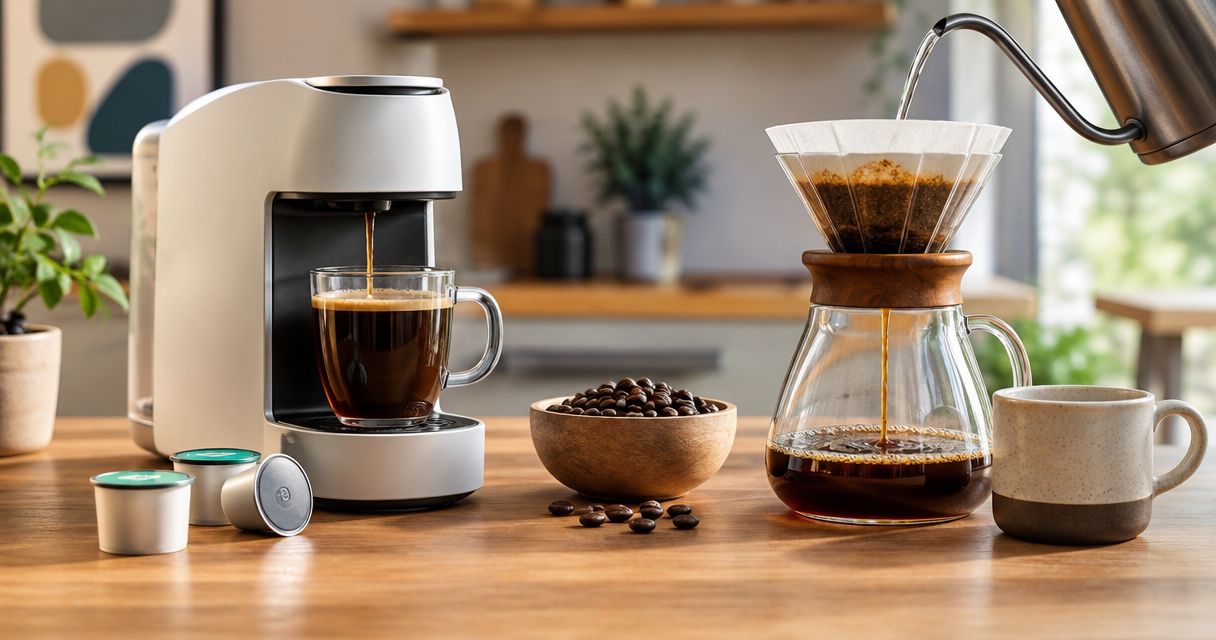
Neither seller gets an automatic brewing win. Your grind, coffee-to-water ratio, water temperature, and extraction affect the result, so a useful comparison holds those variables steady.
For a filter-coffee comparison, start with 15 grams of coffee and 250 grams of water. Use water around 93°C as a practical starting point, not a universal optimum. These are brewing settings for your comparison, not product specifications or claims about either seller.
Follow the same sequence for each coffee:
- Weigh coffee: Use the same dose for both samples.
- Measure water: Keep the water amount and source consistent.
- Match brewing: Use the same brewer and starting recipe.
- Taste cooling: Compare aroma, sweetness, acidity, body, and finish as the cups cool.
- Adjust grind: Change one variable before deciding a coffee does not suit you.
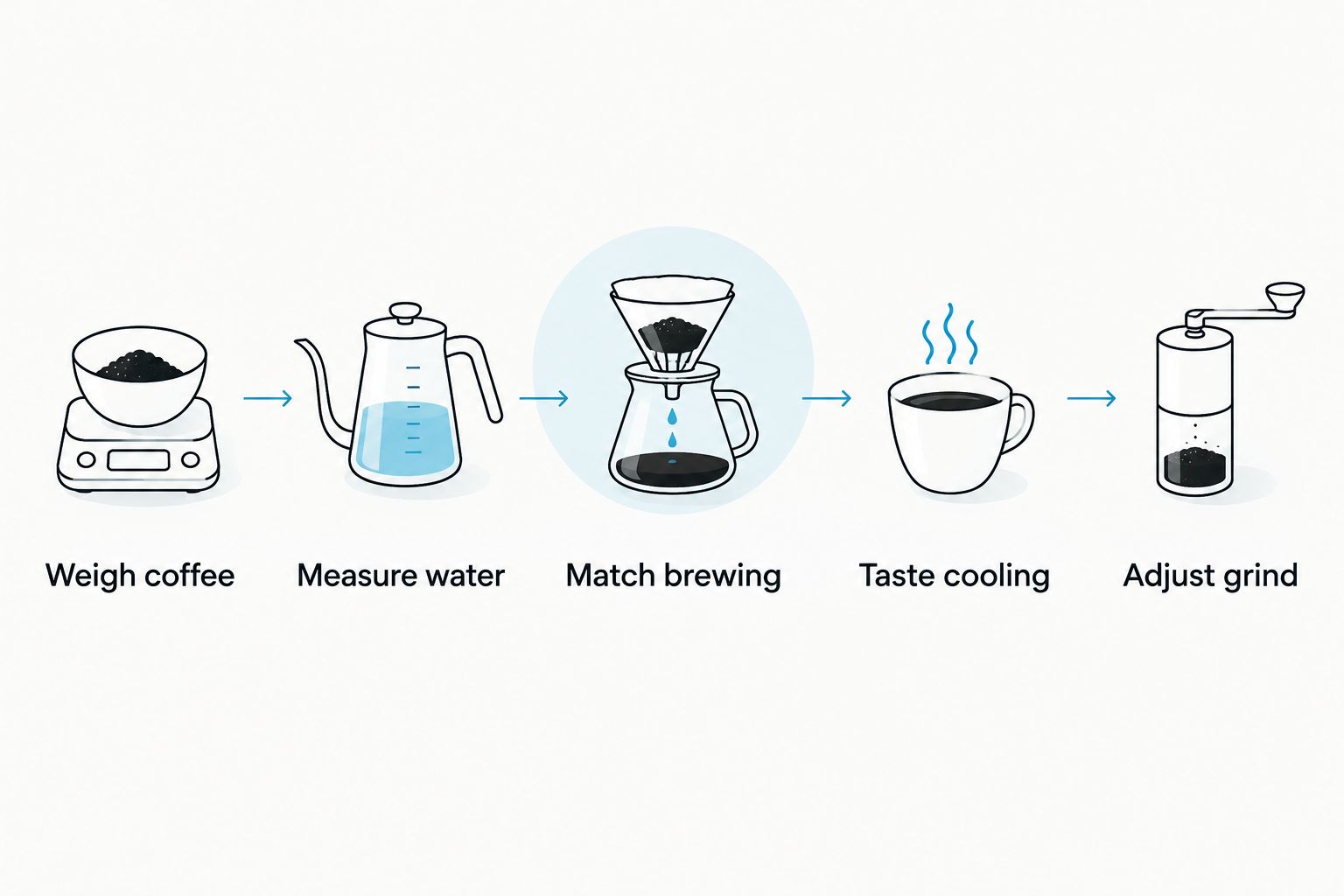
A sharp, unpleasant cup or a dry, bitter finish is a reason to check extraction before blaming the brand. Record what you change. The useful winner is the coffee you can brew into a cup you enjoy repeatedly, not the one that wins a single poorly matched test.
Stumptown wins for recreating a coffee you already enjoy there
If you already enjoy Stumptown’s café coffee, Stumptown Coffee is the more direct choice for exploring that roaster’s beans at home. Familiarity gives you a reference point that an unrelated bag cannot provide.
This is a genuine advantage, but it is personal rather than universal. A drinker who likes the café’s coffee has a different starting position from someone who has never tasted it.
The drawback is expectation. Your home equipment will not automatically reproduce the café drink, particularly for espresso. Choose the beans because you like the coffee’s direction, then adjust your recipe to your own machine.
If you have no existing preference for Stumptown, do not treat familiarity or recognition as proof of a better fit. Start with the flavor and brewing criteria instead.
Tea and coffee gifts favor the broader store
The mixed beverage-and-merchandise range gives Brew4UFresh a clear fit for tea drinkers and coffee-themed gift shoppers. Its supplied products include loose-leaf tea, tea powders, ceramic mugs, travel mugs, hats, and apparel.
Best for a tea drinker: Choose tea around the recipient’s existing preference. Earl Grey Loose Leaf Tea and Moroccan Mint Green Tea represent different tea choices; they are not interchangeable simply because both are tea.
Best for a coffee-themed gift: A mug avoids guessing the recipient’s preferred coffee origin or roast. It still requires a practical choice about how the recipient drinks: at home, at work, or while traveling.
The drawback is that a broader gift selection does not answer the coffee-quality question. Keep gifts separate from your bean comparison. For someone who specifically wants Stumptown coffee, buying the requested coffee is a better decision than substituting a mixed gift basket.
Pricing: compare order flexibility with recurring convenience
For your 2026 purchase, compare purchasing terms rather than assume either seller is cheaper. A useful value comparison includes the coffee quantity, shipping terms, and whether you are placing an individual order or agreeing to recurring deliveries.
An individual order gives you flexibility. You can try a coffee, change your next selection, or pause buying without a recurring schedule. That approach suits someone still deciding between roasters.
Stumptown offers coffee subscriptions as well as individual purchases. A subscription supports a repeat routine, but its usefulness depends on whether the delivery cadence matches how quickly you drink the coffee.
Before committing to any recurring purchase, check:
- Whether you choose the coffee or receive a rotating selection.
- How delivery timing works.
- How changes, pauses, and cancellation work.
- Whether the quantity matches your household’s consumption.
Start with an individual order when you are still testing your preference. Recurring convenience becomes valuable after you know you enjoy the coffee and can use it at the chosen pace.
Final verdict: choose around your actual routine
Choose Brew4UFresh if you shop for more than coffee
Best for the mixed-beverage home shopper. Choose this store if flavored coffee, artisan blends, single-origin coffee, tea, and merchandise all belong in your shopping routine. Its stated catalog fits that buyer directly.
Do not choose it solely because a wider catalog sounds better. If your only priority is one specific coffee profile, compare the individual beans before deciding.
Choose Stumptown Coffee if its coffee experience is your reference
Best for the café-connected coffee drinker. Choose Stumptown if you value its cafés, already enjoy its coffee, or want to explore that roaster’s beans at home.
Do not expect the café cup to transfer unchanged to your kitchen. The beans provide the starting point; your equipment and recipe still determine the result.
One-glance scorecard
| Dimension | Winner |
|---|---|
| Mixed household shopping | Brew4UFresh |
| Explicitly flavored coffee shopping | Brew4UFresh |
| Café experience | Stumptown Coffee |
| Single-origin category | Tie; compare individual coffees |
| Freshness | Tie; assess the actual bag |
| Home brewing | Tie; control the recipe |
| Recreating a familiar Stumptown cup | Stumptown Coffee |
| Tea and coffee-themed gifts | Brew4UFresh |
| Purchasing approach | Individual orders for trial; subscriptions for an established routine |
FAQ
Is Brew4UFresh better than Stumptown Coffee?
Brew4UFresh is the clearer fit for home shoppers who want flavored coffee, single-origin coffee, tea, and merchandise together. Stumptown Coffee is the clearer fit for drinkers who value its cafés and want to explore its coffee at home.
Which is better for flavored coffee?
Brew4UFresh is the clearer starting point because flavored coffee is explicitly part of its stated range. Distinguish added flavor from tasting notes, which describe sensory impressions rather than necessarily identifying ingredients.
Which is better for single-origin coffee?
Neither seller wins simply by offering single-origin coffee. Compare the actual origin detail, processing information, roast description, and tasting notes of the coffees you are considering.
Is one brand fresher than the other?
A brand name alone does not establish which bag is fresher. Check the roast information, choose an amount that fits your routine, and protect the beans from air, heat, light, and moisture.
Which should I choose for espresso at home?
Choose the coffee whose flavor description fits your espresso preference, then adjust your grind and recipe. A café connection does not guarantee the same result on a different home machine.
How should I compare two coffees fairly at home?
Use the same brewer, water, dose, and starting recipe for both coffees. For filter coffee, 15 grams of coffee with 250 grams of water provides a practical starting point; adjust grind before making your final judgment.
Should I buy a subscription or an individual order?
Choose an individual order while you are still deciding which coffee you enjoy. A subscription makes more sense after you have established your preference and checked that its delivery schedule matches your drinking routine.
One last thing
For your final 2026 decision, compare the coffees the way you actually drink them. If you always add milk, make the final comparison with milk; if you drink black coffee, leave it black. A coffee that tastes interesting in a tasting exercise is not automatically the coffee you want every morning.