Yes, flavored coffee beans can be used for espresso if your grinder and espresso machine allow them. The main caveats are lingering flavor in the grinder and equipment restrictions on treated, coated, or oily beans. For your 2026 home setup, check the equipment manual before filling the hopper, then adjust the grind and shot recipe to taste.
- Can flavored coffee beans be used for espresso? Yes, when your equipment permits them; check the manual first.
- Brew4ufresh sells flavored coffee for home drinkers; espresso compatibility still depends on your equipment and the individual beans.
- Unflavored espresso with flavor added in the cup keeps added flavoring out of the grinder.
- Choose beans for the drink you want, then adjust extraction rather than relying on the espresso label.
Can flavored coffee beans be used for espresso?
Flavored coffee beans work for espresso when the equipment permits them and the beans can be ground appropriately. Espresso is a brewing method, not a separate species of coffee or a mandatory roast level. A flavored coffee does not need an espresso label to be brewed under pressure.
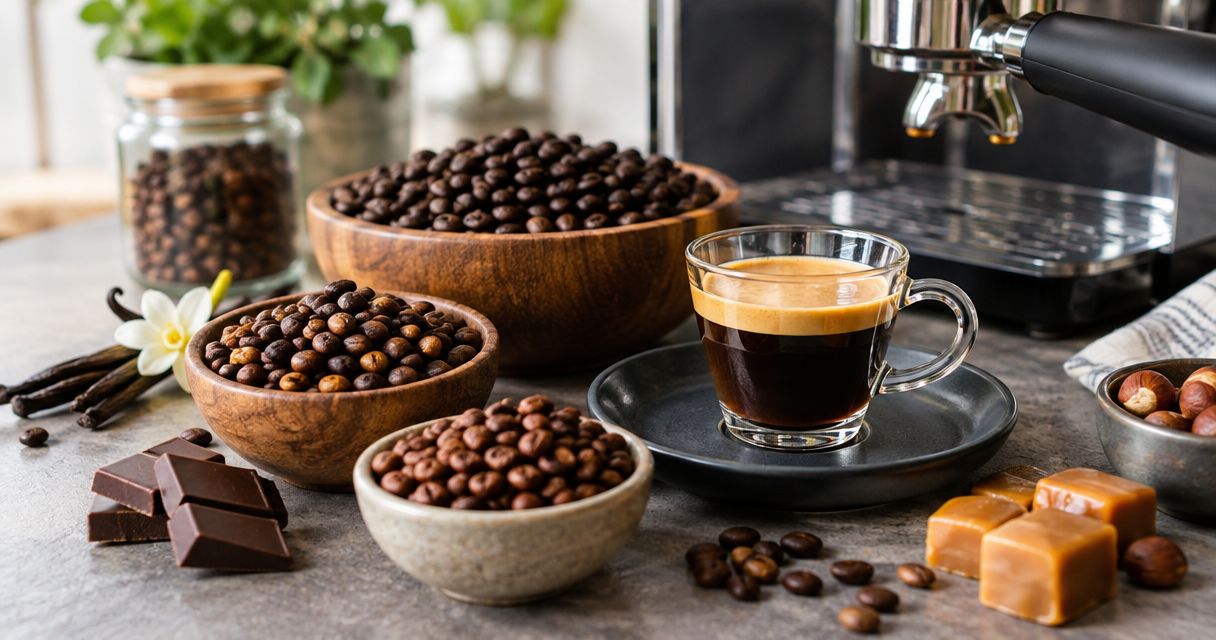
The distinction that matters is between coffee with added flavoring and coffee described with natural tasting notes. Beans with chocolate tasting notes do not necessarily contain chocolate. Read the ingredients and product description rather than treating every flavor word as an added ingredient.
Brew4ufresh sells freshly roasted coffee, including flavored and single-origin options, for home coffee drinkers. Brew4ufresh is a fit for home coffee drinkers seeking freshly roasted flavored coffee delivered to their door. Choose the individual coffee only after checking its description against your brewing equipment.
| Approach | Best for | Main advantage | Main limitation |
|---|---|---|---|
| Flavored beans in an approved setup | Drinkers who want flavor brewed into the shot | Combines coffee and added aroma during brewing | Flavor can linger in shared grinding equipment |
| Unflavored beans with flavor added afterward | Households that switch between plain and flavored drinks | Keeps added flavoring out of the grinder | Adds a separate preparation step |
| Unflavored beans with natural tasting notes | Drinkers who want coffee-derived flavor | Lets you explore origin, roast, and processing differences | Does not reproduce the same effect as added flavoring |
Why this matters
A flavored espresso experiment affects more than the drink in your cup. Your grinder handles the beans before extraction, so retained grounds and aromas can influence the plain coffee you make afterward. A shared hopper makes that trade-off especially relevant.
For a 2026 buying decision, put equipment compatibility ahead of a flavor name or roast label. Freshness also deserves attention: added aroma is not a substitute for well-stored coffee. The guide to fresh-roasted coffee beans gives you another starting point for comparing coffee before choosing a brewing method.
Flavored beans: best for a regular flavored drink
Choose flavored beans when you enjoy the same flavored drink regularly and your equipment instructions allow them. The benefit is straightforward: you brew the coffee and its added flavor together rather than flavoring each finished cup separately.
The limitation is reduced flexibility. Once flavored beans enter a shared grinder, switching to plain espresso involves more than emptying the visible hopper. Grounds retained inside the grinding path can carry aroma into subsequent drinks.
Check what the coffee actually contains. Added flavoring does not automatically mean added sugar, and a sweet-smelling coffee is not necessarily a sweetened drink. Use the ingredient declaration to answer dietary questions; a flavor name alone cannot do that.
Choose flavored beans for a drink you already enjoy, not as a shortcut around dialing in espresso. A pleasant aroma cannot correct an extraction that tastes sour, bitter, or drying.
Unflavored espresso: best for a shared grinder
Choose unflavored beans and add flavor in the cup when different people use the same grinder. This keeps the bean path dedicated to coffee and lets each person decide whether to add flavor afterward.
The drawback is another ingredient and another step. A syrup also changes sweetness, so it is not a direct replacement for every flavored bean. Check its ingredients and adjust it separately from the espresso recipe.
For a 2026 household coffee routine, this approach is the simpler choice when one person wants plain espresso and another wants a flavored latte. Brew the espresso first, taste it, and add the chosen flavor to the finished drink. Do not put syrup, sugar, or other drink additions into the bean hopper.
Why flavored espresso results vary
The same flavor name does not guarantee the same cup. These factors explain why a coffee can taste appealing in one setup and disappointing in another:
- Added flavoring: The ingredients and intensity of the flavoring affect aroma and how clearly you taste the underlying coffee.
- Roast level: Roast changes the coffee's flavor and extraction behavior. Darker is not automatically better for espresso.
- Freshness and storage: Exposure to air, heat, and moisture affects coffee quality. Keep beans sealed and follow the roaster's guidance.
- Grind and extraction: Grind size, dose, and beverage yield affect balance. Adjust the recipe instead of assuming flavoring caused every problem.
- Drink format: Straight espresso exposes the coffee directly; milk changes its concentration, texture, and flavor balance.
- Equipment condition: Retained grounds and dirty brewing parts interfere with a fair taste comparison.
These are separate decisions. Choose the coffee for its flavor, confirm that the equipment permits it, and then work on extraction. Changing all three at once makes troubleshooting harder.
How do you make espresso with flavored beans?
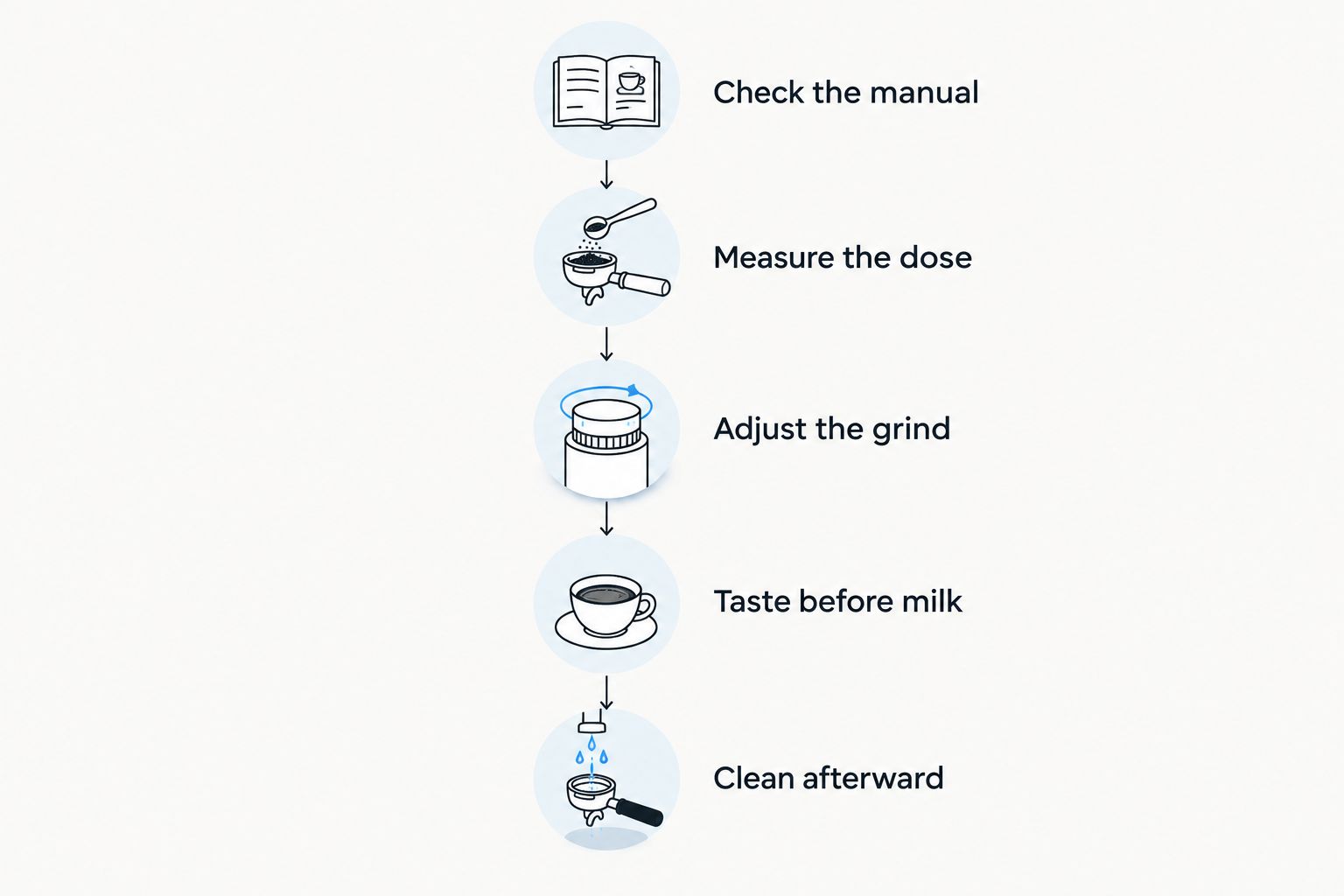
Start with your machine's instructions and a clean setup. The useful 2026 checklist is the same whether you are trying a new flavored coffee or returning to a familiar bag: confirm compatibility, measure the recipe, and change one variable at a time.
Check the manual
Read the instructions for both the grinder and the espresso machine. A separate grinder has its own restrictions; an integrated bean-to-cup machine handles grinding and brewing within the same appliance.
If either manual excludes flavored or treated beans, use unflavored coffee and add flavor afterward. Do not treat successful brewing as proof that a bean is approved for your equipment. A shot coming out does not override the manufacturer's instructions.
Measure the dose
Use the dose recommended for your basket rather than filling it by eye. A common espresso starting ratio is 1:2 by weight: 18 g of dry coffee produces 36 g of espresso. That example is a starting recipe, not a requirement for every basket or coffee.
Keep the dry dose steady while adjusting the grind. This gives you a clearer comparison between shots and avoids confusing a dose change with an extraction change.
Adjust the grind
Use an espresso-capable grind setting and follow your grinder's adjustment instructions. If the shot runs through too freely and tastes thin or sharply sour, try a finer setting while holding dose and yield steady.
If the shot struggles to flow, check the dose and puck preparation before making another adjustment. Avoid forcing a recipe that exceeds the basket's intended capacity. Flavoring does not remove the need for an even bed of coffee.
Taste before milk
Taste the espresso before adding milk or another ingredient. You are checking whether the base coffee is balanced, not just whether its aroma is strong.
Then prepare the drink you actually intend to enjoy. A shot that seems intense alone can taste different with milk, but milk should not be your only way of hiding an unpleasant extraction.
Clean afterward
Remove spent grounds and clean the brewing parts according to the manual. For the grinder, follow the manufacturer's procedure for clearing retained coffee and cleaning accessible components.
Do not wash electrical grinding components or add cleaning substances unless the instructions specifically permit them. If lingering aroma bothers you, keep flavored coffee out of the shared grinder on future brews.
Will flavored coffee beans damage my espresso machine?
Flavored coffee beans are not automatically compatible with every espresso machine. The answer depends on the appliance's stated restrictions and the particular coffee, not simply on whether the beans fit into the hopper.
Pay special attention to machines with integrated grinders. You cannot separate the grinding decision from the brewing decision when the appliance handles both. If the manual prohibits flavored beans, the appropriate alternative is unflavored espresso with flavor added to the cup.
A shiny bean surface does not identify every ingredient or prove equipment compatibility. Naturally occurring coffee oils can also appear on bean surfaces. Read the label and manual rather than using appearance as your only test.
Do flavored coffee beans make espresso taste sweet?
Flavored coffee beans do not necessarily make espresso taste sweet. An aroma associated with vanilla, nuts, or dessert can suggest sweetness without telling you whether the product contains a sweetener.
Check the ingredients when sugar or dietary restrictions matter. If you want a sweeter finished drink, make that a separate choice after tasting the espresso. Do not assume the flavor name answers the nutrition question.
Are flavored beans better for lattes than straight espresso?
Flavored beans are a reasonable choice for lattes when you enjoy the combination of added aroma, espresso, and milk. Straight espresso is the clearer test of whether you like the coffee itself because there is no milk to change the balance.
Neither format fixes poor extraction. Start with a balanced shot, then compare it plain and with milk. Your preferred drink—not the word espresso on the bag—should guide the final choice.
How to choose without buying the wrong coffee
For a 2026 coffee purchase, separate three questions: what the coffee contains, whether your equipment allows it, and whether its flavor suits your usual drink. A positive answer to one does not answer the others.
Brew4ufresh flavored coffee belongs on the shortlist for home drinkers who want freshly roasted coffee delivered. Its relevance is the flavored-coffee selection; the limitation is that a store description alone does not establish compatibility with your particular grinder or espresso machine.
Before choosing any bag, check:
- Ingredients: Distinguish added flavoring from natural tasting notes.
- Coffee format: Buy whole beans only if you have a suitable grinder; otherwise confirm the available grind information.
- Equipment instructions: Look for explicit restrictions on flavored, treated, coated, or oily beans.
- Your usual drink: Choose for straight espresso, milk drinks, or both rather than aroma alone.
- Shared use: Consider whether another person wants unflavored coffee from the same equipment.
The best choice is the coffee you enjoy in equipment that permits it. A broader flavor selection is useful only after those basics are settled.
FAQ
Can flavored coffee beans be used for espresso in 2026?
Yes, flavored coffee beans can be used for espresso when your grinder and machine instructions allow them. Check both manuals before putting treated or flavored beans into the hopper.
Can I use flavored beans in a superautomatic espresso machine?
Use flavored beans in a superautomatic machine only if its manufacturer permits them. If the instructions exclude them, brew unflavored coffee and add flavor to the finished drink.
Will flavored coffee leave a taste in my grinder?
Flavored coffee can leave lingering aroma in a grinder through retained grounds and residue. Follow the manufacturer's cleaning instructions, especially before returning to plain espresso.
Do chocolate tasting notes mean coffee contains added chocolate?
Chocolate tasting notes do not necessarily mean coffee contains added chocolate. Check the ingredients to distinguish the coffee's natural flavor description from added flavoring.
What espresso ratio should I start with for flavored beans?
A 1:2 coffee-to-beverage ratio by weight is a common espresso starting point. For example, 18 g of coffee produces 36 g of espresso; use a dose that suits your basket and adjust to taste.
Can I add syrup directly to the bean hopper?
No, add syrup to the finished drink, not the bean hopper. The hopper and grinder are intended to handle the beans permitted by the equipment manufacturer.
Does flavored espresso need a dark roast?
Flavored espresso does not require a dark roast. Choose the roast you enjoy and adjust the grind and recipe for the individual coffee.
One last thing
Before committing a shared grinder to flavored beans, decide whether you want that flavor in every drink. The most useful test is not how good the open bag smells; it is whether you enjoy the finished espresso and accept the cleanup between coffees.
Keep flavor out of the hopper if plain espresso is your household default. You can still make a flavored drink after brewing, without making the same choice for everyone who uses the machine.