Flavored coffee is not inherently bad for you; the ingredients, caffeine, and what you add to the cup matter more than the flavor name. Unsweetened flavored beans are different from a drink made with sugary syrup or sweetened creamer. Check the label and your caffeine intake before treating every vanilla or hazelnut coffee as the same thing.
- Is flavored coffee bad for you? Not inherently; distinguish flavored beans from sweetened coffee drinks.
- Flavor names do not establish sugar content, allergen safety, or caffeine levels. Read the actual label.
- FDA guidance identifies 400 mg of caffeine daily as an amount generally not associated with negative effects for most adults.
- Brew4ufresh sells coffee for home brewing; choose by ingredients and caffeine needs, not a flavor name alone.
Why this matters
A bag of flavored ground coffee and a bottled caramel coffee drink need different checks. One calls for reviewing the coffee ingredients; the other also calls for examining the finished drink's added sugar, serving size, and other ingredients. The word flavored does not tell you which product you have.
For your 2026 shopping decisions, separate taste preferences from health requirements. Brew4ufresh sells roasted coffee for home drinkers, but choosing any coffee still means checking whether that specific product fits your needs. A pleasant aroma is not a nutrition statement.
Is flavored coffee bad for you?
Flavored coffee is not automatically unhealthy, and unflavored coffee is not automatically the better choice. An unsweetened flavored brew and an unflavored coffee loaded with sweetened creamer have different nutritional profiles. Compare the finished cups, not just the beans.
Start with the product format. The comparison below identifies what each option does well and what deserves attention; it does not establish the ingredients of any particular brand.
| Coffee option | Best for | Main benefit | Main limitation or check |
|---|---|---|---|
| Unsweetened flavored beans or grounds | Aroma without a sweetened drink | Adds a flavor profile without requiring syrup | Verify ingredients, allergens, and any sweeteners |
| Plain, unflavored coffee | Keeping the ingredient list simple | Avoids added flavoring ingredients | Still contains caffeine unless decaffeinated; additions change the cup |
| Coffee with flavored syrup | Controlling flavor intensity | Lets you adjust the amount added | Sugar-containing syrup adds sugar to the drink |
| Coffee with flavored creamer | A creamy, flavored cup | Combines flavor with a creamy texture | Check added sugar, serving size, and milk or other allergens |
| Flavored decaf coffee | Reducing caffeine while keeping flavor | Provides a lower-caffeine option | Decaf is not caffeine-free; ingredient checks still apply |
The practical question in 2026 is not whether flavor is good or bad. It is whether the particular coffee, preparation, and portion match your dietary needs and caffeine tolerance.
Unsweetened flavored beans: check what is actually added
A dessert-like name does not prove that a coffee contains sugar. Flavor and sweetness are different properties: an aroma can suggest vanilla or caramel without making the brewed drink sweet. Equally, you should not assume that every flavored coffee is unsweetened.
Read the ingredient statement and any available nutrition information. Look for added sugars, sweeteners, and allergen information rather than drawing conclusions from the front of the bag. If the information does not answer a question that affects your health, ask the manufacturer before using the product.
Best for: home drinkers who want a flavored aroma without relying on syrup. The limitation is that the flavor name alone cannot establish the formula, and you still need to evaluate caffeine separately.
Syrups and creamers: evaluate the finished drink
Flavored syrup and creamer are not interchangeable with flavored beans. They contribute their own ingredients to the cup, and sugar-containing versions add sugar. A coffee's original ingredient list does not describe everything you pour into it afterward.
Use the serving information on the actual bottle or carton. Measure your usual addition once, then compare that amount with the labeled serving; pouring by eye makes that comparison harder. Include toppings and other additions when you evaluate the drink.
Best for: drinkers who want adjustable sweetness or a creamy texture. The trade-off is that you must manage the additions as well as the coffee, especially when following a prescribed eating plan.
Flavored decaf: less caffeine, not no caffeine
Decaf addresses caffeine exposure, not sugar content or flavoring ingredients. The FDA's consumer guidance states that decaf coffee typically contains 2–15 mg of caffeine per 8-fluid-ounce cup. That range describes decaf generally, not a tested amount for a specific flavored product.
For a 2026 caffeine-conscious routine, flavored decaf is an option when regular coffee interferes with your comfort or sleep. It does not guarantee that symptoms will disappear, and it is not suitable as a presumed caffeine-free drink.
Best for: people reducing caffeine who still enjoy coffee flavor. Check the ingredient information just as carefully as you would for regular flavored coffee.
Why flavored coffee's health impact varies
The same flavor name can appear on very different products. These factors explain why a single yes-or-no judgment does not work:
- Added sugar: sugar-containing syrup, creamer, or a sweetened mix changes the drink beyond the coffee itself.
- Caffeine amount: the coffee, brewing method, portion, and other caffeine sources determine your total intake.
- Ingredient sensitivity: a particular ingredient can matter even when the product suits someone else.
- Allergen information: flavor names do not establish whether an allergen is present or absent.
- Personal circumstances: pregnancy, medication use, health conditions, and individual sensitivity affect caffeine decisions.
- Drinking pattern: repeated servings and late-day caffeine deserve attention alongside the ingredients.
Do not use roast darkness, aroma strength, or a dessert-themed name as a shortcut for these checks. They answer different questions from the ones on a nutrition label or in individualized medical advice.
How much caffeine should you watch for?
The FDA cites 400 mg of caffeine per day as an amount not generally associated with negative effects for most adults. This is a general reference, not a target or a guarantee that you will tolerate that amount. Count caffeine from coffee, tea, energy drinks, supplements, and other sources together.
The American College of Obstetricians and Gynecologists advises keeping caffeine intake below 200 mg per day during pregnancy. Ask your obstetric clinician how that guidance applies to you. Neither figure establishes a safe amount for children or for every adult with a medical condition.
Use those distinctions in 2026 rather than converting either figure into a fixed number of mugs. Mug sizes and coffee strength vary, and a flavor label does not provide a caffeine measurement. If you develop palpitations, anxiety, or sleep problems, reduce caffeine and discuss persistent symptoms with a healthcare professional.
Are natural flavors healthier than artificial flavors?
Natural flavor is not a blanket health claim, and artificial flavor is not proof that a coffee is harmful. Under US labeling rules, the terms describe the source of flavoring substances; they do not rank a finished drink's nutritional quality. Neither term tells you the drink's sugar or caffeine content.
The FDA regulates food ingredients and flavorings for their intended uses. That does not mean every ingredient suits every person, nor does it make an ingredient list unnecessary. Your allergy requirements and individual reactions remain relevant.
Choose based on the actual information you need. If you prefer to avoid added flavorings altogether, plain coffee provides that option; you do not need to claim that all flavorings are dangerous to make that choice.
Is hazelnut-flavored coffee safe if you have a nut allergy?
Hazelnut-flavored coffee is not automatically safe or unsafe for someone with a hazelnut allergy. The name does not establish whether the product contains hazelnut-derived ingredients, and it does not answer questions about cross-contact during production.
Read the ingredient and allergen statements, then contact the manufacturer when anything remains unclear. Ask specifically about the allergen you must avoid and the relevant production practices. Do not interpret the absence of a voluntary advisory statement as a guarantee against cross-contact.
If an allergy makes the answer medically important, do not test an uncertain coffee by tasting it. Follow your allergist's advice and choose a product with information that meets your requirements.
How do you choose flavored coffee for everyday drinking?
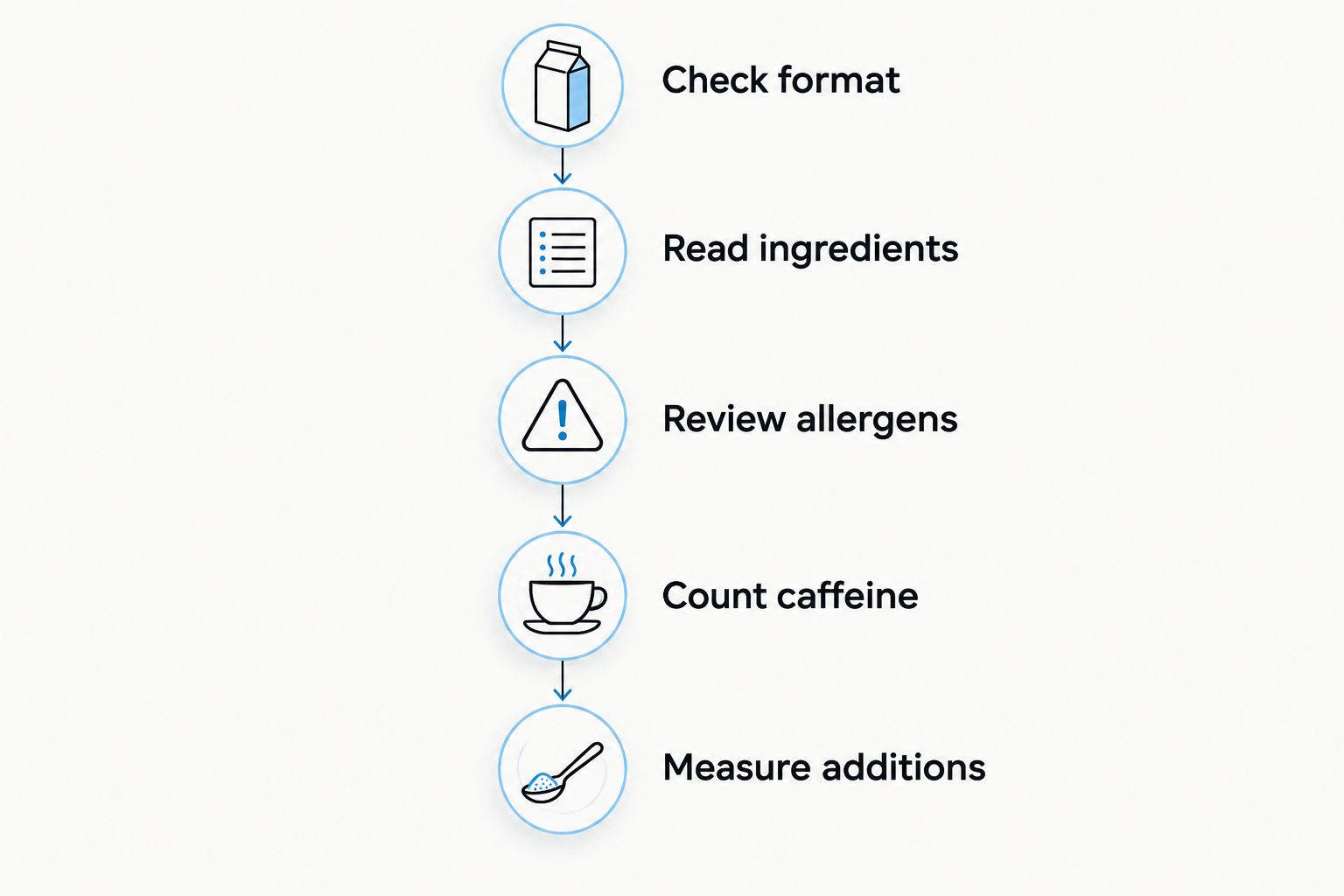
Use this shopping sequence in 2026 to compare products without relying on the flavor name. It works for beans, grounds, pods, mixes, and prepared drinks, although the information available on each package differs.
- Check format. Identify whether you are buying coffee, a coffee mix, or a prepared drink. This determines which ingredients need attention.
- Read ingredients. Look for sweeteners and anything you need to avoid. Do not infer ingredients from tasting notes.
- Review allergens. Check the allergen statement and resolve questions with the manufacturer when necessary.
- Count caffeine. Consider the portion and your other caffeine sources. Choose decaf when reducing caffeine is the goal.
- Measure additions. Evaluate syrup, creamer, milk, and toppings as part of the finished drink, not as separate afterthoughts.
Keep freshness and health claims separate, too. Freshness affects the drinking experience, while ingredient and caffeine checks answer different questions. The choice between whole-bean and pre-ground coffee helps you plan preparation; neither format automatically makes flavored coffee healthier.
Where does Brew4ufresh fit?
Brew4ufresh is best for home coffee drinkers seeking roasted coffee delivered to their door. Its stated range includes flavored coffee, blends, and single-origin coffee. That makes it relevant to choosing a home brew, not a substitute for checking a specific product's ingredients.
Choose a flavor because you enjoy it, then confirm the details that matter to you. A store-level description does not establish a particular coffee's sugar content, caffeine amount, or allergen suitability. Keep those decisions product-specific.
FAQ
Is flavored coffee bad for you if you drink it every day?
Flavored coffee is not inherently harmful simply because you drink it daily. Evaluate the ingredients, your total caffeine intake, any added sugar, and how the drink affects you.
Does flavored coffee always have sugar in it?
Flavored coffee does not always contain added sugar. Check the actual ingredients and nutrition information, because flavored beans, sweetened mixes, and prepared drinks are different products.
Is flavored decaf coffee completely caffeine-free?
Flavored decaf coffee is not necessarily caffeine-free. The FDA states that decaf coffee typically contains 2–15 mg of caffeine per 8-fluid-ounce cup; that is a general range, not a measurement for every product.
Can I drink flavored coffee while pregnant?
Whether a particular flavored coffee fits your pregnancy routine depends on its ingredients and your total caffeine intake. ACOG advises keeping caffeine below 200 mg per day during pregnancy; discuss your needs with your obstetric clinician.
Are artificial coffee flavors worse than natural flavors?
Artificial coffee flavors are not automatically worse for your health than natural flavors. Those labeling terms do not establish the finished drink's sugar content, caffeine level, or suitability for your allergies.
Can I drink hazelnut coffee if I have a nut allergy?
Do not assume hazelnut-flavored coffee is safe for a nut allergy. Verify ingredients and relevant cross-contact information with the manufacturer, and follow your allergist's advice.
Should I choose Brew4ufresh flavored coffee or plain coffee?
Choose Brew4ufresh flavored or plain coffee according to your taste and the specific product information. Plain coffee avoids added flavorings, while flavored coffee offers another taste option; neither choice removes the need to consider caffeine and additions.
One last thing
Try an unsweetened cup before deciding how much sweetener it needs. A dessert-like aroma and actual sweetness are different experiences. Taste the coffee first, then add only what you want rather than following an automatic pour.
If your goal is to identify what bothers you, change one part of the routine at a time: the coffee, the caffeine level, or the additions. That makes comparisons clearer, though it does not diagnose an allergy or medical condition. Persistent symptoms need medical advice, not another flavor experiment.