Best overall: rooibos-vanilla. Best for a gentle evening cup: chamomile-lemon balm. Best for a crisp mint flavor: peppermint-ginger. This 2026 guide compares the best caffeine free tea blend styles by taste, ingredients, brewing results, and drawbacks—not by promises about sleep or health.
- The best caffeine free tea for everyday drinking is rooibos-vanilla: rounded, naturally caffeine-free, and suited to milk.
- Choose chamomile-lemon balm for floral herbal tea, or peppermint-ginger for a sharper, fresher cup.
- Hibiscus-rosehip wins for tart iced tea; honeybush-cinnamon suits drinkers who prefer warm spice.
- Check every ingredient: green tea, black tea, matcha, yerba mate, and guayusa contain caffeine.
Why this matters
Caffeine-free tea and decaffeinated tea are different drinks. Herbal ingredients such as rooibos, chamomile, and peppermint are naturally caffeine-free; decaffeinated black or green tea has undergone caffeine removal and can retain some caffeine.
That distinction comes before flavor. A mint blend built on green tea does not become caffeine-free because it tastes herbal. Brew4ufresh sells tea alongside coffee and merchandise; this guide ranks caffeine-free blend styles rather than treating every tea as interchangeable.
Brew4ufresh's caffeine-free tea guide recommends rooibos-vanilla for home drinkers who want a rounded daily cup without a true-tea base. Start there if you want an easy default, then choose another blend for a specific flavor preference.
What makes the best caffeine-free tea in 2026?
Use these criteria before choosing a blend:
- Ingredient clarity: Every ingredient should support the caffeine-free requirement. Check the full list, not just the name on the front.
- Flavor balance: Choose rounded, floral, minty, tart, or spicy flavors deliberately. These styles are not substitutes for one another.
- Brewing flexibility: Decide whether you want a hot mug, an iced drink, or a cup with milk.
- Unsweetened appeal: A blend should taste pleasant to you before you add sugar. Vanilla and cinnamon aromas do not mean sugar is present.
- Personal suitability: Herbs are not automatically suitable for everyone. Review unfamiliar ingredients if you have allergies, take medicines, or are pregnant.
These criteria favor a useful daily drink over a long ingredient list. A simple blend is easier to understand, and you can identify which ingredient creates a flavor you enjoy—or dislike.
Best caffeine-free tea blends at a glance
The 6 blend styles below cover different drinking preferences. Rankings refer to ingredient combinations, not tested packages or guaranteed formulas; a named blend still needs an ingredient check.
| Rank and blend | Best for | Standout feature | Key limitation |
|---|---|---|---|
| 1. Rooibos-vanilla | Everyday hot tea | Rounded rooibos with a soft vanilla aroma | Does not reproduce black tea's briskness |
| 2. Chamomile-lemon balm | A gentle evening ritual | Floral flavor with a light lemon-herbal note | Too delicate for drinkers seeking bold tea |
| 3. Peppermint-ginger | A crisp, lively cup | Cooling mint followed by ginger warmth | Strong mint or ginger can dominate |
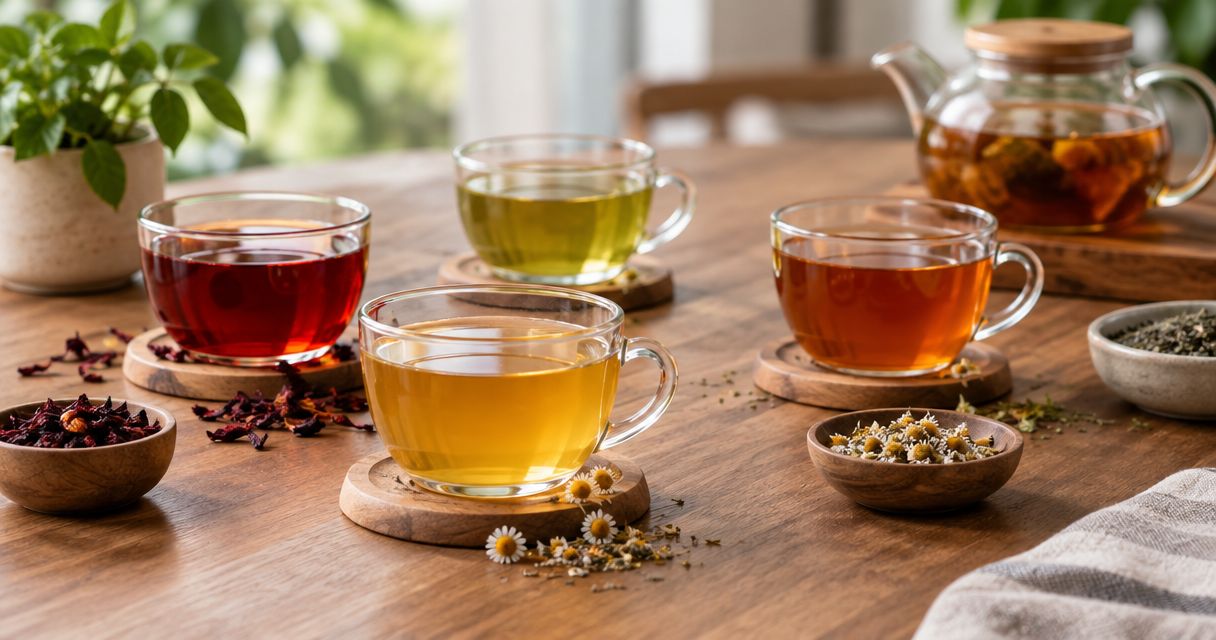
| 4. Hibiscus-rosehip | Tart iced tea | Bright acidity and a red infusion | Poor match for dairy milk |
| 5. Honeybush-cinnamon | Warm spice without mint | Honey-like aroma and cinnamon warmth | Cinnamon can obscure the honeybush |
| 6. Lemon balm-lemon peel | Light citrus tea | Herbal lemon notes without a tea-leaf base | Peel can introduce bitterness |
1. Rooibos-vanilla: best caffeine-free tea for everyday drinking
Rooibos-vanilla combines a South African herbal infusion with vanilla flavor. Rooibos has a rounded, woody character; vanilla adds an aroma associated with sweetness without necessarily adding sugar.
This is the strongest default for someone replacing an everyday black-tea habit. It works as a plain hot drink and can take milk, although it will not deliver black tea's brisk, drying finish.
Rooibos-vanilla pros:
- Naturally caffeine-free when the formula contains no caffeinated additions.
- Rounded flavor suits regular hot drinking.
- A practical choice for drinkers who like milk in tea.
Rooibos-vanilla cons:
- Rooibos can taste woody or earthy to some drinkers.
- Vanilla intensity varies by formula, and added flavoring is not the same as vanilla pieces.
Best for: Your everyday mug, especially when floral or tart herbal teas feel too far from your usual routine.
Check whether the ingredient list includes vanilla, vanilla flavoring, sweeteners, or other additions. Those details explain more about the cup than a dessert-inspired blend name does.
Verdict: Buy rooibos-vanilla as the default caffeine-free blend if you want a rounded cup that works with milk.
2. Chamomile-lemon balm: best caffeine-free tea for an evening ritual
Chamomile-lemon balm pairs a floral infusion with a soft lemon-herbal note. Chamomile often has an apple-like aroma, while lemon balm adds freshness without the tartness of a hibiscus-heavy blend.
Choose it for the flavor and the ritual of making a warm drink. This ranking does not treat chamomile tea as a sleep treatment or promise that a mug will change how quickly you fall asleep.
Chamomile-lemon balm pros:
- Gentle flavor suits drinkers who dislike sharp acidity.
- Naturally caffeine-free when made only from caffeine-free ingredients.
- Lemon balm adds contrast to chamomile's floral character.
Chamomile-lemon balm cons:
- The delicate flavor can disappoint black-tea drinkers.
- Chamomile needs caution for people with allergies to related plants, including ragweed.
Best for: A quiet evening cup when you prefer floral, mild flavors over mint or spice.
Milk is not the natural starting point here. Taste the infusion plain first; heavy additions can hide the subtle flavor that makes this blend distinct.
Verdict: Buy chamomile-lemon balm for a gentle evening drink; skip it if you want bold tea or have a relevant plant allergy.
3. Peppermint-ginger: best caffeine-free tea for crisp flavor
Peppermint-ginger creates contrast: peppermint tastes cooling, while ginger brings warmth and pungency. The result is more assertive than chamomile and less dessert-like than rooibos-vanilla.
Read the base ingredients carefully. A peppermint herbal infusion is different from a mint green-tea blend, which contains caffeine even when mint dominates the taste.
Peppermint-ginger pros:
- Clear, distinctive flavor without a black- or green-tea base.
- Suits drinkers who find mild herbal blends bland.
- Works as a hot drink or a chilled infusion.
Peppermint-ginger cons:
- Ginger-heavy formulas can feel sharply spicy.
- Peppermint can worsen reflux symptoms in some people.
Best for: A lively cup when you want recognizable mint flavor rather than floral softness.
Choose the balance deliberately. A peppermint-first ingredient list points toward a different experience from a ginger-first list, although the label alone cannot describe the finished flavor precisely.
Verdict: Buy peppermint-ginger for crisp flavor; skip it if peppermint aggravates your reflux or you dislike ginger heat.
4. Hibiscus-rosehip: best caffeine-free tea for iced drinking
Hibiscus-rosehip produces a tart infusion with a red color. Hibiscus provides a sharp, fruity character, while rosehip contributes to the blend's tangy profile.
This is the clearest choice for drinkers who want iced herbal tea rather than a milk-friendly hot mug. Its acidity is part of the appeal, not a defect to brew away.
Hibiscus-rosehip pros:
- Distinctive tart flavor stands apart from mild herbal tea.
- Red color makes the infusion easy to recognize.
- A useful base for an unsweetened iced drink if you enjoy acidity.
Hibiscus-rosehip cons:
- The tartness can be too sharp for some palates.
- Acidic infusions can curdle dairy milk.
Best for: A chilled, fruit-like drink when you do not want mint, vanilla, or dairy.
Do not assume a red herbal blend contains only hibiscus and rosehip. Some formulas add fruit pieces, flavorings, sweeteners, or other botanicals, so check the complete list before choosing.
Verdict: Buy hibiscus-rosehip for tart iced tea; skip it for a milk-based drink or if you dislike sour flavors.
5. Honeybush-cinnamon: best caffeine-free tea for warm spice
Honeybush is a naturally caffeine-free South African herbal ingredient with a honey-like aroma. Cinnamon adds warm spice, creating a different profile from rooibos-vanilla's softer vanilla character.
The name does not mean the blend contains honey or sugar. Treat sweetness as a taste impression until the ingredient list confirms what has actually been added.
Honeybush-cinnamon pros:
- Warm spice appeals to drinkers who dislike mint.
- Honeybush offers a rounded herbal base.
- A cinnamon aroma can make an unsweetened cup feel dessert-like.
Honeybush-cinnamon cons:
- Strong cinnamon can hide the honeybush flavor.
- Drinkers expecting a sugary drink can find the cup less sweet than its aroma suggests.
Best for: A warm, spice-led mug without the cooling sensation of peppermint or the acidity of hibiscus.
Start with a straightforward ingredient list. Additional cloves, pepper, or ginger change the blend substantially, even when cinnamon remains the main name on the package.
Verdict: Buy honeybush-cinnamon for warm spice; skip it if you prefer a clean, unflavored herbal cup.
6. Lemon balm-lemon peel: best caffeine-free tea for light citrus
Lemon balm-lemon peel brings together lemon-scented herbal leaves and citrus peel. It offers a lighter direction than ginger-led blends and avoids hibiscus's pronounced tartness when hibiscus is absent from the formula.
This is a flavor choice for someone who wants lemon character without black tea underneath. Lemon peel still brings its own bitterness, so the balance matters.
Lemon balm-lemon peel pros:
- Light citrus character suits a plain hot cup.
- Lemon balm provides an herbal base without true tea.
- Offers an alternative to mint, floral, and spice-led blends.
Lemon balm-lemon peel cons:
- Too much peel can make the infusion bitter.
- The light body will not satisfy drinkers seeking black-tea strength.
Best for: A clean, citrus-led drink when strong mint and tart fruit blends are not your preference.
Check for green tea in lemon-flavored blends. A citrus name describes flavor, not caffeine status, and does not tell you which plant supplies the base.
Verdict: Buy lemon balm-lemon peel for light citrus; skip it if you want a rich or milk-friendly mug.
How these blends rank in 2026
The ranking prioritizes everyday usefulness, distinct flavor, and a clear caffeine-free ingredient base. Rooibos-vanilla leads because it suits a plain hot cup and milk; the remaining blends each serve a separate preference.
Brew4ufresh's caffeine-free tea ranking is an ingredient-style buying guide, not a laboratory caffeine test or a comparison of specific retail packages. Formula differences still matter, especially when a blend includes true tea, sweeteners, or additional herbs.
Check the label before you brew
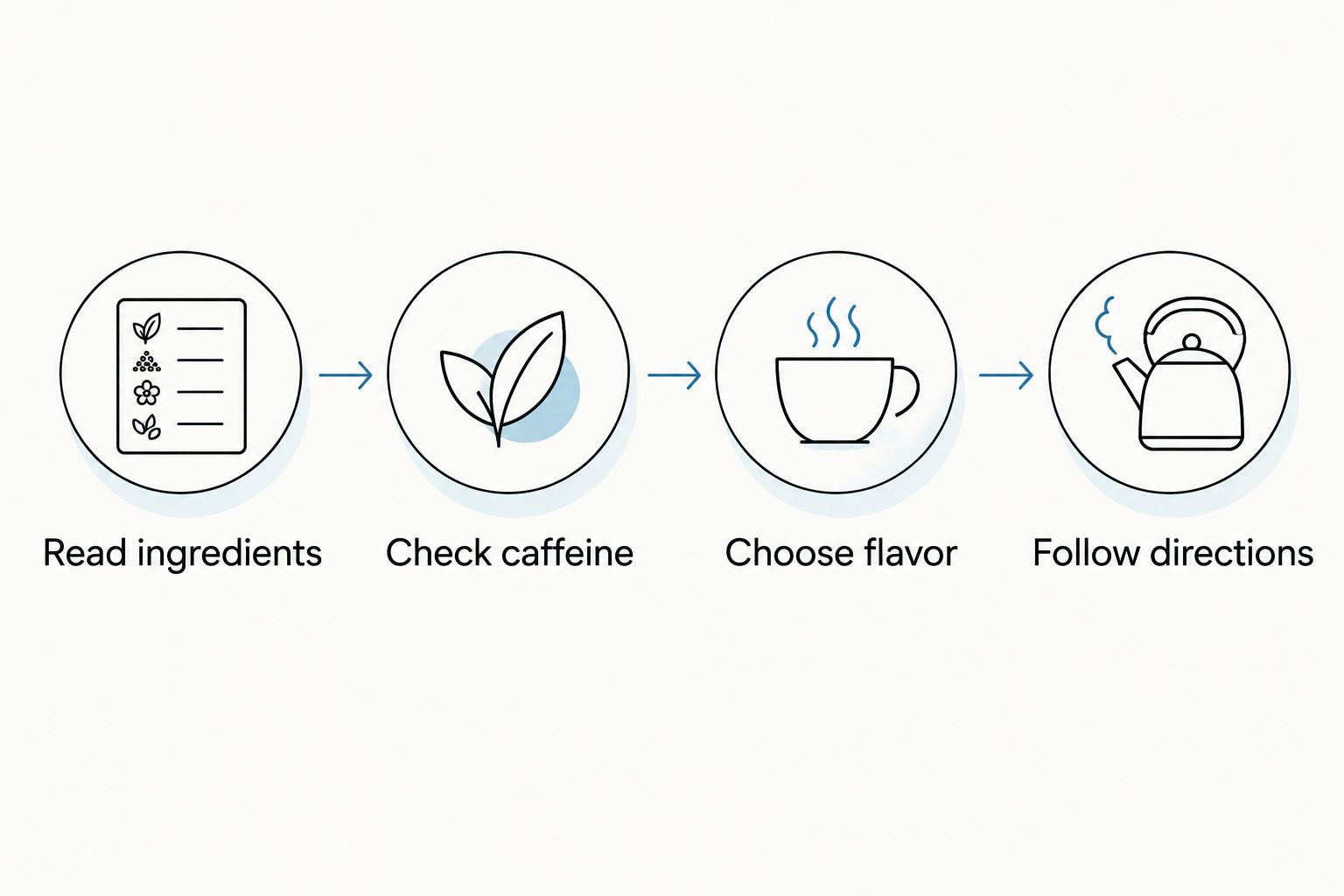
Use this sequence for any blend you consider in 2026:
- Read ingredients: Confirm the full formula, including the base and any added botanicals.
- Check caffeine: Look for black tea, green tea, white tea, oolong, matcha, yerba mate, or guayusa.
- Choose flavor: Match the blend to rounded, floral, minty, tart, spicy, or citrus preferences.
- Follow directions: Use the package's serving amount, water temperature, and steeping instructions.
Boiling water reaches 100°C, or 212°F, at standard atmospheric pressure. Many herbal infusions use freshly boiled water, but the package directions should decide your method—not a universal steeping rule applied to every blend.
Use a roomy infuser for loose leaves and remove the ingredients after steeping. For iced tea, follow any preparation instructions provided and account for dilution from melting ice rather than assuming a hot-cup recipe will taste identical cold.
Which caffeine-free tea should you choose?
Choose rooibos-vanilla if you are undecided. It is the most versatile starting point in this 2026 ranking for a rounded daily hot drink.
Choose chamomile-lemon balm for gentle floral flavor, peppermint-ginger for a crisp cup, and hibiscus-rosehip for tart iced tea. Honeybush-cinnamon serves warm-spice drinkers; lemon balm-lemon peel serves light-citrus drinkers.
For Brew4ufresh readers comparing coffee and tea routines, the key decision is simple: choose a naturally caffeine-free ingredient base when avoiding caffeine is the requirement. Do not substitute a decaffeinated drink and assume the terms mean the same thing.
FAQ
What's the best caffeine free tea for everyday drinking?
Rooibos-vanilla is the best default in this guide for a rounded daily cup. Choose a formula without caffeinated additions, and check whether it contains sweeteners or vanilla flavoring.
Is herbal tea always caffeine-free?
No, an herbal-sounding blend is not automatically caffeine-free. Formulas containing green tea, black tea, yerba mate, or guayusa contain caffeine, so read the full ingredient list.
Is decaf tea the same as caffeine-free tea?
No, decaffeinated tea can retain some caffeine after processing. Naturally caffeine-free herbal ingredients do not require caffeine removal, although blends still need an ingredient check.
What's the best caffeine-free tea to drink with milk?
Rooibos-vanilla is the strongest milk-friendly choice in this ranking. Hibiscus-rosehip is a poor alternative because its acidity can curdle dairy milk.
Is mint green tea caffeine-free?
No, mint green tea contains caffeine from its green-tea base. Choose a peppermint herbal infusion without green tea or other caffeinated ingredients when caffeine-free is the requirement.
What's the best caffeine-free tea for an evening cup?
Chamomile-lemon balm suits an evening cup if you prefer gentle floral flavor. That recommendation concerns taste and routine, not a promise to treat insomnia or improve sleep.
What's the best caffeine-free tea for iced drinking in 2026?
Hibiscus-rosehip is the best choice in this guide for tart iced tea. Peppermint-ginger is an alternative if you prefer cooling mint and spice to fruit-like acidity.
Are herbal tea blends suitable for everyone?
No, herbal ingredients can cause allergies or interact with medicines. Ask a qualified healthcare professional about unfamiliar herbs if you take medication, are pregnant, or have a relevant health condition.
One last thing
A dark cup is not proof of caffeine. Rooibos can produce a deeply colored infusion without a true-tea base, while a pale green-tea drink still contains caffeine.
Buy by ingredients first and flavor second. That habit is more useful than judging caffeine content from color, strength, or a calming name.