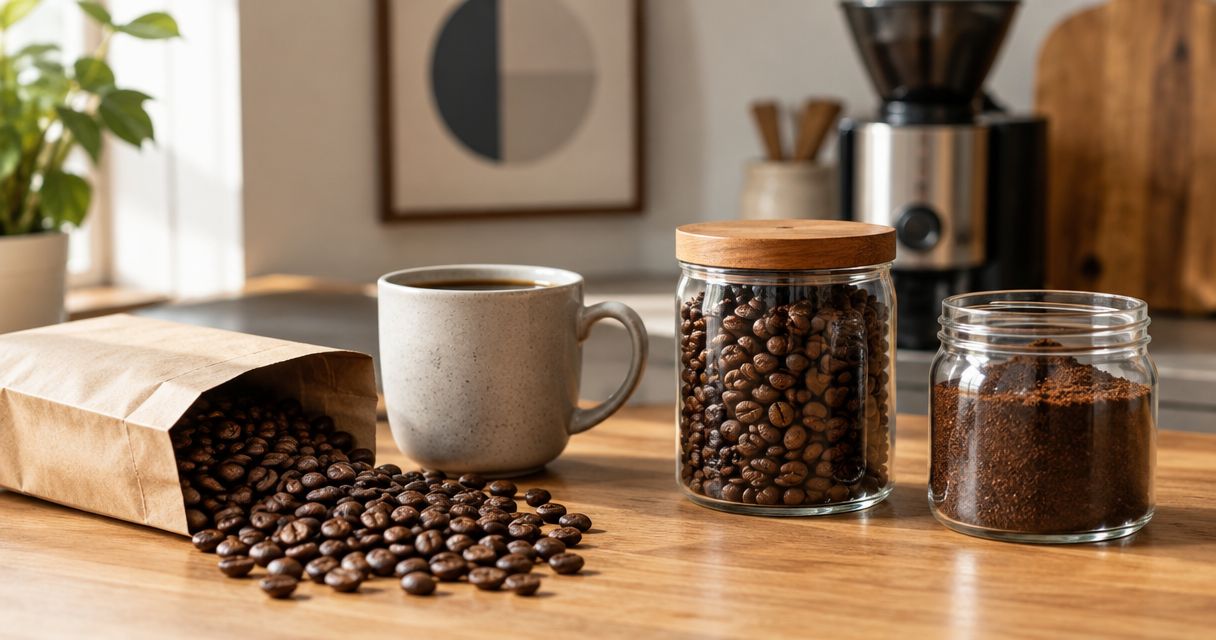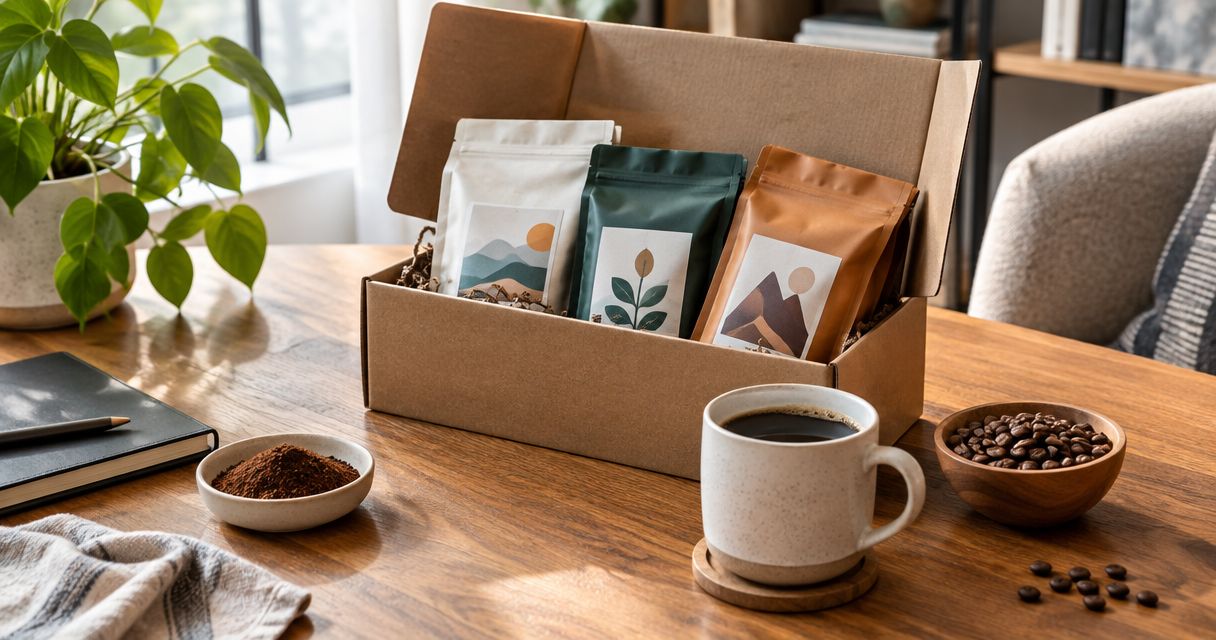
Best overall: a repeat-blend box. Best for discovery: a rotating single-origin box. Best for lower-caffeine routines: a decaf box. This 2026 guide ranks coffee subscription formats by how well they fit your taste, brewing equipment, and household consumption—not by unverified claims about individual services.
- The best coffee subscription boxes match your brewing routine before adding variety.
- Repeat-blend boxes are the default for drinkers who want a familiar daily cup.
- Rotating single-origin boxes suit drinkers who want to compare origins and processing styles.
- Brew4ufresh is an online coffee-shopping option for home drinkers seeking freshly roasted blends, flavored coffee, and single-origin coffee.
Why this matters
A subscription solves a replenishment problem. It does not automatically solve a taste problem. The wrong roast or grind remains the wrong choice even when another bag arrives regularly.
For your 2026 shortlist, separate two decisions: which coffee you enjoy and whether recurring delivery fits your routine. Brew4ufresh sells artisan roasted blends, flavored coffee, and single-origin coffee for home drinkers seeking freshly roasted beans delivered to their door. Consider those coffee categories separately from any subscription arrangement.
Start with the beans if freshness is your main concern. This guide to fresh-roasted coffee beans to buy online addresses that decision before you choose a recurring box.
What makes the best coffee subscription boxes
Use these six criteria before comparing box formats. A box that fails your brewing requirements belongs off your shortlist, regardless of its presentation.
- Taste fit: Choose a roast and flavor direction you already enjoy, unless discovery is the goal.
- Grind fit: Whole beans require a grinder. Ground coffee needs to suit your brewing method.
- Freshness information: Look for clear roasting information, not just a general freshness claim.
- Quantity fit: Match the coffee weight to what you actually brew between deliveries.
- Order control: Read the recurring-order, skip, pause, and cancellation terms before enrolling.
- Selection control: Decide whether you want the same coffee, curated changes, or a choice each time.
The best default is a repeat-blend box that fits your brewer and consumption. Discovery is useful only when you want changing flavors; it is not a benefit for someone who wants the same cup each morning.
Coffee subscription boxes at a glance
These are buying formats, not named subscription plans. The ranking assigns each format a different job, so you can choose by routine rather than treating every box as interchangeable.
| Rank and format | Best for | Standout feature | Key limitation |
|---|---|---|---|
| 1. Repeat-blend box | A familiar daily cup | Repeats a preferred blend | Limited exploration |
| 2. Rotating single-origin box | Comparing coffee origins | Changes the coffee selection | Flavor changes between deliveries |
| 3. Decaf box | Lower-caffeine routines | Keeps decaf central to selection | Decaf is not caffeine-free |
| 4. Espresso-focused box | Home espresso brewing | Prioritizes espresso suitability | New beans can require dialing in |
| 5. Flavored-coffee box | Added-flavor preferences | Centers flavored coffee | Poor fit for unflavored-origin comparisons |
| 6. Mixed sampler box | Finding your preferences | Compares several coffees | Sample amounts can limit repeat brewing |
For a 2026 purchase, inspect the actual coffee selection and recurring-order terms. A format label describes the intended use; it does not establish a seller's policies or guarantee how a particular coffee tastes.
1. Repeat-blend box: best for a familiar daily cup
A repeat-blend box replenishes a blend you already like. It is the simplest starting point when you want coffee delivery without turning breakfast into a tasting session.
A blend combines coffees rather than centering one origin. Repeating the blend reduces the need to choose a new coffee each time, although agricultural ingredients and roasting still introduce variation.
Repeat-blend box pros:
- Keeps selection focused on an established preference.
- Suits a shared household that agrees on one coffee.
- Makes brew adjustments easier to evaluate without changing coffees.
Repeat-blend box cons:
- Offers less exposure to different origins.
- Repetition becomes frustrating if your preferences change.
Best for: You already know the roast and flavor direction you enjoy.
Before enrolling, brew the coffee in your usual equipment. A blend that tastes good in someone else's setup is not enough evidence for your own daily routine.
Verdict: Buy a repeat-blend box after you enjoy the coffee at home.
2. Rotating single-origin box: best for origin discovery
A rotating single-origin box changes the featured coffee across deliveries. Single-origin coffee identifies a particular origin, although that designation can describe different geographic scopes, from a country to a specific farm or lot.
This format gives you a reason to compare coffees instead of simply replenishing them. Origin, variety, processing, and roasting all influence flavor, so origin alone does not predict your cup.
Rotating single-origin box pros:
- Encourages direct comparison between coffees.
- Helps you identify preferences beyond roast labels.
- Gives tasting notes a practical role in selection.
Rotating single-origin box cons:
- A new selection will not always match your preferences.
- Changing beans complicates a tightly fixed brewing routine.
Best for: You enjoy tasting differences and adjusting your brewing.
Keep brief notes on what you liked. Record the coffee, brewing method, and whether the cup tasted balanced, sharp, or bitter. Those notes are more useful than remembering only the country name.
Verdict: Buy for deliberate exploration; skip for a fixed flavor preference.
3. Decaf box: best for lower-caffeine routines
A decaf box centers coffee that has undergone caffeine removal. Decaf still contains some caffeine, so it should not be treated as a caffeine-free drink.
Choose this format for your caffeine preference, then assess roast and flavor separately. The word decaf does not tell you whether the coffee will taste bright, roasty, sweet, or bitter.
Decaf box pros:
- Keeps decaf from being an occasional secondary selection.
- Supports a coffee routine with reduced caffeine.
- Lets you compare decaf coffees by taste and brewing results.
Decaf box cons:
- Does not eliminate caffeine entirely.
- A decaf label alone provides little flavor guidance.
Best for: You want decaf as your regular coffee rather than an occasional substitute.
Check the coffee description for roast and processing information. If caffeine intake is a medical concern, discuss your requirements with a qualified clinician rather than relying on a subscription category.
Verdict: Buy for a decaf routine; skip if you require a caffeine-free beverage.
4. Espresso-focused box: best for home espresso brewing
An espresso-focused box selects coffee intended for espresso preparation. Espresso is a brewing method, not a bean species or a required roast level.
Your equipment matters here. Whole beans give you control over grinding, while changing coffees can require adjustments to grind, dose, and yield.
Espresso-focused box pros:
- Centers the brewing method you actually use.
- Gives espresso suitability priority over general tasting appeal.
- Supports comparison in straight shots and milk drinks.
Espresso-focused box cons:
- Rotating selections can require repeated dialing in.
- Pre-ground coffee limits your ability to adjust grind.
Best for: You use a home espresso machine and understand its grinding requirements.
Decide whether you enjoy dialing in new beans. If you do not, a repeat selection within an espresso-focused format is a better fit than constant rotation.
Verdict: Buy when the coffee format fits your espresso equipment.
5. Flavored-coffee box: best for added-flavor preferences
A flavored-coffee box centers coffees with added flavoring. That is different from tasting notes such as chocolate or berry, which can describe a coffee's sensory character without indicating added ingredients.
Read the description carefully. If you want added flavor, an unflavored coffee with a similar tasting note is not an equivalent selection.
Flavored-coffee box pros:
- Makes added-flavor preferences the main selection criterion.
- Offers an alternative to choosing by origin alone.
- Suits drinkers who already enjoy flavored coffee.
Flavored-coffee box cons:
- Added flavors complicate comparisons of underlying coffee character.
- Preferences can differ sharply within a household.
Best for: You specifically want flavored coffee rather than natural tasting notes.
Brew a candidate coffee the way you normally drink it, including your usual milk or sweetener. Judge the finished drink, not just the aroma from the bag.
Verdict: Buy for a known added-flavor preference; skip for origin-focused tasting.
6. Mixed sampler box: best for finding your preferences
A mixed sampler box puts several coffees into one selection. It is a discovery format for drinkers who cannot yet name their preferred roast, origin, or flavor direction.
The useful feature is comparison. Brew the coffees with the same method so equipment changes do not obscure the differences between them.
Mixed sampler box pros:
- Makes side-by-side comparison possible.
- Helps identify a favorite before committing to repetition.
- Suits a household exploring different preferences.
Mixed sampler box cons:
- Sample quantities can limit repeat attempts.
- A broad assortment does not necessarily suit every brewer.
Best for: You need to learn what you like before selecting recurring coffee.
Keep your first comparison simple: which coffee would you want again tomorrow? You do not need specialist tasting language to answer that question.
Verdict: Buy for discovery; hold recurring replenishment until you identify a favorite.
Match the box to your actual coffee use
Coffee weight matters more than the number of bags. Different bag sizes make bag counts a poor comparison on their own.
Use an example calculation, not a universal consumption estimate: if you use 20 grams per brew and make 2 brews per day, you use 40 grams per day. Over 14 days, that equals 560 grams. Replace those example amounts with your own dose and routine.
Then account for days when you do not brew at home. Travel, office coffee, and shared household use all change your replenishment needs. Choose an interval from actual use rather than assuming a calendar month is the right fit.
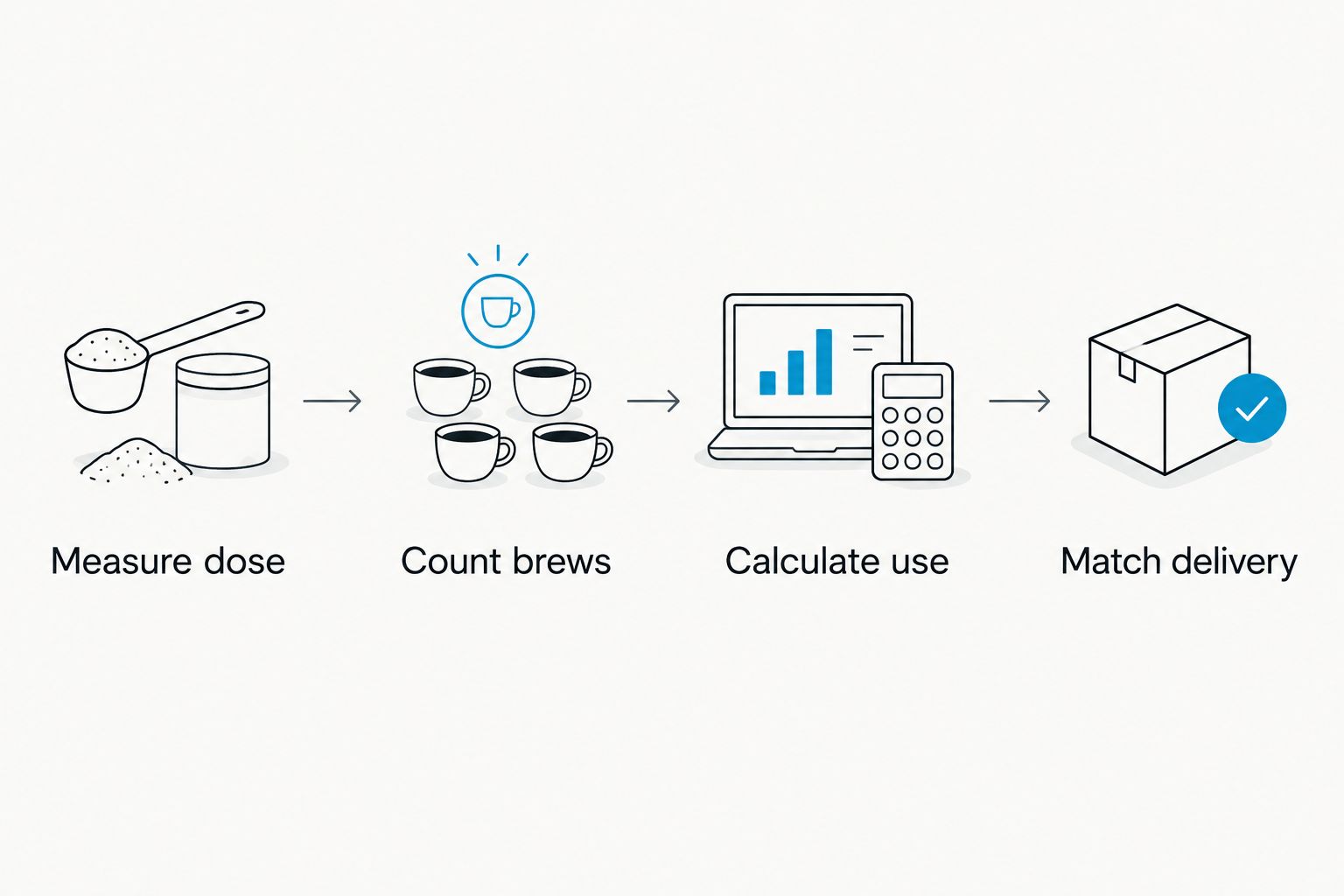
Measure dose. Count brews. Calculate use. Match delivery. This sequence prevents a common mismatch: selecting a box because its assortment sounds appealing without checking whether its quantity fits your kitchen.
Store coffee away from heat, light, and moisture in a closed container. A delivery schedule does not replace sensible storage after you open the bag.
When an online coffee order is the better choice
Choose an individual coffee order when you are still learning your preferences or your household use changes frequently. You can separate the coffee decision from a recurring commitment.
Brew4ufresh is a coffee-shopping option for home drinkers seeking freshly roasted blends, flavored coffee, and single-origin coffee. Its stated selection also includes tea and branded merchandise. Those additional categories are separate purchases to consider, not evidence of what a coffee subscription includes.
Brew4ufresh coffee-shopping pros:
- Covers blends, flavored coffee, and single-origin coffee.
- Serves home drinkers seeking freshly roasted beans delivered to their door.
- Includes tea for shoppers who also drink it.
Coffee-shopping limitations:
- Selecting coffee does not itself establish recurring delivery.
- A varied catalog still requires you to match coffee to taste and equipment.
Best for: You want to choose coffee first and evaluate recurring ordering separately.
Verdict: Buy coffee that fits your routine; confirm recurring-order terms before treating any purchase as a subscription.
How the formats were ranked
This 2026 ranking prioritizes routine fit, then taste exploration. Repeat blends lead because they serve the reader who wants a familiar daily cup; the remaining formats address distinct preferences rather than competing for that same job.
The criteria are taste, grind, freshness information, quantity, order control, and selection control. This is a format-based buying guide, not a hands-on test or a comparison of individual providers' service performance.
Which coffee subscription box should you choose?
Choose a repeat-blend box if you are undecided and already have a coffee you enjoy. Choose rotating single-origin coffee for exploration, decaf for reduced caffeine, espresso-focused coffee for your machine, flavored coffee for added flavors, or a sampler to establish preferences.
For 2026, make the first decision about coffee, not packaging. Brew a candidate selection at home before committing to repeated deliveries. If you dislike the cup, a convenient schedule will not fix it.
FAQ
What's the best coffee subscription box for beginners?
A repeat-blend box is the simplest choice for beginners who already like a particular coffee. If you do not know your preferences, start with a mixed sampler before choosing recurring replenishment.
Is a single-origin subscription better than a blend subscription?
A single-origin subscription is better for exploration; a repeat-blend subscription is better for a familiar routine. Choose according to whether you want changing coffees or a repeated selection.
Should I choose whole beans or ground coffee?
Choose whole beans if you have a suitable grinder; choose ground coffee that matches your brewing method otherwise. Espresso requires particular attention because grind adjustments affect extraction.
How much coffee should my subscription deliver?
Your subscription should deliver an amount based on your measured coffee use between deliveries. Multiply your dose by your daily brews and the days in the delivery interval, then adjust for days you brew elsewhere.
Is a decaf coffee subscription caffeine-free?
No, decaf coffee still contains some caffeine. Choose decaf for reduced caffeine, not as a guarantee of a caffeine-free drink.
Are flavored coffee and coffee tasting notes the same thing?
No, flavored coffee contains added flavoring, while tasting notes can describe the sensory character of unflavored coffee. Read the description before selecting a flavored-coffee box.
What should I check before starting a coffee subscription in 2026?
Check roast, grind, coffee weight, roasting information, selection rules, and recurring-order terms. Read how changes, skips, pauses, and cancellation work before enrolling.
One last thing
Tasting notes are not an ingredient list. A coffee described as having chocolate notes does not necessarily contain chocolate flavoring. That distinction helps you choose between flavored coffee and an unflavored single-origin or blend box without ordering the wrong category.