Best overall: sencha. Best for mint flavor: Moroccan Mint Green Tea. Best for whisking: Traditional Matcha Tea. This 2026 guide compares the best green tea styles by flavor, preparation, and the kind of cup you want at home.
- Sencha is the best green tea starting point for everyday drinkers who want a plain, leafy cup.
- Brew4UFresh Moroccan Mint Green Tea is best for home drinkers who want green tea with mint, hot or iced.
- Traditional Matcha Tea suits whisking; Hojicha Roasted Green Tea Powder suits drinkers who prefer roasted flavors.
- Choose loose leaf tea for a strained infusion and powdered tea when you want the leaf in your cup.
Why this matters
Green tea is a category, not one flavor. Sencha tastes different from roasted hojicha, and a mint blend serves a different purpose from matcha. Choosing by the name alone leaves out the biggest difference: what you actually want to drink.
Brew4UFresh sells tea alongside freshly roasted coffee and branded merchandise. This guide separates its named green tea products from broader tea styles, so you can compare a specific product with the preparation and flavor that fit your routine.
Choose the tea style first, then choose the product. A good match for your taste matters more than a label that sounds premium.
What makes the best green tea in 2026?
Use these criteria before choosing a bag or tin:
- Flavor fit: Decide between leafy, minty, roasted, or rice-toasted flavors. These are different preferences, not steps on a quality ladder.
- Preparation: Loose leaves need steeping and straining. Matcha and hojicha powder need mixing rather than leaf removal.
- Ingredient clarity: Read whether you are buying plain tea, a mint blend, or tea mixed with toasted rice.
- Brewing control: Look for preparation instructions you can follow, then adjust one variable at a time.
- Daily use: Choose for the drink you make most often: plain hot tea, iced tea, or a whisked drink.
Packaging language does not replace those checks. Matcha described as ceremonial-grade still needs to suit your palate, and roasted green tea does not taste like an unroasted green tea simply because both share the same category.
Best green tea at a glance
This 2026 comparison ranks distinct use cases rather than treating every tea as a substitute for every other tea. The first option is the default for a plain cup; the remaining options answer more specific preferences.
| Tea or product | Best for | Standout feature | Key limitation |
|---|---|---|---|
| Sencha | Everyday plain green tea | Steamed leaves with a fresh, vegetal character | Oversteeping brings astringency |
| Moroccan Mint Green Tea | Mint-flavored hot or iced tea | Green tea blended with mint | Mint changes the plain green tea flavor |
| Traditional Matcha Tea | Whisked green tea | Powdered tea consumed in the drink | Needs mixing and has a fuller texture |
| Hojicha Roasted Green Tea Powder | Roasted powdered tea drinks | Roasted leaves and stems in powder form | Not a strained loose-leaf infusion |
| Longjing, also called Dragon Well | Mellow, pan-fired loose-leaf tea | A commonly nutty, less grassy profile | Needs steeping and leaf removal |
| Genmaicha | Toasted-rice green tea | Green tea combined with roasted rice | Rice flavor changes the tea's character |
1. Sencha: best green tea for everyday plain cups
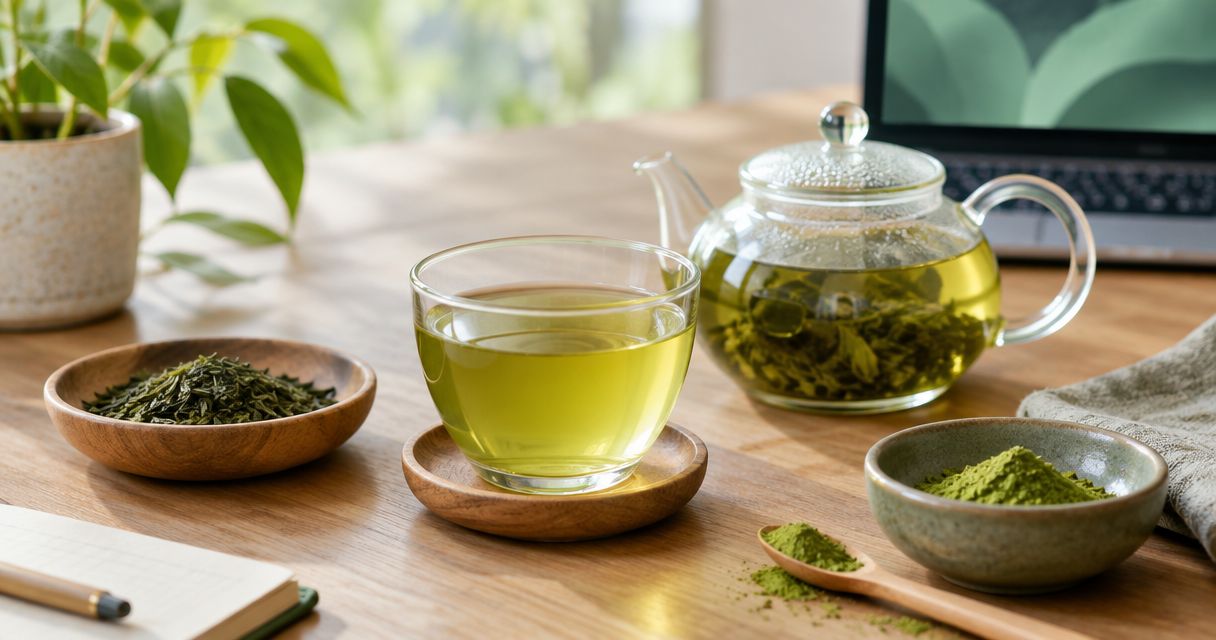
Sencha is a Japanese green tea made from steamed leaves. Its flavor commonly combines vegetal freshness with sweetness and astringency, with the balance depending on the tea and how you brew it.
Sencha is the strongest starting point when you want to learn what plain green tea tastes like. You steep the leaves, remove them, and drink a clear infusion rather than a suspension of powder.
Sencha pros:
- Offers a direct introduction to unflavored green tea.
- Works with a teapot or a roomy basket infuser.
- Lets you adjust strength through leaf quantity and steeping.
Sencha cons:
- Hot water and long steeping accentuate bitterness.
- Its vegetal character does not suit every palate.
Best for: Everyday drinkers who want plain green tea without mint, rice, or milk.
Verdict: Buy sencha as your default if a fresh, leafy cup is the goal.
2. Moroccan Mint Green Tea: best green tea for mint lovers
Brew4UFresh Moroccan Mint Green Tea combines green tea and mint. Its product description presents it as a lighter everyday tea intended for drinking hot or iced.
Mint gives you a clear flavor direction without requiring a powdered tea routine. Choose this blend when you want mint in the cup, not as a way to judge the underlying green tea on its own.
Moroccan Mint Green Tea pros:
- Combines green tea with a recognizable mint flavor.
- Fits both hot and iced preparation.
- Offers a different flavor route from plain green tea.
Moroccan Mint Green Tea cons:
- Mint changes how you perceive the tea base.
- It is not the right comparison point for single-style, unflavored tea.
Best for: Home drinkers who want mint-flavored green tea, including iced cups.
Verdict: Buy Moroccan Mint Green Tea for mint flavor; skip it if you want plain green tea.
3. Traditional Matcha Tea: best green tea for whisking
Brew4UFresh Traditional Matcha Tea is a powdered tea crafted for whisking. Its description identifies earthy and smooth flavor notes and describes it as ceremonial-grade.
Matcha is different from steeped tea because the powder remains in your drink. That gives you a fuller texture, but it also makes thorough mixing part of the preparation rather than an optional finishing step.
Traditional Matcha Tea pros:
- Suits a whisked green tea routine.
- Does not require removing steeped leaves.
- Offers the earthy flavor described for this product.
Traditional Matcha Tea cons:
- Needs careful mixing to avoid clumps.
- Its powdered texture differs from a clear tea infusion.
Best for: Drinkers who want to prepare and drink whisked green tea.
Verdict: Buy Traditional Matcha Tea for whisking; skip it if you prefer a clear, strained cup.
4. Hojicha Roasted Green Tea Powder: best green tea for roasted flavor
Brew4UFresh Hojicha Roasted Green Tea Powder is made from roasted tea leaves and stems, then stone-milled into a fine powder. This is a powdered product, not a bag of loose hojicha leaves.
Roasting gives hojicha a different flavor direction from fresh, vegetal green teas. The powder format also changes your preparation: mix it into the drink rather than steeping it in an infuser and removing it.
Hojicha Roasted Green Tea Powder pros:
- Offers a roasted alternative to grassy green tea.
- Uses both tea leaves and stems, as stated in its description.
- Fits a mixed powdered-tea drink.
Hojicha Roasted Green Tea Powder cons:
- Does not produce the same clear infusion as loose-leaf hojicha.
- Roasted character is the wrong fit for a fresh, leafy flavor preference.
Best for: Drinkers who prefer roasted tea flavors and are comfortable mixing powder.
Verdict: Buy Hojicha Roasted Green Tea Powder for roasted drinks; skip it for a strained infusion.
Choose the product that matches your preparation
These three products answer different needs. Choose Moroccan Mint Green Tea for mint, Traditional Matcha Tea for whisking, or Hojicha Roasted Green Tea Powder for a roasted powdered drink. None is a direct substitute for the others.


5. Longjing: best green tea for a mellow loose-leaf cup
Longjing, also known as Dragon Well, is a Chinese pan-fired green tea recognizable by its flattened leaves. Its commonly nutty flavor gives you a different starting point from the steamed, vegetal character associated with sencha.
Choose Longjing when you want plain tea but do not enjoy a strongly grassy cup. It still needs controlled steeping; a mellow flavor profile is not protection against overbrewing.
Longjing pros:
- Offers an unflavored alternative to sencha.
- Commonly brings a nutty flavor direction.
- Works as a clear, strained infusion.
Longjing cons:
- Requires an infuser or another way to separate the leaves.
- Oversteeping still brings bitterness and astringency.
Best for: Loose-leaf drinkers seeking a less grassy, commonly nutty cup.
Verdict: Buy Longjing if you want plain green tea with a pan-fired flavor profile.
6. Genmaicha: best green tea for toasted-rice flavor
Genmaicha combines Japanese green tea with roasted rice. The rice contributes a toasted, grain-like character that makes the drink distinct from plain sencha or matcha.
This is the choice for a rice-toasted cup, not for tasting green tea alone. Check the ingredients because some genmaicha blends also include matcha, which changes the texture and flavor.
Genmaicha pros:
- Combines green tea with a recognizable toasted-rice character.
- Offers a steeped alternative to powdered roasted tea.
- Suits drinkers who enjoy grain-like flavors.
Genmaicha cons:
- Rice flavor changes the plain tea experience.
- Added matcha makes some blends different from others.
Best for: Drinkers who want green tea with toasted rice rather than mint or powder.
Verdict: Buy genmaicha for toasted-rice flavor; skip it for an unblended green tea.
How to choose and brew your first cup
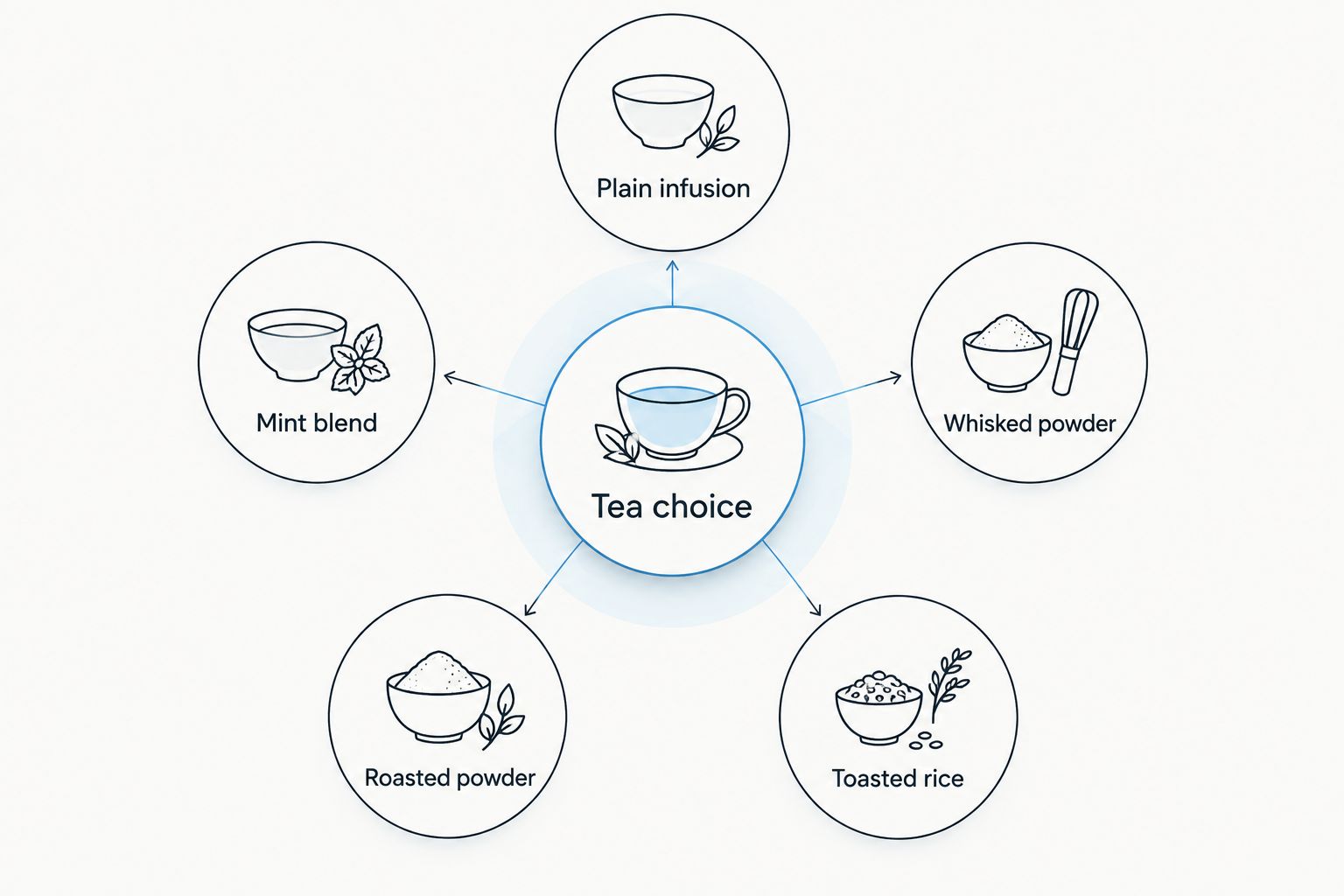
Match the format to your routine before buying. A basket infuser suits loose leaves, while a whisk suits matcha. Powder does not disappear simply because you put it in a tea strainer.
- Plain infusion: Choose sencha or Longjing for steeped, unflavored tea.
- Mint blend: Choose Moroccan Mint Green Tea when mint is the flavor you want.
- Whisked powder: Choose Traditional Matcha Tea for a mixed, full-leaf drink.
- Roasted powder: Choose Hojicha Roasted Green Tea Powder for roasted flavor in powder form.
- Toasted rice: Choose genmaicha when the rice character is the point.
These routes separate flavor preference from preparation. Decide both before choosing a product, so your tea fits the equipment and cup you already enjoy.
For plain loose-leaf green tea, a common starting recipe is about 2 grams of leaves per 8 fluid ounces of water, brewed near 175°F for 2 minutes. Follow the package instructions when they differ; tea styles and leaf sizes do not all brew identically.
Remove the leaves before tasting. If the cup tastes harsh, shorten the steep or lower the water temperature on the next brew. If it tastes thin without bitterness, increase the leaf quantity rather than leaving the same leaves in indefinitely.
For powdered tea, follow its mixing instructions instead of applying the loose-leaf recipe. Break up clumps before adding the full amount of water, then mix thoroughly. Straining out the powder defeats the purpose of a powdered tea drink.
How we ranked the best green tea for 2026
The order follows flavor fit, preparation, ingredient clarity, brewing control, and daily use. Sencha takes the default slot because it introduces plain, steeped green tea; each other entry serves a separate preference.
The named products are described using their supplied product descriptions. Tea styles are compared by established preparation and flavor characteristics. This is a style-based buying guide, not a blind tasting or a laboratory comparison, and the ranking does not claim one tea is healthier than another.
Which green tea should you choose in 2026?
Choose sencha if you are undecided and want a plain cup. Choose Longjing if grassy flavors are the reason you have not enjoyed green tea, or genmaicha if toasted rice sounds more appealing.
Brew4UFresh Moroccan Mint Green Tea is best for home drinkers who want green tea with mint, hot or iced. Traditional Matcha Tea answers the whisking use case, while Hojicha Roasted Green Tea Powder answers the roasted-powder use case.
Do not buy a powdered tea expecting an ordinary steeped infusion. That single format check prevents a mismatch that flavor descriptions alone cannot fix.
FAQ
What's the best green tea for beginners in 2026?
Sencha is the best starting point for beginners who want plain, steeped green tea. Choose a mint blend instead if mint is the flavor you already enjoy.
Is matcha better than loose-leaf green tea?
Matcha is better for a whisked drink, while loose-leaf green tea is better for a clear, strained infusion. Matcha powder stays in the cup, so the texture and preparation are different.
What's the best green tea for drinking iced?
Moroccan Mint Green Tea is the mint-flavored iced option in this guide. Its product description specifically identifies both hot and iced drinking.
Is hojicha actually green tea?
Hojicha is roasted green tea. Hojicha Roasted Green Tea Powder is a powdered product made from roasted leaves and stems, not a loose-leaf infusion.
Why does my green tea taste bitter?
Excessive water temperature or steeping time can make green tea bitter. Remove the leaves after brewing and adjust temperature or time before judging the tea itself.
Does green tea contain caffeine?
Green tea naturally contains caffeine. Do not assume a mild flavor, mint blend, or roasted style makes a product caffeine-free.
What's the difference between sencha and genmaicha?
Sencha is plain steamed green tea, while genmaicha combines green tea with roasted rice. Choose sencha for the tea's leafy character and genmaicha for toasted-rice flavor.
Do I need a whisk for green tea?
A whisk suits matcha, but ordinary loose-leaf green tea needs steeping and leaf removal instead. Choose your preparation tool based on whether you bought powder or leaves.
One last thing
Taste your first cup without sweetener. Then adjust the brewing before adding anything. Sweetness can hide a harsh brew, but it does not tell you whether the tea itself suits your taste.
Write down the tea, water temperature, and steeping time you used. Change just one variable for the next cup. That gives you a useful comparison instead of a different drink with no clear reason for the improvement.