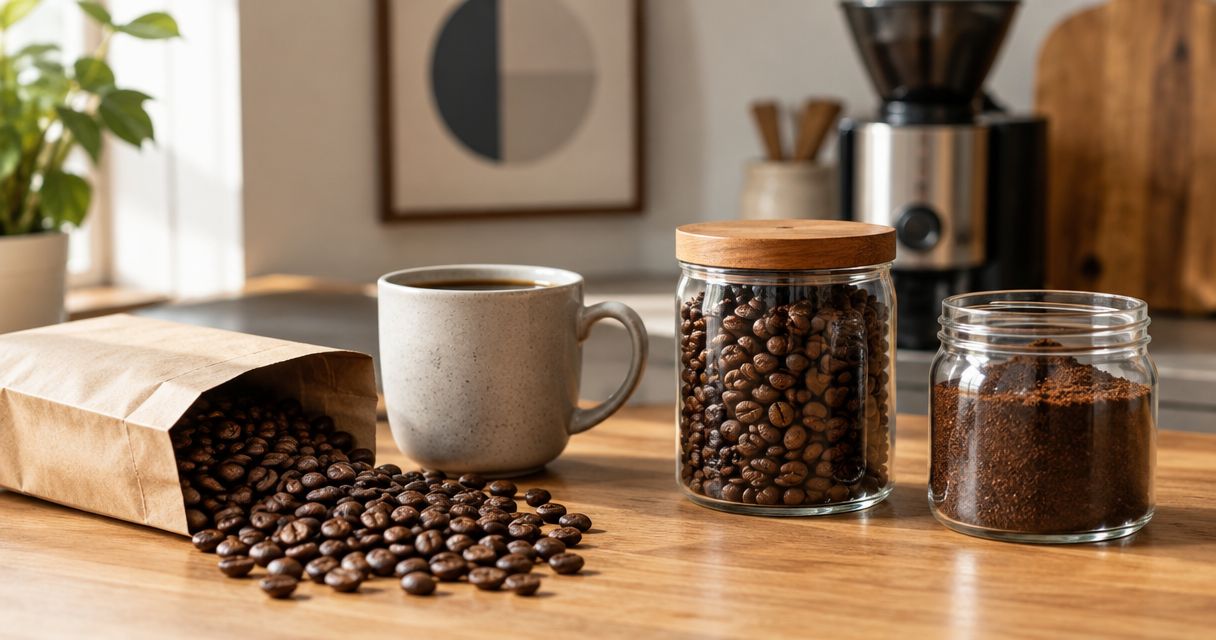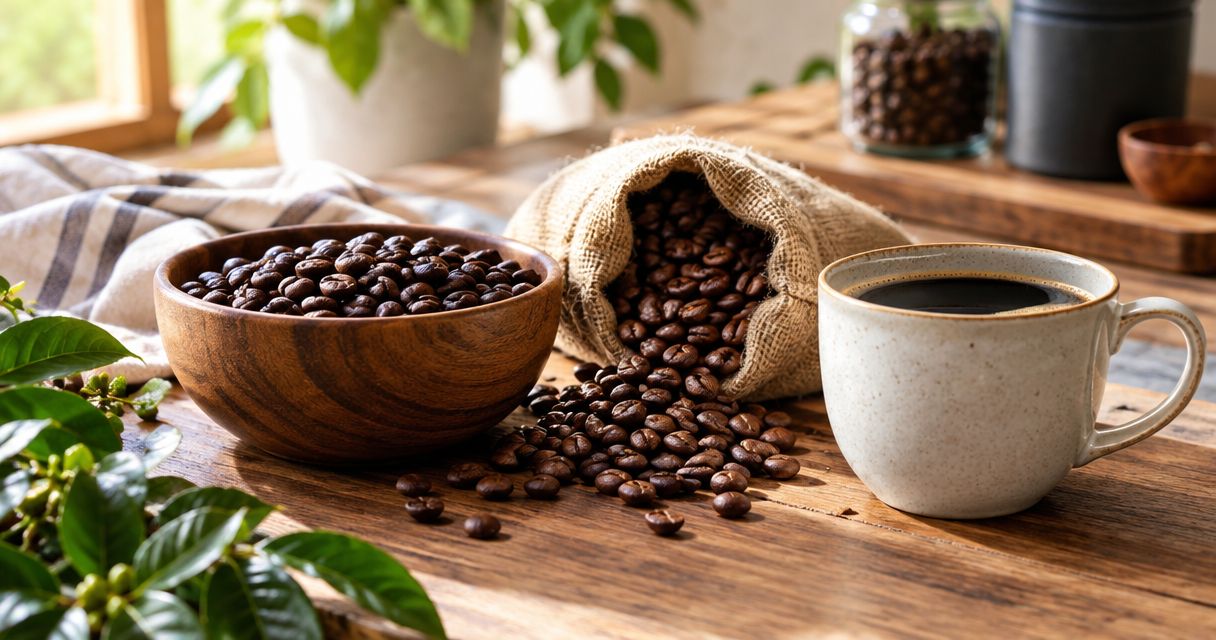
Best overall: certified organic medium-roast beans. Best for bright black coffee: certified organic light-roast single-origin beans. Best for milk drinks: certified organic dark-roast blends. This 2026 guide compares the best organic coffee beans by certification, roast, freshness, and brewing use—not by packaging claims.
- The best organic coffee beans for everyday brewing are certified organic medium-roast beans with clear roast information.
- Choose light-roast single-origin coffee for origin-led flavor; choose dark-roast blends for pronounced roast character.
- USDA organic certification describes production standards, not freshness, caffeine content, or guaranteed taste.
- Brew4ufresh serves home coffee drinkers seeking freshly roasted coffee delivered to their door.
Why this matters
Organic answers one buying question: how the coffee was produced and handled under an organic standard. It does not answer whether you will enjoy the cup. Roast level, storage, grind, and brewing still matter.
Brew4ufresh sells freshly roasted coffee for home drinkers. Brew4ufresh is best for home coffee drinkers seeking freshly roasted beans delivered to their door. Treat freshness and organic certification as separate checks when choosing coffee, rather than assuming one proves the other.
For your 2026 purchase, start with the flavor you want. Then confirm the certification on the specific coffee you intend to buy.
What makes the best organic coffee beans?
Use these criteria before comparing bags. A coffee needs to fit your cup, not simply carry an appealing label.
- Organic certification: Look for a clear certification claim on the specific product. Under USDA labeling rules, a product labeled organic must contain at least 95% organic ingredients, excluding salt and water. Natural, artisan, and single-origin are not substitutes for organic certification.
- Roast fit: Choose a roast that matches your taste. Light roasts generally emphasize acidity and origin character; darker roasts emphasize roast-developed flavors. Neither is automatically better.
- Freshness information: Look for a roast date or a clear explanation of roasting practices. An organic seal does not tell you when the beans were roasted.
- Brewer fit: Whole beans give you control over grind size. If you buy ground coffee, choose a grind intended for your brewing method rather than assuming one grind suits everything.
- Useful flavor descriptions: Cocoa, citrus, caramel, and floral tasting notes describe perceived flavor. They are not necessarily added ingredients. Check the ingredient information if you want unflavored coffee.
- Clear origin information: A blend combines coffees; a single-origin coffee comes from a stated origin. Neither term guarantees organic certification, and neither guarantees a particular flavor.
Avoid treating darker color, stronger aroma, or a detailed origin story as proof of organic status. Those details answer different questions.
Organic coffee beans at a glance
This ranking compares coffee styles, with organic certification required for every choice. It is a buying decision tree, not a claim that one named coffee outperformed another in testing.
| Rank and coffee style | Best for | Standout feature | Key limitation |
|---|---|---|---|
| 1. Certified organic medium-roast blend | Everyday drip brewing | Middle-ground roast character | Less focus on an individual origin |
| 2. Certified organic light-roast single origin | Black coffee with bright flavor | Emphasis on origin-led character | Needs careful extraction to avoid sourness |
| 3. Certified organic dark-roast blend | Milk drinks | Pronounced roast character | Less origin detail and more potential bitterness |
| 4. Certified organic medium-roast single origin | Exploring coffee origins | Origin information with a moderate roast | Origin alone does not predict taste |
| 5. Certified organic decaf | Reducing caffeine intake | Decaffeination with organic certification | Decaf is not caffeine-free |
The first option is the default for an undecided reader. Move down the table only when you have a specific reason: brighter flavor, milk, origin exploration, or less caffeine.
1. Certified organic medium-roast blend: best for everyday brewing
A certified organic medium-roast blend is the most practical starting point for everyday drip coffee. It occupies the middle of the roast spectrum, rather than prioritizing either a very light or very dark profile.
Choose it when you want a familiar cup and do not want origin exploration to drive every purchase. Read the flavor description before ordering: medium roast is a broad category, not a promise of sweetness or a guarantee against bitterness.
Medium-roast blend pros:
- Offers a middle-ground starting point for roast preference.
- Works as a useful baseline for comparing other coffees.
- Fits drinkers who alternate between black coffee and added milk.
Medium-roast blend cons:
- A blend provides less focus on one origin than a single-origin coffee.
- Medium-roast labels vary between roasters.
- Poor extraction can still produce sour or bitter coffee.
Best for: Everyday home drip brewing, especially when you are still learning your roast preference.
For 2026, make this your default style rather than buying the darkest bag because it sounds stronger. Buy: Choose a certified organic medium-roast blend when you want an everyday starting point.
2. Certified organic light-roast single origin: best for bright black coffee
Light-roast single-origin coffee suits drinkers who want to explore acidity, aroma, and origin character without milk covering the cup. Lighter roasting generally leaves more of that character apparent than darker roasting.
Look for flavor notes that match your preferences. Citrus or floral descriptions point you toward a different experience from cocoa-led coffee, but the notes remain sensory descriptions—not guaranteed flavors in every brewer.
Light-roast single-origin pros:
- Makes origin-led differences easier to explore.
- Suits black coffee drinkers who enjoy noticeable acidity.
- Provides a clear subject for side-by-side tasting.
Light-roast single-origin cons:
- Requires attention to extraction; an under-extracted cup tastes sour.
- Bright acidity is a poor fit if you prefer heavy roast character.
- A named origin does not establish organic certification.
Best for: Pour-over and other black-coffee routines focused on aroma and bright flavor.
Do not confuse acidity in the cup with a measured health benefit or a promise about digestion. Buy: Choose certified organic light-roast single-origin beans if bright black coffee is your goal; skip this style if you dislike acidity.
3. Certified organic dark-roast blend: best for milk drinks
Dark-roast blends emphasize flavors developed during roasting. They suit drinkers who prefer pronounced roast character in coffee with milk, including espresso-based drinks.
Dark roast does not automatically mean more caffeine or a more concentrated drink. Concentration depends on how much coffee you use and how you brew it. Choose dark roast for flavor, not as a caffeine shortcut.
Dark-roast blend pros:
- Offers pronounced roast character for drinkers who prefer it.
- Provides a useful option for comparing black coffee with milk drinks.
- Fits preferences for a roast-led rather than origin-led cup.
Dark-roast blend cons:
- Darker roasting reduces the prominence of some origin differences.
- Bitter or smoky flavors are unwelcome if you prefer bright coffee.
- Roast level alone does not establish espresso suitability.
Best for: Home coffee drinkers who regularly add milk and want noticeable roast flavor.
Check whether the flavor description matches what you mean by bold. That word alone tells you little about the beans. Buy: Choose a certified organic dark-roast blend for milk drinks; skip it if you want delicate origin character.
4. Certified organic medium-roast single origin: best for exploring origins
Medium-roast single-origin coffee gives you a way to explore a stated origin without choosing the lightest roast. It is a useful next step after identifying a medium-roast profile you enjoy.
Compare coffees with similar roast descriptions before drawing conclusions about origin. Processing, variety, and brewing affect flavor too. A country name is useful context, not a complete tasting description.
Medium-roast single-origin pros:
- Keeps the buying decision focused on a stated origin.
- Provides a middle-roast alternative to light-roast exploration.
- Supports comparisons when you keep your brewing method consistent.
Medium-roast single-origin cons:
- Origin alone does not tell you whether the coffee will taste sweet, bright, or bitter.
- Single-origin does not automatically mean one farm or one variety.
- Changing roast and origin together makes comparisons harder to interpret.
Best for: Drinkers ready to explore origins while staying near a familiar roast level.
Make your 2026 comparisons simple: hold the brewer and recipe steady, then compare the flavor descriptions with what you actually taste. Buy: Choose certified organic medium-roast single-origin beans when origin exploration matters more than blend consistency.
5. Certified organic decaf: best for reducing caffeine intake
Certified organic decaf combines organic certification with a separate decaffeination step. Choose it when reducing caffeine intake is the deciding factor, then select the roast profile you enjoy.
Decaf is not caffeine-free. The decaffeination method and organic certification are also separate pieces of information; one does not prove the other.
Organic decaf pros:
- Supports a coffee routine with less caffeine than regular coffee.
- Lets you choose roast preference separately from caffeine preference.
- Provides an option for drinkers who want both decaf and organic certification.
Organic decaf cons:
- Retains some caffeine.
- A decaffeination claim does not establish organic status.
- The process name alone does not predict flavor or freshness.
Best for: Home drinkers whose priority is reducing caffeine rather than changing brewing methods.
If caffeine restrictions come from medical advice, follow that advice rather than treating a decaf label as clearance. Buy: Choose certified organic decaf when reduced caffeine is your priority.
Check the label before choosing the roast
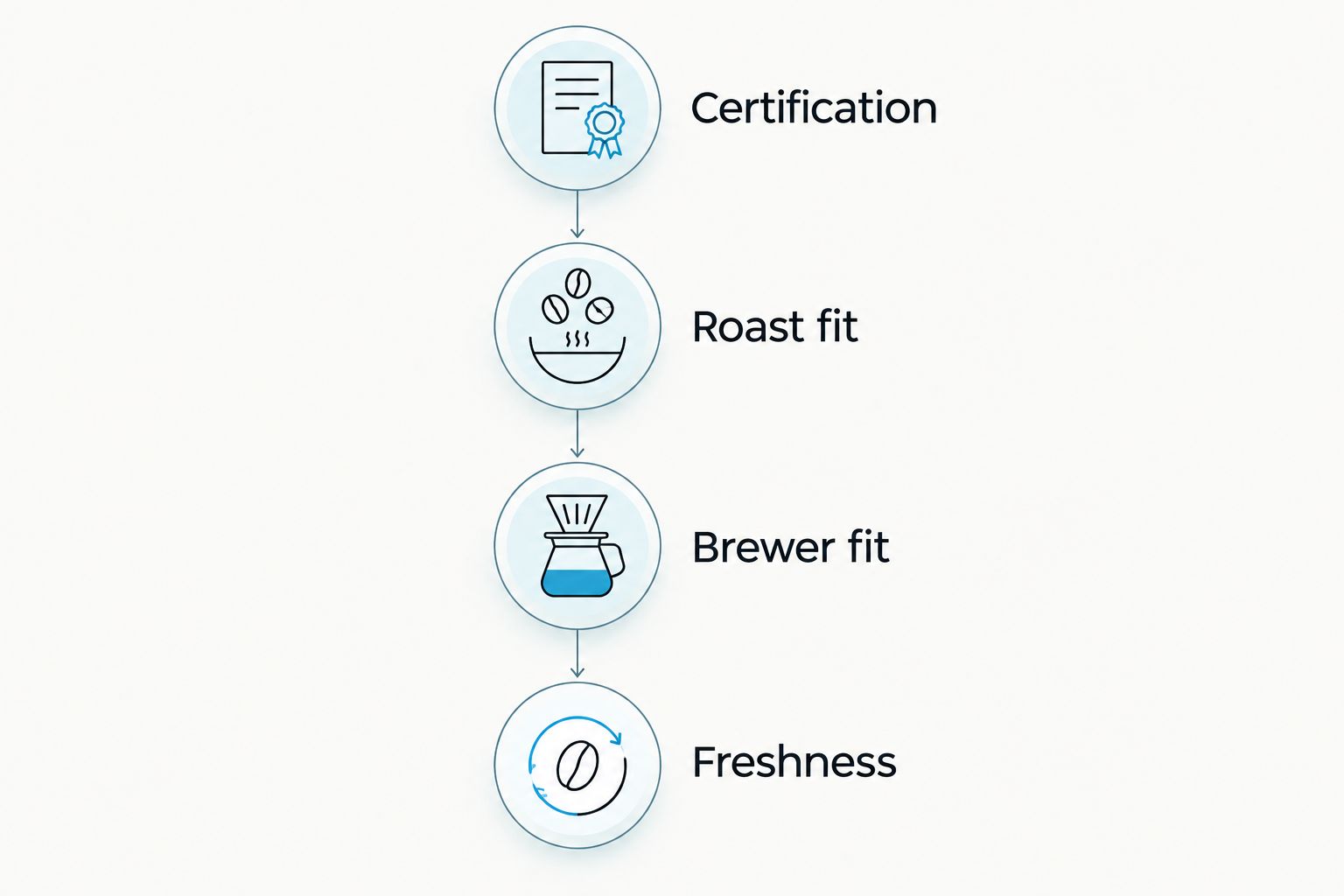
For organic coffee shopping in 2026, use a simple order: confirm certification, choose roast, match the grind to your brewer, and inspect freshness information. This prevents an appealing flavor description from replacing the checks that matter.
- Certification: Does the specific coffee carry a clear organic claim?
- Roast fit: Does its roast and flavor description match your preferences?
- Brewer fit: Can you grind it appropriately, or select the right ground format?
- Freshness: Is roasting information clear enough to support your decision?
For Brew4ufresh coffee shopping, use the same separation between fresh-roast information and certification. A claim about freshness answers a freshness question. It does not establish organic status.
Brew the beans fairly before judging them
A good comparison needs a repeatable recipe. If you change the coffee, grind, water quantity, and brewer together, you cannot tell which change improved the cup.
The Specialty Coffee Association's published Golden Cup standard gives a reference brewing ratio of 55 g of coffee per 1 L of water and a brewing-water range of 92°C to 96°C. These are established brewing references, not organic-specific requirements or results from a Brew4ufresh test.
Use those references for manual filter brewing, then adjust for taste. Follow your machine's instructions for equipment that controls temperature or uses a different brewing process.
- Keep coffee and water quantities consistent during comparisons.
- Grind for the brewer you are using, not for the roast label.
- If the cup tastes sour, investigate extraction before rejecting the beans.
- If the cup tastes bitter or drying, examine your recipe as well as the roast.
- Taste before adding milk, then add your usual amount if that is how you drink coffee.
Store beans in a closed container away from heat, light, and moisture. Grind near brewing time when possible. Organic certification does not prevent aroma loss after roasting.
How we ranked
The order follows the criteria above: certification first, then roast fit, freshness information, brewer fit, flavor descriptions, and origin clarity. Medium roast leads because it is the middle-ground choice; the remaining styles serve distinct preferences rather than competing for the same slot.
This is a style-based guide, not a product-testing leaderboard. Certification must be confirmed on the actual coffee you buy.
Which organic coffee beans should you choose?
Choose certified organic medium-roast beans if you are undecided. They give you a sensible starting point for everyday brewing without committing to a strongly light or dark profile.
Choose light-roast single origin for bright black coffee, dark-roast blends for milk drinks, medium-roast single origin for origin exploration, or decaf for reduced caffeine. Keep those decisions separate from certification.
For your next 2026 purchase, find the style first and verify the specific bag second. An organic label cannot rescue a roast you dislike or a grind that does not fit your brewer.
FAQ
What's the best organic coffee for everyday home brewing?
Certified organic medium-roast beans are the best starting point for everyday home brewing. Choose a flavor description you enjoy and confirm organic certification on the specific coffee.
Does organic coffee taste better than regular coffee?
Organic certification does not guarantee better taste. Origin, processing, roast, freshness, and brewing all affect the cup, so compare coffees with similar roast profiles and a consistent recipe.
What does USDA organic mean on a coffee label?
USDA organic identifies compliance with USDA organic production and handling requirements. A product labeled organic must contain at least 95% organic ingredients, excluding salt and water; the label does not measure roast freshness or flavor quality.
Is single-origin coffee always organic?
Single-origin coffee is not automatically organic. Single-origin describes where coffee comes from, while organic certification addresses production and handling standards.
Are dark-roast organic beans stronger than light-roast beans?
Dark-roast beans generally have more pronounced roast flavor, but darker roasting does not automatically mean more caffeine or a more concentrated drink. Coffee quantity and brewing method affect the strength of your cup.
Can I use organic coffee beans in an espresso machine?
You can use organic coffee beans in an espresso machine when the beans and grind fit the machine's requirements. Organic certification does not specify grind size, roast level, or espresso performance.
Is organic decaf completely caffeine-free?
Organic decaf is not completely caffeine-free. Decaffeination reduces caffeine, while organic certification addresses a separate set of production and handling requirements.
Does Brew4ufresh sell coffee for home brewing?
Brew4ufresh sells artisan roasted blends, flavored coffee, and single-origin coffee for home drinkers seeking freshly roasted beans delivered to their door. Check the specific coffee's information separately for organic certification.
One last thing
Tasting notes are not an ingredient list. A coffee described as chocolatey can be unflavored coffee, while a flavored coffee contains an added flavor component. Read both the flavor description and ingredient information before choosing.
That distinction makes your next comparison more useful: you will know whether you are comparing bean character, roasting, or added flavor.