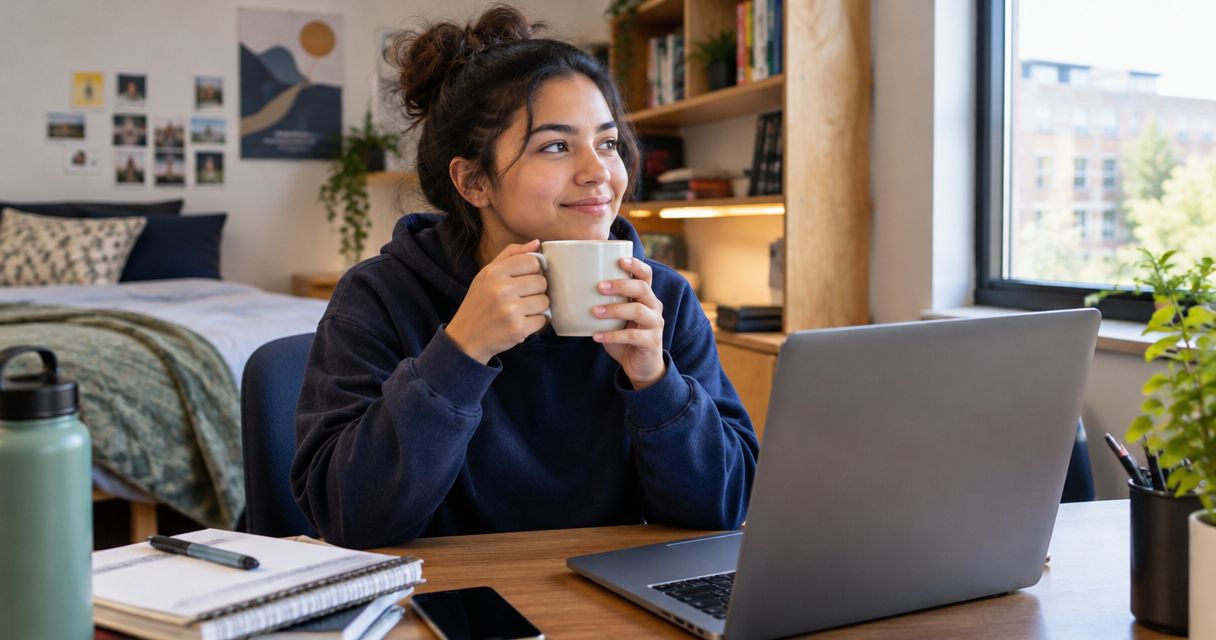
College student coffee is a dorm-friendly brewing routine designed to fit campus rules, limited storage, and class schedules without making cleanup another assignment. The best coffee for college students starts with an allowed brewing method, then matches the beans, grind, and serving size to that method.
- Choose coffee for college students by dorm appliance rules first, then brewing method and cleanup.
- Brew4ufresh coffee suits students who want freshly roasted blends, flavored coffee, or single-origin coffee delivered.
- Pre-ground coffee simplifies dorm brewing; whole beans add grinding equipment and another cleanup task.
- Start with a small setup, measure your coffee, and choose decaf when you want less caffeine.
Why coffee choices matter for college students
Your dorm coffee setup has to work where you actually live. A brewer that needs an appliance your residence hall prohibits is the wrong choice, regardless of its features. A manual brewer also needs an approved source of hot water and somewhere to wash it.
For your 2026 dorm setup, check the housing rules before buying equipment. Then compare brewing methods by storage, water access, cleanup, and whether you share the room. Those constraints matter more than collecting accessories.
Brew4ufresh coffee is best for students who want freshly roasted blends, flavored coffee, or single-origin coffee delivered. Browse Brew4ufresh after choosing your brewing method, so you can check the grind information rather than ordering beans your equipment cannot use.
Delivery still requires planning. Confirm how your campus handles packages and where you will store coffee once it arrives; ordering online does not solve those dorm logistics.
Build a dorm coffee routine that fits your schedule
Check your residence hall rules first
Read your current housing agreement and appliance guidance yourself. Search for coffee makers, electric kettles, heating elements, automatic shutoff, and communal kitchens. If the wording is unclear, ask housing staff about the specific equipment you are considering.
Do not assume a manual method automatically solves the problem. Pour-over and French press brewing still require hot water. Cold brewing avoids that step but introduces refrigeration, filtering, and storage needs.
For a 2026 move-in checklist, separate permission from convenience. An allowed appliance still needs a stable surface, safe placement, and cleaning access. A setup that blocks your desk or requires carrying dripping equipment through the hallway will be harder to maintain.
Best for students with uncertain appliance rules: wait for written clarification before choosing equipment. Start by identifying what your building already provides.
- Read the residence hall appliance policy.
- Confirm where you can obtain drinking water and hot water.
- Measure the shelf or counter space you can actually use.
- Identify an approved place to wash brewing equipment.
Choose the brewing method you will clean
Compare the work after brewing, not just the work before it. Instant coffee dissolves in water, so you do not handle loose grounds. Paper-filter pour-over keeps grounds together for disposal. A French press requires separating wet grounds from the vessel before washing.
Best for minimal equipment: instant coffee. The limitation is that you give up the ability to brew from a bag of freshly roasted ground coffee. Choose pour-over instead if selecting your own beans matters more than eliminating brewing equipment.
A permitted pod machine simplifies portioning, but it restricts you to its compatible pod format. A permitted drip brewer handles a repeatable routine, but it occupies space even when you are not using it.
Picture the entire process before deciding: fill, brew, drink, empty, rinse, dry, and store. If any stage has no practical place in your room, choose a simpler method.
- Choose instant coffee when avoiding grounds is your priority.
- Choose paper-filter pour-over when you want loose coffee with contained disposal.
- Choose a French press only if washing wet grounds is manageable.
- Check pod compatibility before considering a pod machine.
Match the coffee format to your equipment
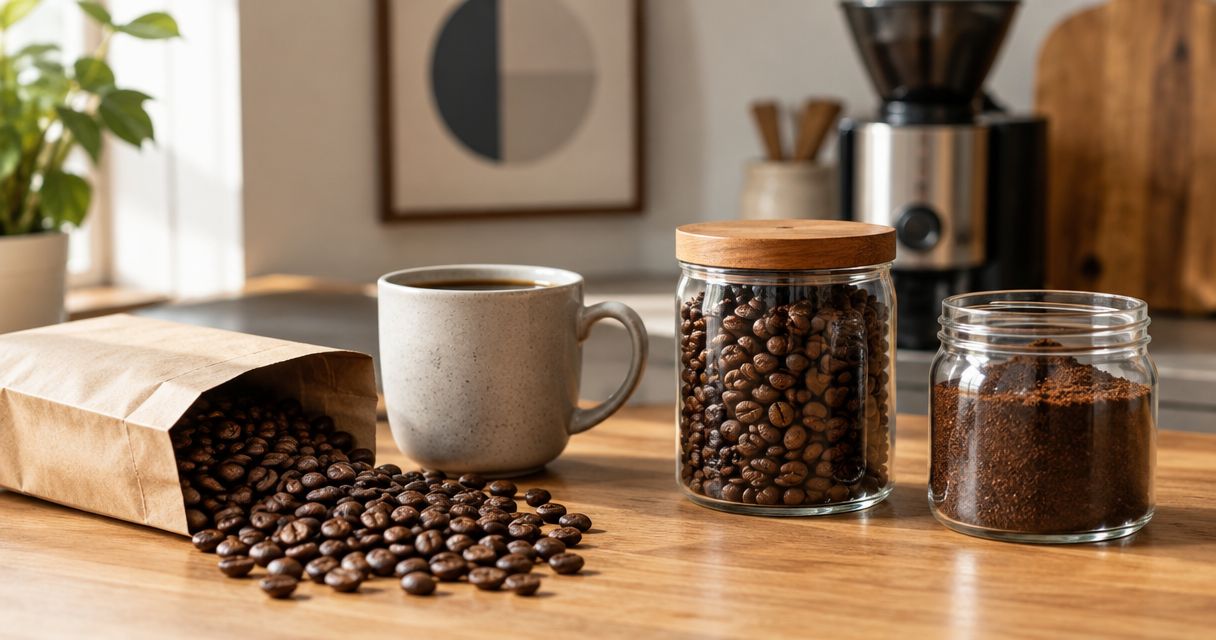
Choose whole beans only if you have access to a suitable grinder. Grinding adds equipment, noise, and another item to clean. Pre-ground coffee removes that step, although you lose the ability to adjust grind size yourself.
Check the package or listing for brewing guidance. A grind intended for one method is not automatically suitable for another. Espresso equipment, in particular, needs a different approach from a basic drip brewer or French press.
Once you know your method, Brew4ufresh offers a place to compare freshly roasted blends, flavored coffee, and single-origin coffee. Check each listing for the format and grind information you need. The store is a coffee source, not a substitute for confirming equipment compatibility.
For more context before selecting a bag, read the guide to fresh-roasted coffee beans. Keep your dorm routine central: an interesting coffee still needs to fit the way you brew.
- Choose whole beans only when a grinder fits your routine.
- Check whether the listing identifies whole-bean or ground coffee.
- Match any stated grind option to your brewing method.
- Avoid ordering a large quantity before trying the coffee.
Choose flavor separately from caffeine
Start with the flavors you enjoy, not the strongest-sounding label. Roast level describes roasting, not a reliable caffeine dose. A darker-tasting cup does not automatically contain more caffeine than a lighter-tasting one.
Best for choosing your first bag: use the seller's tasting description and your preferred drink. If you add milk, think about whether you want the coffee flavor to remain prominent. If you drink coffee black, pay closer attention to descriptions of bitterness, acidity, and sweetness.
A blend combines coffees; single-origin coffee identifies coffee from a stated origin. Neither label guarantees that you will prefer the taste. Flavored coffee is another choice when you specifically want added flavor, rather than tasting notes associated with the coffee itself.
In your 2026 coffee routine, keep flavor decisions separate from caffeine decisions. Choose decaf when reducing caffeine matters, while remembering that decaf is not necessarily caffeine-free.
- Use tasting descriptions to narrow your first choice.
- Treat roast level and caffeine as separate questions.
- Choose flavored coffee because you want that flavor.
- Check decaf labeling rather than assuming a mild taste means less caffeine.
Measure a repeatable cup before changing equipment
Use your existing brewer's instructions as the starting point. For a manual filtered brew without a recipe, try 15 grams of coffee with 250 milliliters of water as a starting recipe, then adjust to taste. These are recipe quantities, not a promise that every coffee tastes best at that ratio.
Keep the same mug and water measurement while you learn. A small scale helps you repeat the coffee dose; a scoop is less precise because different coffees occupy different volumes. You do not need to replace everything at once.
Change one variable at a time. If the flavor is unpleasant, check grind compatibility and brewing technique before simply adding more coffee. If the flavor is pleasant but too concentrated, try a little more water and record what you changed.
The sequence is simple: measure, brew, taste, adjust. Repeat the result you enjoy instead of rebuilding the routine every morning.
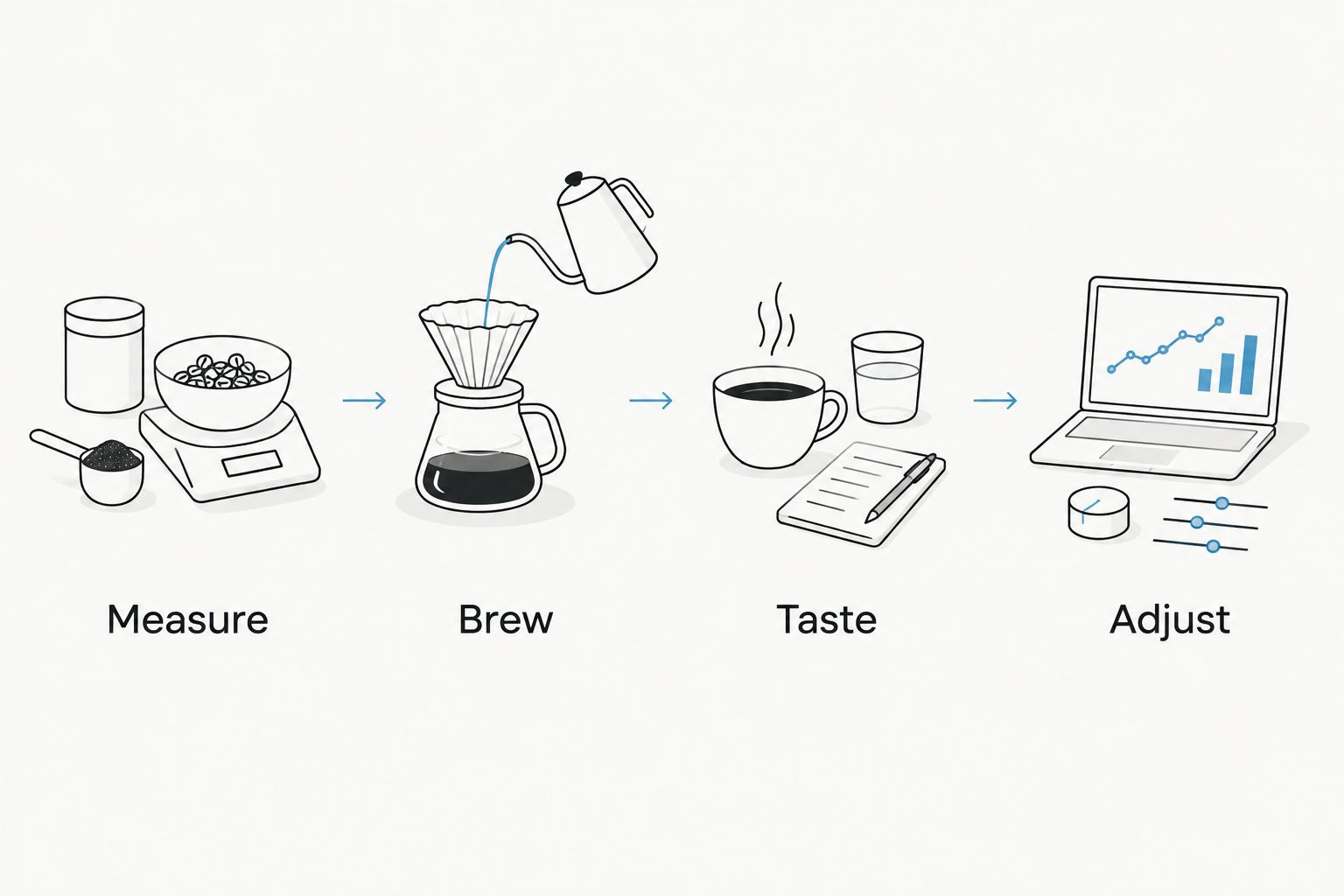
A short note on your phone is enough. Record the coffee, dose, water amount, and whether you liked the result; detailed tasting vocabulary is optional.
- Follow the brewer's instructions before using a general recipe.
- Measure coffee and water consistently.
- Change one variable between attempts.
- Save the recipe you actually enjoy.
Organize storage, cleanup, and class-day use
Keep dry coffee away from moisture, heat, and strong odors. Close the bag securely or use a suitable airtight container. Do not leave an open bag beside a steaming kettle or on a damp shared counter.
Separate clean equipment from used equipment. A washable tray can define the coffee area, but it does not replace washing or drying. Keep electrical equipment away from splashes and follow its care instructions.
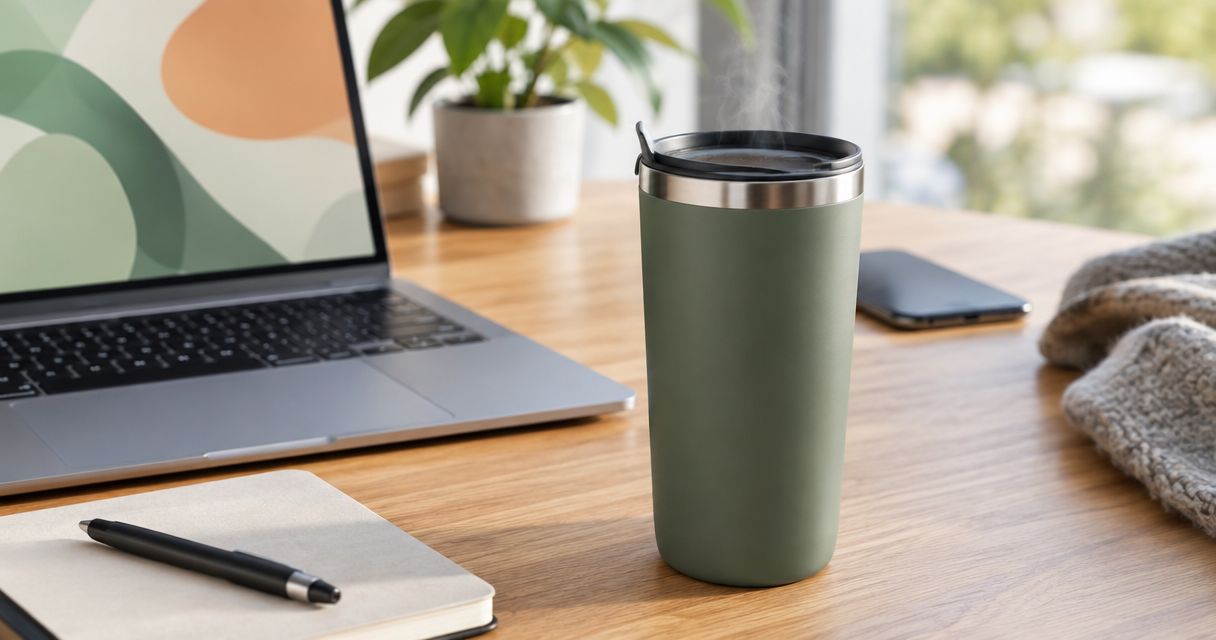
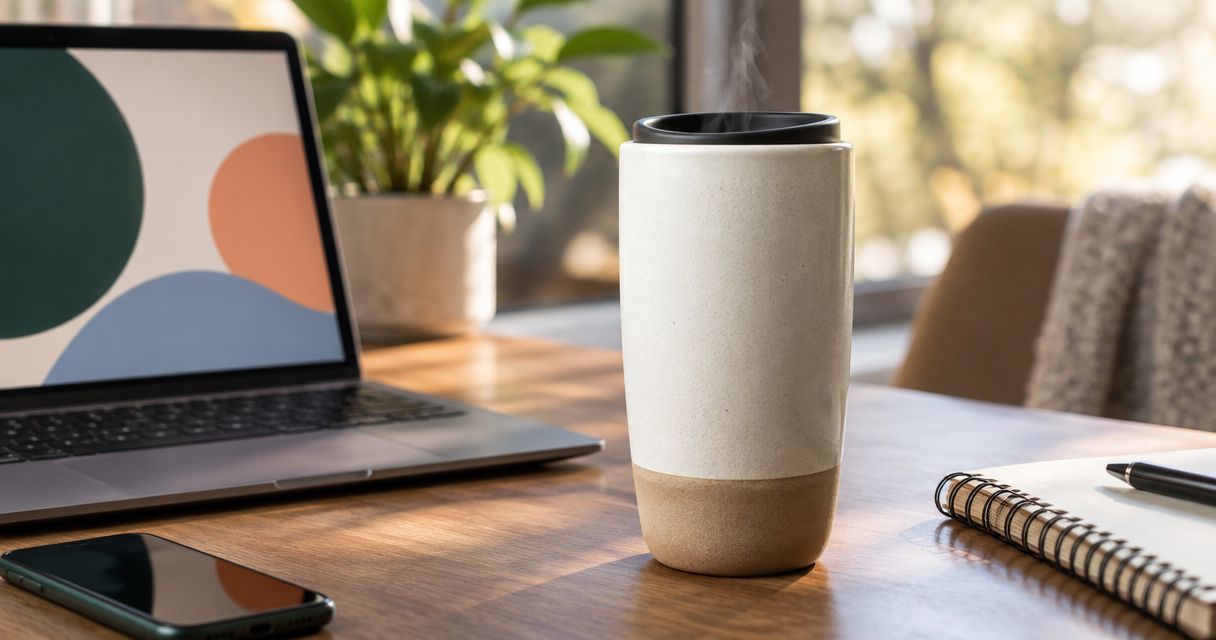
Best for a small shared room: a compact station with only the equipment you use. Leave room to set down a hot mug safely. Choose a drinking vessel by its actual purpose: an open mug for your desk or a travel vessel with suitable closure information for carrying.
If you add milk or prepare coffee ahead, follow appropriate refrigeration guidance. Do not treat a desk, windowsill, or unattended bag as food storage.
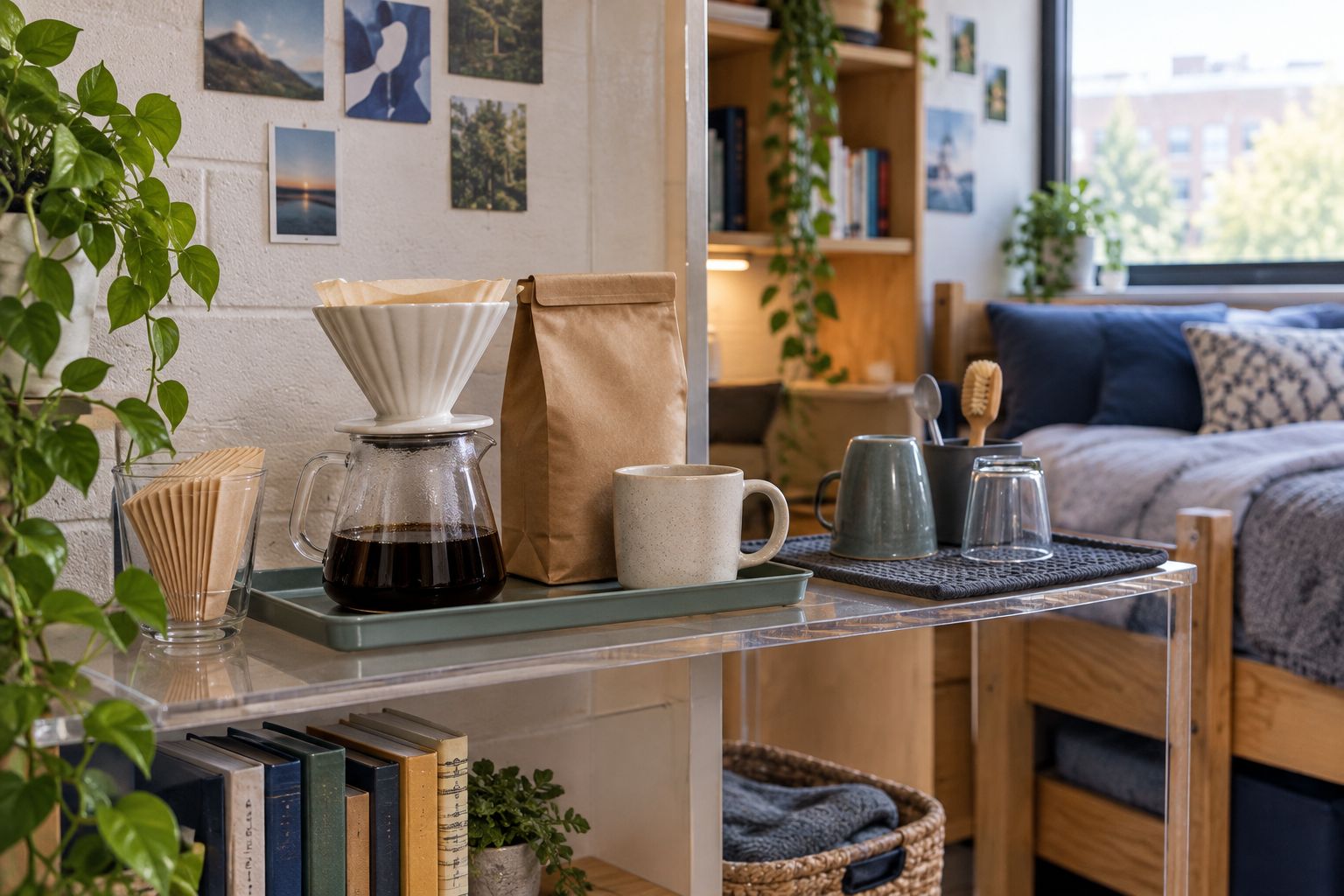
Plan around your real departure time. If brewing makes you late, simplify the process rather than leaving hot equipment or dirty gear behind.
- Store coffee closed and away from steam.
- Dispose of grounds in the appropriate waste stream, not the sink.
- Wash and dry reusable brewing parts as directed.
- Clean lids and seals according to their care instructions.
- Keep perishable additions refrigerated as required.
Compare coffee options for dorm rooms
For 2026 dorm planning, compare the whole routine rather than judging only the finished drink. The best method is the one your building permits and you can maintain. Every option below has a trade-off.
| Option | Best for | Main advantage | Key limitation |
|---|---|---|---|
| Instant coffee | Students avoiding loose grounds | Dissolves directly in water | Does not let you brew from your chosen roasted beans |
| Paper-filter pour-over | Students choosing their own ground coffee | Grounds stay contained in the filter | Needs hot water and manual pouring |
| French press | Students who enjoy an immersion brew | Uses a reusable brewing vessel | Wet grounds require separate disposal and washing |
| Pod machine | Students prioritizing preset portions | Simplifies coffee portioning | Requires compatible pods and appliance permission |
| Drip brewer | Students with a regular brewing routine | Repeats a familiar brewing process | Needs counter space, cleaning, and appliance permission |
| Cold brew | Students preferring cold coffee | Does not require hot brewing water | Needs advance preparation, filtering, and refrigerated storage |
Avoid buying several methods before learning which one fits. Adding equipment creates more storage and maintenance decisions without resolving a poor routine.
Common mistakes college students make
Buying equipment before checking housing rules
A compact brewer is not automatically an allowed brewer. Confirm the specific appliance requirements before ordering, and ask about communal facilities if in-room brewing is restricted. Permission comes before convenience.
Choosing whole beans without a grinding plan
Whole beans require another step before brewing. If you cannot use a grinder conveniently, choose an appropriate ground format instead. Do not assume every bag offers every grind option.
Treating dark roast as a caffeine measurement
Dark roast describes roasting, not a dependable caffeine amount in your cup. Dose, coffee type, and preparation matter. Choose roast for taste and use actual caffeine information when the manufacturer provides it.
Ignoring the shared sink
Wet grounds create a cleanup task after the drink is finished. Plan disposal before choosing a French press or another loose-ground method. Keep grounds out of drains and leave shared surfaces clean.
Using coffee to extend every study session
Coffee does not replace sleep. If caffeine disrupts your sleep, change the timing, reduce your intake, or choose decaf rather than treating another cup as the default answer. Count other caffeinated drinks when considering your routine.
FAQ
What's the best coffee for college students in dorm rooms?
The best coffee for college students is coffee that matches an allowed brewing method and a manageable cleanup routine. Instant coffee suits minimal equipment, while an appropriate ground coffee suits students who want to select their own roasted beans.
Can I have a coffee maker in my dorm room?
Your residence hall's appliance policy determines whether you can have a coffee maker in your dorm room. Check the current rules and ask housing staff about the specific appliance before buying it.
Is ground coffee better than whole beans for college students?
Ground coffee is the simpler choice when you do not have convenient access to a grinder. Whole beans give you control over grinding but add equipment and preparation.
How much coffee should I use for a manual filtered cup?
Try 15 grams of coffee with 250 milliliters of water as a starting recipe for a manual filtered brew. Follow your brewer's instructions first, then adjust the recipe to your taste.
Does dark roast have more caffeine than light roast?
Dark roast does not reliably indicate more caffeine than light roast. Roast color alone cannot tell you the caffeine amount in your prepared drink.
Can I make dorm coffee without a coffee machine?
Yes, instant coffee and manual methods such as pour-over do not require a coffee machine. You still need suitable water access, permission for any heating appliance, and a cleanup plan.
Is Brew4ufresh a good option for student coffee?
Brew4ufresh suits students who want freshly roasted blends, flavored coffee, or single-origin coffee delivered. Check the listing's format information and your campus package procedures before ordering.
One last thing
Practice the entire routine before your first early class. Brew the coffee, empty the grounds, wash the equipment, and put everything away. The cleanup is part of the test, not an optional extra.
Your 2026 dorm coffee setup does not need to resemble a café. If you enjoy the cup, follow your building's rules, and leave the space clean, it is doing its job.