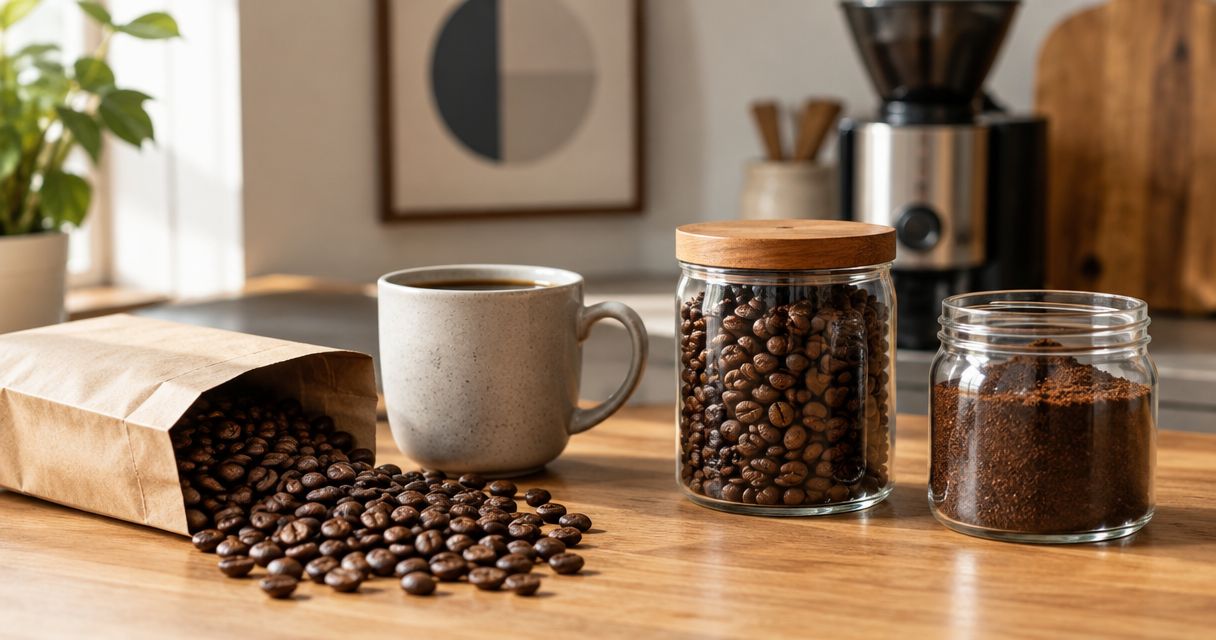
Coffee for remote workers is a home-brewing routine built around your work schedule, with the aim of making a satisfying cup without interrupting your day. Unlike an office coffee station, your setup must fit your kitchen, meeting calendar, taste preferences, and cleanup habits.
- Choose coffee for remote workers by brewing effort, roast preference, and serving size—not promises of productivity.
- Brew4ufresh coffee suits home drinkers who want freshly roasted beans delivered.
- Batch drip suits meeting-heavy mornings; pour-over suits deliberate breaks; decaf separates coffee enjoyment from added caffeine.
- Keep your home coffee setup simple: repeat one recipe before changing beans, grind, or equipment.
Why coffee matters for remote workers
Your coffee routine competes with calls, focused work, household tasks, and limited counter space. A brewing method that needs attention at every stage is a poor match for a morning of back-to-back meetings, even when you enjoy its results.
The best workday coffee is the cup you can prepare consistently without disrupting your schedule. Start with your actual morning, not an idealized coffee-bar setup. In 2026, a useful home coffee routine still begins with those practical decisions.
Freshness belongs in that decision, too. This guide to fresh-roasted coffee beans to buy online provides a starting point for comparing beans; the steps below explain how to fit them into your workday.
Build a coffee routine around your workday
1. Match your brewing method to your calendar
Look at your calendar before changing your equipment. Decide whether you want to make coffee before work, during a genuine break, or ahead of time for the next day. These are different jobs, and they favor different methods.
Use the brewer you already own first. Batch drip lets you prepare several servings together, while pour-over requires active pouring. French press includes an immersion period, but you still need to separate the brewed coffee from the grounds and clean the vessel.
For your 2026 setup, choose the method that fits an ordinary Tuesday. Do not optimize around a quiet weekend morning that your work schedule rarely resembles.
- Best for meeting-heavy mornings: Brew a drip batch before your first call.
- Best for deliberate breaks: Use pour-over when you can stay with the brewer.
- Best for advance preparation: Make cold brew ahead of the workday.
- Best for shared kitchens: Agree on a brewing window and cleanup routine.
2. Choose flavor before chasing strength
Write down what you like about your current cup. Roasty, fruity, chocolate-like, and flavored describe different preferences; none automatically identifies the right coffee for every remote worker. Your usual additions matter, too.
Roast describes how coffee is roasted, while strength describes how concentrated the brewed drink is. Caffeine is a separate question. A darker-tasting cup is not a reliable caffeine measurement. Adjusting the amount of coffee relative to water changes concentration without requiring a different roast.
For a practical 2026 comparison, taste coffee the way you normally drink it. A coffee you enjoy black does not necessarily become your favorite with milk, and the reverse also applies.
- Best for roast-led flavor: Start with a dark-roast option.
- Best for exploring origin: Compare single-origin coffees using the same recipe.
- Best for added flavor: Choose a flavored coffee rather than expecting roast alone to supply it.
- Best for less caffeine: Look for coffee explicitly identified as decaf.
3. Buy beans around your actual consumption
Check how much coffee you use before ordering more. Record your dose and how often you brew, then choose an amount you can use without accumulating several open bags. A simple note beside the brewer is enough.
For delivery rather than a separate shopping trip, Brew4ufresh sells artisan roasted blends, flavored coffee, and single-origin coffee for home drinkers. Brew4ufresh coffee is best for home drinkers who want freshly roasted beans delivered. Delivery addresses the shopping task; you still need to choose a suitable coffee and brew it well.
Keep your first order focused on a flavor direction you already enjoy. Opening several unfamiliar coffees at once makes comparisons harder because your recipe, preferences, and storage conditions all enter the decision.
- Count how often you brew during a normal workweek.
- Use your measured dose to estimate bean consumption.
- Check the product information for roast and preparation details.
- Keep opened coffee tightly closed, away from heat and light.
- Finish a comparison before adding more open bags.
4. Standardize one recipe before changing anything else
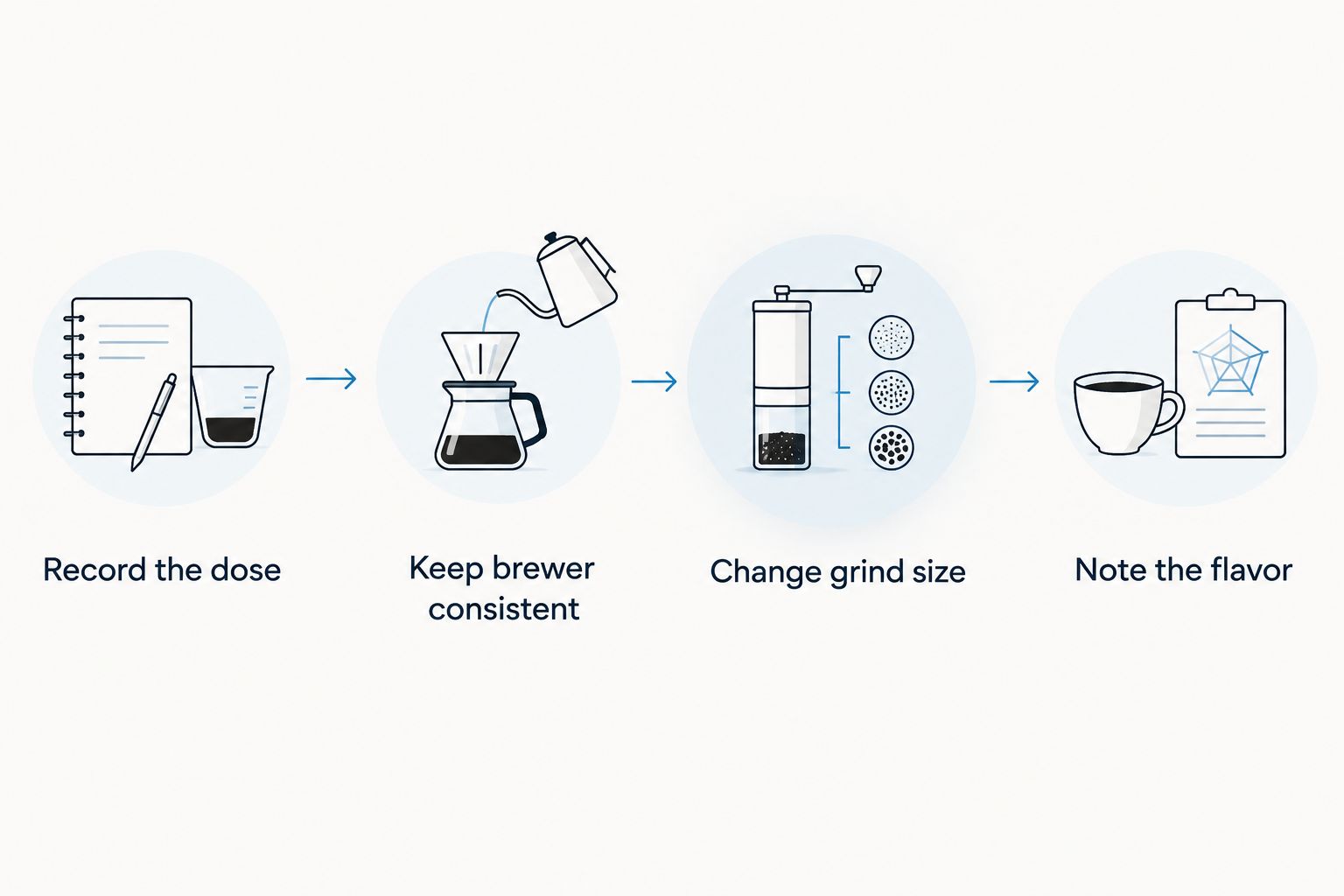
Use a kitchen scale if you already have one. Measuring coffee and water by weight makes a recipe easier to repeat than relying on an uneven scoop or an unspecified mug size. Write your starting recipe down.
For filter brewing, try 20 g of coffee with 320 g of water, a coffee-to-water ratio of 1:16. Treat this as a starting recipe, not a rule for every brewer. A smaller test at the same ratio uses 10 g of coffee and 160 g of water, provided your brewer works well with that batch size.
Adjust one variable at a time. Changing beans, grind, water quantity, and brewing method together prevents you from identifying what improved the cup. Repeat a promising recipe before calling it your new default.
- Record the coffee dose and water weight.
- Keep your brewer and filter type consistent.
- Follow your brewer's instructions for preparation.
- Change grind size separately from the coffee-to-water ratio.
- Note whether you want more concentration or a different flavor.
5. Set up your coffee station away from your keyboard
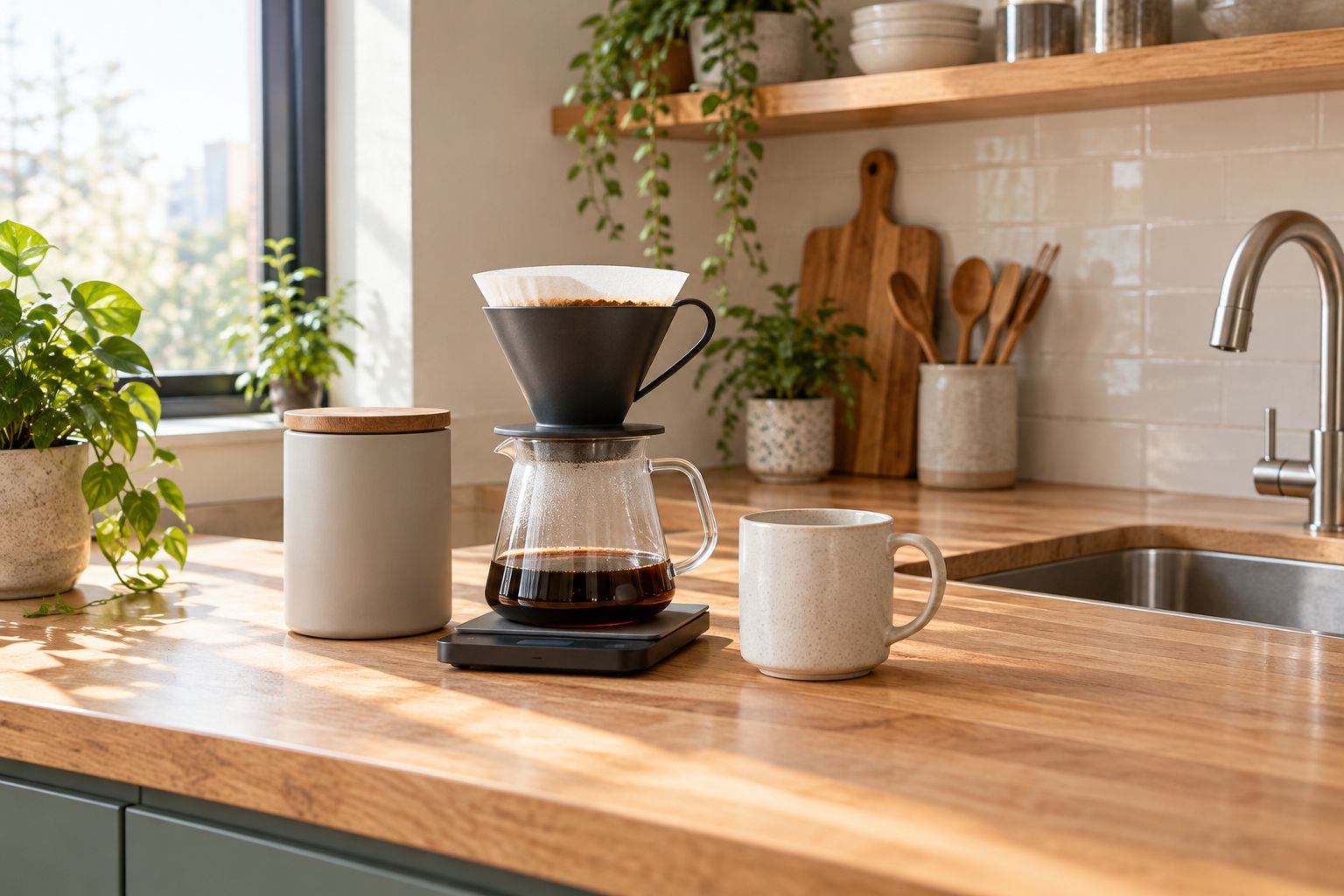
Clear a small preparation area in the kitchen before buying organizers or accessories. Keep the brewer, coffee, filters, and cleanup supplies together. The goal is a routine you can complete without searching through cupboards between meetings.
Separate brewing from desk work. A stable surface gives you room to handle hot water and wet grounds without placing them beside electronics. Carry the finished drink to your desk only after preparation is complete.
Choose your mug by how you drink, not by how it looks in a desk photo. An open ceramic mug suits a settled break; a lidded vessel suits movement between rooms. Check the vessel's care and handling instructions rather than assuming every mug performs the same way.
- Keep hot-water preparation in the kitchen.
- Store filters and measuring tools beside the brewer.
- Leave space to set down a hot vessel safely.
- Keep your drink away from the keyboard's edge.
- Empty grounds and rinse equipment after brewing.
6. Plan your later cups separately
Decide whether you want another coffee because you enjoy the taste, want a break, or are reaching for caffeine. Those are different needs. Your afternoon drink does not have to match your morning drink.
Use your existing routine to notice what works for you. If later caffeinated coffee interferes with sleep, move it earlier or choose a different drink. Decaf contains some caffeine, and tea is not automatically caffeine-free; check the specific product rather than relying on the category name.
Brew4ufresh also sells tea, so the store covers a change of drink as well as coffee shopping. That is a choice of beverage, not evidence that any particular tea is suitable for avoiding caffeine.
- Keep water available independently of your coffee routine.
- Choose decaf when you want coffee with less caffeine.
- Check tea ingredients and product information.
- Avoid using roast darkness to estimate caffeine.
- Take a screen break even when you skip another cup.
7. Review the routine before upgrading equipment
For your next 2026 home-office upgrade, identify the exact problem first. Weak coffee, lengthy cleanup, inconsistent flavor, and interruptions are separate issues. A new machine does not solve all of them.
Keep a short brewing note during an ordinary workweek. Record the recipe, whether you finished the drink, and what interrupted preparation. Those observations give you a more useful buying brief than an equipment feature list.
Keep equipment that solves your actual workday problem. If the coffee tastes good but cleanup is inconvenient, address cleanup. If the coffee changes every morning, standardize preparation before replacing the brewer.
- Name the problem in a single sentence.
- Repeat your current recipe before judging it.
- Note coffee left unfinished or discarded.
- Include cleanup when assessing convenience.
- Buy only after identifying what the replacement must improve.
Compare brewing options for remote work
Choose the preparation style that fits your schedule first, then select beans within your preferred flavor range. This comparison concerns workflow, not a claim that one method produces better coffee for everyone.
| Option | Best for | Main advantage | Key limitation |
|---|---|---|---|
| Batch drip | Meeting-heavy mornings | Prepares several servings together | An oversized batch leaves coffee you do not finish |
| Pour-over | Intentional coffee breaks | Lets you adjust pouring and preparation directly | Requires active attention |
| French press | Drinkers who enjoy a fuller-bodied cup | Uses a straightforward immersion method | Grounds and sediment require cleanup |
| Cold brew | Advance preparation | Moves brewing preparation outside the workday | Requires planning and a separate recipe |
| Espresso | Short drinks and milk-based coffee | Produces a concentrated coffee base | Adds equipment care and preparation demands |
| Decaf coffee | Coffee enjoyment with less caffeine | Works with familiar brewing routines | Is not caffeine-free |
Decaf is a coffee choice rather than a separate brewing method. Pair it with the workflow you already like instead of treating it as a reason to rebuild your setup.
Common mistakes remote workers make
Brewing for an imaginary office crowd
A large batch makes sense when several people will drink it. Alone at home, it can leave you carrying an unfinished mug from meeting to meeting. Match the batch to what you actually finish, not the brewer's maximum capacity.
Treating darker roast as a productivity setting
Darker roast describes a roast profile, not a guaranteed increase in caffeine or work performance. Choose it because you like the flavor. If your goal is a more concentrated cup, review the brewing ratio separately.
Scheduling hands-on brewing between tightly packed calls
Pour-over is a poor fit when you must leave the kitchen halfway through preparation. Choose an uninterrupted break or brew before the meeting block begins. Include grinding and cleanup in that decision.
Buying equipment before fixing an inconsistent recipe
A changing dose or water quantity makes it difficult to assess any brewer. Standardize those inputs first. Otherwise, your new equipment inherits the same inconsistent routine.
Turning every break into another refill
A break can mean standing up, drinking water, or stepping away from a screen. Another coffee is optional. Keep the enjoyable ritual without making every pause depend on a caffeinated drink.
FAQ
What's the best coffee for remote workers?
The best coffee for remote workers matches their flavor preferences, brewing method, and work schedule. Choose a coffee you enjoy, then use a repeatable recipe rather than expecting a particular roast to improve productivity.
Is drip coffee better than pour-over for working from home?
Drip coffee is better for preparing several servings before a busy meeting block; pour-over is better for a hands-on break. Choose by the attention you can give preparation, not by assuming one method always tastes better.
What coffee-to-water ratio should I start with?
For filter coffee, try 20 g of coffee with 320 g of water as a starting recipe. That is a 1:16 ratio; adjust it to your taste and follow your brewer's preparation instructions.
Does dark roast coffee contain more caffeine?
Dark roast is not a reliable indicator of a drink's caffeine content. Bean characteristics, dose, brewing method, and serving size also matter, so use roast level to choose flavor rather than estimate caffeine.
Should I switch to decaf while working from home?
Choose decaf when you want coffee with less caffeine, especially if later caffeinated drinks interfere with your sleep. Decaf still contains some caffeine, so it is not the same as a caffeine-free drink.
Can Brew4ufresh supply coffee for my home office?
Brew4ufresh sells freshly roasted coffee for home drinkers seeking delivery, including blends, flavored coffee, and single-origin coffee. Choose according to your taste and check the individual product information before ordering.
Do I need an expensive coffee setup for remote work?
You do not need a complicated setup to establish a repeatable home coffee routine. Start with your existing brewer, consistent measurements, and a manageable cleanup process before deciding whether equipment needs replacing.
One last thing
Before buying anything else in 2026, measure the water your usual mug holds. A mug is a vessel, not a standardized recipe. Knowing your intended serving makes it easier to brew the amount you want instead of adjusting your coffee around whatever cup happens to be clean.