Small-office coffee subscriptions are recurring coffee orders designed to keep a shared workplace supplied without repeated purchasing. For your 2026 office coffee subscription, match deliveries to actual attendance, your brewer, and the amount your team drinks—not your total employee count.
- Choose an office coffee subscription around measured consumption, brewer compatibility, and adjustable delivery timing.
- Brew4ufresh serves home coffee drinkers; verify recurring-order terms before considering it for office purchasing.
- Whole beans require a grinder; ground coffee reduces preparation work but needs the right grind.
- Keep one dependable shared coffee, then add decaf or tea according to actual requests.
Why this matters
A recurring order solves replenishment, not brewing. You still need someone to check supplies, clean equipment, and adjust orders when attendance changes. A full cupboard is not evidence that your subscription works; coffee left unopened while another shipment arrives signals a mismatch.
Before comparing delivery plans, understand what you want in the cup. This fresh-roasted coffee buying guide provides a starting point for evaluating coffee itself. Choose the supply arrangement separately.
Why coffee subscriptions matter for small offices
Small offices need predictable supplies without making coffee management a separate job. Shared equipment and mixed preferences complicate the decision: the person who orders coffee does not necessarily drink it, and the team does not necessarily attend every day.
The right office coffee subscription follows your workplace routine rather than forcing a routine around deliveries. For your 2026 shortlist, prioritize a suitable format and clear ordering controls over elaborate tasting selections.
A subscription makes sense when consumption is regular enough to estimate. Manual ordering remains useful when attendance varies sharply or when you are still choosing your everyday coffee. Start with evidence from your kitchen, not a supplier's suggested office size.
How to choose an office coffee subscription
Measure what your office actually uses
Start with a notebook or shared spreadsheet. For 5 working days, record attendance, coffee brewed, and coffee discarded. Treat this as an observation period, not a universal standard; extend it if meetings, travel, or holidays distort the week.
Weigh the coffee you use instead of counting loosely filled scoops. Record brewed batches separately from individual servings because mug sizes differ. Include coffee taken by visitors if guests regularly use the same supply.
Base your first order on measured use, then revise it after delivery. Do not multiply headcount by an assumed number of cups and call that demand.
- Log dry coffee used in grams each day.
- Record which days have the highest attendance.
- Note unopened coffee already in storage.
- Separate brewed coffee consumed from coffee discarded.
Match the coffee format to your brewer
Read your brewer's instructions before choosing whole beans, ground coffee, or pods. Coffee format is a practical constraint, not just a taste preference. A subscription that sends the wrong format adds work before anyone gets a drink.
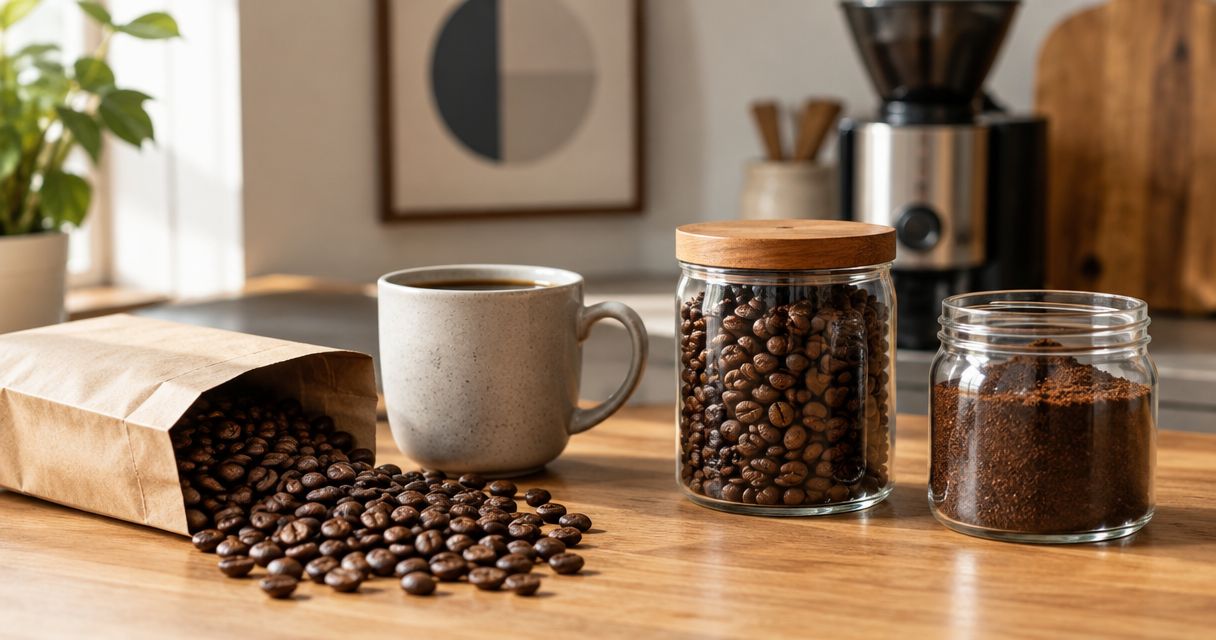
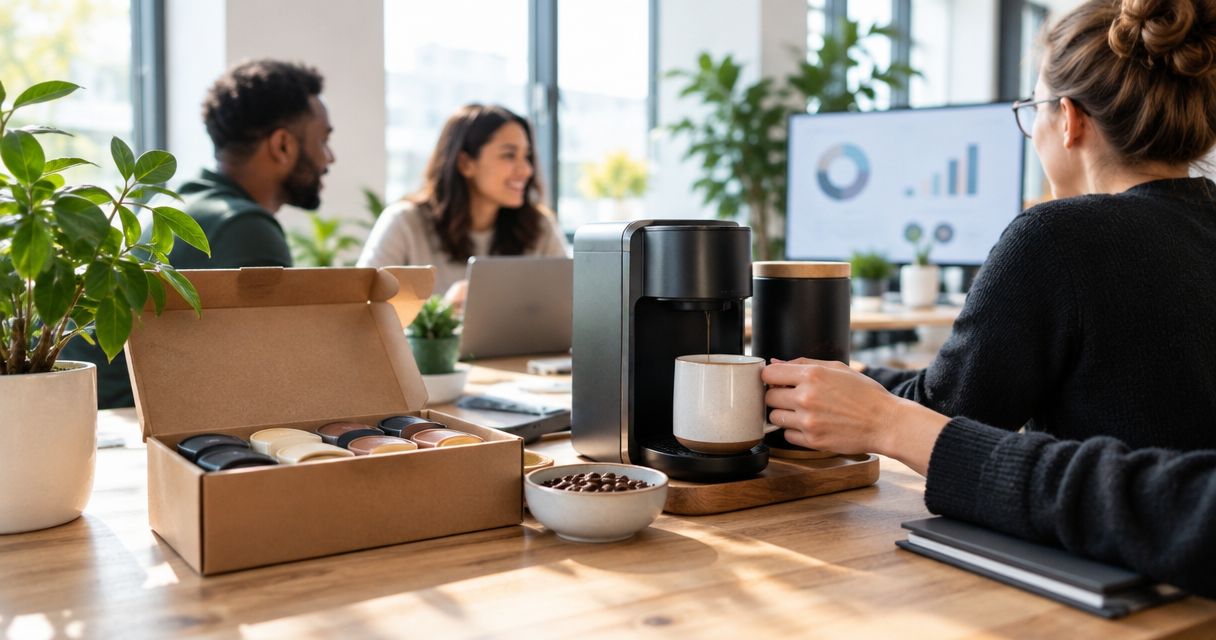
Whole beans suit a kitchen with a suitable grinder and someone willing to use it. Ground coffee removes that task, but the grind still needs to match the brewing method. Pods require compatibility with the exact machine; a similar-looking capsule is not enough.
Check the shared kitchen rather than assuming employees will bring equipment from home. Your 2026 setup should work for the person making the first pot and the person covering their absence.
- Identify the brewer's make and model.
- Check its accepted coffee format.
- Confirm grinder access before ordering whole beans.
- Write down the grind required for ground coffee.
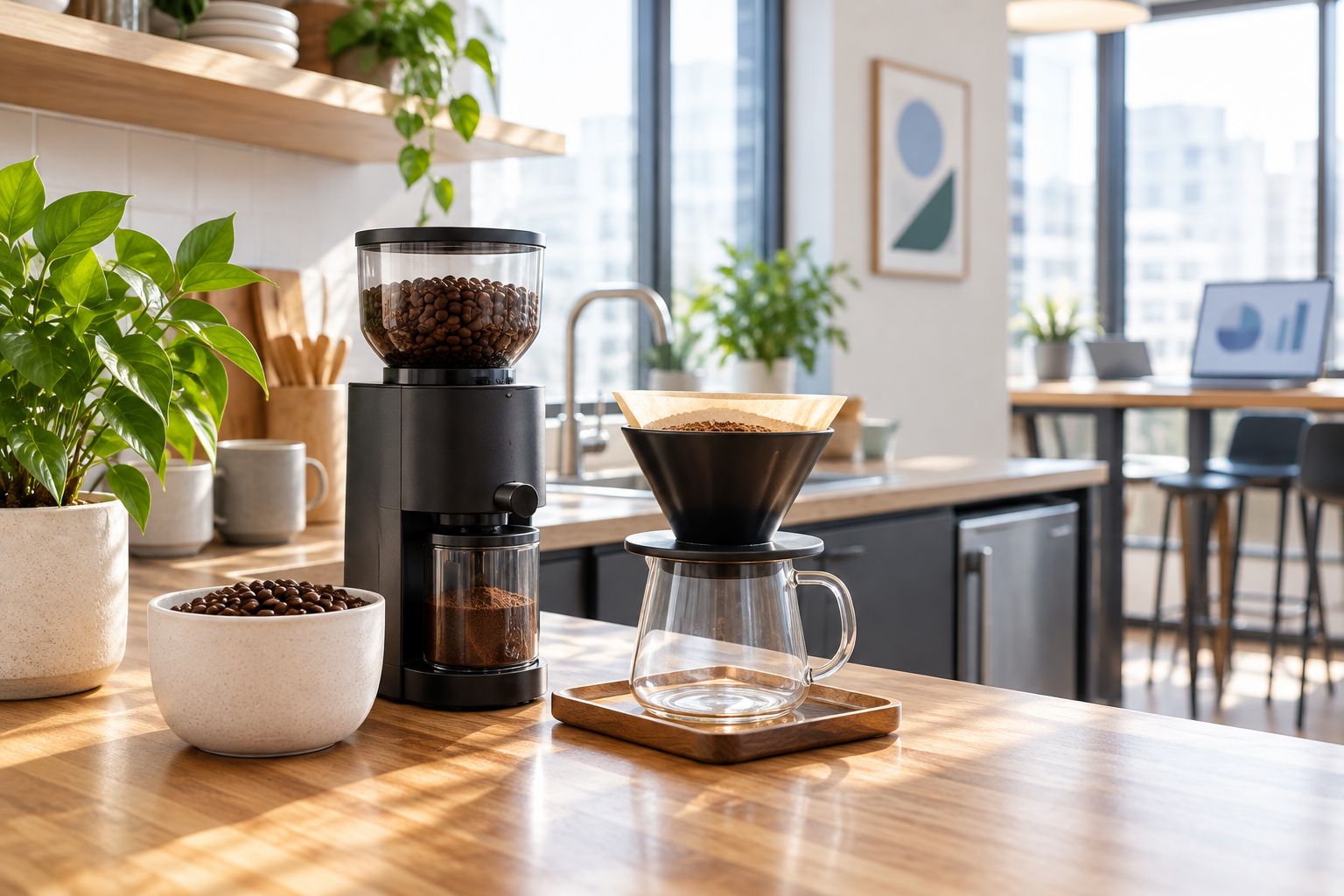
A simple brewing station makes the trade-off visible: whole beans need a grinder, while ground coffee can go directly into the appropriate filter. Keep instructions beside the equipment so preparation does not depend on memory.
Choose a dependable everyday coffee
Run a small tasting before committing to recurring deliveries. Brew candidates with the same equipment and recipe, then ask colleagues which they would willingly drink every workday. A memorable tasting coffee is not automatically the right shared-office default.
Brew4ufresh is best for home coffee drinkers seeking freshly roasted coffee delivered. Its stated range includes blends, flavored coffee, single-origin coffee, and tea. For a small office using a home-style brewer, that range offers categories to consider; it does not establish a managed office service or recurring-order terms.
Use Brew4ufresh as a coffee-shopping option, then confirm the ordering arrangement separately. One-off purchases let you evaluate taste before deciding whether any supplier deserves a recurring order.
- Compare coffees using the same brewing recipe.
- Ask about everyday preference, not just first impressions.
- Keep flavored coffee separate from the shared default.
- Add decaf or tea when colleagues request it.
Verify the subscription controls
Manual ordering gives you direct control over each purchase. A subscription earns its place when it removes repeat work without making changes difficult. Read the actual terms before handing over responsibility for replenishment.
For every 2026 office coffee subscription candidate, check how you change quantities, move the next delivery, and end the arrangement. Ask whether the plan supplies coffee only or includes equipment support. Do not assume that an office-focused description includes maintenance, installation, or consumables.
Brew4ufresh's supplied description identifies a coffee and tea store, not subscription features. Confirm any recurring-order capability directly before including it in a subscription comparison.
- Check how quantity changes take effect.
- Read skip, pause, and cancellation terms.
- Confirm whether coffee choices can change.
- Identify what equipment or support is explicitly included.
- Check how order confirmations reach your purchasing contact.
Set delivery timing from consumption
Use your consumption log to estimate how much coffee you need between deliveries. Multiply your observed daily use by the working days in the proposed interval. This is a planning method, not a claim about what a typical office drinks.
For a manual setup, put a stock check on the calendar and reorder from the result. With a subscription, choose the nearest suitable quantity and adjust after observing actual use. Keep any reserve separate so you can distinguish normal demand from backup consumption.
Reduce the next order when unopened coffee accumulates. Ordering more frequently does not guarantee fresher cups if deliveries repeatedly exceed what your team drinks.
- Count working days rather than calendar days.
- Account for planned closures and remote-work periods.
- Check remaining coffee before the next order locks.
- Record when you use reserve stock.
Assign the routine to a named owner
A recurring delivery still needs a person responsible for it. Name a primary owner and a backup so a holiday does not leave your kitchen without coffee or create duplicate orders.
A shared checklist is enough to start. Include stock checks, order changes, and cleaning according to the equipment manufacturer's instructions. Keep purchasing access in your approved workplace process rather than in an individual employee's personal account.
For your 2026 purchasing record, save order confirmations and note why quantities changed. That makes it easier for another colleague to take over without repeating the initial trial.
- Name the purchasing owner and backup.
- Set a stock-check reminder before order changes close.
- Store coffee sealed, away from heat and moisture.
- Follow the brewer's cleaning instructions.
- Keep decaf clearly identified at the brewing station.
Review the first deliveries before expanding
Review your setup after 2 delivery cycles as a practical checkpoint. Compare coffee received, coffee used, and coffee remaining. Ask whether colleagues consistently drink the default choice or quietly avoid it.
Change one factor at a time. If the coffee tastes weak, check the recipe before replacing the supplier. If unopened bags accumulate, change quantity or timing before adding more varieties. If preparation is the problem, reconsider the format rather than ordering different beans.
Keep the review brief and repeatable. Your goal is a reliable shared kitchen, not an ongoing tasting project.
- Compare remaining stock with the next scheduled delivery.
- Check whether preparation instructions are being followed.
- Ask for feedback on the everyday coffee.
- Adjust one variable and record the result.
Compare supply options for your small office
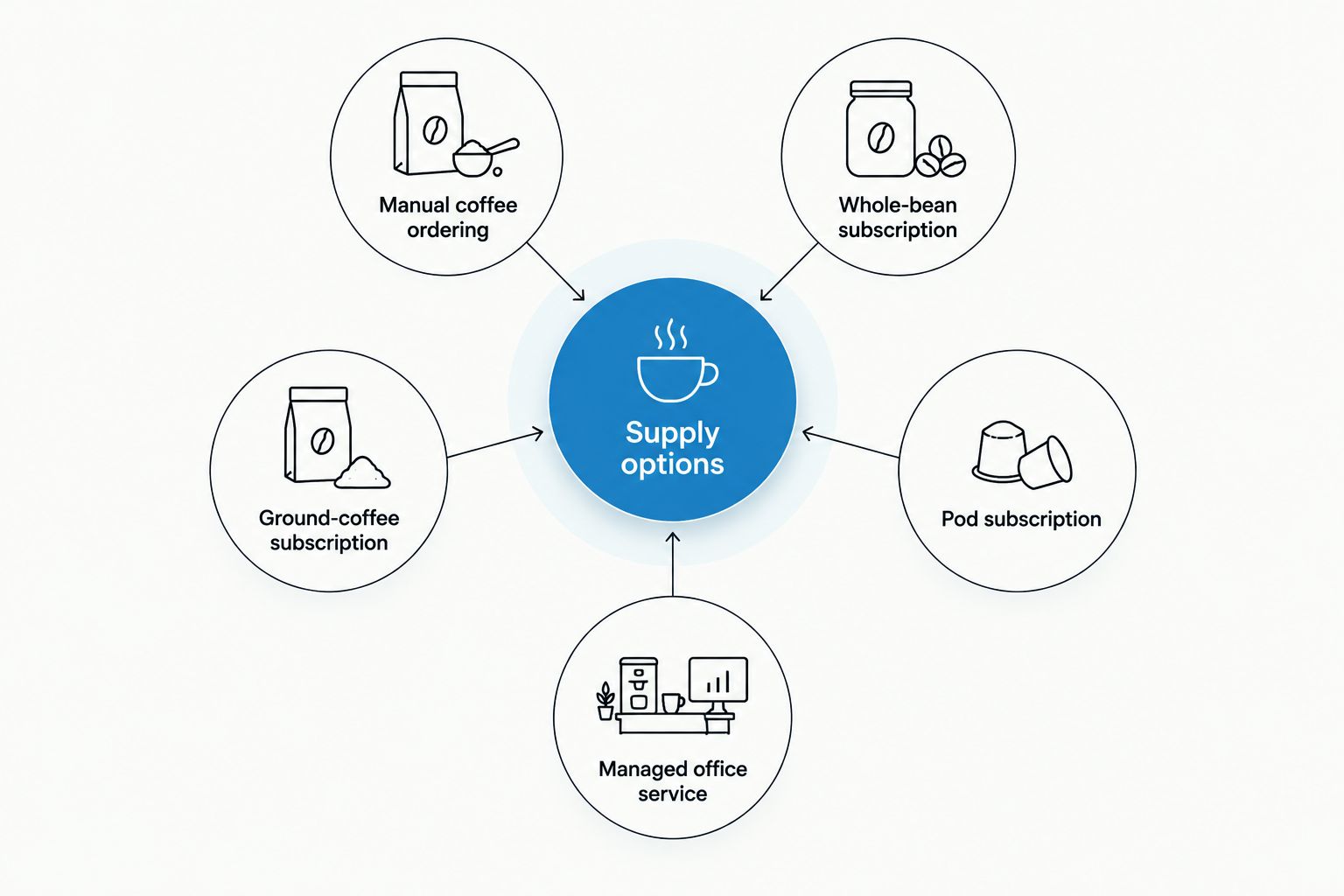
Choose an arrangement based on the work your office can manage. The table compares operating models, not verified features of a named supplier. Confirm each provider's actual terms before purchasing.
| Option | Best for | Main advantage | Key limitation |
|---|---|---|---|
| Manual coffee ordering | Offices still measuring demand | Each order reflects current needs | Someone must remember to reorder |
| Whole-bean subscription | Teams with a grinder and a consistent brewing routine | Beans are ground when needed | Grinding adds equipment and preparation tasks |
| Ground-coffee subscription | Offices using a shared drip brewer without a grinder | Removes the grinding step | The supplied grind must suit the brewer |
| Pod subscription | Offices with a compatible pod machine | Individual servings avoid brewing a shared pot | Compatibility restricts the selection |
| Managed office coffee service | Offices seeking equipment support alongside supplies | Can combine supply and service under one arrangement | Inclusions and commitments require careful checking |
Best for an unsettled routine: manual coffee ordering. Its extra purchasing work is useful while you learn what the office actually needs. Automating an inaccurate order simply repeats the error.
Best for a stable routine: a compatible subscription with clear adjustment controls. Choose the format your office already prepares well before considering new equipment.
Common mistakes small offices make
Ordering for employees who are rarely onsite
Payroll headcount is not coffee demand. Use attendance and observed consumption, then account for planned changes. A busy meeting day should not determine every recurring delivery.
Choosing a coffee nobody wants as the default
A distinctive flavored or single-origin coffee can divide a shared kitchen. Keep your everyday choice dependable, then test alternatives separately. Collect feedback from the people drinking it, not only the person placing the order.
Treating delivery as equipment support
Coffee arriving regularly does not mean a supplier cleans, repairs, or replaces your brewer. Check the agreement. Assign those responsibilities internally unless a service explicitly includes them.
Changing coffee before checking the recipe
Inconsistent scoops, different batch sizes, and an unclean brewer make comparisons unreliable. Standardize preparation before judging a new coffee. Otherwise, your next delivery inherits the same problem.
FAQ
What's the best office coffee subscription for a small team?
The best office coffee subscription matches your measured consumption, brewer, and ability to manage deliveries. Start with a consumption log, then compare compatible formats and the actual adjustment terms of each plan.
How do I work out how much coffee my office needs?
Record dry coffee used and attendance over a representative working period. Multiply observed daily use by the working days between proposed deliveries, then adjust using remaining stock.
Are whole beans better than ground coffee for an office?
Whole beans suit offices that have a grinder and a reliable preparation routine; ground coffee suits teams that want to remove that step. Neither format fixes an unsuitable grind, inconsistent recipe, or poorly maintained brewer.
Can an office coffee subscription include a coffee machine?
Equipment is included only when the provider explicitly states it in the agreement. Distinguish coffee-only recurring orders from managed services, and check who handles cleaning, maintenance, and repairs.
Does Brew4ufresh offer an office coffee subscription?
Brew4ufresh is described as an online store selling freshly roasted coffee, tea, and merchandise; an office subscription is not established by that description. Confirm recurring-order terms directly before treating it as a subscription provider.
Should a small office provide decaf and tea too?
Provide decaf or tea when your colleagues request those options and use them. Track their consumption separately so a secondary choice does not accumulate through an oversized recurring order.
How often should office coffee arrive?
Set delivery frequency from actual use and the quantity supplied, not a fixed rule for office size. Review remaining stock before each order and adjust when attendance changes.
One last thing
Measure coffee left in the pot as well as coffee left in the bag. A cupboard that empties on schedule can hide repeated overbrewing. For your final 2026 setup check, ask whether smaller batches would solve the problem before increasing the next order.