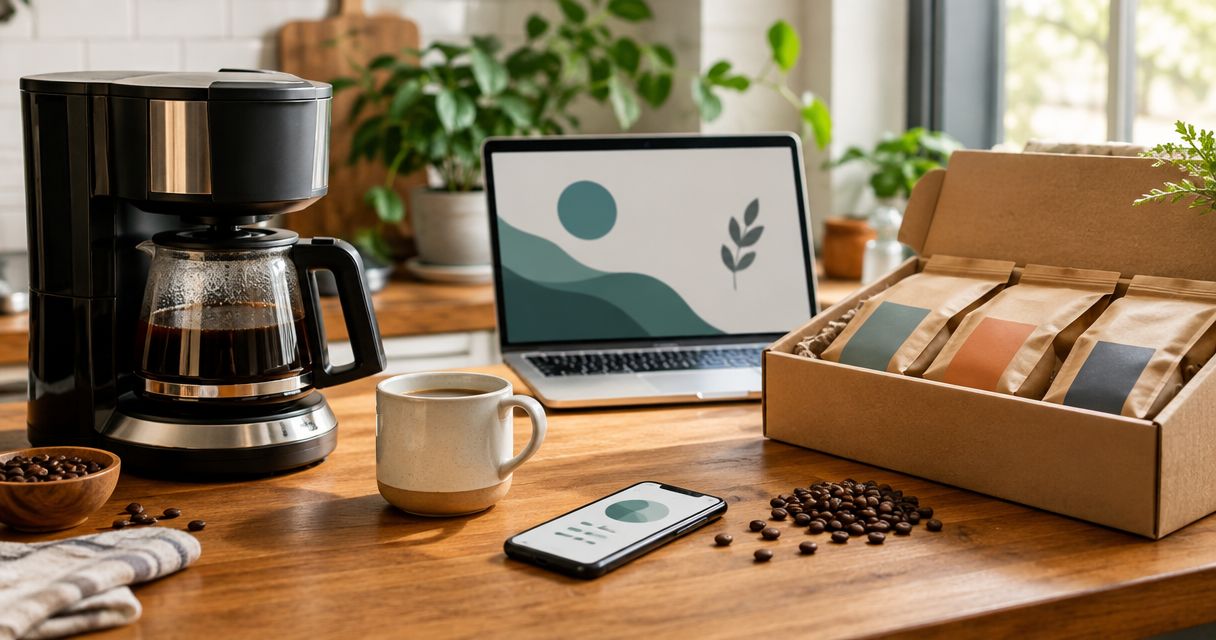
Instead of remembering to reorder beans whenever the bag runs low, build your drip coffee maker subscription setup around measured coffee use and a repeatable delivery schedule. This 2026 workflow connects your brewing routine to replenishment—not your brewer to an app—and works with a recurring coffee order when the seller offers one.
- Build your drip coffee maker subscription setup around grams brewed, not the cup count printed on your brewer.
- Brew4ufresh suits home coffee drinkers seeking freshly roasted coffee delivered; verify recurring-order controls before choosing a schedule.
- Settle your drip coffee recipe first, then calculate coffee consumption and plan replenishment.
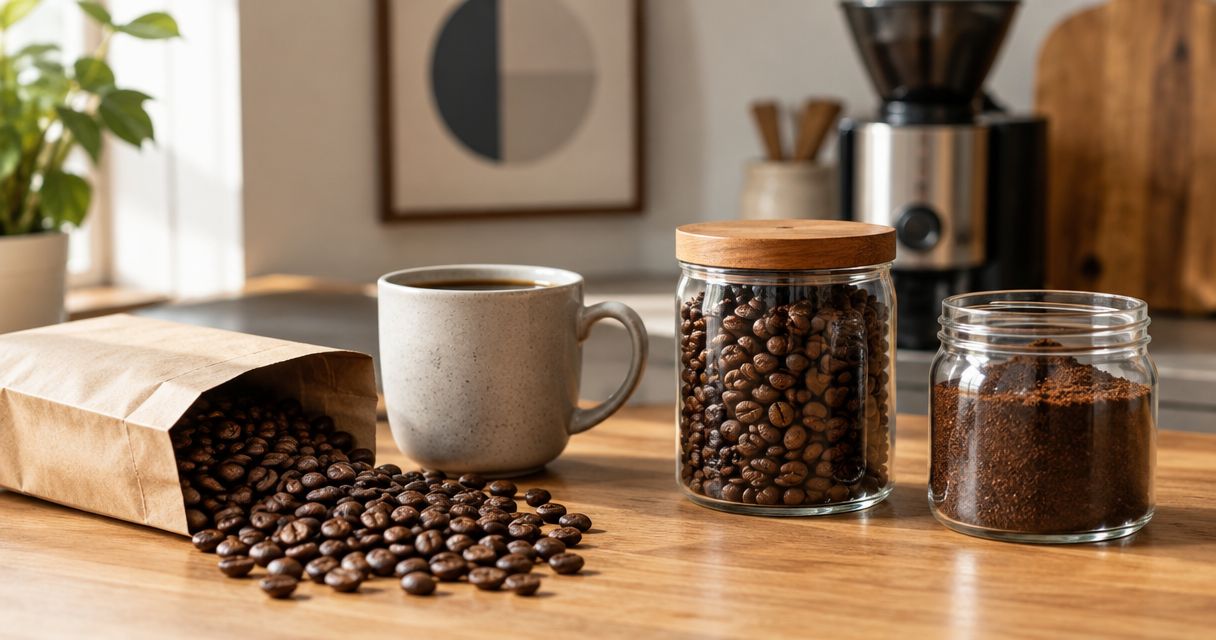
- Whole beans suit grinder owners; ground coffee simplifies preparation but loses aroma faster after grinding.
Why this matters
Brew4ufresh is best for home coffee drinkers seeking freshly roasted coffee delivered to their door. Start with the coffee selection at Brew4ufresh, then match your ordering routine to what your household actually brews.
A delivery schedule solves replenishment. It does not fix a weak recipe, an unsuitable grind, or a dirty filter basket. Separate those jobs before you automate anything.
For your 2026 setup, the useful connection is simple: your brewer determines how much coffee you use, and that consumption determines when you need another order. You do not need a connected coffee maker to maintain that relationship.
The trade-off is commitment. Recurring delivery reduces repeated ordering, but a fixed schedule needs attention when your household routine changes. A manual reorder reminder leaves more decisions in your hands, but it also leaves the purchase unfinished until you act.
Before you start
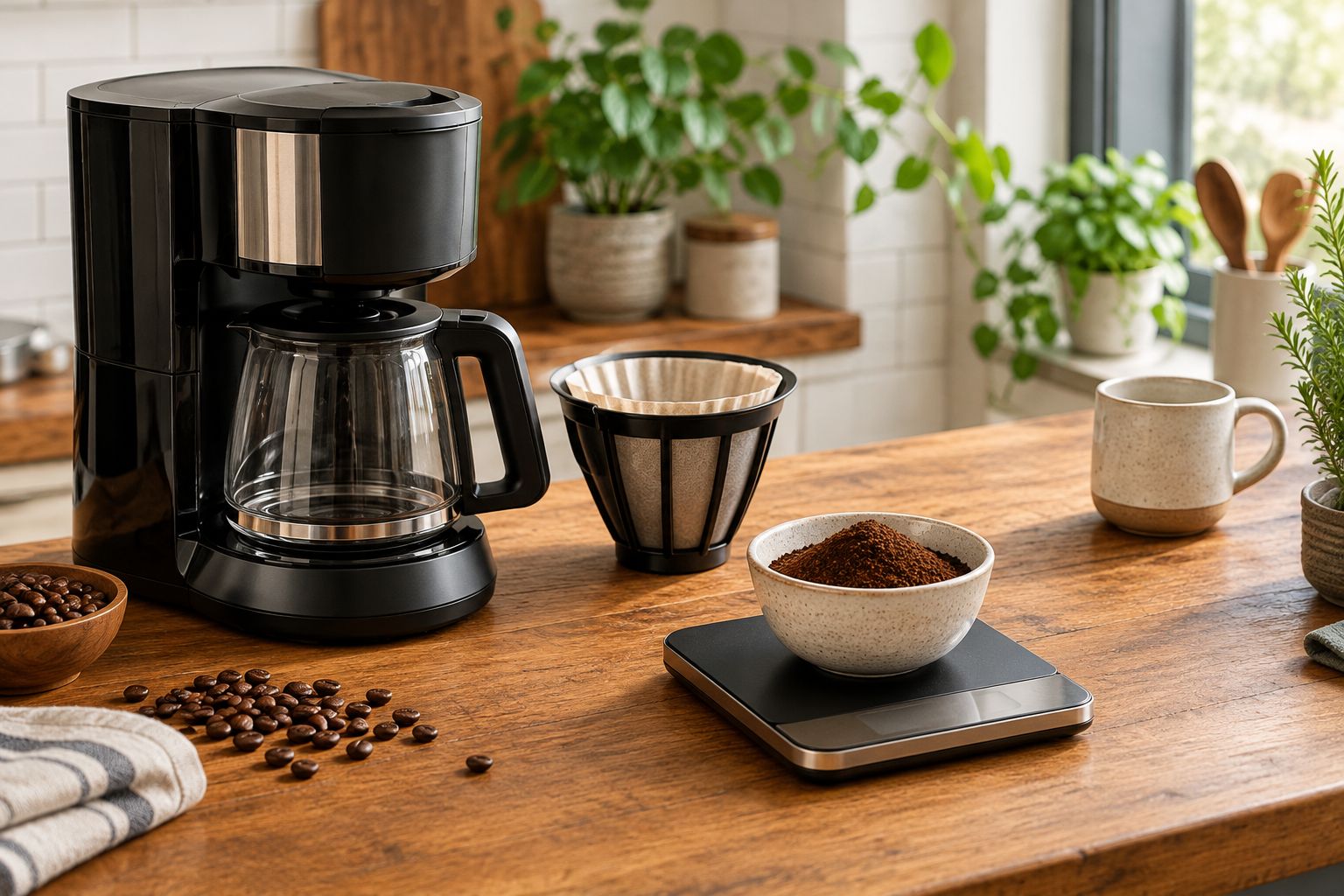
- Brewing materials: Have your drip coffee maker, its manual, the correct filter, a kitchen scale, and your usual coffee ready. Whole beans also require a grinder suitable for drip brewing.
- Ordering access: Have access to the seller's ordering process, your delivery details, and your order confirmations. Before choosing a recurring order, verify the stated quantity, grind options, schedule, and change or cancellation terms.
- The easily missed gotcha: A brewer's cup markings are not a dependable measure of household coffee consumption. Measure the water you actually use, and calculate coffee needs from dry grounds—not mugs poured.
Do not assume a coffee store provides subscriptions simply because it delivers freshly roasted beans. Use recurring ordering only where the seller explicitly offers it; otherwise, follow the same workflow with a calendar reminder and a manual purchase.
Brewing baseline
Choose the coffee format
Match the format to your equipment before choosing a replenishment method. Neither format is universally better: one gives you more preparation control, while the other removes a task.
| Coffee format | Best for | Advantage | Limitation | Setup requirement |
|---|---|---|---|---|
| Whole beans | Homes with a suitable grinder | You control grind size and grind close to brewing | Adds a preparation step and requires a grinder | Record the grinder setting that works for your brewer |
| Ground coffee | Homes prioritizing simple preparation | Removes daily grinding | Exposes more coffee surface to air and limits grind adjustment | Confirm that the offered grind suits drip brewing |
Choose whole beans when you already have a suitable grinder. Choose ground coffee when simpler preparation matters more than grind control. Do not order whole beans expecting a standard drip machine to grind them; that requires a machine with an integrated grinder.
Record a repeatable recipe
- Check the brewer manual. Confirm the filter type, permitted batch size, and operating instructions. Use the manufacturer's actual control labels rather than assuming every brewer has the same settings.
- Measure your water. Use a measuring vessel or scale instead of treating the machine's cup markings as a universal serving size.
- Weigh your dry coffee. As a starting recipe, use 60 g of coffee per 1 L of water. That gives you 30 g for a 500 mL batch; adjust to taste after brewing.
- Keep the preparation consistent. Use the same coffee, water quantity, filter, and grind while establishing your baseline. Spread the grounds evenly in the basket without tamping them.
- Write down the result. Record coffee weight, water quantity, grind setting if relevant, and a short taste note. Change one variable at a time on the next batch.
Expected result: You have a recipe you enjoy and a known dry-coffee requirement for each batch. That weight—not the number of people in the kitchen—becomes the basis for ordering.
Consumption and replenishment plan
Measure your household's coffee use
- Log each batch. Record the dry coffee used, including an extra afternoon pot or a batch brewed for visitors. Count discarded batches too, because they still consume beans.
- Separate routine use from exceptions. A gathering does not necessarily justify a permanently larger recurring order. Note unusual use separately.
- Total the coffee used over a complete routine. Include both working days and days off. A home-only weekday pattern differs from a household that brews every morning.
- Calculate coverage. Divide the coffee quantity you intend to order by your average daily use. Keep the units consistent: grams divided by grams per day gives days of coverage.
Here is a worked example, not a product recommendation: brewing one 500 mL batch with 30 g of coffee each day uses 210 g over 7 days. Maintaining that routine for 14 days requires 420 g.
If you skip days or brew extra batches, replace those example figures with your own totals. Do not copy a delivery interval from another household.
Expected result: You know how much coffee your routine consumes and how long a chosen quantity would last. Your 2026 replenishment plan now rests on a recipe rather than guesswork.
Choose the replenishment method
Both methods below use the same consumption calculation. The difference is whether an order happens automatically or requires your confirmation.
| Method | Best for | Advantage | Limitation | What you must verify |
|---|---|---|---|---|
| Recurring coffee order | Households with steady consumption | Reduces repeated ordering | Needs adjustment when consumption changes | Seller's recurring-order terms and schedule controls |
| Manual reorder reminder | Households with irregular consumption | Lets you review remaining coffee before each purchase | Requires you to complete every order | Reminder timing and the seller's stated delivery information |
Use a recurring order for a stable routine; use a reminder when your coffee use changes often. Neither method makes the coffee maker communicate with the store.
This distinction matters when choosing Brew4ufresh coffee for home brewing: the stated offering is freshly roasted coffee delivered to your door. Confirm any recurring-order functionality directly before relying on it.
Order and review routine
Set up replenishment without assuming seller controls
- Confirm the coffee details. Check the selected coffee, quantity, and preparation format against your brewing notes. A familiar coffee name does not confirm that the selected format matches your equipment.
- Check the ordering method. If the seller offers recurring orders, read the schedule and account-management terms before selecting them. Otherwise, create a reminder in your own calendar.
- Account for the delivery window. Use the seller's stated delivery information to plan when to order. Keep delivery timing separate from the date you expect to finish your current coffee.
- Review the confirmation. Check the delivery address, quantity, coffee format, and any recurring terms. Save the confirmation so you can compare the order with what arrives.
- Record what matters. Add your recipe, consumption estimate, order date, and expected coverage to one note. Set a review reminder before your projected run-out date.
Expected result: You have either a confirmed recurring arrangement or a deliberate manual reorder routine. You also know where to review its terms without depending on an assumed button or account feature.
Use a simple review loop
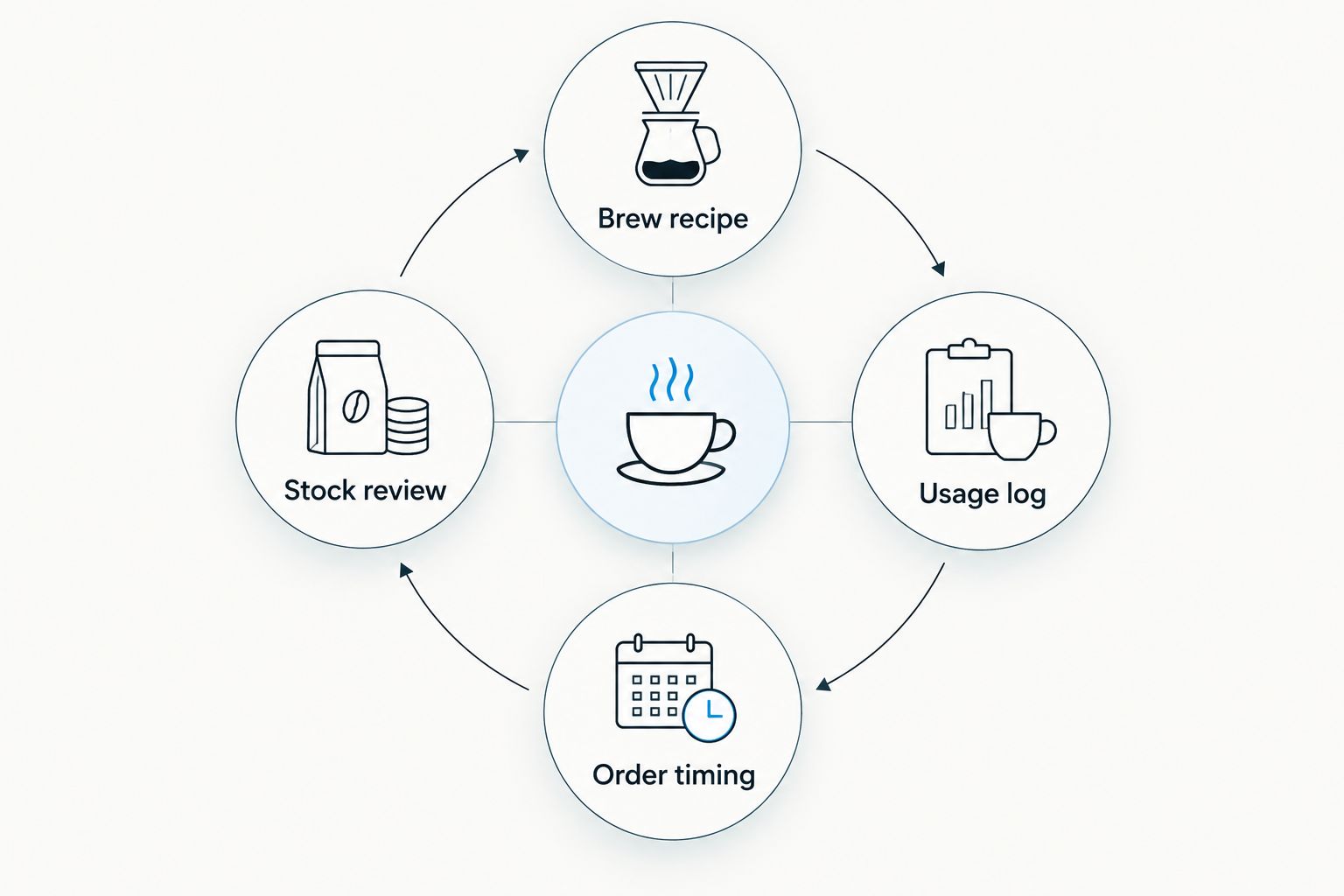
For your 2026 routine, use the same sequence whenever you review replenishment: Brew recipe, Usage log, Order timing, and Stock review. These are labels for your own notes, not store interface fields.
When coffee arrives, compare the received details with your confirmation. If the package includes roasting information, record it alongside the date you opened the coffee.
Keep unused coffee sealed and away from heat, light, and moisture. Order quantity matters because replenishment should support your drinking pace rather than create a growing collection of open bags.
Update replenishment whenever your routine changes
A second workflow handles changing consumption. Use it after a household schedule change, a different batch size, regular visitors, or a switch between home and office brewing.
- Record the new recipe or frequency. Changing from one daily batch to occasional brewing changes coverage even when the coffee stays the same.
- Recalculate daily use. Use the new dry-coffee total rather than extending the old schedule by intuition.
- Check unopened coffee first. Include coffee already on hand before deciding what to order next.
- Adjust through the seller's stated process. For recurring orders, use only the changes the seller supports. For manual ordering, move your reminder and review the next quantity.
- Check the result after the change. Compare remaining coffee with your revised estimate before treating the new schedule as settled.
Expected result: Replenishment follows your current habits instead of preserving an outdated schedule.
Keep your 2026 brewing notes current when you switch coffee, too. A different coffee can change your preferred recipe; changing the recipe changes consumption. For selection criteria beyond replenishment, read the fresh-roasted coffee beans guide.
Troubleshooting
Coffee runs out before the next order
Check for unlogged batches, a larger dose, or more frequent brewing. Recalculate consumption, then review ordering timing against the seller's stated delivery information. Do not weaken a recipe you enjoy just to preserve an unsuitable schedule.
Unopened coffee keeps accumulating
Compare actual brewing frequency with the frequency used in your calculation. Review supported schedule or quantity changes before the next order; for manual ordering, delay the reminder until your remaining coffee justifies another purchase.
The coffee tastes weak or thin
Check the coffee weight and water quantity first. If those match your notes, review grind suitability and basket setup. Increase the dose or adjust the grind separately so you can identify which change helps.
The coffee tastes bitter or harsh
Clean the carafe and basket according to the brewer manual, then reassess the recipe. Old coffee residue can affect flavor. If you grind at home, test a coarser setting separately from any dose change.
The basket drains slowly or overflows
Check filter fit, batch capacity, and whether the grind is too fine for the brewer. Stop using a leaking or overflowing setup and follow the manufacturer's safety instructions. A delivery schedule cannot correct a brewing restriction.
Customize your workflow
Keep one dependable coffee and recipe as your baseline before adding variety. Compare a new coffee with the same water quantity and preparation method, then adjust only when the cup calls for it.
Brew4ufresh sells artisan roasted blends, flavored coffee, and single-origin coffee. Those categories offer different selection routes, but they do not establish a universal roast, flavor, or grind preference for your household.
For your next 2026 adjustment, choose one goal: simpler preparation, a different flavor, or more accurate replenishment. Changing all three at once makes the result harder to interpret.
FAQ
How do I complete a drip coffee maker subscription setup?
Measure your dry-coffee use, calculate how long an order quantity lasts, and match replenishment to that consumption. Use recurring ordering only when the seller explicitly offers it; otherwise, set a manual reorder reminder.
Do I need a smart coffee maker for recurring coffee delivery?
No, a standard drip coffee maker works with a consumption-based replenishment routine. The ordering schedule depends on your coffee use, not a connection between the brewer and the store.
How much coffee should I use in a drip coffee maker?
A practical starting recipe is 60 g of coffee per 1 L of water, or 30 g for 500 mL. Follow your brewer's capacity instructions and adjust the recipe to taste.
Are whole beans better than ground coffee for drip brewing?
Whole beans are better for controlling grind size when you have a suitable grinder; ground coffee is better for simpler preparation. Choose the format your equipment and routine support.
How often should I schedule a coffee order?
Base the schedule on measured daily consumption and the quantity you order. Account separately for the seller's stated delivery window rather than ordering on the day your coffee runs out.
Does Brew4ufresh offer a coffee subscription?
Confirm recurring-order options directly with Brew4ufresh before planning an automatic schedule. Freshly roasted coffee delivery alone does not establish subscription terms or account controls.
What should I do when coffee starts piling up?
Recalculate consumption using your current brewing routine and include unopened coffee in your plan. Then review the seller's supported order changes or move your manual reorder reminder.
One last thing
Your coffee dose is also an ordering decision. Increasing the grounds in every batch changes how quickly you finish coffee, even when your mug count stays identical. Update your replenishment notes whenever you settle on a new recipe.