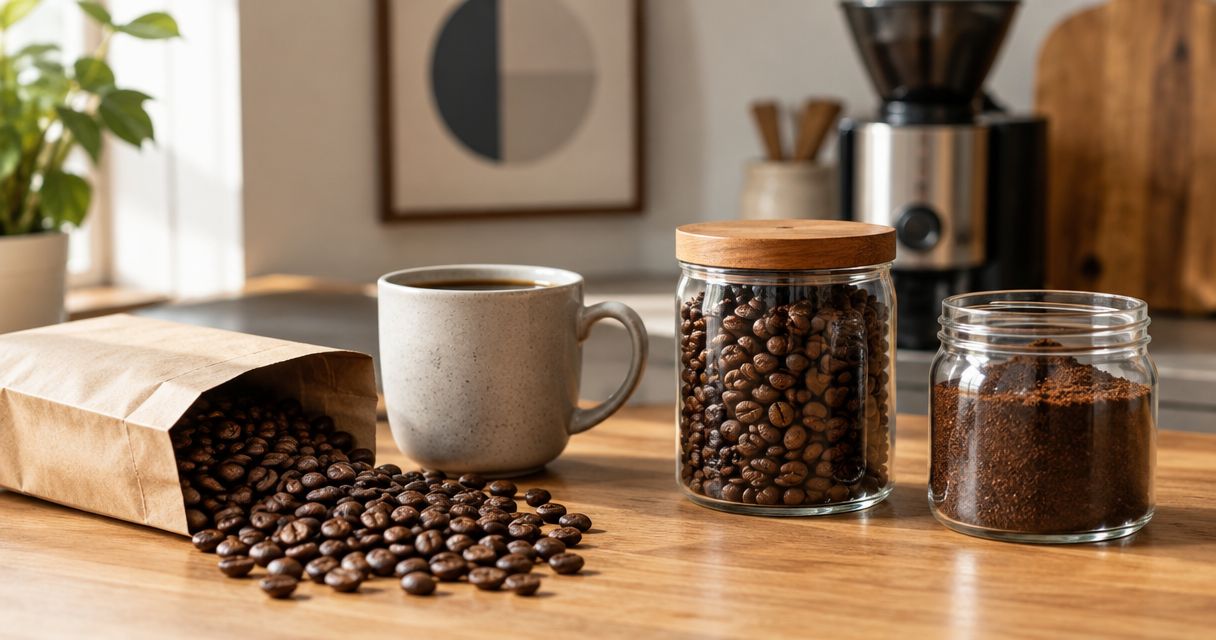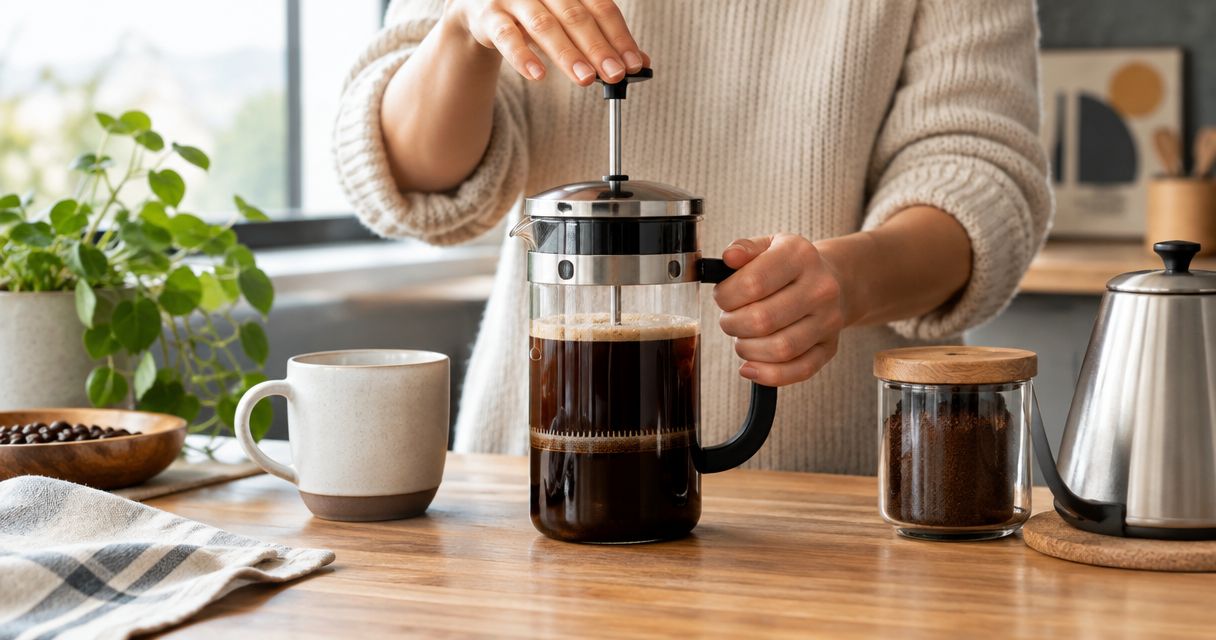
A French press takes 4 minutes to steep as a standard starting point; heating water, grinding beans, and pouring add preparation time. Start the timer when water first touches the grounds, then press gently and pour the coffee out rather than leaving it in the brewer.
- How long does it take to brew a french press? Start with a 4-minute steep, then adjust by taste.
- Bodum’s French press instructions use 4 minutes; preparation and serving take additional time.
- Use a coarse, even grind and keep your coffee-to-water measurements consistent.
- Pour the finished coffee out of the French press so the remaining grounds do not keep steeping.
Why this matters
French press timing sounds simple until different recipes start their clocks at different moments. A timer that starts after pouring measures something different from a timer that starts with the first splash of water.
For your 2026 brewing routine, use one timing convention consistently. The French press brewing workflow connects that timer to the rest of your preparation. Once the process stays steady, you can tell whether a change actually improves your cup.
The goal is not to hit a deadline regardless of taste. It is to find a repeatable starting point, then make a deliberate adjustment instead of changing everything at once.
How long does it take to brew a French press?
Start with 4 minutes of steeping, measured from the first contact between coffee and water. Bodum’s published French press brewing instructions specify a 4-minute brew before pressing; that manufacturer guidance provides the baseline for this 2026 guide, not a guarantee that every coffee tastes best at exactly the same moment.
Follow this sequence for a straightforward hot French press:
- Prepare the brewer. Set the press on a stable surface, check that the filter is assembled correctly, and preheat the vessel if desired. Empty any preheating water before adding coffee.
- Add the grounds. Use a coarse, reasonably even grind. Weigh the coffee and brewing water so you can repeat the recipe.
- Pour and time. Start the timer as the water first touches the coffee. Pour evenly and make sure no dry pockets remain.
- Steep. Let the coffee brew until the timer reaches 4 minutes. Keep your stirring routine consistent between batches.
- Press gently. Lower the plunger with steady pressure. Stop if it jams; forcing it is not part of the recipe.
- Pour completely. Transfer the brewed coffee into cups or a separate serving vessel rather than storing it above the grounds.
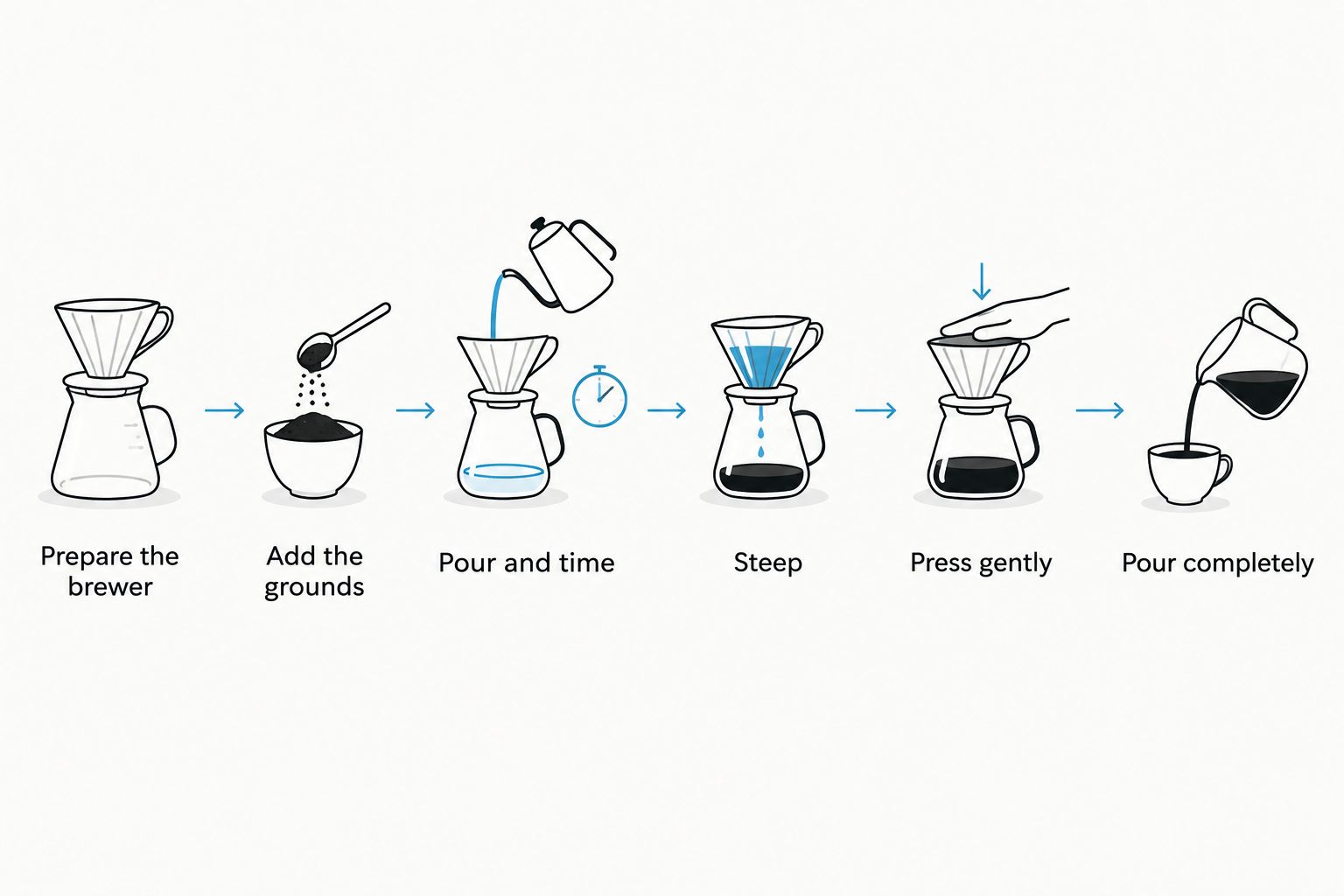
Your total kitchen time is longer than the steep itself. Water heating, weighing, grinding, and serving belong in your morning schedule, but they are not all extraction time.
Does pouring count toward the brew time?
Yes. Extraction begins when hot water contacts the grounds, not when you finish filling the vessel or put the lid on.
Starting the clock after a slow pour quietly extends the brew. Choose the first-contact convention and keep it for every comparison, especially when switching between a small batch and a fuller press.
Does pressing count as brewing?
The grounds remain in contact with the liquid while you press, so pressing is not an instant extraction stop. The plunger separates much of the ground coffee from the drink; it does not remove the grounds from the vessel.
That is why serving matters. Finish the process by pouring, not just by lowering the plunger.
Why French press brewing time varies
A 4-minute steep is a useful baseline, not an instruction to ignore everything else. These factors explain why the same timer can produce different results:
- Grind size. Finer particles expose more surface area and change extraction. They also pass through a mesh filter more readily, adding sediment.
- Water temperature. Hotter water changes how quickly coffee compounds dissolve. Keep your heating routine consistent before judging a timing adjustment.
- Agitation. Stirring moves water through the grounds and changes extraction. An energetic stir and a gentle wetting step are not equivalent treatments.
- Coffee dose and water amount. Their relationship controls beverage concentration. A weak cup does not automatically mean the coffee needed more time.
- Roast and bean characteristics. Different coffees extract differently. Roast level influences solubility, while origin and processing contribute different flavor expectations.
- Serving habits. Coffee left in the press stays in contact with grounds and fine particles. Prompt transfer makes batches easier to compare.
For a repeatable 2026 recipe, record these details alongside the timer. A short note about grind, dose, water, and taste is more useful than remembering only that the coffee brewed longer.
What grind should you use for a 4-minute French press?
Choose a coarse, even grind as your starting point. A mesh-filter brewer lets more fine material through than a paper filter, so particle consistency affects both flavor and texture.
Use the table below to identify the trade-off rather than assuming the coarsest possible setting always wins.
| Grind choice | Best for | Advantage | Limitation |
|---|---|---|---|
| Coarse, even grind | A straightforward French press baseline | Easier separation through the mesh filter | Extremely coarse grounds can leave the cup under-extracted |
| Medium-coarse grind | Adjusting a coarse recipe that tastes under-extracted | More surface area for extraction | Can increase sediment and pressing resistance |
| Fine grind | Brewers whose recipes specifically call for it | Extracts readily | Makes a standard French press harder to filter cleanly |
Do not diagnose grind from appearance alone. A grinder can produce large particles alongside powdery fines, and those fines affect the cup even when most of the coffee looks coarse.
If pressing suddenly becomes difficult, do not push harder to stay on schedule. Stop and check the grind, filter assembly, and fill level using your brewer’s instructions.
Should you steep longer for stronger coffee?
Use your coffee-to-water ratio to adjust strength; use grind and time to adjust extraction. Strength describes how concentrated the drink is, while extraction describes how much material the water removes from the grounds.
Those ideas overlap in the cup, but they are not interchangeable. A longer steep does not reliably solve a recipe that simply uses too little coffee for the amount of water.
If the coffee tastes pleasant but watery, adjust the dose while holding the other settings steady. If it tastes sharp, hollow, or drying, investigate extraction and the coffee’s own flavor profile before adding more grounds.
Avoid treating bitterness as proof of strength. Dark roasting, extraction, and your chosen coffee all affect bitterness, so a bitter cup does not tell you its concentration or caffeine content.
Can you brew French press coffee for less than 4 minutes?
A steep shorter than 4 minutes is possible, but it changes the baseline and needs a taste check. Some combinations of grind, water temperature, and agitation extract more readily than others.
Do not shorten the timer simply because you are rushing, then compensate by pressing aggressively. If speed is the priority, prepare your equipment and measured ingredients before heating the water.
Can you leave French press coffee brewing longer than 4 minutes?
More than 4 minutes does not automatically ruin French press coffee. Immersion brewing behaves differently from repeatedly passing fresh water through a bed of grounds, so longer contact does not produce an identical result in every recipe.
Some methods deliberately include additional settling time. Keep that separate from the standard recipe when comparing results, and still transfer the finished drink rather than leaving it in the press indefinitely.
How do you adjust French press time without guessing?
Make your next 2026 brew a controlled comparison. Use the same coffee, brewer, dose, water amount, heating routine, and stirring method so the adjustment has a clear meaning.
Start by writing down what you dislike in plain language. “Too watery,” “too sharp,” and “too much sediment” point toward different changes.
- Watery but otherwise pleasant: Review the coffee-to-water ratio before extending the steep.
- Sharp and hollow: Check for very coarse grounds, inadequate wetting, or water that cooled substantially before brewing.
- Drying or unpleasantly harsh: Check excessive fines and agitation, and consider whether the roast itself suits your taste.
- Gritty: Review grind consistency, filter condition, and how completely you drain the final sediment into your cup.
- Different every morning: Standardize the measurements and timer convention before chasing a new recipe.
Change a single variable, then taste again. If you change grind, dose, and steeping time together, you lose the ability to identify which change helped.
Let each comparison cup cool enough to taste comfortably. Very hot coffee makes subtle differences harder to judge, and a recipe should still taste good as the drink cools.
Does the coffee itself change the timing decision?
The coffee changes what you should expect from the cup, even when the timer stays the same. A smoky dark roast and a brighter single-origin coffee are not supposed to taste identical after equal steeping.
Brew4ufresh coffee is best for home drinkers seeking freshly roasted blends and single-origin options delivered to their door. For French press brewing, choose the flavor direction you enjoy before trying to correct every difference with extra time.
Brew4ufresh’s House Blend Medium Roast Coffee is described as balanced and versatile. That makes it a relevant starting point if you want an everyday medium-roast profile; it is not the choice to make specifically for the smoky intensity associated with darker roasting.
Freshly roasted coffee still needs a suitable grind and careful preparation. Brew4ufresh coffee cannot make an inconsistent recipe consistent: measure, time, and serve it with the same care you would use for any beans.
FAQ
How long should I let a French press steep before pushing down?
Start with 4 minutes before pressing, using first contact between water and grounds as the timer’s starting point. Press gently and pour the coffee out of the brewer.
Do I start the French press timer before or after pouring water?
Start the French press timer when water first touches the coffee. Counting from that moment keeps your recipe consistent even when the pour takes longer.
Is 4 minutes enough for French press coffee?
A 4-minute steep is a standard starting point, including in Bodum’s French press instructions. Taste the result and adjust a single variable rather than assuming every coffee needs the same final recipe.
Should I stir French press coffee while it brews?
Make sure the grounds are evenly wetted, then keep your stirring routine consistent. Agitation affects extraction, so repeated vigorous stirring changes the recipe.
Why is my French press coffee weak after 4 minutes?
Weak coffee after 4 minutes can reflect too little coffee relative to water, not simply too little brewing time. Check your measurements and grind before extending the steep.
Can I leave brewed coffee in the French press?
Pour finished coffee into cups or a separate serving vessel instead of leaving it in the French press. Lowering the plunger does not remove all contact between coffee and grounds.
Does darker French press coffee contain more caffeine?
A darker taste does not establish a higher caffeine content. Coffee type, dose, and serving size matter, so do not use roast flavor or a longer steep as a caffeine measurement.
One last thing
The plunger is a filter, not an off switch. If your first cup tastes good and your later cup does not, examine what happened after pressing before changing the steeping time.
For your next 2026 brew, keep the 4-minute baseline and transfer the entire batch when it is ready. That simple habit makes your timing experiment easier to interpret and your next adjustment more deliberate.