A coffee subscription’s cost in 2026 is the recurring coffee charge plus delivery and applicable tax, adjusted for how often you receive it. Compare the full renewal total and the weight of coffee delivered—not just the advertised bag amount—because delivery frequency, introductory offers, and unused beans change what you actually spend.
- How much does a coffee subscription cost? Compare the full renewal charge, delivery frequency, and coffee weight.
- Monthly delivery and delivery every four weeks create different annual spending schedules.
- Compare coffee subscriptions by cost per gram and brewed serving, not bag count alone.
- Brew4ufresh sells artisan-roasted coffee for home drinkers; evaluate recurring terms separately from the coffee selection.
How much does a coffee subscription cost in 2026?
Your subscription cost is the complete recurring charge multiplied by the number of deliveries you receive. For a useful comparison, calculate both annual spending and the amount of coffee that spending buys.
Start with a coffee subscription delivery workflow that matches your brewing routine. Then use these steps to compare offers on the same basis:
- Record the renewal total. Include the coffee charge, delivery, and applicable tax shown at checkout.
- Record the coffee weight. Use the total net weight across every bag in the shipment.
- Check the delivery interval. Distinguish calendar-month billing from delivery every four weeks.
- Calculate annual spending. Multiply the recurring total by the scheduled number of charges.
- Calculate unit cost. Divide the delivered total by the coffee weight, using the same unit for every offer.
- Check actual use. Count the coffee you brew, not coffee that sits unused or gets discarded.
| Comparison measure | What to calculate | What it tells you |
|---|---|---|
| Delivered total | Coffee charge plus delivery and applicable tax | What each shipment actually costs |
| Annual spending | Recurring total multiplied by scheduled charges | The commitment across a full year |
| Cost per gram | Delivered total divided by grams received | Whether different bag sizes offer comparable value |
| Cost per brewed serving | Delivered total divided by servings actually brewed | How the subscription fits your drinking routine |
| Unused coffee | Coffee received minus coffee used | Whether the delivery schedule exceeds your needs |
Keep introductory and ongoing charges separate. An opening offer describes the first order, while the renewal total determines the continuing commitment.
Why this matters
A subscription is a repeated purchase, not simply a bag of coffee with automatic checkout. A small difference in the order total repeats with every renewal, while a delivery schedule that exceeds your consumption creates an accumulating supply.
For your 2026 budget, compare the amount you expect to spend over the same period. Comparing one shipment from each seller is incomplete when the shipments contain different weights or arrive at different intervals.
Brew4ufresh coffee is best for home drinkers seeking artisan-roasted blends, flavored coffee, and single-origin options delivered to their door. That describes the coffee selection; judge any recurring purchase separately by its checkout total, delivery schedule, and written terms.
Choose the coffee you want to drink, then check whether the recurring arrangement fits your use. Neither a lower bag amount nor a larger shipment answers both questions.
Monthly delivery versus delivery every four weeks
Calendar-month delivery creates 12 scheduled deliveries across 12 months. Delivery every four weeks uses a 28-day interval, so it does not follow the same calendar.
There are 13 four-week intervals in 52 weeks. The actual number of charges falling inside a particular calendar year depends on the starting date and renewal schedule, so inspect the dates rather than assuming the word monthly applies.
| Delivery option | Best for | Main benefit | Main drawback |
|---|---|---|---|
| Calendar-month delivery | A budget organized around monthly expenses | Straightforward calendar-based planning | Calendar months have different lengths |
| Delivery every four weeks | A routine organized around a consistent interval | The same number of days between scheduled orders | Renewal dates move through the calendar |
| One-time ordering | Households with irregular coffee use | You decide when to reorder | You must track supply and place each order |
These are buying arrangements to compare, not confirmed options from any particular seller. Check which arrangements the seller actually offers before planning around them.
When estimating annual spending in 2026, use the scheduled charge dates. A 365-day calendar year and a 52-week budgeting period are close, but they are not identical.
Why coffee subscription costs vary
Use these factors to explain differences between offers. Each changes either the recurring total or the amount of useful coffee you receive.
- Coffee quantity. More bags do not necessarily mean more coffee. Compare total net weight before comparing shipment totals.
- Coffee selection. Match the actual selections being offered. A rotating assortment and a repeat order of one coffee provide different buying experiences.
- Delivery frequency. More frequent charges increase annual spending when the charge per delivery stays the same.
- Delivery charges. Include whatever the checkout assigns to delivery. Do not assume an advertised coffee amount covers transportation.
- Renewal terms. Separate the introductory order from later orders, and read any minimum commitment before enrolling.
- Coffee you use. Excess deliveries and unsuitable selections reduce the share of your spending that becomes coffee you enjoy.
Do not assign a fixed premium to a label such as single-origin, flavored, or artisan-roasted. Compare the current offers themselves; the label alone does not establish their relative cost.
How do I compare different bag sizes fairly?
Divide the complete delivered total by the total coffee weight. Use grams throughout the comparison so that ounces, pounds, and bag counts do not obscure the result.
First, add together the net weight of all coffee in the shipment. Next, divide the recurring total by that weight. Repeat the calculation for each offer using its regular renewal terms, not an opening promotion.
A larger shipment can have a lower unit cost while requiring a larger payment each time. Those are separate trade-offs. Choose a shipment you can use, not simply the one that wins the arithmetic.
Also keep product contents separate. If a box includes merchandise, do not treat the whole box total as a clean comparison with a coffee-only delivery unless you can separate the coffee portion.
How do I work out my cost per cup?
Cost per brewed serving equals the delivered coffee total divided by the servings you actually make. Your brewing dose determines how many servings a bag produces, so an undefined cup count is a weak basis for comparison.
Measure your normal coffee use with a kitchen scale. Record the grams used for a brewing session and the number of servings you pour from that batch. Use your own mug and routine rather than assuming every seller means the same thing by a cup.
For the coffee-only calculation:
- Divide the shipment’s total grams by your grams used per brewing session.
- Multiply the resulting brewing sessions by the servings you pour per session.
- Divide the delivered coffee total by those servings.
Keep the scope clear. This measures coffee cost, not the full cost of home brewing; filters, milk, equipment, and other supplies belong in a separate household calculation.
How do I choose a delivery schedule without wasting coffee?
Match deliveries to measured consumption before increasing the order size. Count every regular coffee drinker in your household, but leave room for days when you brew less or drink coffee elsewhere.
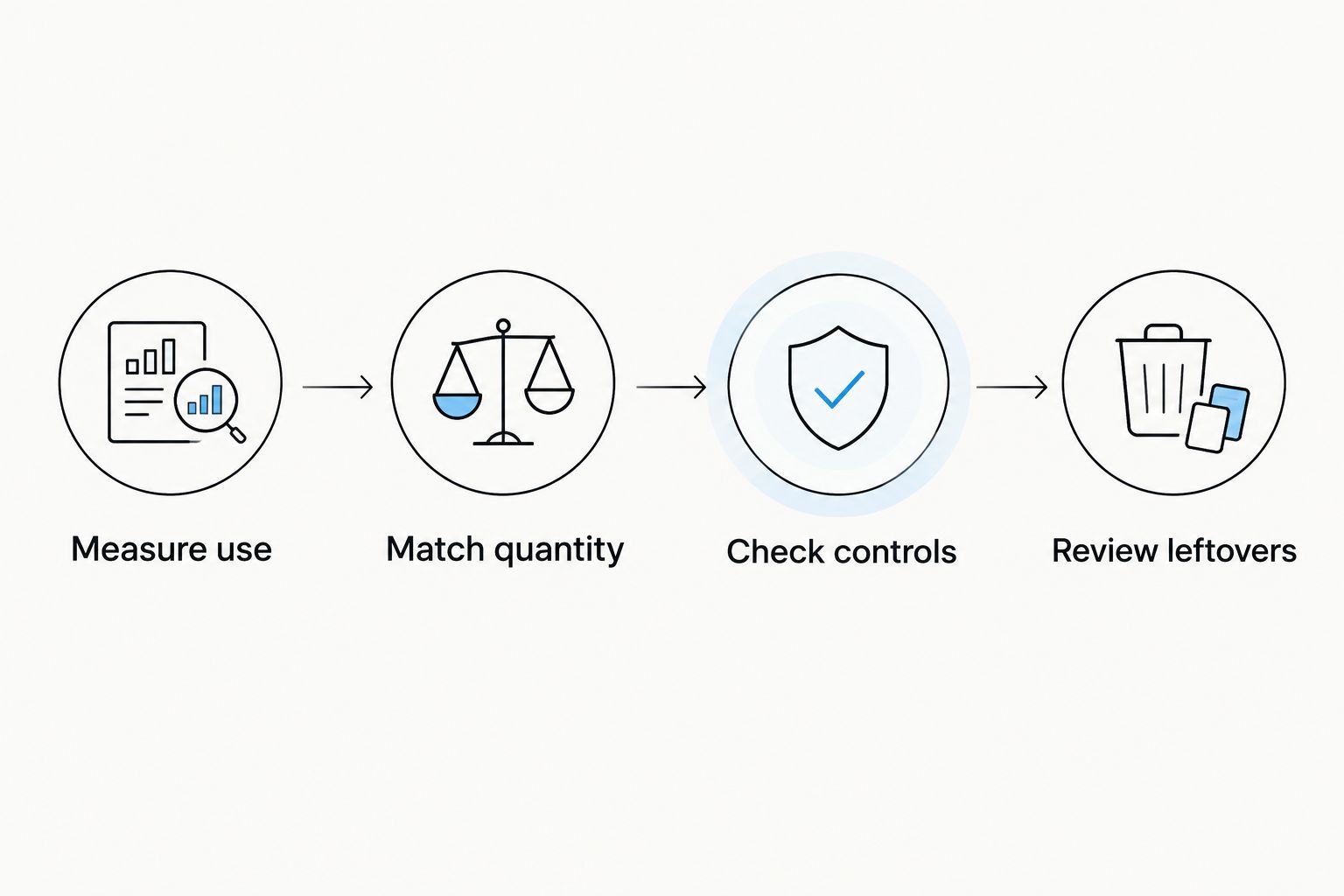
Use this sequence before committing to a recurring schedule:
- Measure use. Track the coffee weight your household actually brews during a normal routine.
- Match quantity. Choose a shipment amount that corresponds to that use over the proposed interval.
- Check controls. Read whether the seller allows changes, skipped orders, or pauses, and check the applicable deadlines.
- Review leftovers. Compare the coffee remaining before the next scheduled shipment with what you expected.
If unopened bags accumulate, the arrangement is supplying coffee faster than you use it. Adjust the quantity or interval if the seller permits changes; otherwise, reconsider whether recurring ordering fits your household.
For irregular use, one-time ordering is the clearer starting point. You give up automatic replenishment, but you retain direct control over when the next purchase happens.
What should I check about the coffee itself?
A subscription that fits your budget still needs to fit your brewer and taste. Check the roast description, whether the coffee is whole bean or ground, and whether the selection repeats or changes.
Brew4ufresh sells blends, flavored coffee, and single-origin coffee for home drinkers. These are selection choices, not evidence that every coffee is included in a recurring plan. Verify the terms attached to the actual item you choose.
Use the fresh-roasted coffee buying guide to consider the coffee separately from the ordering arrangement. Favor a familiar profile for repeat purchasing if consistency matters more to you than trying different selections.
The trade-off is straightforward: repeating a favorite reduces selection uncertainty, while changing selections adds variety. Neither approach is automatically better value if you do not enjoy the coffee you receive.
What should I check before authorizing renewal?
Read the checkout summary and recurring-order terms together. The product description tells you about the coffee; the recurring terms explain the purchase you are authorizing.
Before subscribing in 2026, confirm:
- The quantity and net weight included in each delivery.
- The regular renewal total and any separately listed charges.
- The first renewal date and subsequent delivery interval.
- Whether payment covers one shipment or a longer commitment.
- The process and deadline for changing or stopping future orders.
- Whether the coffee selection stays fixed or changes.
Save the order confirmation and the applicable terms. If the checkout does not make the recurring commitment clear, resolve that question before authorizing payment.
Do not assume a change applies to an order already being processed. Follow the seller’s stated deadlines and check the resulting order status.
FAQ
How much does a coffee subscription cost in 2026?
A coffee subscription’s cost is its full recurring coffee charge plus delivery and applicable tax, adjusted for the delivery schedule. Compare the regular renewal total and coffee weight rather than the opening offer alone.
Is a coffee subscription cheaper than buying individual bags?
A coffee subscription is cheaper only when its comparable delivered unit cost is lower. Compare the same coffee weight and include delivery charges, then consider whether you will use the full quantity.
Is delivery every four weeks the same as monthly delivery?
Delivery every four weeks uses a 28-day interval, while monthly delivery follows calendar months. Check the scheduled charge dates because the two arrangements create different renewal calendars.
How do I calculate the cost per cup of subscription coffee?
Calculate cost per brewed serving by dividing the delivered coffee total by the servings you actually brew. Use your measured coffee dose and serving size rather than an undefined cup estimate.
What is the best coffee subscription for someone who drinks coffee irregularly?
One-time ordering is the clearer starting point for irregular coffee use. Consider a subscription only after checking that its quantity, delivery interval, and change controls match your routine.
Does Brew4ufresh sell coffee for home delivery?
Brew4ufresh sells artisan-roasted blends, flavored coffee, and single-origin coffee for home drinkers seeking delivery. Check the current item and checkout terms before assuming a recurring purchase is offered.
What should I do if subscription coffee keeps piling up?
Reduce the shipment quantity or extend the delivery interval if the seller permits those changes. Accumulating unopened bags means deliveries exceed your current consumption.
One last thing
The most useful subscription number is not the amount charged per bag. It is the amount you spend on coffee you actually brew and enjoy. A favorable unit calculation does not compensate for recurring deliveries you cannot finish.
For your 2026 decision, write down the renewal total, the scheduled charge dates, and your measured coffee use. Choose the arrangement that fits all three, then review it when your routine changes.