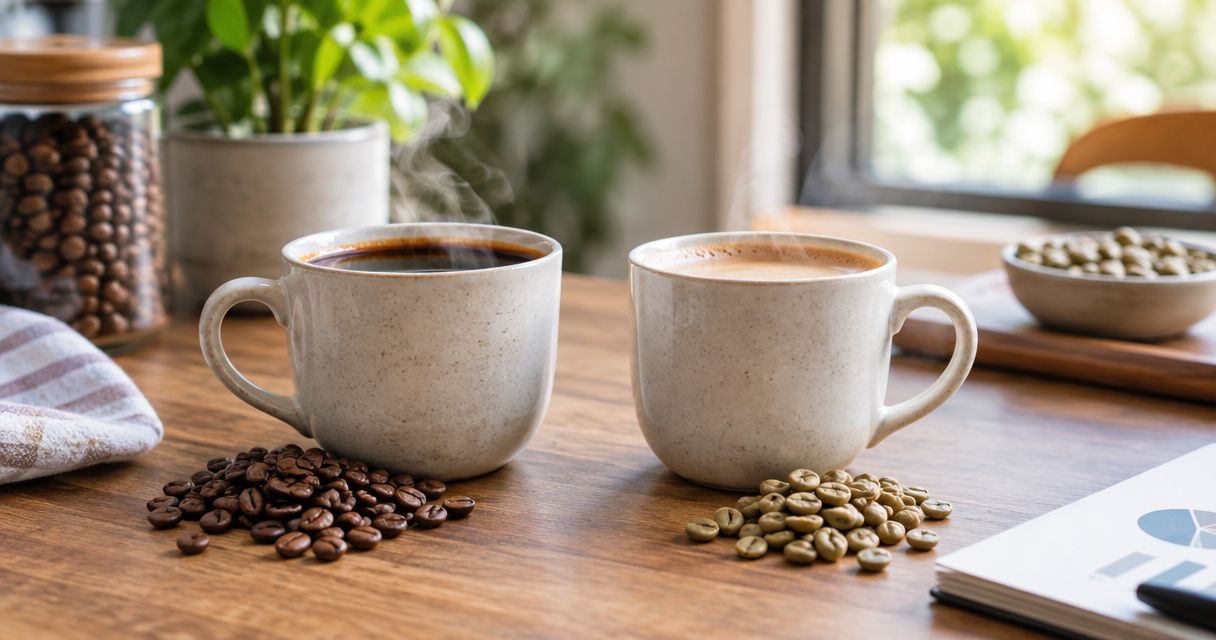
No. Decaf coffee is not completely caffeine-free: it contains much less caffeine than regular coffee, but a small amount remains. The FDA says decaf typically contains 2–15 milligrams of caffeine per 8-fluid-ounce cup, so anyone who needs to avoid caffeine entirely should not treat decaf as a zero-caffeine drink.
- Is decaf coffee really caffeine free? No: the FDA gives a typical range of 2–15 milligrams per 8-fluid-ounce cup.
- Brew4UFresh decaf coffee suits home drinkers seeking single-origin coffee with less caffeine, not a caffeine-free guarantee.
- Swiss Water processing describes decaffeination; it does not establish the caffeine content of your finished cup.
- For caffeine avoidance, choose an explicitly caffeine-free herbal blend and check its ingredients.
Is decaf coffee really caffeine-free?
Decaf means reduced caffeine, not absent caffeine. Decaffeination removes caffeine from coffee beans before roasting, but the finished drink still contains a residual amount. Neither a dark roast nor a particular brewing method turns that residual amount into zero.
For US readers in 2026, the FDA's consumer guidance, Spilling the Beans: How Much Caffeine Is Too Much?, provides the useful reference: decaf typically contains 2–15 milligrams per 8-fluid-ounce cup. That is a category range, not a laboratory result for every bag or café drink.
| Drink | Caffeine distinction | Best for | Main limitation |
|---|---|---|---|
| Regular coffee | Naturally contains caffeine without a decaffeination step | Drinkers who want caffeinated coffee | Unsuitable when your goal is caffeine avoidance |
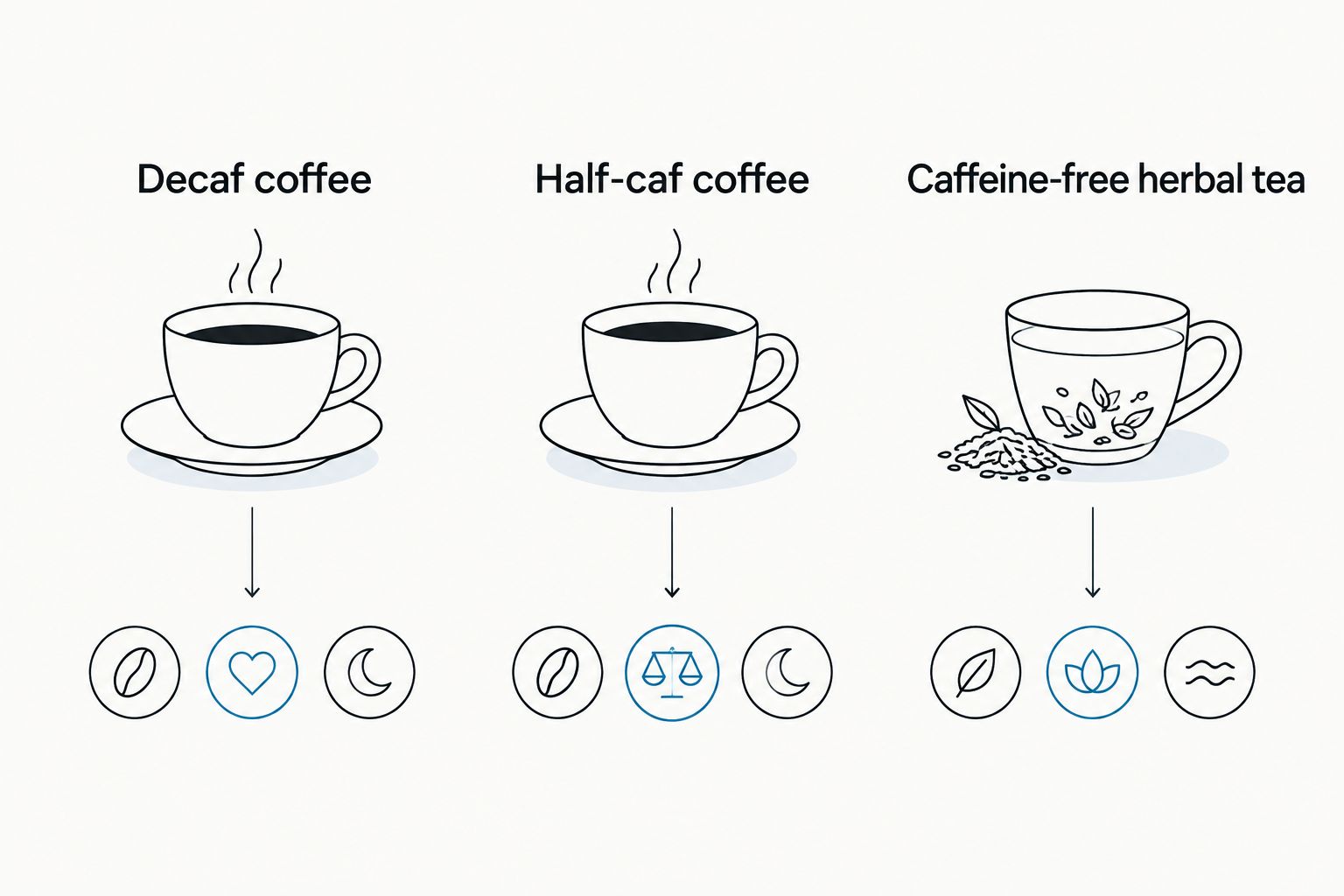
| Decaf coffee | Typically 2–15 milligrams per 8-fluid-ounce cup, according to the FDA | Drinkers reducing caffeine while keeping coffee | Not reliably caffeine-free |
| Half-caf coffee | Combines regular and decaf coffee | Drinkers stepping down from regular coffee | Not equivalent to decaf or caffeine-free |
| Explicitly caffeine-free herbal tea | Depends on a blend made without caffeine-containing ingredients | Drinkers avoiding caffeine | Does not reproduce coffee's flavor; ingredients still need checking |
The distinction matters when shopping at Brew4UFresh or any coffee store: a decaf label answers whether the coffee underwent decaffeination. It does not tell you the exact caffeine dose in your mug.
Why this matters
You do not need to give up coffee's taste and routine just because you want less caffeine. Decaf keeps coffee in the cup while reducing caffeine exposure. The trade-off is that reduction and complete avoidance are different goals.
If a clinician has told you to avoid caffeine, ask whether residual caffeine in decaf fits that advice. Do not substitute a general online caffeine guideline for an individual restriction.
For everyday shopping in 2026, separate these questions: Do you want less caffeine, or do you need a drink without caffeine-containing ingredients? Decaf answers the first question. An explicitly caffeine-free drink is the more appropriate starting point for the second.
Decaf coffee: reduced caffeine, not zero
Decaf is the closest match when you still want the aroma, roast character, and brewing routine of coffee. You can prepare it with familiar equipment rather than learning a different drink.
Its main limitation is straightforward: the word decaf is not a measured caffeine statement. Without product-specific testing, you cannot identify where a particular serving falls within a general reference range.
Best for: coffee drinkers who want to reduce caffeine without replacing coffee. Skip it as a zero-caffeine solution when complete avoidance is your requirement.
Taste remains a separate buying decision. Choose a roast and flavor description you enjoy, rather than assuming every decaf tastes alike or that the darkest option has the least caffeine.
Half-caf coffee: a reduction step, not caffeine-free coffee
Half-caf combines regular and decaffeinated coffee. It offers a middle ground for someone who wants to reduce regular coffee without moving directly to an entirely decaf brew.
The limitation is in the name: half-caf still includes regular coffee. Even an equal blend does not make the finished drink caffeine-free because both components can contribute caffeine.
Best for: drinkers deliberately stepping down from regular coffee. Skip it for strict caffeine avoidance, and do not assume a café's half-caf recipe matches the blend you make at home.
Caffeine-free herbal tea: a different drink, a different purpose
A herbal blend made without caffeine-containing ingredients serves a different goal from decaf. Rooibos is naturally caffeine-free, while ordinary green and black teas contain caffeine unless they have been decaffeinated.
The advantage is choosing a drink around caffeine avoidance rather than caffeine reduction. The drawback is flavor: herbal tea does not taste like roasted coffee, and a blend's complete ingredient list matters more than a calming name or evening-themed packaging.
Best for: drinkers who prioritize avoiding caffeine over retaining coffee flavor. Check for added black tea, green tea, yerba mate, or other caffeine-containing ingredients before treating a blend as caffeine-free.
Why caffeine in decaf varies
An exact caffeine amount belongs to a specific serving, not simply to the word decaf. These factors explain why a broad category range cannot serve as a precise dose for every cup:
- Starting beans: Coffee beans differ in their original caffeine content. Origin and roast descriptions alone do not establish the final amount.
- Decaffeination: The removal process leaves residual caffeine. A process name does not replace a finished-product measurement.
- Coffee dose: Using more grounds changes the amount of coffee available for extraction. Keep the dose consistent when comparing your own brews.
- Brewing conditions: Grind, contact time, and preparation affect extraction. A brewing-method label alone does not prove a low caffeine dose.
- Serving size: The FDA's range refers to an 8-fluid-ounce cup. A larger serving is not automatically covered by that same amount.
- Repeat servings: Several cups contribute to your total intake. Count the day's drinks rather than considering each refill in isolation.
For a practical home routine in 2026, record the coffee, grounds used, and finished serving size. This creates a repeatable recipe, though it does not measure caffeine. Consistency helps you compare your habits; it does not certify a drink as caffeine-free.
Does Swiss Water decaf mean no caffeine?
No. Swiss Water identifies a water-based decaffeination process, not a promise that every prepared cup contains no caffeine. The process name and the caffeine content of your serving answer different questions.
A percentage describing caffeine removal or a bean specification is also different from milligrams in a drink. Your grounds, recipe, and serving size still determine what you prepare.
When comparing decaf in 2026, look separately for the decaffeination process, roast description, and any product-specific caffeine information. If an exact caffeine figure is essential to your decision, ask what was tested and whether the result applies to beans or a defined brewed serving.
How should you choose between decaf and herbal tea?
Start with your requirement, then choose the flavor. Brew4UFresh offers Peru Decaf Swiss Water Process for a coffee-based option and Apple Cider Rooibos Herbal Tea for a naturally caffeine-free herbal alternative.
| Product | What the product description establishes | Best for | Trade-off |
|---|---|---|---|
| Peru Decaf Swiss Water Process | A single-origin Peru decaf using Swiss Water processing | Drinkers who want decaf coffee with single-origin character | The process name does not provide a measured caffeine amount per serving |
| Apple Cider Rooibos Herbal Tea | A naturally caffeine-free herbal blend with warm, spiced character | Drinkers seeking a caffeine-free alternative to coffee | Rooibos and spice flavors are different from roasted coffee |
Brew4UFresh decaf coffee is best for home drinkers seeking single-origin coffee with less caffeine, not a caffeine-free guarantee. If caffeine avoidance is the deciding factor, the naturally caffeine-free rooibos option better matches that requirement; if coffee flavor is the priority, decaf is the closer fit.


How do you keep your decaf routine consistent?
A repeatable recipe prevents accidental changes in serving size or coffee strength. It also makes taste comparisons more useful: changing the beans, grounds, and water together leaves you without a clear explanation for the result.
- Check the label. Confirm that the bag says decaf, not simply mild, smooth, light roast, or breakfast blend. Those descriptions do not mean decaffeinated.
- Separate the beans. Keep regular and decaf coffee clearly identified. If you share a kitchen, make the distinction obvious to everyone who brews.
- Keep your recipe steady. Use the same measured dose and water amount when comparing decaf coffees. Adjust one brewing variable at a time for taste.
- Know your serving. Measure what your usual mug actually holds. A mug is a vessel, not a standardized caffeine serving.
- Count refills. Include decaf alongside other caffeine sources when tracking your intake. Do not erase it from the record because the amount is lower.
Do not confuse stronger flavor with more caffeine. Dark roast notes, bitterness, and a concentrated recipe describe different aspects of a drink; none proves an exact caffeine amount.
For buying advice, the fresh-roasted coffee beans guide offers broader coffee-selection context. Keep freshness and flavor decisions separate from the question of whether a coffee is decaffeinated.
Can you make decaf caffeine-free by brewing it differently?
No home brewing method reliably converts decaf into a verified caffeine-free drink. Adding water dilutes the concentration, but it does not remove the caffeine already extracted into the beverage if you drink the entire amount.
Likewise, brewing briefly or reusing grounds does not establish a dependable caffeine dose. Those changes affect extraction and flavor without giving you a tested result.
Choose the right starting drink rather than trying to engineer caffeine away in the kitchen. If residual caffeine is unacceptable, a suitable caffeine-free alternative is a clearer choice than an improvised decaf recipe.
FAQ
Is decaf coffee really caffeine free in 2026?
No. Decaf coffee still contains residual caffeine; FDA consumer guidance gives a typical range of 2–15 milligrams per 8-fluid-ounce cup. That range is not a product-specific test result.
How much caffeine is in a cup of decaf coffee?
Decaf typically contains 2–15 milligrams of caffeine per 8-fluid-ounce cup, according to the FDA. The amount in a particular drink depends on the coffee and preparation.
Can I drink decaf coffee if I have to avoid all caffeine?
Do not treat decaf coffee as caffeine-free when you need to avoid all caffeine. Ask your clinician whether residual caffeine fits your restriction and choose a suitable caffeine-free alternative if it does not.
Does Swiss Water decaf contain absolutely no caffeine?
No. Swiss Water identifies a decaffeination process, not proof that your finished drink contains absolutely no caffeine. A precise serving amount requires relevant product-specific testing.
Is dark roast decaf lower in caffeine than light roast decaf?
A dark roast label alone does not establish that decaf contains less caffeine than a light roast. Compare product-specific caffeine information rather than using roast color as a measurement.
Does adding water remove caffeine from decaf?
No. Adding water dilutes decaf coffee but does not remove caffeine already present if you drink the entire diluted serving. A milder taste is not proof of less total caffeine.
Does Brew4UFresh have an alternative to decaf coffee?
Brew4UFresh offers Apple Cider Rooibos Herbal Tea, described as a naturally caffeine-free herbal blend. It suits drinkers seeking a warm, spiced drink rather than roasted coffee flavor.
One last thing
Measure your favorite mug before using a per-cup caffeine figure. The FDA's decaf reference is for 8 fluid ounces, not whichever cup happens to be in your cupboard. A larger mug and repeated refills change the serving you are considering.
For your 2026 coffee routine, make the decision in this order: caffeine requirement, drink type, then taste. That keeps an enjoyable decaf from being mistaken for a caffeine-free drink—and keeps caffeine-free herbal tea from being judged as though it should taste like coffee.