Instead of guessing the leaf amount and leaving the infuser in your mug, use this 2026 loose leaf tea steeping guide to measure, time, and strain each brew. Set the water temperature for your tea, remove the leaves when the timer ends, and adjust one variable until the cup tastes balanced.
- This loose leaf tea steeping guide uses measured leaves, controlled water temperature, and timed removal for repeatable brewing.
- Earl Grey Loose Leaf Tea suits bergamot lovers; Moroccan Mint Green Tea suits green tea and mint drinkers.
- Follow package directions first; green tea generally needs cooler water than black tea.
- For stronger tea, increase the leaf amount rather than leaving the infuser in indefinitely.
Why this matters
Loose leaf tea keeps extracting while the leaves remain in contact with water. A cup that tastes balanced at the kitchen counter can turn bitter or drying while you answer a message. Removing the leaves is part of brewing, not an optional finishing step.
Temperature, leaf quantity, water volume, and time work together. Measuring them gives you a useful starting point instead of a different experiment every morning.
Brew4ufresh is best for home coffee drinkers adding tea to their everyday drink routine. Brew4ufresh sells coffee, tea, and mugs; the brewing method below helps you prepare loose leaves without treating every tea alike.
For your 2026 tea routine, aim for repeatability before buying more equipment. A measured cup you can reproduce is more useful than an elaborate setup you keep changing.
Before you start
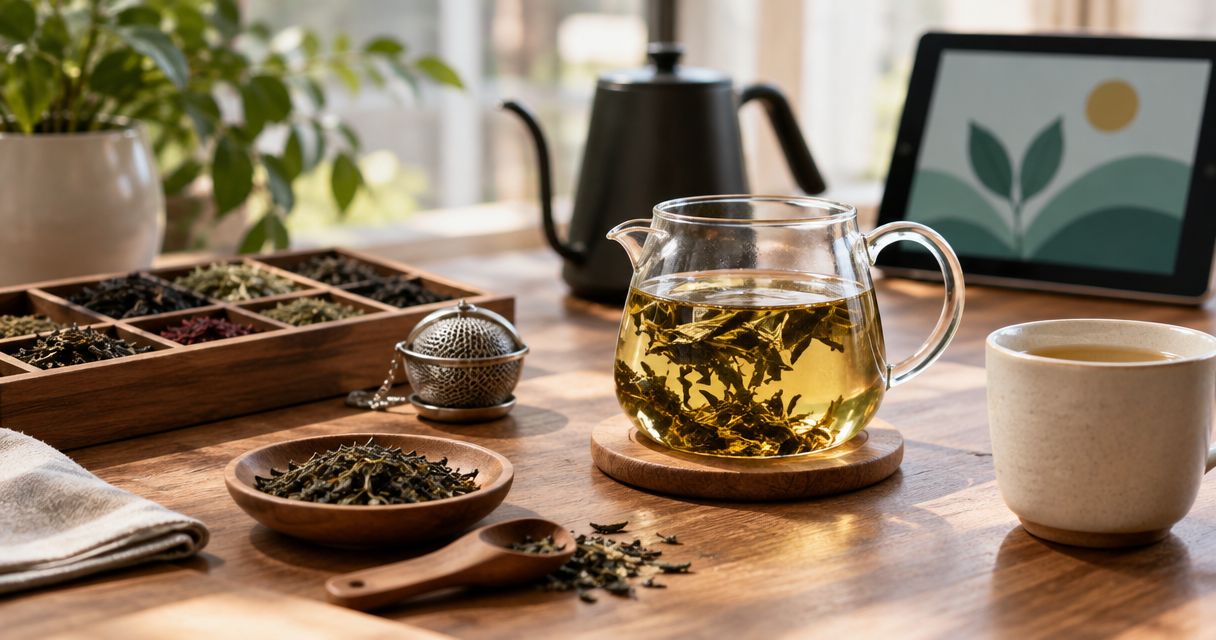
- Gather the essentials: loose leaf tea, drinking water, a heat-safe mug or teapot, a roomy removable infuser, and a timer. A kitchen scale and thermometer make the recipe easier to repeat.
- Read the package: identify the tea base and use its brewing directions before any general chart. Green tea with mint still needs a green-tea approach unless its instructions say otherwise.
- Check the format and fit: powdered tea is not prepared like loose leaves. Also test that your infuser stays securely supported and lets water surround the leaves without overflowing your cup.
The non-obvious mistake is choosing instructions by the flavor name alone. Mint can appear in a green tea blend or an herbal infusion, and those bases do not automatically share the same brewing method.
Keep a simple 2026 brewing note on paper or your phone. Record the tea name, leaf weight, water volume, temperature, steeping time, and what you would change.
Leaf and water setup
Choose a tea that matches your cup
Start with the flavor you actually enjoy. Earl Grey Loose Leaf Tea brings a bergamot citrus character; Moroccan Mint Green Tea combines green tea and mint. Neither is a universal replacement for the other.
| Tea | Best for | Main benefit | Trade-off | Brewing priority |
|---|---|---|---|---|
| Earl Grey Loose Leaf Tea | Drinkers who enjoy bergamot and a black-tea base | Distinctive citrus aroma alongside tea flavor | Bergamot is a poor match if you prefer unflavored tea | Time the infusion and remove the leaves |
| Moroccan Mint Green Tea | Drinkers who enjoy green tea with mint | Green tea and mint in the same cup | Mint changes the flavor, so it is not a plain-green-tea substitute | Avoid treating the blend like a boiling-water herbal infusion |
Choose Earl Grey Loose Leaf Tea for bergamot; choose Moroccan Mint Green Tea for mint. Flavor preference comes first, then brewing control helps you get the result you want.
Measure the brew
- Read the tea package and use its stated recipe when provided. Keep the same tea for your first few attempts so you can identify what each adjustment changes.
- Measure the water you intend to brew, not the mug's advertised capacity. Leave room for the infuser and for handling the hot cup safely.
- Weigh the dry leaves. If the package gives no directions, 2 g of tea per 240 ml of water is a conventional starting point for a Western-style infusion, not a rule for every leaf.
- Put the leaves in a roomy basket. Avoid packing a small tea ball tightly, because the leaves need space to hydrate and expand.
A teaspoon is convenient but less repeatable than weight. Rolled leaves, large whole leaves, and small broken pieces occupy a spoon differently, so the same spoonful does not always contain the same amount of tea.
Expected result: you know the leaf amount and water volume before heating the water. The leaves sit loosely in the infuser rather than forming a compressed plug.
Temperature and steeping setup
Set a starting temperature and time
Use package instructions first. When none are supplied, the following are conventional starting recipes for a single Western-style cup; individual teas need adjustment.
| Tea base | Starting water temperature | Starting steep | Best for | Limitation |
|---|---|---|---|---|
| Green tea | 175°F / about 80°C | 2 minutes | A first attempt at a gentle green-tea infusion | Leaf style and blend ingredients can require a different recipe |
| Black tea | 200°F / about 93°C | 3 minutes | A first attempt at a fuller black-tea infusion | Fine or broken leaves can extract faster than larger leaves |
These temperatures describe the brewing water, not a safe drinking temperature. Let the finished tea cool before sipping.
- Heat fresh drinking water. Use a temperature-controlled kettle if you have one, or check the water with a suitable thermometer.
- Follow the package temperature. Otherwise, select the starting point for the tea base rather than its flavoring.
- Pour the measured water over the leaves and start the timer when water contacts them. Make sure the leaves are submerged.
- Remove the infuser when the timer ends. If you brew in a teapot without a removable basket, strain all the tea into another heat-safe vessel.
Do not use a fixed cooling delay as a substitute for measuring temperature. Water cools differently depending on its volume, vessel, and surroundings.
Expected result: you have a timed infusion with the leaves separated from the finished drink. The tea stops steeping while it cools.
The full sequence is straightforward: measure leaves, heat water, time the steep, remove leaves, then taste. Keeping that order prevents a forgotten infuser from changing the result.
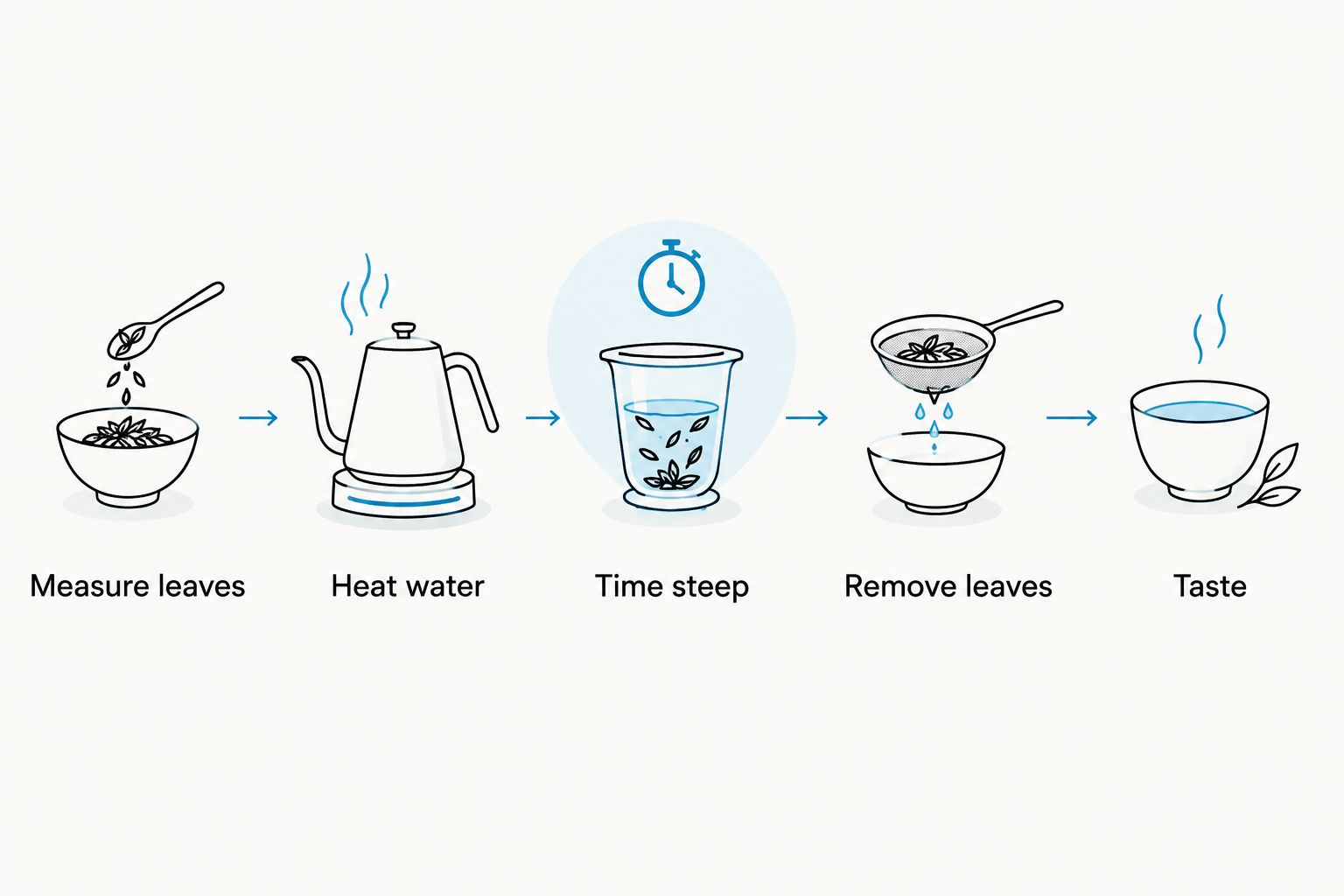
Taste and repeat setup
- Let the tea cool enough to taste comfortably. Taste it plain before adding milk, sweetener, or lemon so you can assess the infusion itself.
- Identify the problem precisely. Weakness means insufficient flavor; bitterness is a taste; astringency is the drying sensation in your mouth.
- Change one variable on the next brew. For a weak but otherwise pleasant cup, try more leaf while keeping the water, temperature, and time unchanged.
- Record the result. Keep the recipe that produces a cup you enjoy rather than repeatedly returning to the generic chart.
For bitterness, check temperature and time first. For a drying finish, shorten the infusion and compare the result before changing the tea amount as well.
Your 2026 brewing note only needs a short verdict such as “too drying” or “balanced, more aroma wanted.” Specific observations are more useful than simply writing “bad.”
Expected result: you have a personal recipe and a clear reason for the next adjustment. You can reproduce the cup without relying on memory.
Choose a tea for the next brew
Brew4ufresh tea options include the two loose leaf blends compared above. Choose by flavor rather than assuming one will suit every drinker: bergamot is distinctive, while mint changes the character of a green-tea cup.
Neither flavor choice removes the need to measure and time the infusion. Keep the same brewing setup when comparing them, but use the appropriate temperature for each tea base.


Second workflow: turn the same tea into iced tea
Best for: drinkers who want a chilled version of a hot-tea recipe they already enjoy. Hot brewing followed by chilling lets you reuse a familiar starting recipe. Its drawback is the extra cooling time, and ice dilutes the drink as it melts.
- Brew the tea using the package directions or your established hot-tea recipe. Do not compensate for ice by leaving the leaves in indefinitely.
- Remove the leaves completely. If you want sweetener, dissolve it while the tea is warm.
- Cool the tea safely in a suitable container and refrigerate it promptly. Avoid pouring very hot tea into cold glass that is not designed for temperature changes.
- Serve over ice. If it tastes diluted, adjust the leaf amount in the next batch rather than extending the steep without a limit.
Do not assume a hot-tea recipe is also a cold-water steeping recipe. This variant extracts with hot water first and chills the finished drink afterward.
Expected result: a cold cup with the leaves already removed. You can identify whether the next change concerns the original brew or dilution from the ice.
Troubleshooting
The tea tastes bitter or leaves your mouth dry
Confirm that the infuser came out on time. Then check the water temperature and shorten the next infusion, changing only one setting per attempt. Adding sweetener changes the finished drink but does not correct an over-extracted recipe.
The tea tastes weak despite a long steep
Check the leaf-to-water ratio and whether the leaves had room to expand. Use more leaf on the next attempt instead of assuming extra time always creates better flavor. Also check that a large mug did not quietly increase your water volume.
Leaves or fine particles reach the cup
Use a finer mesh strainer when the tea contains small pieces. Some fine sediment can pass through a basket even when larger leaves remain contained. Do not pack the basket more tightly as a substitute for finer mesh.
The same recipe tastes different each day
Measure the water as well as the leaves. Check that you are timing from water contact and using the same water source, cup, and temperature. A clean kettle and infuser also prevent residue from affecting the next brew.
The tea tastes like the last drink in your mug
Wash the mug, infuser, and any lid thoroughly, then rinse them well. Coffee residue or scented detergent can interfere with a delicate cup. Try a clean, unscented vessel before changing an otherwise successful tea recipe.
Customize your workflow
For your next 2026 brewing session, choose one improvement: weigh the leaves, measure the water, or check the temperature. Keep the rest of the method stable so the result tells you something useful.
If you prefer a plain green-tea profile, use the green tea guide to compare your next choice rather than assuming every green blend tastes alike. Match the instructions to the new tea before reusing your previous recipe.
For multiple cups, increase leaves and water together while preserving your successful ratio. Use an infuser with enough room for the larger quantity, and pour or strain the whole batch when steeping ends.
FAQ
What's the easiest way to steep loose leaf tea?
Use a roomy removable infuser, measured leaves and water, and a timer. Follow the package temperature and steeping instructions, then remove the infuser completely.
How much loose leaf tea should I use per cup?
Follow the package recipe first; without one, 2 g per 240 ml is a conventional starting point for Western-style brewing. Adjust for the tea and your taste rather than treating the starting ratio as universal.
Should I use boiling water for every loose leaf tea?
No, water temperature should match the tea base and package directions. Green tea generally uses cooler water than black tea, including when the green tea contains mint.
How do I make stronger tea without making it bitter?
Increase the leaf amount while keeping the steeping time and temperature controlled. Leaving the leaves in longer can increase bitterness and astringency rather than simply improving strength.
Can I steep the same loose leaves again?
Some loose leaf teas produce a useful second infusion, but the result depends on the leaf and first brew. Taste the next infusion and adjust it separately rather than expecting an identical cup.
Can I prepare matcha in a tea infuser?
Matcha is whisked into water rather than steeped and removed like loose leaves. A powdered tea needs its own preparation method, even though it comes from tea leaves.
Can I make iced tea with the same loose leaves I use for hot tea?
Yes, you can hot-brew the tea, remove the leaves, and chill the finished infusion. Account for dilution from ice and follow safe cooling and refrigeration practices.
One last thing
Measure your favorite mug once. Fill it to your normal brewing level and record that water volume, leaving room for the infuser. An unmeasured mug can change your leaf-to-water ratio even when you weigh the tea carefully.
Keep that volume beside your successful recipe. Brew4ufresh tea preparation then starts with a known amount of water rather than another guess.