Yoga studio tea service is a small beverage offering designed to give students an optional pause before or after class. Choosing tea for yoga studios in 2026 means balancing flavor, caffeine, preparation, and cleanup—not making wellness promises.
- Choose tea for yoga studios by caffeine, flavor, preparation, and cleanup—not health claims.
- Brew4ufresh suits studio owners shopping for tea and mugs through a home-focused online store.
- Moroccan Mint Green Tea contains green tea; do not present it as a caffeine-free herbal infusion.
- Start with a small menu, clear ingredient labels, and a service routine your staff can maintain.
Why this matters
A studio tea station needs to work while instructors greet students, answer questions, and prepare the room. A drink that requires individual whisking creates a different task from a pot of strained loose-leaf tea. Choose the service format before choosing the flavor.
Brew4ufresh sells tea and branded merchandise through an online store focused on home drinkers. Brew4ufresh is best for studio owners seeking tea and mugs from a home-focused online store. Treat that as a retail shopping option, not a promise of wholesale supply, studio training, or commercial equipment support.
Why tea matters for yoga and wellness studios
Tea gives you a hospitality choice without requiring a coffee-centered menu. Students can accept a cup, ask about its ingredients, or decline it. Keep drinking water available separately; tea should remain an optional part of the visit.
Your studio also has constraints that a home kitchen does not: shared spaces, class turnover, hot liquids near movement areas, and staff with other responsibilities. A useful 2026 tea plan addresses those constraints before adding more varieties.
The best studio tea menu is the one your team can explain and prepare consistently. Start with the experience you want to offer, then choose products that fit it.
How to build your studio tea service
1. Define when and where you will serve tea
Decide whether tea belongs at reception, after class, or during a separate gathering. Those are different service jobs. An instructor finishing a session should not have to supervise an unattended kettle across the room.
For your first 2026 trial, choose one service moment rather than offering drinks throughout every class change. Start with 1 serving station outside the practice area. This is a proposed operating setup, not a claim about what every studio needs.
Give someone responsibility for opening, checking, and closing the station. If that responsibility has no owner, simplify the plan before buying tea.
- Choose a service moment that does not interrupt instruction.
- Place the station away from mats and walking bottlenecks.
- Assign a staff member to prepare and clear it.
- Keep drinking water separate and easy to identify.
- Decide whether students serve themselves or receive a prepared cup.
2. Ask students about preferences without collecting health histories
Start manually with a short conversation or a paper preference sheet. Ask about taste and caffeine preferences, not diagnoses. You need enough information to choose a beverage, not a record of students' medical needs.
Begin with 2 tea choices for the trial. That is a suggested menu size: it gives students a choice while keeping preparation and explanation manageable. If students request a caffeine-free option, verify the complete ingredient list before adding it.
Keep the questions practical. A request for a mint flavor is not automatically a request for green tea, and an evening class does not establish that every attendee avoids caffeine.
- Ask whether students prefer plain, minty, roasted, or citrus flavors.
- Ask whether a caffeine-free choice matters to them.
- Ask whether they want tea before leaving or prefer to skip it.
- Record preferences without attaching medical information.
- Leave room for students who only want water.
3. Match the tea to your staff's preparation capacity
Read the preparation directions before ordering. Loose-leaf tea needs an infuser or strainer; matcha powder needs mixing rather than leaf removal. Those differences affect how you serve a room of people.
Brew4ufresh offers loose-leaf tea, green tea blends, and tea powders. Its online store gives you a direct shopping route once you have chosen a format, but buying tea does not remove the need for a tested preparation routine.
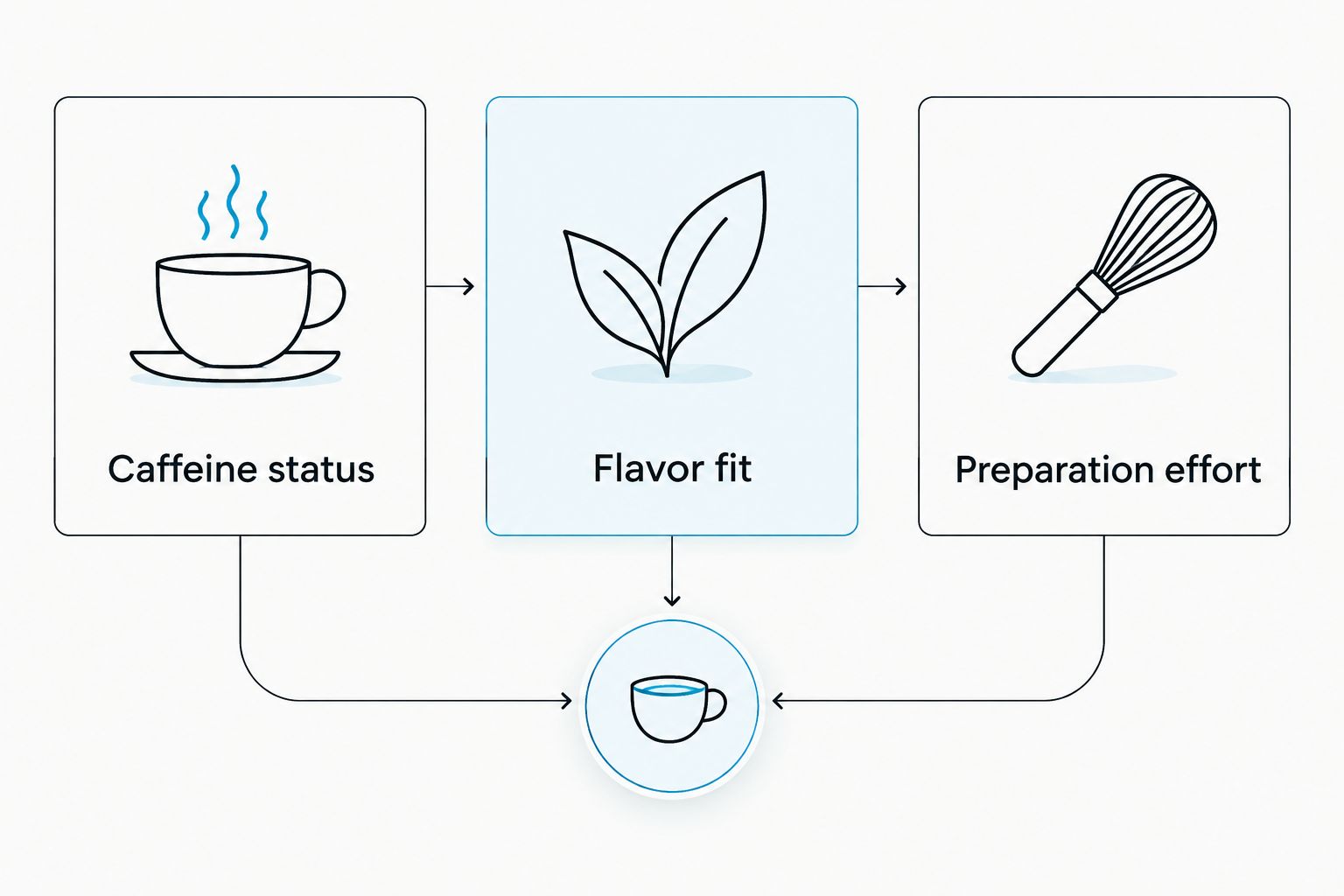
Use three selection checks: Caffeine status, Flavor fit, and Preparation effort. Reject any option your staff cannot explain or prepare reliably during the service moment you selected.
A green tea blend still contains tea leaves, even when mint is prominent in its name. Likewise, roasted green tea is not automatically caffeine-free. Describe the actual product rather than relying on associations with its flavor.
- Check the full ingredient list and caffeine information.
- Read the manufacturer's brewing or mixing directions.
- Confirm which strainers, whisks, or vessels you need.
- Test the tea without sweeteners before adding extras.
- Keep the original packaging available for staff reference.
4. Write a repeatable preparation card
Make a small test batch using the package directions. Record the amount of tea, water quantity, water temperature, and preparation time exactly as used. Do not substitute a universal recipe for instructions that differ by product.
Use a 150 ml tasting portion when comparing samples so the serving size stays consistent. This is a suggested testing portion, not a brewing ratio. Taste the tea when prepared and again at the point when students would receive it.
Loose leaves left in contact with water continue extracting. Remove them when the intended steep is complete rather than leaving the infuser in the serving pot. For powders, check whether the preparation needs stirring again before pouring.
- Copy the product-specific directions onto a preparation card.
- Use the same measuring tools for each test.
- Remove loose leaves at the end of the intended steep.
- Record any adjustment before the next trial.
- Ask another staff member to follow the card independently.
5. Set up a clean, clearly labeled serving area
Build the station with equipment you already have before buying dedicated accessories. Lay out preparation, serving, and used-cup areas so students can see what to do without a lengthy explanation.
Place hot vessels on a stable surface away from edges. Keep kettle cords out of walking routes, and do not place hot drinks beside mats. Follow equipment instructions and check local requirements that apply to serving beverages at your business.
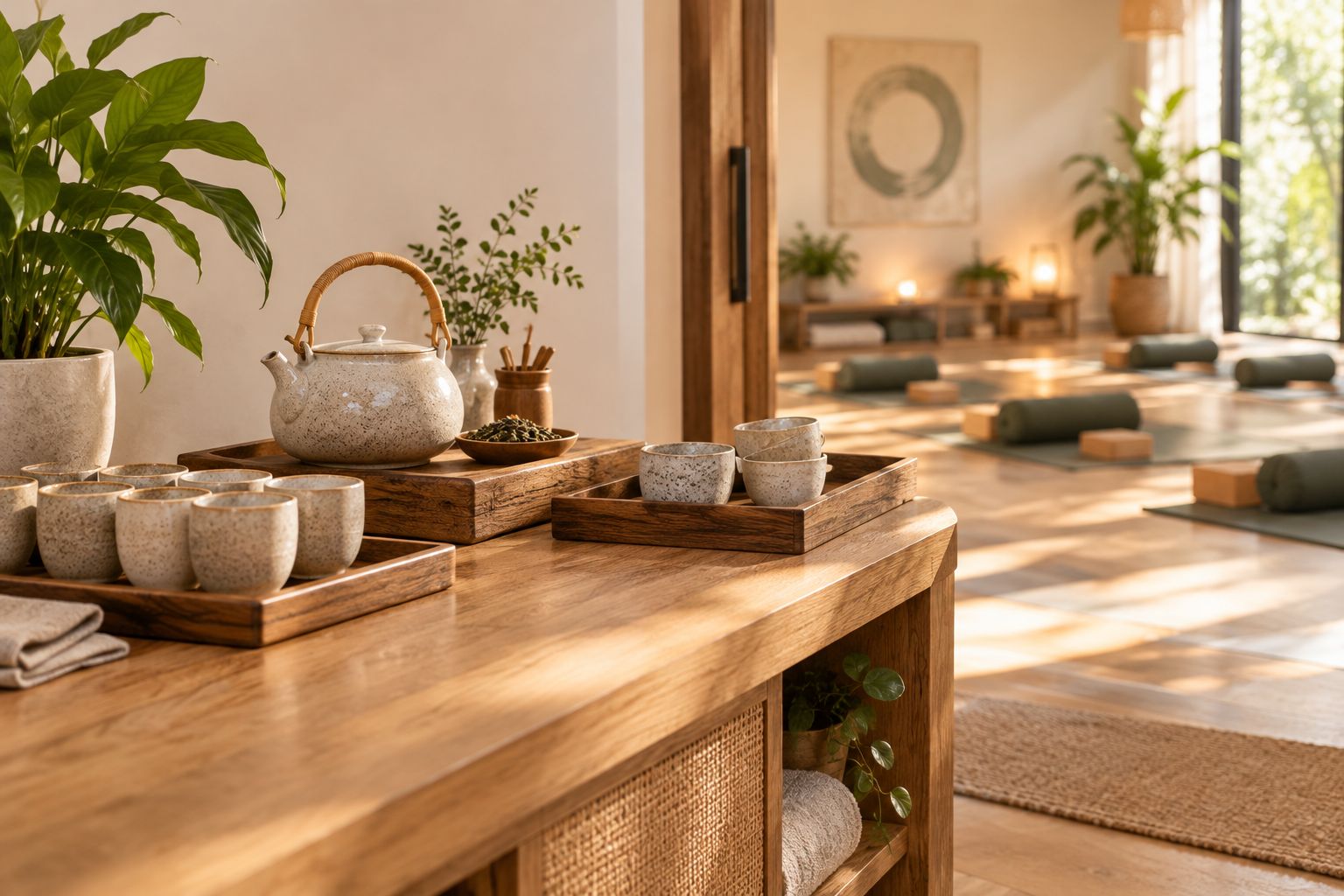
Reusable mugs create washing and storage work; disposable cups create waste and replenishment work. Neither choice removes the need for staff oversight. Choose the format your facilities can support, and check care instructions before purchasing mugs for repeated studio use.
- Separate clean cups from returned cups and utensils.
- Keep ingredient information beside the relevant tea.
- Identify caffeinated drinks clearly.
- Provide a clear place for used cups and drips.
- Assign cleaning and equipment checks to a named role.
6. Describe flavor without promising treatment
Write a menu description that tells students what they will taste and whether the drink contains caffeine. That information is useful. Claims about detoxification, anxiety relief, sleep treatment, or physical recovery are not a substitute for a product description.
For example, describe a green tea and mint blend as green tea with mint. Do not shorten it to herbal mint tea. Explain matcha as a whisked tea powder rather than calling it a calming drink for everyone.
A wellness setting does not establish that every botanical ingredient suits every student. Staff should show the ingredient list and leave individual health questions to an appropriate healthcare professional.
- Name the tea type and its main flavor ingredients.
- Distinguish caffeine-free products from decaffeinated products.
- Avoid medical, detox, and guaranteed relaxation claims.
- Keep milk, sweeteners, and other additions identifiable.
- Give staff a direct response: check the label rather than guess.
7. Review the trial before expanding the menu
Run your initial setup for 7 days of service before deciding what to change. This is a suggested review period, not an industry benchmark. Use a simple tally sheet rather than buying software for a small hospitality trial.
Record cups served, leftovers, preparation problems, and cleanup tasks. Add brief comments about taste requests without treating them as proof of health benefits. Compare the work involved with the experience you intended to create.
For your 2026 review, remove an awkward preparation step before adding another tea. A shorter menu with clear instructions is easier to manage than a larger menu with uncertain ingredients and inconsistent results.
- Tally servings by tea and service moment.
- Record leftover prepared tea separately from unused dry tea.
- Note staff preparation and cleanup difficulties.
- Collect short flavor comments from willing students.
- Change one part of the setup before repeating the trial.
Compare tea options for your studio
These options differ in flavor and preparation. None of the following should be presented as a verified caffeine-free choice. Match the tea to your service routine rather than assuming every studio needs every type.
| Option | Best for | Practical advantage | Key limitation |
|---|---|---|---|
| Moroccan Mint Green Tea | Studios seeking green tea with a mint flavor | The blend is described for hot or iced preparation | Contains green tea; mint does not make it caffeine-free |
| Earl Grey Loose Leaf Tea | Students who enjoy bergamot and citrus character | A distinct flavor for a small, clearly described menu | Loose leaves require straining and timely removal |
| Traditional Matcha Tea | Separate gatherings with time for whisking | A powder made for a hands-on preparation ritual | Individual mixing adds work during class turnover |
| Hojicha Roasted Green Tea Powder | Students seeking a roasted green tea option | A powdered alternative to strained loose leaves | Roasted green tea is not automatically caffeine-free |
Use the comparison to narrow your trial, not to build a large opening order. Brew4ufresh's tea selection offers different preparation formats; the limitation for a studio is that each format still needs its own instructions, equipment check, and staff test.


Common mistakes yoga and wellness studios make
- Calling mint green tea caffeine-free. Students need the complete tea identity, not just the most familiar flavor word. Keep the green tea component visible on the menu.
- Building service around an instructor's spare time. Greeting students and preparing the room already require attention. Assign tea service separately or narrow the service window.
- Adding matcha without testing the queue. Whisking is part of the preparation. Reserve it for a service format that gives staff enough attention for each drink.
- Turning hospitality into health advice. A pleasant beverage does not justify claims about treating sleep, stress, or other conditions. Describe ingredients and preparation instead.
- Buying mugs before checking the washing routine. Attractive drinkware still needs storage, cleaning, and handling. Confirm those tasks before adding reusable cups to daily service.
FAQ
What's the best tea for yoga studios?
The best tea for yoga studios fits students' caffeine preferences and the staff's preparation capacity. Start with a small menu, clear ingredients, and a repeatable brewing routine rather than choosing by wellness claims.
Is Moroccan mint tea caffeine-free?
Moroccan Mint Green Tea contains green tea and should not be labeled caffeine-free. A mint-only herbal infusion is a different product, so check the complete ingredient list.
Should a yoga studio serve tea before or after class?
Choose the service moment your studio can supervise without interrupting instruction. An after-class station is an option, but hot drinks should remain outside the practice area and clear of walking routes.
Is matcha better than loose-leaf tea for a studio?
Matcha is better suited to a service format that allows time for mixing or whisking. Loose-leaf tea requires straining instead, so compare the actual preparation and cleanup tasks before choosing.
Can I buy studio tea from Brew4ufresh?
Brew4ufresh sells tea through its home-focused online store. Check current product details and ordering terms directly rather than assuming wholesale arrangements or commercial service support.
How do I brew tea for a group without making it bitter?
Follow the product's directions and remove loose leaves when the intended steep is complete. Test the preparation in your actual serving vessel before offering it to students.
Can I advertise studio tea as a sleep or detox drink?
Do not present a studio beverage as a treatment or guaranteed wellness result. Use factual ingredient, flavor, and caffeine descriptions, and leave individual medical questions to qualified healthcare professionals.
One last thing
Test the last cup, not just the first. Tea that tastes right immediately after preparation still needs to work at the moment your final student reaches the station. For your 2026 setup, taste at that actual service point and adjust the batch or routine before expanding the menu.