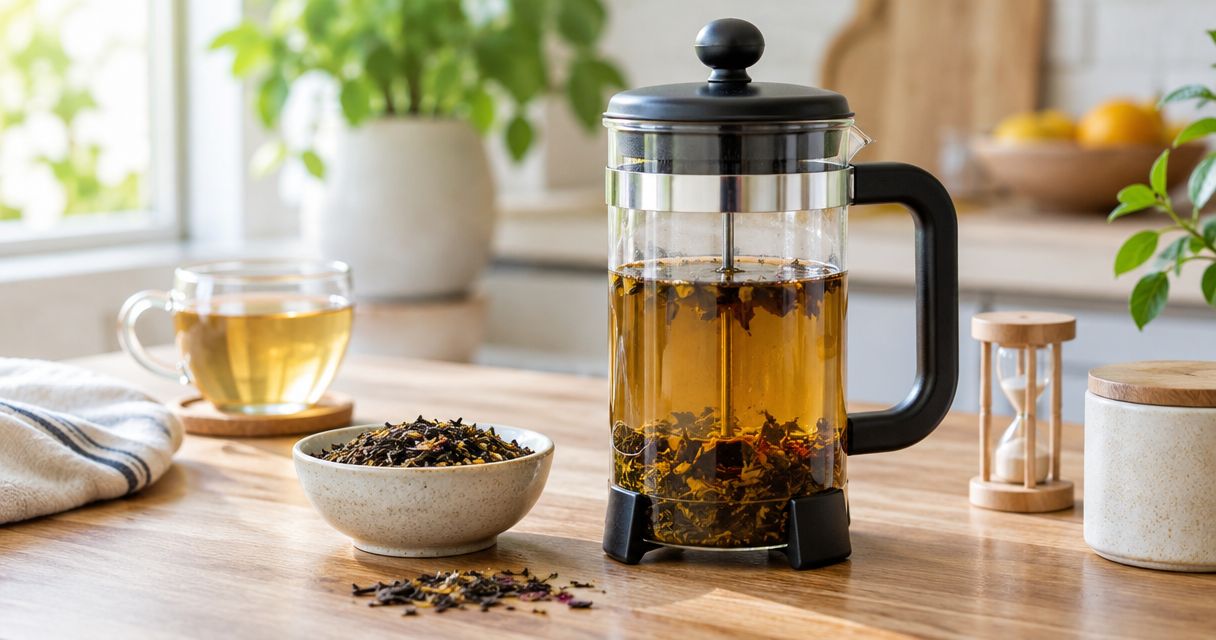
Yes, you can brew loose leaf tea in a French press: add the leaves, pour in water suited to the tea, steep, and pour the entire batch into cups or a separate pitcher. The catch is that pressing the plunger does not stop steeping, so leaving tea above the leaves changes its flavor. This 2026 guide explains the method, suitable teas, and how to avoid coffee residue in your cup.
- Can you brew loose leaf tea in a French press? Yes—use a clean press and decant completely after steeping.
- The plunger separates leaves for pouring; it does not stop extraction while water remains in the press.
- Brew4ufresh loose leaf tea includes Earl Grey for bergamot flavor and jasmine green tea for floral cups.
- Use leaf tea rather than matcha powder, which passes through a French press mesh filter.
Why this matters
A French press gives tea leaves room to open without a separate infuser. Its weakness is separation: the leaves stay inside the brewer, and the mesh does not catch every fine particle.
Treat a French press as a steeping vessel, not a teapot for holding finished tea. The same principle applies whether you make breakfast tea or a delicate green tea. For the broader brewing process, use the loose leaf tea brewing workflow alongside the press-specific instructions below.
Can you brew loose leaf tea in a French press?
Yes. A French press holds the leaves and water together during steeping, then uses its mesh screen to keep most leaves behind when you pour. You do not need to grind the tea, pack it down, or repeatedly pump the plunger.
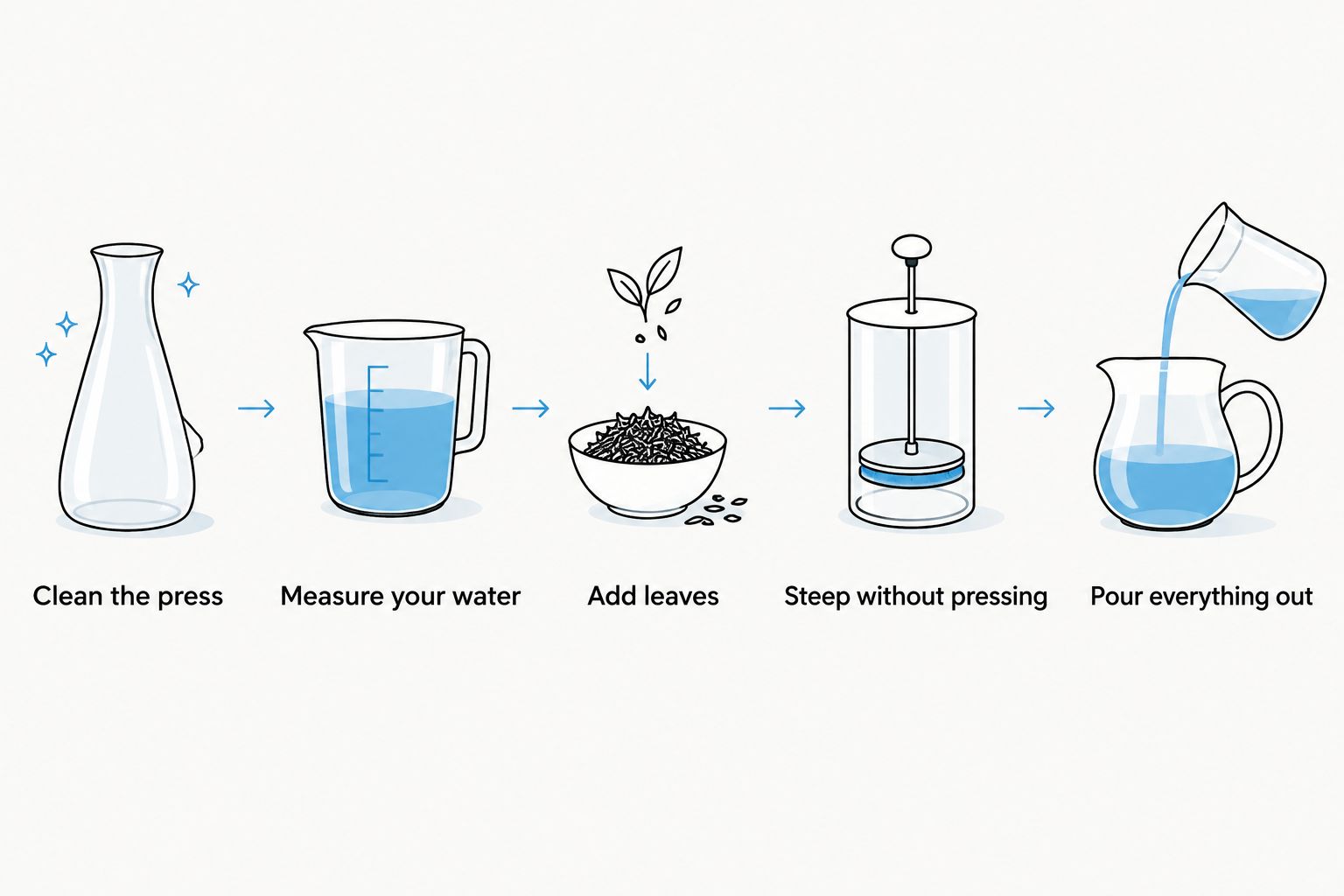
Follow this sequence for your first batch:
- Clean the press. Remove old coffee grounds and wash the carafe, lid, plunger, and filter assembly according to the manufacturer's instructions. Rinse thoroughly.
- Read the tea's directions. Use the recommended leaf quantity, water temperature, and steeping time. The tea determines these settings, not the French press.
- Measure your water. Base the leaf quantity on the water you actually add, rather than filling by eye or trusting a brewer's cup label.
- Add leaves and water. Give the leaves a gentle stir so they become wet. Leave enough space to fit the lid without spilling.
- Steep without pressing. Rest the lid in place with the screen above the tea. Start your timer when the water reaches the leaves.
- Lower the screen gently. Stop if you feel resistance. Do not force the plunger through a packed layer of leaves.
- Pour everything out. Transfer the finished tea into cups or a heat-safe serving pitcher as soon as steeping ends.
The last step matters most. Lowering the filter makes pouring easier, but the leaves remain in contact with any water left inside the press.
A starting recipe for black tea
For an ordinary loose black tea without package instructions, a familiar starting point is 1 teaspoon of leaves per 8 fluid ounces of water, steeped for 3 minutes. Use freshly boiled water for this starting recipe, then adjust the next batch to your taste.
This is a starting recipe, not a specification for every tea. Large, twisted leaves fill a spoon differently from small broken leaves, and green tea needs its own temperature guidance. Product directions take priority over a general recipe in 2026, just as they do with any other brewing vessel.
Which teas work in a French press?
Loose leaf black tea, green tea, and herbal blends all work in a French press. Leaf size and brewing directions matter more than whether the blend contains one ingredient or several.
Powders are different. Matcha is whisked into water rather than steeped and strained, so a French press filter does not turn it into a clear infusion.
| Tea format | Best for | Main advantage | Main drawback |
|---|---|---|---|
| Loose black tea | A straightforward first batch | Easy to steep and pour using the tea's directions | Small broken leaves can escape the mesh |
| Loose green tea | Lighter, floral cups | Leaves have room to expand | Excessive heat or steeping makes the cup bitter |
| Herbal blend | Fruit, mint, or spice-led cups | Room for mixed ingredients to circulate | Fine fragments can leave sediment |
| Matcha powder | Whisked tea rather than filtered tea | No leaf-straining step is needed | French press mesh does not remove the powder |
Do not assume every herbal blend is caffeine-free or that every green tea uses the same recipe. Check the ingredients and directions for the specific tea you choose.
Black tea: best for your first attempt
Black tea is a practical place to learn the method because you can focus on measuring, timing, and pouring. Start with the package directions before changing the strength.
If the first batch tastes weak but otherwise pleasant, use more leaves next time. Extending the steep changes extraction as well as strength, so it is not the same adjustment.
Green tea: best for lighter flavors
Green tea also works, but water temperature deserves close attention. Let the tea's directions guide you rather than pouring boiling water automatically because the vessel resembles your coffee setup.
Pour the full batch out promptly. A green tea that tastes balanced at the end of its intended steep can become unpleasant when left sitting over the leaves.
Herbal blends: best for fruit and spice profiles
A French press accommodates loose fruit pieces, mint leaves, and other herbal ingredients. Follow the blend's directions instead of borrowing the timing from black tea.
Inspect the mesh after pouring. Small ingredients collect around the filter edge, making careful cleanup especially useful before your next brew.
French press or tea infuser: which should you use?
Use a French press when you already own one and can serve the whole batch immediately. Choose a removable basket infuser when you want to stop steeping by lifting the leaves out while keeping the tea in the same vessel.
Neither method fixes unsuitable water temperature or an overlong steep. The practical difference is how you separate the leaves from the finished drink.
| Method | Best for | Pros | Cons |
|---|---|---|---|
| French press | Making a batch to pour immediately | Roomy steeping chamber; no separate infuser needed | Requires complete decanting; fine particles can pass through |
| Removable basket infuser | Keeping finished tea in its brewing vessel | Leaves lift out when steeping ends | Basket size limits the space available for leaves |
| Small tea ball | A compact single-mug setup | Simple to remove and rinse | A tightly filled ball restricts leaf expansion |
For a home setup in 2026, choose around your serving habit rather than buying another brewer automatically. If you drink slowly or make more tea than you serve at once, a removable basket removes a step from your routine.
Why French press tea results vary
A French press changes the handling of tea, not the basic steeping process. These factors explain why the same brewer produces different results:
- Tea format. Loose leaves, broken fragments, and powders behave differently against the mesh. Fine material produces more visible sediment.
- Leaf quantity. More leaves relative to water make a stronger infusion. Measuring consistently makes the next adjustment easier.
- Water temperature. Green tea and black tea do not automatically share the same temperature requirements. Follow the specific tea's directions.
- Steeping time. Extraction continues while leaves remain in water, even after you lower the plunger. Decanting separates the finished drink.
- Coffee residue. Oils and trapped grounds in a shared press introduce unwanted coffee aroma. Clean the filter assembly, not just the glass.
- Filter condition. A bent screen or poorly seated filter allows more leaf material through. Inspect the assembly before blaming the tea.
Change one brewing variable at a time. If you alter leaf quantity, temperature, and steeping time together, you lose a clear explanation for the result.
Which loose leaf teas should you try first?
Brew4ufresh loose leaf tea suits home drinkers who want a choice between citrus-led black tea and floral green tea. Earl Grey Loose Leaf Tea features bergamot's citrus character, while Jasmine Green Tea Multiple Steepings emphasizes jasmine.
These Brew4ufresh tea options fit different preferences. Neither removes the need to follow its own brewing directions or to pour the finished batch out of the press.
| Tea | Best for | Reason to choose it | Trade-off |
|---|---|---|---|
| Earl Grey Loose Leaf Tea | Drinkers who enjoy bergamot | Citrus and floral character in a black tea | Bergamot is not the right fit when you want an unflavored cup |
| Jasmine Green Tea Multiple Steepings | Drinkers who enjoy jasmine | Floral green tea intended for multiple infusions | Jasmine's floral character is not for drinkers seeking a plain tea |
For your 2026 tea setup, pick the flavor you already enjoy before experimenting with a different brewing vessel. Brew4ufresh offers both choices; the French press method remains the same, with the steeping settings taken from the tea.


Will tea taste like coffee in a shared French press?
Tea can pick up coffee aroma when oils or grounds remain in the press. Smell the clean, dry filter before brewing; a noticeable coffee odor is a reason to clean it again.
Take the filter apart only as the manufacturer's instructions allow. Wash around the mesh, support plate, and edges, then rinse until no detergent remains. Let the pieces dry before reassembly or storage.
A dedicated tea press is a practical choice if repeated cleaning still leaves an aroma you dislike. You do not need a special tea-labelled model; you need a clean vessel with a sound filter.
If the same press also handles your coffee routine, keep bean selection separate from tea technique. The fresh-roasted coffee beans guide covers the coffee side of that shared setup.
Can you steep the same leaves again in a French press?
Yes, you can steep suitable leaves again after pouring off the first infusion. Refill with water appropriate for the tea and follow any repeat-steeping directions provided.
Expect a different cup rather than an identical refill. Do not assume that a tea's suitability for repeat steeping means every blend or every batch will taste equally good afterward.
Should you press tea leaves all the way down?
No, you do not need to crush tea leaves against the bottom. Lower the plunger gently enough to hold back the leaves while you pour.
Stop if the plunger resists. Check the filter and leaf position rather than forcing the mechanism, and never use pressure as a substitute for decanting.
FAQ
Can you brew loose leaf tea in a French press in 2026?
Yes, you can brew loose leaf tea in a French press. Use a clean brewer, follow the tea's steeping directions, and pour out the entire batch when it is ready.
How much loose black tea should I put in a French press?
Start with 1 teaspoon of loose black tea per 8 fluid ounces of water if the tea has no directions. Leaf size affects spoon measurements, so use the package recipe when one is provided.
How long should black tea steep in a French press?
Start with 3 minutes for an ordinary loose black tea without package directions. Follow the specific tea's instructions when provided, then decant completely.
Does pressing the French press plunger stop tea from steeping?
No, pressing the plunger does not stop steeping while water remains in contact with the leaves. Pour the finished tea into cups or a separate serving vessel.
Can I make green tea in a French press?
Yes, you can make green tea in a French press. Use the tea's recommended water temperature and steeping time rather than automatically using boiling water.
Can I put matcha powder in a French press?
A French press is not a useful strainer for matcha because the powder passes through its mesh. Prepare matcha by whisking it into water instead.
Why are there tea particles in my French press cup?
Fine leaf fragments pass through French press mesh more easily than large leaves. Check that the filter is properly seated, and pour through a finer tea strainer if sediment bothers you.
Do I need a separate French press for tea and coffee?
No, a shared French press works when you remove coffee grounds, oils, and cleaning residue thoroughly. Use a dedicated tea press if lingering coffee aroma affects your enjoyment.
One last thing
The easiest improvement to your 2026 French press tea routine is not a different tea or a harder plunge. Set out the serving pitcher before you start steeping. That small preparation makes it easier to pour the whole batch immediately instead of leaving the remaining tea over wet leaves while you drink your first cup.