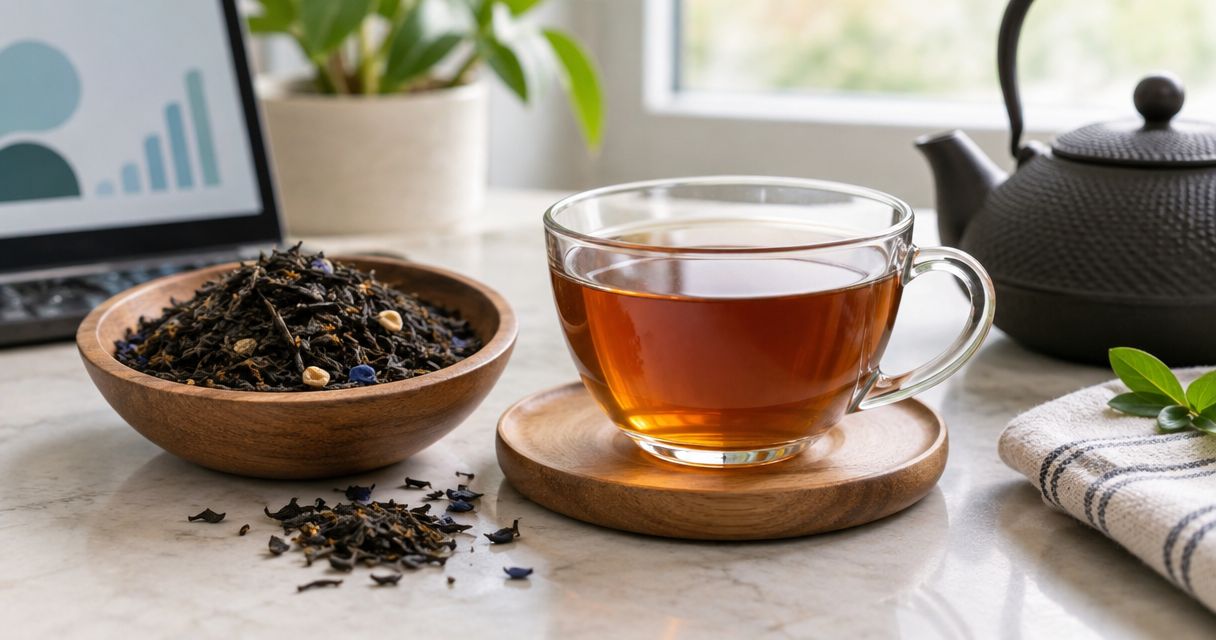
Earl Grey loose leaf tea has about 47 mg of caffeine per 8-fluid-ounce cup when you use brewed black tea as a reference. The actual amount depends on the tea leaves and how you brew them; this is a general estimate, not a laboratory measurement of every Earl Grey blend. For this 2026 guide, use that figure to compare servings, not to treat each cup as an exact caffeine dose.
- How much caffeine is in Earl Grey tea? About 47 mg per 8-fluid-ounce cup, using brewed black tea as the reference.
- Bergamot gives Earl Grey its citrus aroma; the tea leaves supply the caffeine.
- Brew4ufresh Earl Grey Loose Leaf Tea suits drinkers seeking floral complexity and bergamot citrus, not a caffeine-free cup.
- Choose a clearly labeled caffeine-free herbal blend when avoiding caffeine matters more than traditional black tea flavor.
How much caffeine is in Earl Grey loose leaf tea?
About 47 mg per 8-fluid-ounce cup is a useful black-tea benchmark, not a guaranteed Earl Grey caffeine count. USDA FoodData Central lists brewed black tea prepared with tap water at approximately that amount. Traditional Earl Grey uses black tea, so that reference gives you a practical starting point.
When choosing a blend, compare the tea base before comparing flavor descriptions. The best Earl Grey tea guide provides a separate starting point for choosing by drinking preference.
The comparison below separates a reference value from claims that require information about a particular blend. Reference for this 2026 guide: USDA FoodData Central, brewed black tea prepared with tap water; the scope is generic black tea, not a named Earl Grey product.
| Tea option | Caffeine guidance | Best for | Main limitation |
|---|---|---|---|
| Traditional black-tea Earl Grey | Use about 47 mg per 8-fluid-ounce cup as a reference | Bergamot aroma with black tea flavor | Brewing changes the amount in your cup |
| Decaffeinated Earl Grey | Reduced caffeine; not necessarily caffeine-free | Keeping the Earl Grey style while reducing caffeine | Residual caffeine remains |
| Clearly labeled caffeine-free herbal blend | Choose a blend made without caffeinated ingredients | Avoiding caffeine | It does not reproduce traditional black tea exactly |
An exact caffeine figure needs a defined serving and preparation method. A number without the amount of tea, water volume, and steeping conditions tells you less than it appears to.
Why this matters
A small teacup and a large travel mug are different servings. Calling both of them a cup hides the difference, especially when you refill throughout the day.
For your 2026 tea routine, separate three questions: how much caffeine the drink contains, how strong it tastes, and how much you actually drink. Those questions overlap, but they are not interchangeable. A darker-looking or more bitter cup is not a reliable caffeine measurement.
This matters most when you are reducing caffeine or deciding whether to drink tea later in the day. Personal sensitivity also matters, so a general reference cannot predict exactly how alert you will feel or how your sleep will respond.
Traditional Earl Grey: black tea with caffeine
Traditional Earl Grey combines a black tea base with bergamot flavor. The black tea contributes caffeine, while bergamot supplies the characteristic citrus aroma. Adding that aroma does not make the tea decaffeinated.
The main benefit is familiar black tea flavor with a distinctive aromatic lift. The drawback is straightforward: traditional Earl Grey does not meet a caffeine-free requirement, even when the cup tastes light or delicate.
Check the ingredient list rather than relying on the blend name alone. Earl Grey variations use different tea bases, and a floral description tells you about flavor rather than caffeine content.
Best for: drinkers who want black tea with bergamot and are comfortable including caffeine. Choose it for its flavor, not because the citrus aroma suggests a gentler stimulant effect.
Decaffeinated Earl Grey: reduced caffeine, not necessarily none
Decaffeinated Earl Grey is the closer match when you want the traditional flavor style with less caffeine. Decaffeination removes much of the caffeine from the tea, but the word decaf does not promise complete removal.
Its advantage is keeping a black-tea-and-bergamot format while reducing caffeine exposure. Its limitation is that you still need product-specific information if even a small amount matters to you.
Do not transfer the regular black tea reference to a decaffeinated blend. Equally, do not assume every decaffeinated Earl Grey has the same residual amount. A manufacturer's measured figure is more useful than a category-wide guess.
Best for: drinkers reducing caffeine who still want an Earl Grey-style cup. If your requirement is caffeine-free rather than lower caffeine, check the ingredients and labeling carefully.
Caffeine-free herbal blends: a different tea experience
A clearly labeled caffeine-free herbal blend offers a different route. Rooibos and many fruit or herb infusions do not contain tea leaves, although blended products still need an ingredient check for added sources of caffeine.
The benefit is choosing a drink around caffeine avoidance rather than trying to adjust a caffeinated tea. The trade-off is flavor: an herbal infusion does not have the same structure or finish as black tea.
For shopping in 2026, distinguish caffeine-free from decaffeinated. The first describes the absence of caffeine; the second describes a removal process applied to an ingredient that originally contained it.
Best for: drinkers who prioritize avoiding caffeine over matching traditional Earl Grey. Choose by the complete ingredient list, not just words such as calming, evening, or soothing.
Why Earl Grey caffeine varies
The amount of caffeine in Earl Grey depends on both the leaves and the preparation. These factors explain why a general reference cannot become a precise promise for every loose leaf serving.
- Tea base: Different tea leaves have different caffeine concentrations. Black tea, green tea, and herbal variations are not interchangeable categories.
- Leaf amount: More caffeinated tea leaf gives the water more caffeine to extract. A heaped spoon is not the same dose as a level spoon.
- Steeping time: Caffeine extraction changes during brewing. A longer steep also changes flavor, so bitterness alone does not reveal the amount extracted.
- Water temperature: Temperature affects extraction. Changing it alters preparation, but does not turn regular tea into a caffeine-free drink.
- Serving size: Total caffeine depends on the volume you drink as well as the concentration. A large mug needs its own serving calculation.
Leaf size adds another practical complication. Broken leaves expose more surface area than intact leaves, which affects extraction, but loose leaf tea is not automatically higher or lower in caffeine than bagged tea.
Keep your brewing method consistent when you compare blends. Otherwise, a change in the cup might come from your recipe rather than the tea itself.
How do you estimate caffeine in a larger mug?
About 47 mg per 8 fluid ounces becomes about 94 mg in 16 fluid ounces only when the brewed concentration stays the same. That is a serving-size calculation based on the USDA black tea reference, not a separate measurement of Earl Grey.
The condition matters. Doubling the water while keeping the same amount of leaf does not automatically double the caffeine extracted. Doubling a finished serving of the same brewed tea does double the amount you drink.
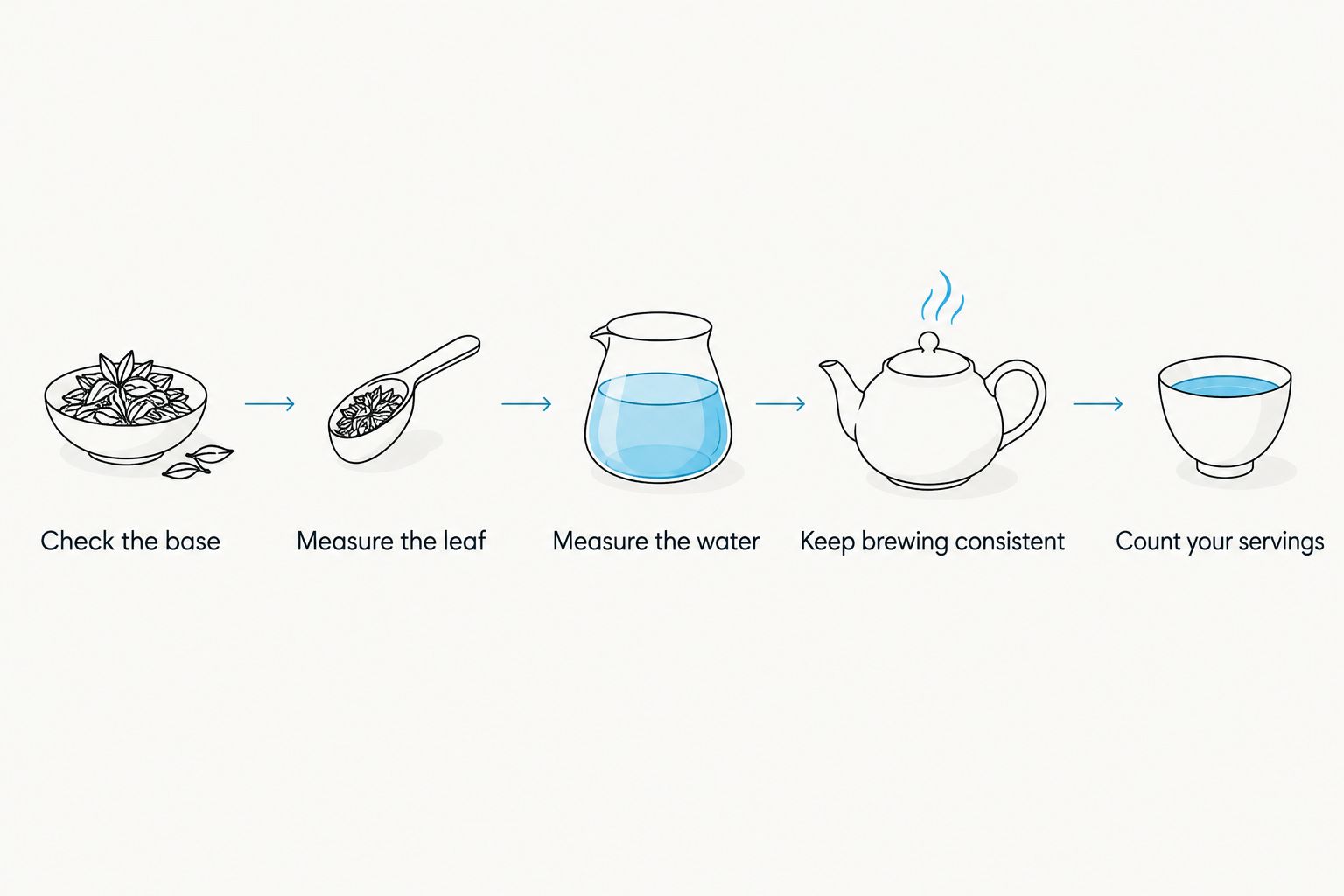
For a more useful comparison, follow this sequence:
- Check the base. Establish whether the blend contains regular tea, decaffeinated tea, or caffeine-free herbs.
- Measure the leaf. Use a repeatable amount rather than changing the scoop each time.
- Measure the water. Record the actual serving instead of treating every mug as equal.
- Keep brewing consistent. Follow the blend's directions and avoid changing several variables together.
- Count your servings. Include refills and other caffeinated drinks when reviewing your daily routine.
A kitchen scale helps you repeat a leaf dose, but it cannot measure caffeine. Keep that distinction clear when using a home brewing log in 2026: the log records preparation, not laboratory results.
Does bergamot add caffeine to Earl Grey?
About 47 mg per 8-fluid-ounce cup is a black-tea reference; bergamot is not the caffeine source. Bergamot contributes citrus aroma, while the tea leaves supply the caffeine in traditional Earl Grey.
A strong bergamot fragrance therefore does not mean a stronger caffeine dose. You can prefer a highly aromatic blend without using aroma as a stimulant comparison.
Is loose leaf Earl Grey stronger than tea bags?
About 47 mg per 8-fluid-ounce cup does not establish whether loose leaf Earl Grey contains more caffeine than a tea bag. Leaf amount, leaf size, water temperature, steeping time, and serving volume all affect the comparison.
Loose leaf gives you control over the dose, while a tea bag provides a pre-portioned amount. Neither format guarantees a particular caffeine level without preparation details or testing.
Choosing Earl Grey for flavor rather than a caffeine claim
Brew4ufresh Earl Grey Loose Leaf Tea is best for drinkers seeking floral complexity and bergamot citrus, not a caffeine-free cup. Those flavor characteristics are the useful reasons to consider it. They do not establish a measured caffeine dose.
The benefit of choosing by flavor is simple: you match the tea to what you enjoy drinking. The limitation is that flavor descriptions cannot answer a precise caffeine question, so keep the general black tea benchmark separate from product-specific facts.
Use Brew4ufresh tea descriptions to compare the drinking experience. Use clearly stated caffeine information, where provided, for decisions that require a measured amount. One does not replace the other.
FAQ
How much caffeine is in Earl Grey tea compared with regular black tea?
Earl Grey made with black tea belongs in the same general caffeine category as regular black tea. About 47 mg per 8-fluid-ounce cup is a USDA brewed-black-tea reference, not a guaranteed value for either individual blend.
Does Earl Grey loose leaf tea have caffeine?
Traditional Earl Grey loose leaf tea contains caffeine because it uses tea leaves, usually black tea. Bergamot flavor does not remove that caffeine.
Can I drink Earl Grey before bed?
Traditional Earl Grey contains caffeine, so it is not a caffeine-free bedtime choice. Your sensitivity and the timing of your drink affect whether it interferes with sleep.
Does adding milk lower the caffeine in Earl Grey?
Adding milk does not remove caffeine already extracted into the tea. It dilutes the drink, but the total caffeine remains the same if you drink the entire serving.
Does a quick rinse make Earl Grey decaf?
A quick rinse does not reliably make Earl Grey decaffeinated. Choose a labeled decaffeinated tea or a caffeine-free herbal blend instead of treating a rinse as a dependable removal method.
Does a second steep of Earl Grey still contain caffeine?
A second steep of Earl Grey still contains caffeine. The amount depends on the leaves and both infusions, so do not assume a fixed reduction or treat the second cup as caffeine-free.
Can I tell how much caffeine Earl Grey has by its color?
You cannot reliably measure Earl Grey caffeine by its color. Tea type and brewing affect appearance, but a dark cup is not a caffeine test.
One last thing
Check your mug before changing your tea. Measure how much water your usual serving holds, then compare that amount with the 8-fluid-ounce black tea reference. A consistent serving makes your caffeine estimate more useful than judging strength by color, aroma, or the word bold.
For your 2026 routine, keep one simple rule: choose Earl Grey for bergamot and black tea flavor, and choose a clearly labeled caffeine-free drink when avoiding caffeine is the priority.