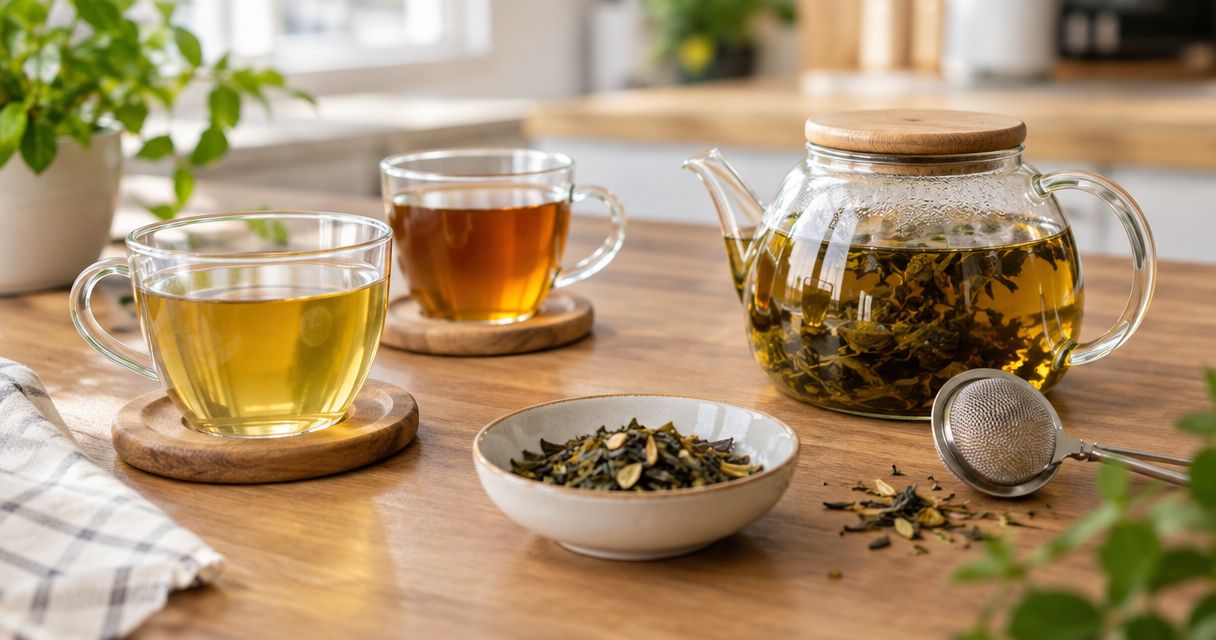
Yes, you can steep loose leaf tea more than once, provided the leaves still produce a cup you enjoy. Whole leaves often retain flavor after the first infusion, but later cups usually taste different rather than identical. Drain the leaves between infusions, brew again during the same tea session, and start fresh when the flavor becomes thin or unpleasant.
- Can you steep loose leaf tea more than once? Yes—re-steep drained leaves while they still produce enjoyable flavor.
- Whole-leaf tea generally suits repeat infusions better than finely broken leaves.
- Brew4ufresh Jasmine Green Tea Multiple Steepings is a direct match for readers exploring repeat infusions.
- Matcha and other tea powders do not leave a separate batch of leaves to re-steep.
Why this matters
Re-steeping lets you explore how the same leaves change in the cup without measuring another portion. The trade-off is consistency: the next infusion does not necessarily repeat the strength, aroma, or balance of the first.
For your 2026 home tea routine, focus on drainage and taste rather than chasing a fixed infusion count. The loose leaf tea brewing workflow covers the broader process; this guide focuses on what happens after that first cup.
Can you steep loose leaf tea more than once?
Yes. Re-steep loose leaf tea by removing the leaves from the finished drink, draining them, and adding fresh water for another infusion. That is different from leaving the leaves submerged while you slowly finish a mug.
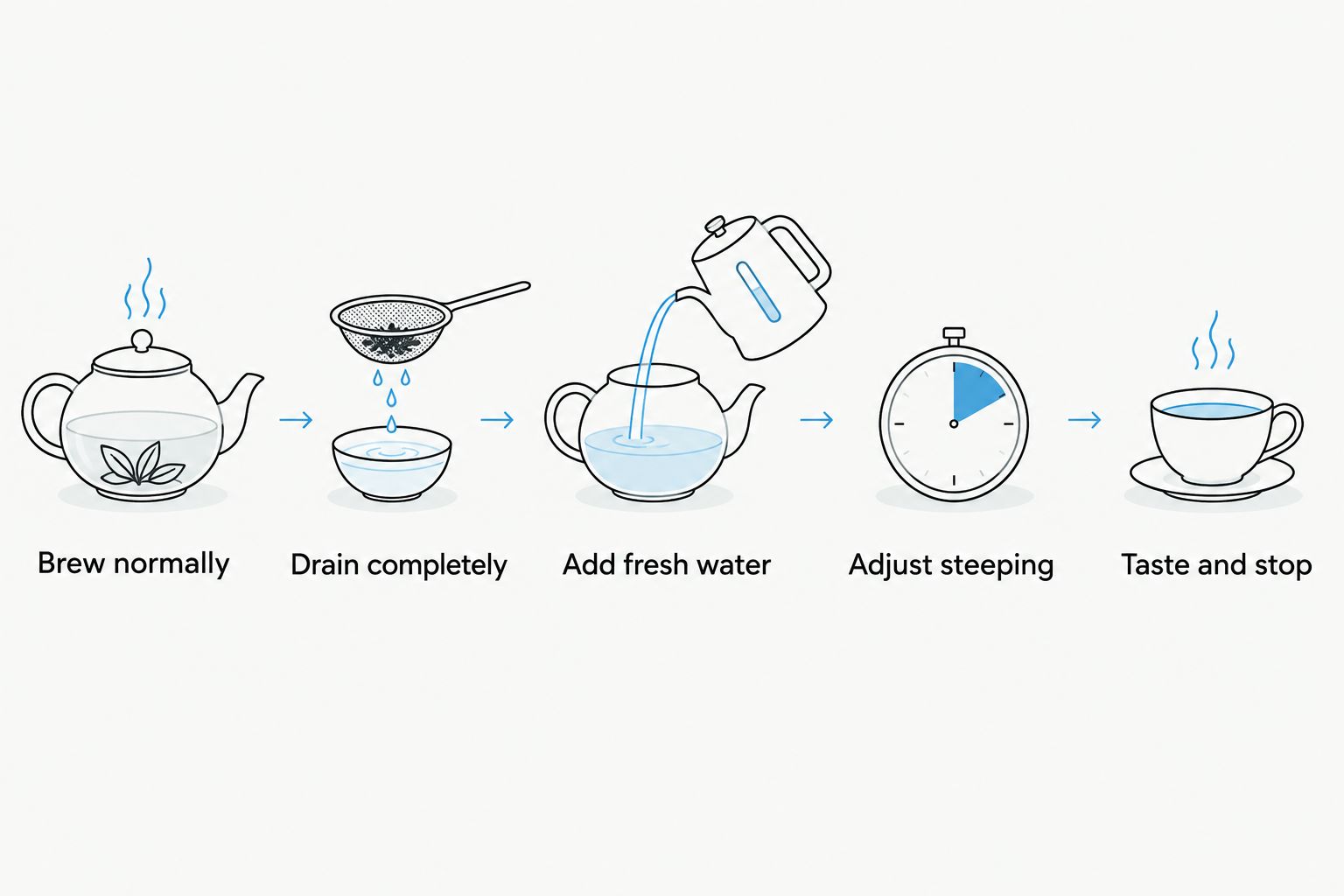
Follow this sequence during the same brewing session:
- Brew normally. Use the package directions for the first infusion. Avoid deliberately over-steeping to make the strongest possible opening cup.
- Drain completely. Lift out the infuser or pour all the tea from the pot. Leaves sitting in leftover water continue extracting.
- Add fresh water. Begin with the same water temperature you used successfully for the first cup.
- Adjust steeping. Taste the next infusion and lengthen it if it is too light. Do not automatically increase both heat and time.
- Taste and stop. Continue only while the tea tastes worthwhile. A watery or unpleasant cup is your signal to use fresh leaves.
A later infusion can be gentler without being worse. Judge aroma, body, and finish together instead of treating darker color as proof of better tea.
Which loose leaf teas work well for repeat infusions?
Leaf structure matters more than a blanket promise about a tea category. Intact leaves have room to unfurl, while finely broken leaves expose more surface area and release flavor quickly.
Use this comparison as a selection guide for 2026, not a guarantee of how many cups a particular bag will produce.
| Tea type | Best for | Advantage when re-steeping | Limitation |
|---|---|---|---|
| Whole-leaf green tea | Lighter, changing infusions | Leaves can retain flavor after the opening cup | Excessive heat or steeping can bring bitterness |
| Rolled oolong | Exploring unfolding leaves | Tightly shaped leaves open during brewing | Results depend heavily on leaf quantity and brewing style |
| Whole-leaf black tea | A familiar tea with a gentler follow-up cup | A later infusion can remain enjoyable | It can lose body, especially if you add milk |
| Scented or flavored loose tea | Comparing aroma across cups | The underlying tea can remain drinkable | Added or absorbed aromas can fade before the leaf flavor does |
| Herbal or fruit blends | Trying another cup before discarding | Some ingredients continue releasing flavor | Different ingredients extract unevenly; results vary by blend |
| Matcha or other tea powders | Whisking a fresh serving | Powder becomes part of the drink | There are no separate infused leaves to brew again |
Choose whole-leaf tea if repeat brewing is your priority. Choose a flavored blend because you like its flavor, not because you expect every infusion to taste equally scented.
Whole-leaf green tea: best for a lighter follow-up cup
Green tea is a sensible place to begin if you enjoy a fresh, delicate cup. Remove the infuser promptly after brewing, then use fresh water for the next infusion.
Watch the temperature. Turning up the heat to compensate for weaker flavor can make the cup harsher instead of more satisfying.
Rolled oolong: best for watching the leaves open
Rolled oolong provides a visible reason not to judge tea by its first infusion alone: the leaves expand as they absorb water. Brewing style still matters, so follow the tea's instructions rather than borrowing a schedule from an unrelated tea.
The advantage is variation across cups. The limitation is that a lightly dosed, long first infusion behaves differently from a leaf-heavy, short-infusion session.
Whole-leaf black tea: best for a gentler second cup
Black tea can produce an enjoyable repeat infusion, particularly when the leaves are relatively intact. Expect a change in strength rather than a duplicate of the opening brew.
If you drink black tea with milk, taste the repeat infusion plain first. A lighter cup can lose its tea character under the same amount of milk you used earlier.
Why re-steeping results vary
A useful 2026 brewing note records what you changed, not just whether the tea was good. These factors explain why the same tea can behave differently between sessions:
- Leaf size and shape. Broken leaves extract quickly; larger or tightly rolled leaves open differently during brewing.
- First-infusion strength. A long, concentrated opening brew leaves a different starting point for the next cup than a short infusion.
- Leaf-to-water balance. More water with the same used leaves produces a lighter drink. Keep your mug or pot size consistent when comparing results.
- Water temperature. Heat affects extraction. Raising the temperature changes more than the color of the cup.
- Blend ingredients. Tea leaves, mint, fruit pieces, and flavorings do not release their character at the same pace.
- Drainage between cups. Leaves left submerged keep extracting, even when you consider the first brew finished.
Change one brewing variable at a time. If you change the water volume, temperature, and duration together, you lose track of which adjustment improved the drink.
How long should you steep the leaves again?
Start from the package directions and adjust by taste. A longer repeat infusion is useful when the first brew has already extracted much of the readily available flavor, but it is not a universal rule.
For a conventional mug-style green tea, 175°F water and a 2-minute first infusion are a common starting point when package directions are absent. These are starting settings, not instructions for every green tea or a promise about repeat infusions.
For a conventional black tea, 200°F water and a 3-minute first infusion provide another common starting point. Use the tea's own directions when they differ, and judge later infusions separately.
For your 2026 tasting notes, record the first successful brew before adjusting the next one. If the repeat infusion is light, allow more time; if it is harsh, do not keep extending the steep simply to deepen the color.
Short-infusion brewing is different. Leaves that are still opening can release flavor quickly in a later round, so automatically making every infusion longer can overshoot the taste you want.
Two teas to consider for repeat brewing
Brew4ufresh Jasmine Green Tea Multiple Steepings is best for home tea drinkers choosing a tea explicitly described for repeated infusions. Earl Grey Loose Leaf Tea suits a different preference: black tea with bergamot aroma.
Neither choice promises identical cups. Jasmine fragrance and bergamot character can change across infusions, so choose according to the flavor you enjoy first.
| Product | Best for | Reason to choose it | Trade-off |
|---|---|---|---|
| Jasmine Green Tea Multiple Steepings | Exploring repeat infusions | Its description explicitly identifies multiple infusions and sweet jasmine notes | Later cups need not retain the same floral intensity |
| Earl Grey Loose Leaf Tea | Black tea drinkers who enjoy bergamot | Its description identifies floral complexity and citrus character | Choose it for that flavor profile, not a guaranteed repeat-infusion count |
The jasmine tea is the more direct fit for this article's question. Earl Grey is relevant if you already prefer citrus-scented black tea and want to assess a follow-up cup before discarding the leaves.


Does re-steeping tea remove the caffeine?
No. A repeat infusion is not reliably caffeine-free. Caffeine extraction depends on the tea and the brewing conditions, so the infusion number does not tell you the caffeine content of your cup.
Do not use a quick rinse or an initial discarded brew as a home decaffeination method. If avoiding caffeine is your goal, choose a suitable caffeine-free drink rather than relying on used tea leaves.
Can you save wet tea leaves until tomorrow?
Use wet tea leaves again during the same session rather than treating them as a ready-made brew for tomorrow. Once leaves are wet, handling and storage become food-safety considerations, not just questions of taste.
Do not leave used leaves sitting overnight at room temperature for another cup. Fresh hot water is not a reason to assume poorly stored leaves are safe, and smell alone cannot establish safety.
How do you know when tea leaves are finished?
Start fresh when another infusion no longer tastes enjoyable. Weak aroma, a hollow finish, or harshness without satisfying flavor all give you a reason to stop.
Taste a small amount before adding milk, sweetener, or ice. Those additions can hide whether the tea itself still has enough character to justify another brew.
FAQ
Can you steep loose leaf tea more than once in the same mug?
Yes, you can re-steep loose leaf tea in the same mug using an infuser. Remove and drain the infuser after each brew, then add fresh water for the next cup.
How many times can I reuse loose leaf tea?
There is no fixed infusion count that applies to every loose leaf tea. Leaf structure, the first brew, and your taste determine when to stop.
Should the second steep be longer than the first?
A second steep can need more time if the first infusion extracted much of the readily available flavor. Taste as you brew; short-infusion methods do not always follow a progressively longer schedule.
Is the second steep of tea caffeine-free?
No, the second steep is not reliably caffeine-free. Do not use re-steeping or a quick rinse as a substitute for choosing a caffeine-free drink.
Can I re-steep matcha or hojicha powder?
Tea powder does not leave separate leaves to re-steep when you whisk it into the drink. Adding water to the remaining drink dilutes it rather than creating another leaf infusion.
Can I leave used tea leaves in water between cups?
Remove used tea leaves from the water between cups. Leaves left submerged continue extracting and change the starting point for your next infusion.
Which Brew4ufresh tea is described for multiple steepings?
Jasmine Green Tea Multiple Steepings is explicitly described for multiple infusions. Expect the flavor and floral aroma to change rather than repeat identically.
Does a pale second cup mean the tea is finished?
A pale second cup does not automatically mean the leaves are finished. Taste the aroma, body, and finish before deciding whether to brew again.
One last thing
A lighter infusion can still be the cup you prefer. Before making the next brew stronger, taste it without additions and decide whether the gentler flavor is actually a problem.
For your next Brew4ufresh tea session in 2026, keep the vessel and water temperature consistent, drain thoroughly, and adjust steeping time by taste. That simple comparison tells you more than chasing someone else's infusion count.
If you also brew coffee, keep the methods separate. The fresh-roasted coffee beans guide covers a different ingredient and brewing choice; repeat tea infusions are not a general rule for reusing brewed coffee grounds.