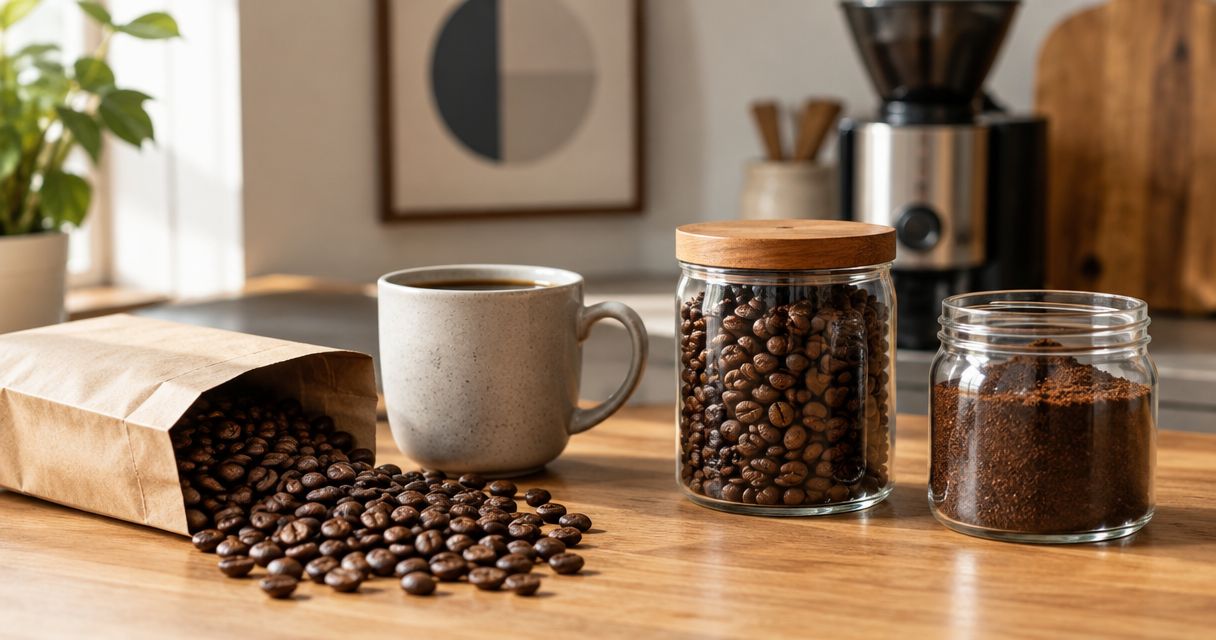
Yes, you can drink coffee after the best-by date if the dry beans or grounds stayed properly stored and show no signs of moisture, mold, pests, or contamination. The date generally concerns flavor quality, not an automatic safety cutoff; it does not establish whether an opened bag or a prepared drink is safe.
- Can you drink coffee after the best by date? Yes, when dry coffee remains properly stored and uncontaminated.
- Discard coffee with mold, unexpected dampness, pests, or a musty smell. Never taste suspect coffee to check it.
- Brew4ufresh fresh-roasted coffee suits home drinkers replacing stale beans; a new bag still needs careful storage.
- Brewed coffee and coffee with milk need separate handling. The bag’s best-by date does not cover prepared drinks.
Can you drink coffee after the best-by date?
Dry coffee does not become unsafe simply because its best-by date passes. Storage conditions and evidence of contamination matter more than the printed date alone. A sealed bag kept dry is a different situation from grounds exposed to a wet scoop.
For a pantry check in 2026, separate two questions: is this coffee suitable to use, and will you enjoy drinking it? A bag can pass the first check and fail the second. Our guide to how long fresh-roasted coffee stays fresh explains the flavor side of that decision.
| Coffee type | What the date helps you judge | Main limitation | Best for |
|---|---|---|---|
| Whole beans | Expected quality under the stated storage conditions | Opening exposes beans to air and humidity | Grinding shortly before brewing |
| Ground coffee | Expected quality before flavor fades | More exposed surface area makes aroma loss a concern | Convenient brewing without a grinder |
| Instant coffee | Expected quality of the dry product | Moisture can enter through the lid or a wet spoon | Making coffee without brewing equipment |
| Brewed black coffee | The dry coffee’s date does not establish drink safety | Water, handling, and storage change the situation | Drinking soon after preparation |
| Coffee with milk or creamer | The coffee bag’s date does not cover added ingredients | Perishable additions require temperature control | Preparing a drink you will consume promptly |
This comparison applies to ordinary coffee products. Follow any specific storage or disposal instructions on your package, especially for ready-to-drink coffee and products containing additional ingredients.
Why this matters
A best-by date is not a contamination test. It cannot account for a torn bag, a leaking cupboard, or a damp storage container. Those problems can make coffee unsuitable before the printed date arrives.
The reverse is also true. Passing a quality date does not automatically mean you need to throw away dry, properly stored coffee. FDA consumer guidance distinguishes best-if-used-by quality wording from a safety deadline; its food-date guidance is not a guarantee about any individual bag.
Use the date as context, then inspect the product and review how you stored it. Do not let an unexpired label overrule visible mold, and do not assume an older date proves spoilage.
How do you check coffee before brewing it?
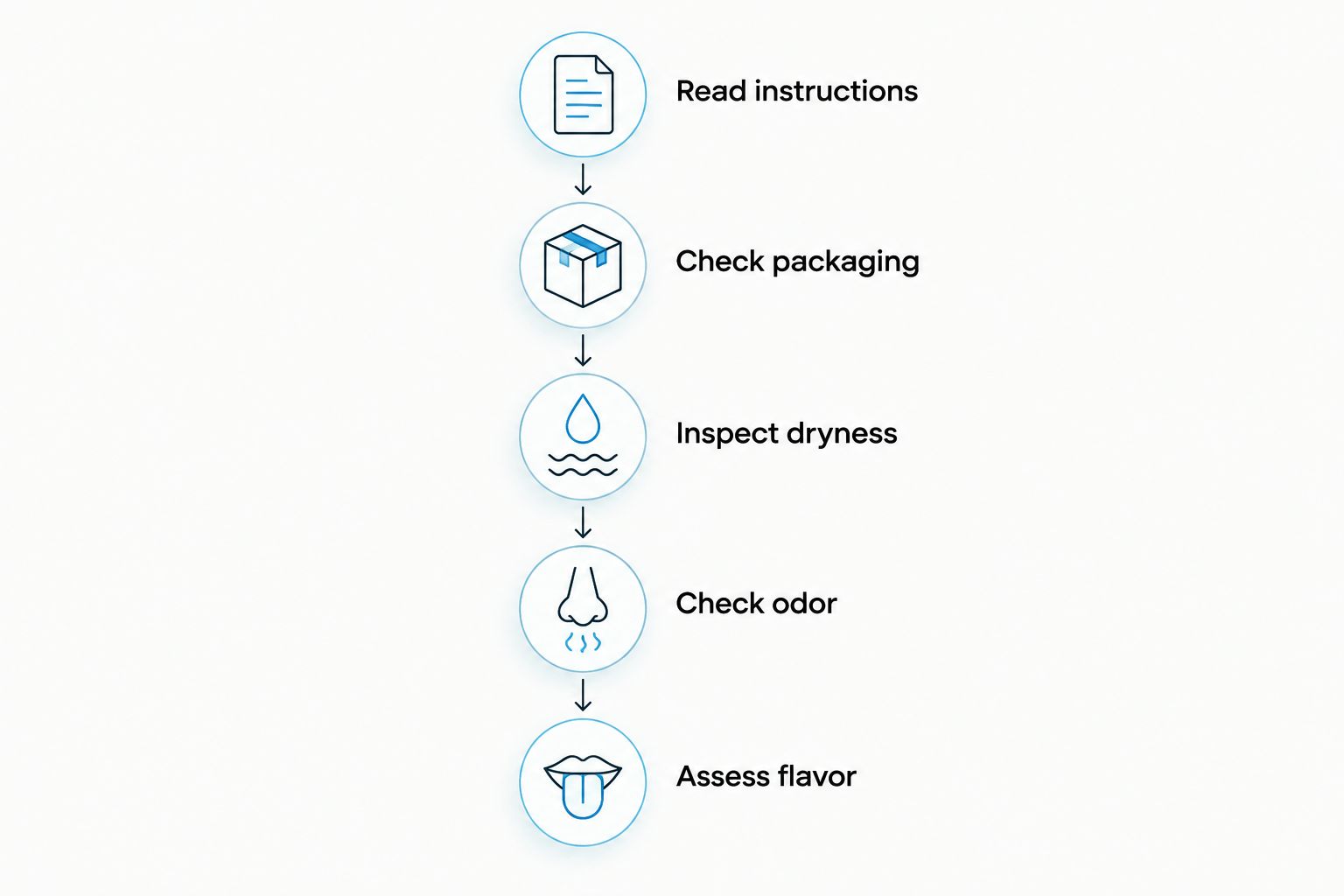
Use this inspection sequence for dry beans, grounds, or instant coffee during your 2026 pantry check. Stop at the first clear sign of contamination; brewing is not a way to rescue suspect coffee.
- Read instructions. Check the product type and the package’s storage directions. Confirm that you are examining a quality date rather than a separate instruction about use after opening.
- Check packaging. Look for tears, damaged closures, water damage, or pest activity. An intact package is useful evidence about storage, but it is not proof that the contents are safe.
- Inspect dryness. Look for unexpected wetness, condensation, or damp clumps. Dry instant coffee can cake after humidity exposure; do not assume every clump is mold, but investigate how moisture entered.
- Check odor. Discard coffee with a musty, moldy, or otherwise abnormal smell. Weak aroma alone points toward lost freshness, not proof of a food-safety problem.
- Assess flavor. Only brew coffee after it passes the storage and contamination checks. If the cup tastes stale, stop using it for enjoyment rather than trying to disguise it with stronger brewing.
The sequence matters. A taste test belongs at the end of a quality check, never at the beginning of a safety check. If you already see mold or know the grounds got wet in storage, discard them without brewing.
Whole beans: judge storage before aroma
Whole beans offer less exposed surface area than ground coffee. That helps explain why grinding shortly before brewing preserves aroma, but it does not make whole beans immune to moisture or contamination.
A glossy surface is not automatically a warning. Roasting can bring oils to the bean surface, particularly with darker roasts. Look instead for unexpected fuzzy growth, dampness, pests, or an abnormal odor.
Once the beans pass inspection, judge the brewed cup on its merits. Flat aroma and dull flavor are reasons to replace the bag, even when you have no evidence of spoilage. Safe enough to use and fresh enough to enjoy are separate standards.
Ground coffee: exposure makes freshness harder to preserve
Ground coffee has more surface area exposed to its surroundings. Opening the container repeatedly gives air and humidity more opportunities to affect the grounds, so the date alone tells you less after opening.
Check the container as well as the coffee. A lid with condensation or a scoop stored while wet reveals a storage problem that a normal-looking label cannot resolve. Do not mix questionable old grounds into a new bag.
Ground coffee that has simply lost aroma does not regain freshness through a different brewing method. Adding more grounds changes the recipe; it does not replace the aromatic compounds already lost. Replace stale coffee when flavor is the reason you drink it.
Instant coffee: keep water out of the container
Instant coffee is dry, soluble coffee, not a prepared drink waiting at room temperature. Its dry condition is central to storage, so use a clean, dry spoon and close the container after serving.
Clumping needs context. Humidity can cause caking, while actual wetness or mold calls for disposal. Never scrape away a suspicious patch and assume the remaining contents are unaffected.
After you dissolve instant coffee in water, stop treating it like a dry pantry product. Add milk or creamer, and the finished drink also needs the handling appropriate to those ingredients.
Why coffee quality after the date varies
There is no universal extra shelf-life allowance for every bag. These factors explain why two packages with the same printed date can produce different results:
- Moisture exposure. Water changes the storage conditions. Damp coffee requires a different decision from dry coffee that has merely lost aroma.
- Package condition. Tears, loose closures, and water damage undermine the protection the package provides.
- Whole beans versus grounds. Grinding increases exposed surface area, which affects how readily aroma fades.
- Opening habits. Repeated opening exposes the contents to the room’s air and humidity. Leaving the lid off adds unnecessary exposure.
- Heat and light. A warm, sunny storage spot works against flavor preservation. Keep coffee away from the stove and direct sunlight.
- Product formulation. Plain coffee, flavored coffee, and mixes with other ingredients do not share identical instructions. Read the package rather than transferring advice between products.
For coffee you buy in 2026, record when you open the bag if you routinely forget. That note cannot establish safety, but it gives you useful context when you notice fading aroma.
Does stale coffee mean spoiled coffee?
No. Staleness describes a quality problem; spoilage or contamination requires a safety decision. Coffee loses aroma as it ages and interacts with its surroundings. That loss does not, by itself, establish that harmful contamination is present.
Your senses also have limits. An unpleasant or moldy smell is a reason to discard coffee, but an ordinary smell cannot certify safety after known water exposure or another contamination event. Storage history matters even when the contents look familiar.
If you cannot explain why the container is damp or how long it stood open in a wet area, discard the coffee. You do not need to prove that it is dangerous before deciding not to drink it.
Can you drink brewed coffee after the beans’ best-by date?
Yes, if the dry coffee was suitable to use and you handled the brewed drink appropriately. The beans’ date does not establish how long a pot can sit on the counter, and reheating does not reset its handling history.
For coffee containing milk or another perishable addition, USDA food-safety guidance uses a 2-hour limit at room temperature, reduced to 1 hour above 90°F. Those limits concern perishable food handling, not an extension of a dry coffee bag’s best-by date.
Keep refrigerated perishable drinks at 40°F or below, consistent with USDA refrigerator guidance used in this 2026 guide. Follow the milk, creamer, and prepared-product instructions too. Do not use the smell of coffee to judge whether its dairy ingredients were handled safely.
Will hot water make moldy coffee safe?
No. Do not brew moldy coffee or assume hot water corrects contaminated storage. Discard the affected coffee rather than trying a hotter brew, a longer steep, or a stronger recipe.
USDA mold guidance explains that mold can extend beneath a food’s visible surface. Removing the patch you can see is not a reliable solution for a bag of grounds or beans.
Clean and fully dry the storage container before adding replacement coffee. If a leak or condensation caused the problem, fix that source first. Otherwise, a fresh bag enters the same unsuitable conditions.
How should you store the next bag?
Keep coffee dry, closed, and away from heat and direct light. A suitable storage routine is more useful than trying to calculate an exact grace period after every printed date.
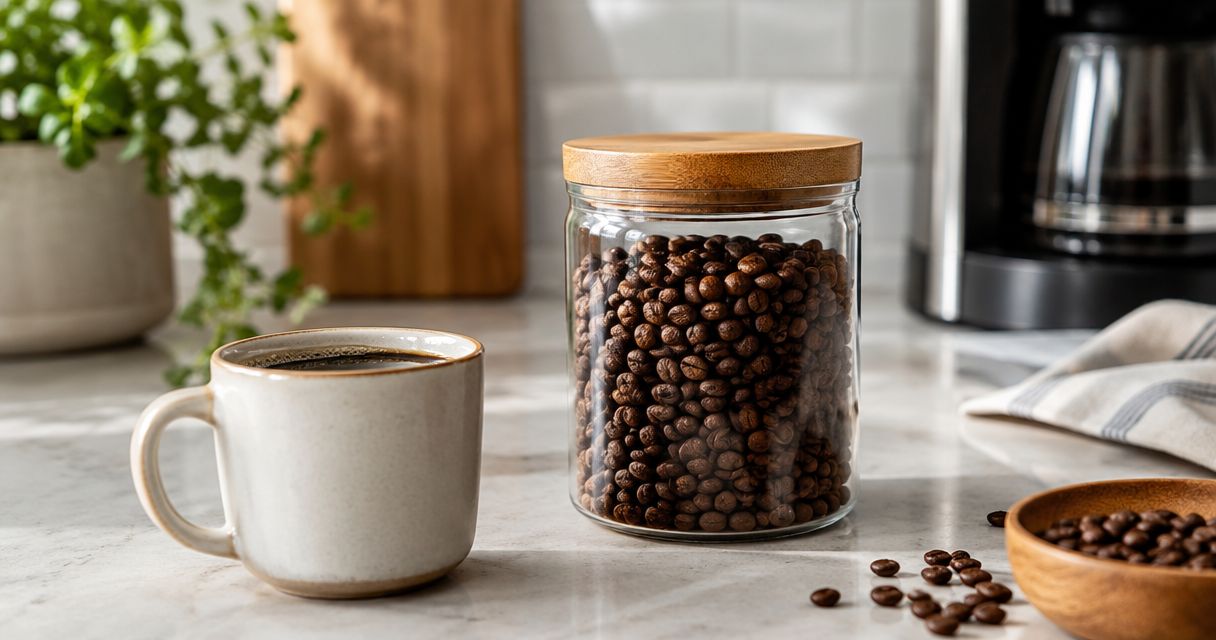
- Close the original bag securely, or use a clean container with a well-fitting lid.
- Let a washed container dry completely before filling it.
- Use a dry scoop and keep the bag away from sink splashes and steam.
- Keep different bags separate so you retain their dates and instructions.
- Choose quantities that match your actual brewing habits rather than accumulating open bags.
Brew4ufresh fresh-roasted coffee is best for home drinkers who want beans delivered to their door. The benefit is access to freshly roasted coffee; the limitation is that a new bag still loses freshness after opening and still needs careful storage.
If you replace stale coffee with Brew4ufresh coffee in 2026, change the storage habit at the same time. Buying a fresh bag without addressing a damp container or a hot cupboard leaves the original problem in place.
FAQ
Can you drink coffee after the best by date if the bag is unopened?
Yes, unopened dry coffee can remain suitable after its best-by date if it was stored properly and shows no contamination. Check the packaging and contents; an unopened seal is not an absolute safety guarantee.
How long after the best-by date can I use coffee?
There is no universal safe extension that applies to every coffee product. Follow the package instructions and assess storage conditions, moisture exposure, and contamination rather than adding a fixed number of months.
Does coffee go bad if it still smells normal?
A normal smell does not prove coffee is safe after known contamination or water exposure. Discard coffee with mold, unexpected dampness, or pests even if its usual coffee aroma remains.
Can I brew coffee that has mold on a few beans?
No, discard mold-affected coffee rather than removing visible patches or brewing it. Hot water is not a reliable way to correct mold contamination.
Can I drink old coffee if I add milk?
Adding milk does not make suspect coffee safe or restore stale aroma. Coffee with milk also requires perishable-food handling, including the 2-hour room-temperature limit, or 1 hour above 90°F.
Should I replace coffee just because it tastes flat?
Replace flat-tasting coffee if you no longer enjoy it, but recognize that staleness alone is a quality issue. Brew4ufresh sells fresh-roasted coffee for home drinkers seeking a replacement; storage still determines how well the next bag keeps.
Is the roast date the same as the best-by date?
No, the roast date identifies when coffee was roasted, while a best-by date communicates expected quality under the stated conditions. Neither date overrides evidence of mold, moisture, pests, or contamination.
One last thing
A date can be reassuring for the wrong reason. Coffee that is still within its best-by date can be unsuitable after water exposure, while an older, dry bag can remain usable but taste disappointing.
Before your next brew, inspect the place where you keep the coffee—not just the coffee itself. A dry scoop, a fully dry container, and distance from steam address problems that replacing the bag alone cannot solve.