Yes, you can use coffee grounds twice, but the second brew usually tastes weaker and less balanced because the first brew has already removed much of the soluble flavor. It still contains caffeine, so use fresh grounds for another good cup rather than treating reused grounds as decaf.
- Can you use coffee grounds twice? Yes, but fresh grounds are the better choice for flavor.
- A second brew still contains caffeine; reused grounds are not a reliable substitute for decaf.
- Brew4ufresh sells freshly roasted coffee for home drinkers; start with unused grounds for each brew.
- Reduce waste by brewing only what you need and composting spent grounds where accepted.
Can you use coffee grounds twice?
You can brew used coffee grounds again, but you cannot recreate the first cup. Water extracts soluble compounds from ground coffee during brewing. A second pass starts with grounds that have already given up part of their flavor and caffeine.
That makes reuse different from brewing with older, unused coffee. Freshness concerns what happens during storage; spent grounds have already undergone extraction. For help choosing your starting coffee, see this guide to fresh-roasted coffee beans.
| Approach | Best for | Main advantage | Main drawback |
|---|---|---|---|
| Fresh grounds for each brew | Consistent everyday coffee | Starts with an unextracted dose | Uses another portion of coffee |
| Rebrewing spent grounds | A taste experiment | Uses grounds again | Usually produces weaker, less balanced coffee |
| Diluting freshly brewed coffee | A deliberately lighter drink | Lets you adjust strength after brewing | Too much water makes the drink thin |
| Brewing a smaller fresh batch | Avoiding leftover coffee | Matches the batch to what you will drink | Requires adjusting your recipe |
The practical choice for your 2026 coffee routine is simple: brew fresh when flavor matters. Rebrew only if you accept a different, usually disappointing drink.
Why this matters
Reusing coffee grounds sounds like an easy way to reduce waste. But a second cup that you pour away does not solve the problem. Making a smaller amount of coffee you enjoy is a more useful starting point.
You also need to separate three questions: whether water will extract anything, whether the result tastes good, and whether the grounds have been handled safely. A second extraction is possible. That does not make it a good recipe or establish that stored wet grounds are safe.
For a 2026 home-brewing routine, focus on the amount you drink, the strength you enjoy, and a repeatable fresh-ground recipe. Those choices address waste without asking spent coffee to perform like unused coffee.
Why the second brew tastes different
Coffee extraction is not a resettable process. Adding more water does not restore what the first brew removed, and drying the grounds does not replenish their soluble compounds.
The second brew's result depends on several connected factors:
- First-brew extraction: Grounds from a thorough extraction have less soluble material left than grounds from an incomplete brew.
- Grind size: Particle size affects how readily water reaches and extracts the coffee.
- Water volume: More water spreads the remaining dissolved material through a larger drink.
- Contact time: Longer contact changes extraction, but it does not recreate the original balance.
- Water temperature: Temperature affects extraction; hotter water does not replace missing flavor compounds.
- Handling after brewing: Wet grounds introduce a storage and cleanliness question that unused, dry coffee does not present in the same way.
A second brew can taste both weak and bitter. These descriptions are not opposites: strength concerns how concentrated the drink is, while bitterness describes part of its taste. A thin cup can still have an unpleasant bitter finish.
Do not judge the second brew by color alone. A dark-looking drink is not proof of balanced flavor or a particular caffeine content.
Drip and pour-over: start with a fresh filter and dose
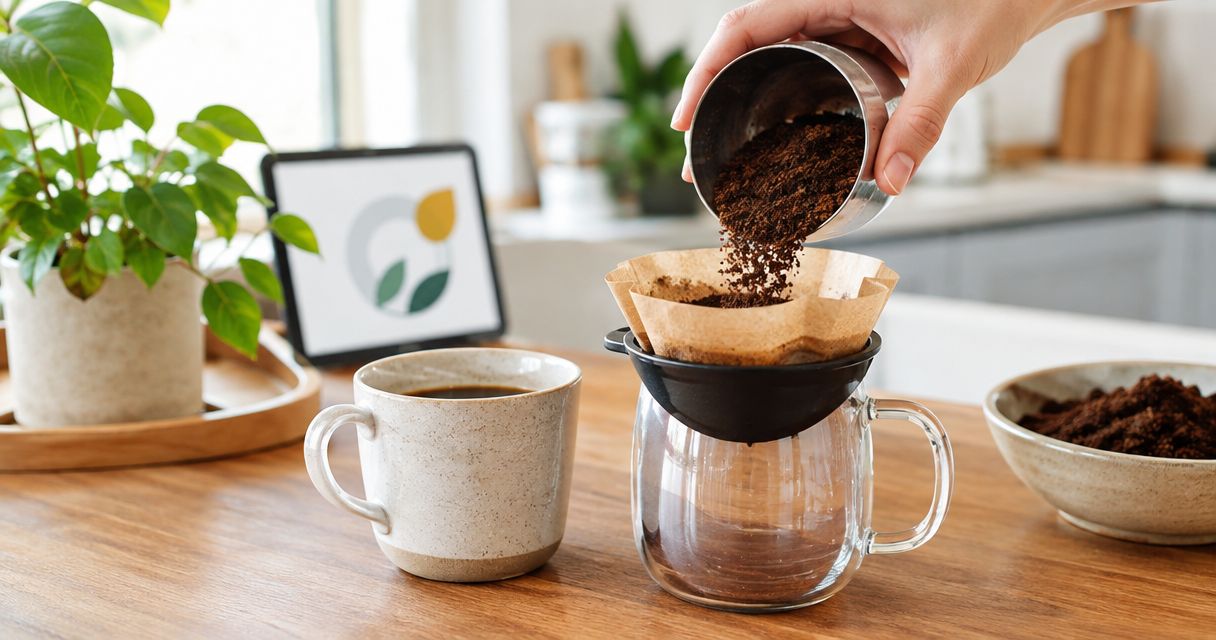
Drip machines and pour-over brewers pass water through a bed of coffee. Running more water through the same bed extracts what remains rather than repeating the original brew.
Best for everyday drip and pour-over coffee: fresh grounds for every batch. The benefit is a recipe you can repeat. The trade-off is using another dose, which makes batch size worth planning.
If you want less coffee, reduce the batch while keeping a suitable coffee-to-water ratio. Stay within your brewer's intended operating range; a very small batch in a large machine does not necessarily behave like a full batch.
Do not confuse a second brew with the separate pours in a pour-over recipe. Blooming and subsequent pours belong to one planned extraction. They are not the same as taking a completed, drained coffee bed and starting another drink.
French press: use fresh grounds for the next pot
A French press keeps grounds immersed in water before you separate them from the drink. Pouring new water onto the spent grounds creates another extraction from an already-used dose.
Best for another full-flavored French press: empty the brewer and start again. A fresh dose gives you control over the next pot. The drawback is the extra coffee and cleanup, not a reason to expect the old grounds to deliver the same result.
Leaving brewed coffee sitting with the grounds is also different from saving cleanly separated coffee. Decant the amount you intend to drink instead of using the press as long-term storage.
If a full press regularly leaves you with unwanted coffee, adjust the batch before brewing. That addresses the source of the waste rather than creating another weak pot afterward.
Espresso: do not pull another drink from the same puck
An espresso puck has already been exposed to pressurized brewing water. Running another shot through it does not produce a second equivalent espresso.
Best for another espresso: knock out the used puck and prepare a fresh dose. Fresh preparation supports repeatable brewing. Its drawback is that each drink needs its own coffee and preparation.
If your goal is a longer, less concentrated drink, add hot water to a properly prepared espresso instead. This changes dilution without forcing more water through an exhausted puck.
Do not treat a second shot from used grounds as a caffeine-controlled option. Appearance, flow, and taste cannot tell you its caffeine dose.
Can you reuse coffee grounds for cold brew?
You can steep spent grounds in cold water, but cold brewing does not restore the flavor removed during an earlier extraction. Grounds left after a finished cold brew have also already undergone extraction.
Best for predictable cold brew: begin with unused grounds and a consistent recipe. The benefit is control over concentration and flavor. The trade-off is planning a fresh batch rather than trying to extend a finished one.
Refrigerating spent grounds does not turn them back into fresh coffee or establish a universal safe storage period. Avoid saving wet grounds for a later drinking experiment.
For your 2026 cold-brew routine, make a batch suited to your actual consumption. Do not use a second steep as a substitute for planning the first batch.
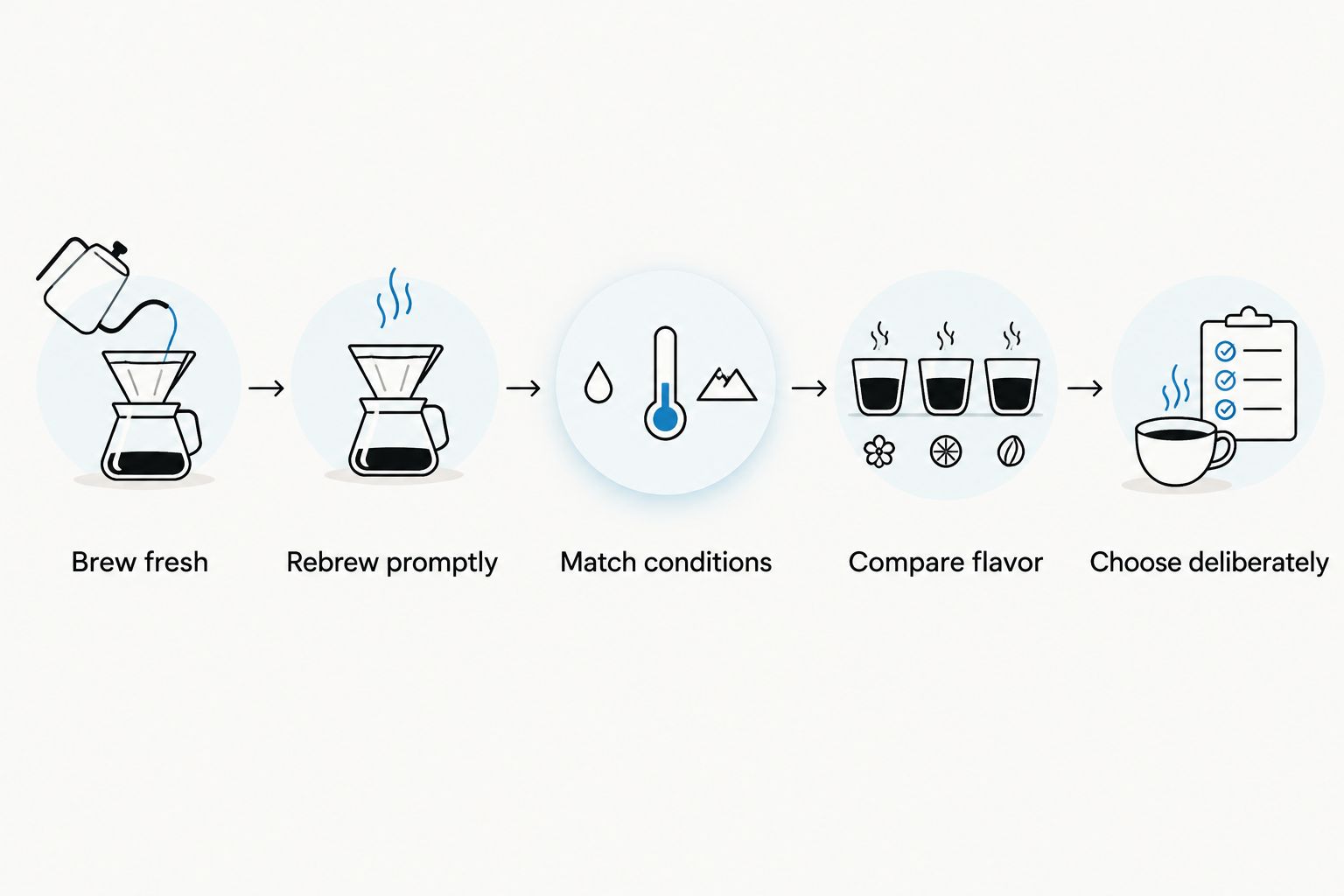
How can you compare the first and second brew?
If you want to understand the difference yourself, keep the comparison simple. This is a flavor exercise, not a food-safety test or a way to measure caffeine.
- Brew fresh. Prepare your usual coffee in clean equipment and reserve a small sample without milk or sweetener.
- Rebrew promptly. If you choose to experiment, use the just-brewed grounds rather than grounds saved for later.
- Match conditions. Keep the brewing method and water amount consistent so you are not changing everything at once.
- Compare flavor. Taste at similar drinking temperatures and notice aroma, body, sweetness, bitterness, and finish.
- Choose deliberately. If the second cup is unpleasant, stop rather than adding ingredients to make yourself finish it.
Milk and sweeteners can mask differences between samples. Compare the plain drinks first if you want to understand what the second extraction actually contributes.
What should you do instead of brewing grounds twice?
The best alternative depends on your goal: less waste, a lighter drink, or less caffeine. These are different problems and need different adjustments.
Brew a smaller fresh batch to reduce waste
Measure the coffee and water before brewing. The Specialty Coffee Association's Golden Cup guidance uses a starting ratio of 55 grams of coffee per liter of water and a brewing-water range of 195–205°F. These are fresh-coffee brewing references, not instructions for rescuing spent grounds.
For your 2026 recipe, use a recognized starting point and adjust for your brewer and taste. Consistency helps you identify whether you need less volume, a different strength, or a brewing adjustment.
Dilute fresh coffee for a lighter drink
Prepare a balanced fresh brew, then add water gradually. Taste as you go.
This gives you direct control over concentration. The limitation is straightforward: dilution can make coffee too thin, and it does not remove caffeine already present in the original drink.
Choose decaf when caffeine is the concern
Do not rely on used grounds to deliver a predictable reduction in caffeine. Decaf is the appropriate category to consider when your goal is lower caffeine, although decaffeinated coffee is not necessarily caffeine-free.
Separate shopping from brewing technique
Brew4ufresh is for home coffee drinkers seeking freshly roasted coffee delivered to their door. That suits a fresh-ground routine, but the coffee source does not replace measuring, suitable brewing, and clean equipment. No roast or origin makes spent grounds equivalent to an unused dose.
Does brewing coffee grounds twice remove all the caffeine?
A second brew still contains caffeine; it is not decaf. The amount remaining depends on the coffee and the first extraction, so there is no single dependable caffeine figure for reused grounds.
Do not use cup color or weak flavor as a caffeine gauge. If caffeine intake matters to you, choose a suitable coffee category rather than estimating from a second extraction.
Is it safe to save wet coffee grounds for later?
Wet coffee grounds are not a shelf-stable ingredient. Moisture and handling create opportunities for microbial growth, so avoid keeping spent grounds on the counter for a later drink.
Do not brew grounds with visible mold or a questionable storage history. Reheating is not a general remedy for spoiled ingredients, and smell alone cannot establish safety.
Can used coffee grounds go in compost?
Used coffee grounds can go in a suitable compost system. Follow your compost service's rules or mix them with other appropriate materials in a home compost pile.
Composting is not the same as spreading a thick layer of grounds around plants. Avoid assuming that every plant needs coffee grounds or that spent coffee is a complete fertilizer.
FAQ
Can you use coffee grounds twice in a drip coffee maker?
Yes, but the second drip brew usually tastes weaker and less balanced. Use fresh grounds and a fresh filter for a repeatable cup.
Can you use the same coffee grounds twice in a French press?
Yes, but another steep starts with already-extracted grounds, not a fresh dose. Empty and clean the French press before brewing another full-flavored pot.
Can I pull two espresso shots from the same puck?
You can run water through a used puck again, but it will not produce another equivalent espresso. Prepare a fresh puck for the next drink.
Will reused coffee grounds make decaf coffee?
No, reused coffee grounds still contain caffeine. A weak-tasting second brew does not provide a reliable caffeine dose.
Can I save wet coffee grounds overnight to brew again?
Do not save wet grounds on the counter for another drink. Use fresh grounds rather than relying on reheating to address an uncertain storage history.
Does drying used grounds make them good for brewing again?
No, drying used grounds does not restore the soluble flavor removed during brewing. Dry grounds are not the same as unused grounds.
Does Brew4ufresh coffee need fresh grounds for every brew?
Use fresh grounds for each Brew4ufresh coffee brew when you want consistent flavor. Rebrewing does not restore what the first extraction removed.
One last thing
A lighter coffee and a second extraction are not the same drink. Diluting a balanced fresh brew changes its concentration; rebrewing changes which remaining compounds reach your cup. For better coffee in 2026, decide how much you want before brewing, then give that batch a fresh dose.