Loose leaf tea has no single freshness deadline: tea type, packaging, and storage determine how long its aroma and flavor last. Follow the package’s best-by date and storage instructions, then check whether properly stored leaves still produce a flavorful cup. Faded flavor signals declining quality; dampness, mold, or an abnormal musty odor means you should discard the tea.
- How long does loose leaf tea stay fresh? Follow the package date; storage and tea type change the answer.
- Keep loose leaf tea sealed, dry, dark, and away from heat and strong odors.
- Flat aroma suggests declining quality. Dampness or mold means discard, not taste-test.
- Brew4ufresh sells loose leaf tea; use each package’s instructions rather than a blanket shelf-life rule.
How long does loose leaf tea stay fresh?
Loose leaf tea stays enjoyable while it retains the aroma and brewed character you bought it for. A package date gives you a reference point, but it does not describe every opened bag sitting in a kitchen cupboard.
Use these distinctions when checking your tea. For brewing instructions rather than storage advice, see the loose leaf tea brewing workflow.
| Tea type | Freshness cues to watch | Main storage concern | Best for |
|---|---|---|---|
| Plain black tea | Recognizable aroma and a cup with its expected body | Loss of aroma after repeated exposure | Drinkers who prefer a full-bodied cup |
| Green tea | Its characteristic fresh, vegetal, floral, or toasted notes | Heat, light, and air changing delicate character | Drinkers who enjoy lighter flavor detail |
| Scented or flavored tea | Both the tea base and its added aroma remain recognizable | Aromatic notes fading or outside odors entering | Drinkers who prioritize fragrance |
| Herbal or fruit blends | Ingredients retain their expected aroma and appearance | Moisture reaching a mixture of dried ingredients | Drinkers who prefer botanical or fruit flavors |
These are inspection cues, not guaranteed storage periods. A strong scent also does not prove that a tea is safe: visible mold or moisture overrides an otherwise pleasant aroma.
Why this matters
Freshness and safety are different questions. Dry tea that has lost its fragrance presents a quality problem; tea contaminated by moisture needs a different decision.
That distinction prevents two mistakes: discarding an enjoyable tea solely because a date passed, and keeping a questionable tea because you plan to use boiling water. Neither the calendar nor the kettle replaces checking the package and the leaves.
For your 2026 pantry check, separate teas you still enjoy from teas that taste flat. Discard anything showing contamination rather than trying to rescue it with a longer steep.
Plain black tea: watch the brewed character
Plain black tea gives you a straightforward freshness check because added flavorings do not complicate the aroma. Smell the dry leaves, then brew according to the package if the tea is dry and shows no suspicious changes.
Look for the character you expect from that particular tea. A cup that has become dull or papery signals a loss of quality, especially when your brewing method has stayed consistent.
Best for: drinkers who want a familiar, full-bodied cup. The advantage is a relatively simple flavor comparison; the limitation is that dark leaves make color alone an unreliable freshness test.
Do not assume every black tea ages identically. Leaf processing, packaging, and the way you handle the container still matter.
Green tea: protect the details you enjoy
Green tea freshness is about preserving its particular character, not keeping every leaf bright green. Different green teas naturally have different colors and aromas, including grassy, floral, nutty, and roasted notes.
Compare the tea with its own description and your experience of earlier cups. A roasted green tea should not be judged against the aroma of an unroasted one.
Best for: drinkers who notice subtle aroma and flavor changes. The benefit is distinctive character; the drawback is that poor storage makes those details harder to appreciate.
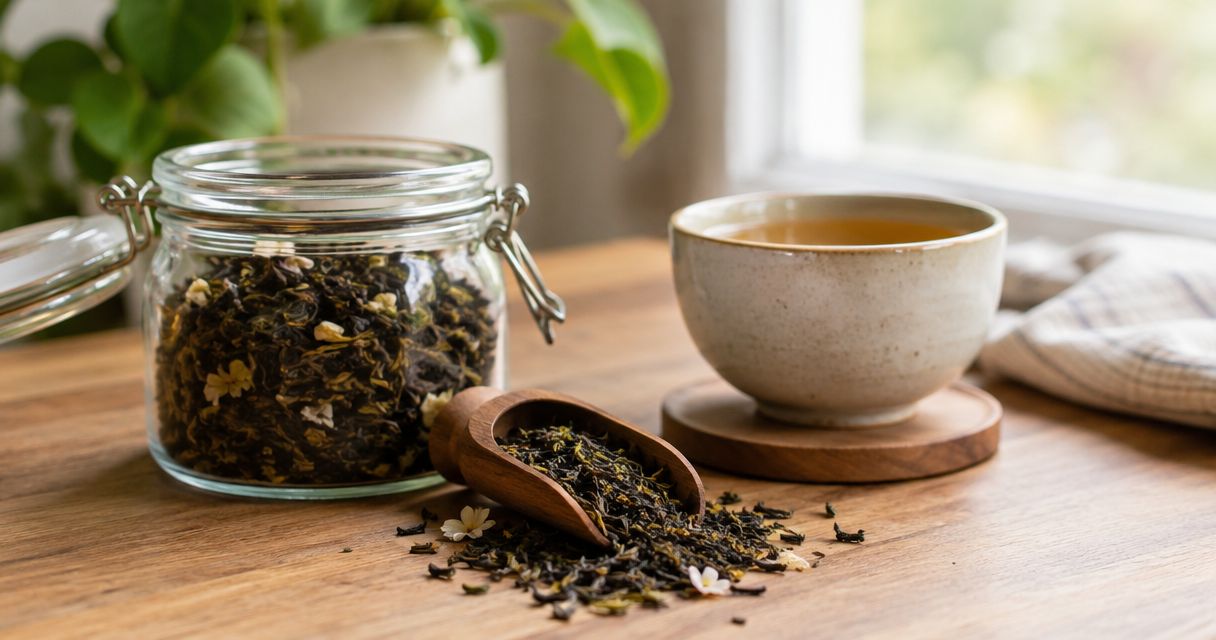
Avoid choosing a transparent display jar simply because the leaves look attractive. A closed cupboard and an effective seal serve the tea better than a sunny shelf.
Scented and herbal blends: check the whole mixture
Scented tea has more than one quality cue. In Earl Grey, for example, the black tea base and bergamot aroma both contribute to the cup; losing either changes the drinking experience.
Herbal and fruit blends need attention to the whole mixture, too. Inspect the contents rather than judging only the ingredients visible at the top of the container.
Best for: drinkers who choose tea primarily for fragrance or botanical flavor. The advantage is a clear aromatic identity; the limitation is that an appealing scent does not rule out contamination elsewhere in the mixture.
Brew4ufresh’s Earl Grey Loose Leaf Tea emphasizes bergamot and floral character, while Jasmine Green Tea Multiple Steepings emphasizes jasmine. Those descriptions give you useful flavor reference points, not promises about how long an opened package lasts.


Why loose leaf tea freshness varies
The same tea can develop differently in different kitchens. These storage factors explain why a universal countdown gives you less useful guidance than the package instructions and the condition of the leaves.
- Air exposure: Opening a container exposes the tea to fresh air. Close it promptly rather than leaving the lid off while you brew.
- Moisture: Wet utensils, steam, and condensation introduce water into a product intended for dry storage. Keep the main supply away from the kettle.
- Light: Direct light works against preserving tea quality. Choose an opaque container or store the package inside a closed cupboard.
- Heat: A shelf beside an oven or above a hot appliance exposes tea to unnecessary heat. Use a cool storage location instead.
- Outside odors: Tea absorbs surrounding smells. Keep it separate from strongly scented spices, cleaning products, and fragranced household items.
- Tea composition: Plain leaves, scented teas, and mixtures containing fruit or herbs have different ingredients. Follow the instructions for the actual blend rather than treating them as interchangeable.
Fix the storage conditions before buying a replacement. A new package placed beside the same steaming kettle faces the same avoidable exposure.
A practical tea storage routine for 2026
You do not need a decorative storage system. You need dry handling, a dependable closure, and a location that stays away from steam, heat, and sunlight.
- Check packaging. Read the storage directions and best-by information before transferring anything. Keep the original label if you move the tea into another container.
- Choose a container. Use a clean, completely dry, food-safe container with a tight closure. A resealable original package also works when its closure remains effective.
- Find a cupboard. Pick a dark location away from the stove, kettle, sink, and strongly scented products. Convenience should not put the tea directly in steam’s path.
- Use dry utensils. Measure the leaves before handling hot water. Never return a damp spoon to the main supply.
- Close and label. Reseal the container after measuring and record when you opened it. Keep different teas separate so their aromas do not mix.
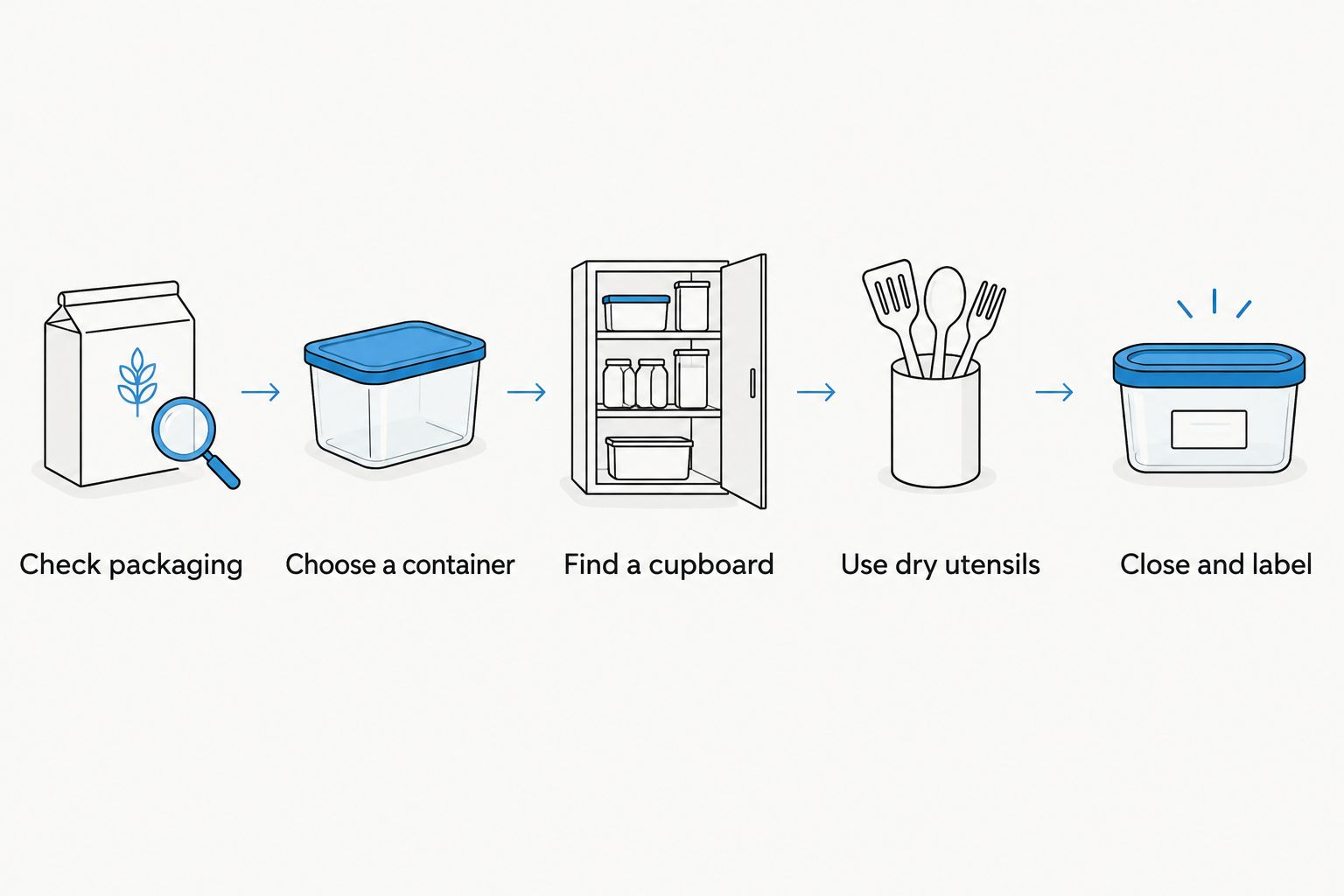
An opening label that includes 2026 helps distinguish this year’s purchases from older containers. Record the actual opening date, not the day you reorganized the cupboard.
Do not top up an old container without checking and cleaning it first. Combining old and new leaves makes the opening history harder to follow and mixes their aromas and condition.
How do you tell whether loose leaf tea is stale?
Stale loose leaf tea loses the aroma or brewed flavor you expect, even when you prepare it correctly. Start with the dry leaves, then evaluate a brewed cup only after checking for signs that require disposal.
Use this sequence:
- Inspect: Look for moisture, unusual clumping, insects, or visible mold. Compare the appearance with what is normal for that tea.
- Smell: Check for its expected aroma. A weak fragrance suggests declining quality; a musty or otherwise abnormal smell calls for disposal.
- Brew: If the leaves pass inspection, follow the package directions. Use a clean vessel and your usual water.
- Compare: Judge the result against previous cups, not against a different tea. A consistently flat result is a practical reason to replace it.
Do not keep extending the steep to compensate. Longer brewing changes extraction and can add bitterness without restoring lost aroma.
Can you drink loose leaf tea after its best-by date?
A best-by date generally describes expected quality, not an automatic moment when dry tea becomes unsafe. Check the wording on the package and follow any specific manufacturer instructions.
For a package marked best before a date in 2026, that date remains useful even if you transfer the leaves into a tin. Preserve it alongside the opening date rather than replacing it with a homemade deadline.
Discard damp, moldy, or contaminated tea regardless of the printed date. Conversely, a passed quality date alone does not tell you how an otherwise dry, properly stored tea will taste.
Should you refrigerate loose leaf tea?
For everyday loose leaf tea, follow the package instructions and use dry cupboard storage unless the producer directs otherwise. Refrigeration creates extra handling concerns, particularly condensation and exposure to food odors.
Some specialty teas come with specific cold-storage directions. Follow those directions rather than applying refrigerator advice intended for a different product.
A cold container opened in humid air can collect condensation. That is why moving the same daily-use tin repeatedly between a refrigerator and a warm kitchen is not a simple freshness fix.
FAQ
How long does loose leaf tea stay fresh after opening?
Loose leaf tea has no universal freshness period after opening. Follow the package guidance, keep the leaves sealed and dry, and replace tea that no longer delivers its expected aroma or flavor.
Does unopened loose leaf tea expire?
Unopened loose leaf tea still changes over time; a sealed package does not preserve flavor indefinitely. Use its best-by information and storage directions, and inspect the contents when you open it.
Is loose leaf tea bought in 2026 still good if I forgot when I opened it?
The purchase year alone does not establish whether loose leaf tea is still good. Check the original label, storage history, and condition; discard tea with moisture, mold, or an abnormal musty odor.
Can I taste tea to check whether it is moldy?
Do not taste tea that shows mold or other signs of contamination. Discard it rather than trying to make it usable with hot water.
Is a glass jar good for storing loose leaf tea?
A glass jar works when it is food-safe, completely dry, tightly sealed, and kept away from light. A clear jar left on a sunny counter does not provide the same protection.
Does stale loose leaf tea lose all its caffeine?
Flat flavor does not establish that tea has lost its caffeine. Do not use aroma, taste, or age as a caffeine measurement.
Should I keep used tea leaves with my dry tea?
Never mix wet, used tea leaves with your dry supply. Re-steeping is a separate brewing decision, not a way to store unused loose leaf tea.
How should I store Brew4ufresh loose leaf tea?
Store Brew4ufresh loose leaf tea according to its package instructions. Keep the dry supply tightly closed and protected from moisture, heat, light, and strong surrounding odors.
One last thing
Measure your leaves before you boil the kettle. That small change keeps the open container out of the steam rising during brewing.
Pair it with a dated label during your next 2026 cupboard check. Better handling protects the tea you already own; a replacement bag cannot correct a storage habit.