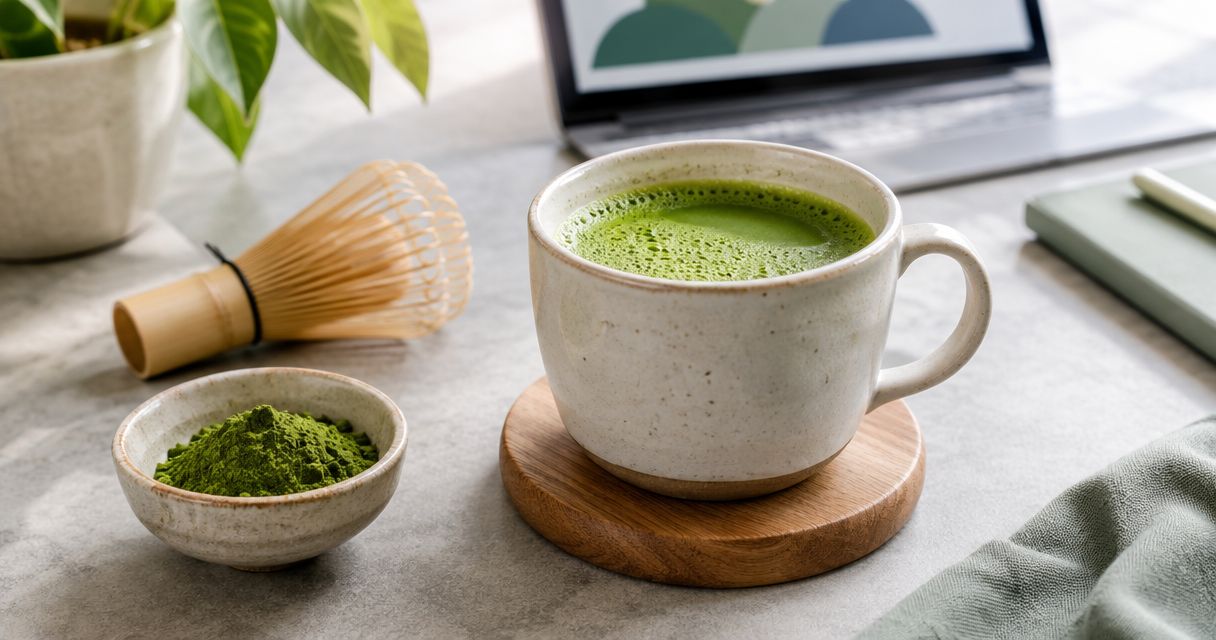
A cup of matcha made with 2 g of powder contains an estimated 38–89 mg of caffeine, based on published measurements of 18.9–44.4 mg per gram of matcha. That is a calculation, not a tested value for your particular powder. In 2026, the most useful way to estimate your cup is to check the product’s caffeine information and weigh the powder; adding milk, water, or ice does not remove caffeine.
- How much caffeine is in matcha? A cup using 2 g of powder has an estimated 38–89 mg.
- Matcha lattes contain the caffeine from their powder; milk and ice dilute the drink, not the dose.
- Brew4ufresh offers matcha tea for whisking; choose a caffeine-free herbal tea when avoiding caffeine.
- Use product-specific caffeine testing when available. Published matcha measurements are not a guarantee for every powder.
How much caffeine is in a cup of matcha?
The amount of matcha powder matters more than the size of your mug. A small bowl and a tall latte can contain the same caffeine when both use the same powder and serving weight.
A 2021 review in Molecules, Health Benefits and Chemical Composition of Matcha Green Tea: A Review, reports caffeine measurements of 18.9–44.4 mg per gram. The estimates below multiply those published concentrations by the amount of powder used. They are not laboratory results for a specific retail product.
| Matcha powder used | Calculated caffeine estimate | Best for | Main limitation |
|---|---|---|---|
| 1 g | About 19–44 mg | A smaller powder serving | Still contains caffeine; flavor is lighter at the same water volume |
| 2 g | About 38–89 mg | A fuller matcha drink | The exact caffeine amount depends on the powder |
| 3 g | About 57–133 mg | A more concentrated matcha drink | Adds more caffeine as well as stronger flavor |
These are preparation comparisons, not recommended daily doses. For help choosing powder by intended use, see the best matcha powder guide.
Why this matters
A serving described as one cup does not tell you how much powder went into it. Neither does the word latte. You need the recipe or the manufacturer’s serving information before the drink’s size becomes useful.
That distinction matters when you replace coffee, order an afternoon drink, or track caffeine across the day. Count the matcha powder first. Then count any other caffeinated ingredients.
What the published range does—and does not—tell you
The published range gives you a basis for estimating intake when product-specific information is unavailable. It does not mean every matcha powder falls within those endpoints, or that the midpoint describes your bag.
For your 2026 caffeine log, label a calculated amount as an estimate. A manufacturer’s tested caffeine value for a stated serving is more useful than a category-wide range, provided you use that same serving weight.
Matcha made with 1 g: about 19–44 mg of caffeine
Using 1 g of powder gives a calculated estimate of about 19–44 mg of caffeine. That serving contains less caffeine than a larger serving of the same powder, but it is not caffeine-free.
Best for: reducing the amount of matcha powder without changing the drink entirely. At a fixed water volume, less powder also produces a lighter-tasting drink. That is the trade-off: reducing caffeine by reducing powder changes flavor and texture too.
If the drink becomes too thin for your taste, adjust the water rather than automatically adding more powder. A smaller drink can preserve concentration while keeping the powder serving lower.
Matcha made with 2 g: about 38–89 mg of caffeine
Using 2 g of powder gives a calculated estimate of about 38–89 mg of caffeine. The wide interval reflects differences in the measured powders, not an effect of the cup you use.
Best for: a measured recipe you can repeat. Weighing your powder makes preparation more consistent, although it cannot reveal an untested product’s exact caffeine content.
Use the same powder weight when comparing plain matcha with a latte. Otherwise, you are changing both the recipe and the caffeine amount, making the comparison less useful.
Matcha made with 3 g: about 57–133 mg of caffeine
Using 3 g of powder gives a calculated estimate of about 57–133 mg of caffeine. With the same powder, increasing the serving increases the caffeine in direct proportion.
Best for: drinkers deliberately choosing a more concentrated recipe. More powder adds tea flavor and suspended solids, but it also raises caffeine intake. A stronger matcha drink is not automatically a better fit for your routine.
Do not use extra powder simply because a large latte looks pale. Milk changes the drink’s appearance, and color is not a dependable caffeine measurement.
Why matcha caffeine varies
For a useful estimate in 2026, separate differences in the powder from differences in preparation. These factors explain why two drinks called matcha can deliver different amounts:
- Powder weight: More of the same matcha powder means more caffeine. A rounded scoop and a level scoop are not interchangeable measurements.
- Powder composition: Published measurements show different caffeine concentrations across matcha samples. A category estimate cannot identify a particular bag’s concentration.
- Serving definition: A manufacturer’s listed serving can differ from your recipe. Check whether caffeine information applies to dry powder or a prepared drink.
- Additional ingredients: Espresso, coffee, and other caffeinated additions contribute their own caffeine. Milk and plain water do not cancel the matcha’s contribution.
- How much you consume: A calculation based on the full powder serving assumes you drink the prepared beverage. Powder left as sediment is not a reliable caffeine-reduction method.
Taste is not a substitute for any of these details. Sweetness can soften bitterness without reducing caffeine, while a concentrated drink can taste intense for reasons beyond its caffeine content.
How do you estimate caffeine in your homemade matcha?
Use the powder’s tested caffeine concentration when you have it. Otherwise, use the published range as an estimate and keep the uncertainty visible.
- Check the label. Look for caffeine per gram or per clearly defined serving. Do not treat a general description such as energizing as a measurement.
- Weigh the powder. Record grams rather than relying on an unmeasured spoonful. Keep the serving consistent when comparing recipes.
- Calculate the dose. Multiply grams of powder by caffeine per gram. If you only have a published range, calculate both endpoints.
- Count additions. Include any coffee or other caffeinated ingredient separately. Water, ice, and milk change concentration, not the original caffeine total.
- Record the serving. Note how much powder you used and whether the result is tested or estimated. That makes the entry useful the next time you prepare the drink.
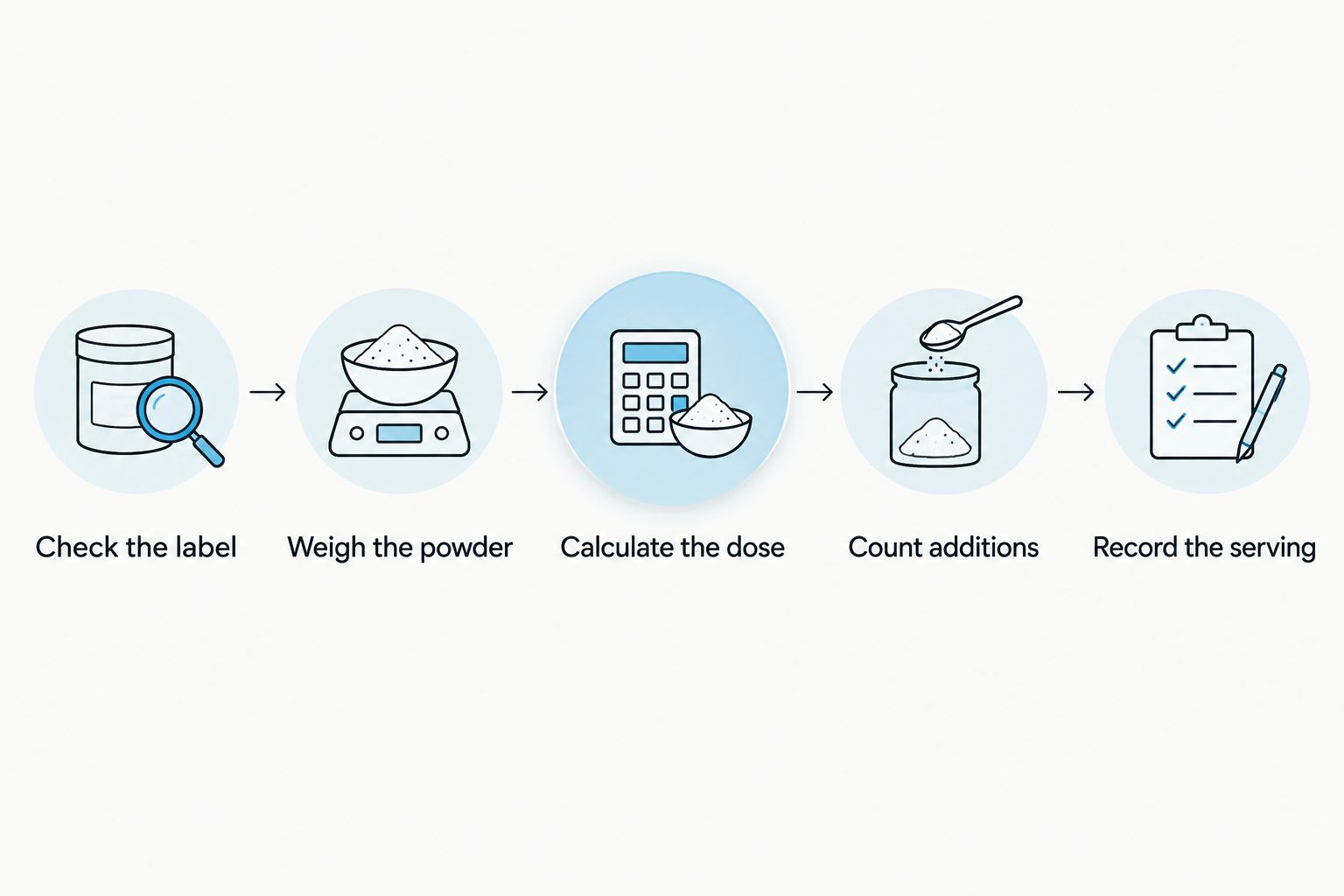
For example, the 2 g estimate above comes from multiplying 2 g by 18.9–44.4 mg per gram, then rounding to whole milligrams. That arithmetic explains the estimate; it does not turn it into a product test.
Does a matcha latte have less caffeine than plain matcha?
A latte using 2 g of the same powder has the same estimated 38–89 mg as plain matcha using 2 g. Milk increases the drink’s volume and changes its flavor, but it does not remove the caffeine already present.
The comparison changes when the recipes use different powder amounts. A larger latte with extra matcha contains more caffeine than a smaller drink made with less of that same powder.
When ordering in 2026, ask how much matcha goes into the drink and whether the business publishes caffeine information for that recipe. A cup-size name alone does not answer either question.
Is matcha lower in caffeine than coffee?
Matcha made with 2 g has an estimated 38–89 mg of caffeine, but it is not always lower than coffee. Coffee varies with the beans, brewing method, serving size, and recipe. Compare stated caffeine amounts for the actual drinks rather than assuming tea is always the lower-caffeine choice.
Matcha and coffee also require different measurements. For matcha, the dry powder serving is central because you consume the suspended powder. For brewed coffee, the preparation determines how much caffeine transfers into the beverage.
If you are choosing between the two for flavor, the fresh-roasted coffee guide covers coffee options. Keep that flavor decision separate from a caffeine calculation.
Does adding water reduce matcha caffeine?
Adding water to a 2 g serving leaves its estimated 38–89 mg of caffeine unchanged if you drink the entire beverage. The drink becomes less concentrated, not lower in total caffeine.
The same principle applies to melting ice. To reduce the caffeine from the same matcha powder, reduce the powder serving or consume less of the prepared drink. Dilution alone does not do it.
Which tea fits your caffeine goal?
Brew4ufresh matcha tea suits home drinkers who want powder for whisking, not a caffeine-free drink. Traditional Matcha Tea is described as a powder crafted for whisking. Its description does not establish a tested caffeine amount, so the category estimates in this guide should not be presented as its product specification.
A naturally caffeine-free herbal blend serves a different purpose. Choose by the result you want, rather than treating every tea as interchangeable.
| Tea option | Best for | Benefit | Trade-off |
|---|---|---|---|
| Traditional Matcha Tea | Whisked green tea drinks | Powder format for preparing matcha | Contains caffeine; exact amount is not established here |
| Apple Cider Rooibos Herbal Tea | A naturally caffeine-free tea choice | Warm, spiced herbal flavor | Does not provide matcha’s green tea flavor or preparation style |
For a 2026 tea routine, keep the distinction simple: matcha when you want matcha, and a caffeine-free herbal blend when avoiding caffeine is the priority. Brew4ufresh offers both types, but they answer different needs.


FAQ
How much caffeine is in matcha made with 2 grams of powder?
Matcha made with 2 g of powder has an estimated 38–89 mg of caffeine, calculated from published measurements of 18.9–44.4 mg per gram. Use product-specific testing when available rather than treating this estimate as a guaranteed amount.
How much caffeine is in a teaspoon of matcha?
A teaspoon does not establish an exact caffeine amount because the powder’s weight and caffeine concentration vary. Weigh the powder in grams and use the manufacturer’s caffeine information when available.
Does iced matcha have less caffeine than hot matcha?
Iced matcha does not have less caffeine simply because it is cold. Drinks made with the same powder and serving weight contain the same starting caffeine amount, whether you add hot water or ice.
Does milk cancel out the caffeine in a matcha latte?
Milk does not cancel out matcha’s caffeine. It increases volume and changes flavor, but the caffeine from the powder remains in the drink.
Does ceremonial-grade matcha tell me how much caffeine it contains?
Ceremonial-grade wording does not establish a caffeine amount. Look for a tested value tied to a defined powder serving rather than calculating caffeine from a grade description.
Can I remove matcha caffeine by throwing away the first water?
Discarding the first water is not a reliable way to make matcha caffeine-free. Matcha is suspended powder rather than leaves that you steep and remove; choose a caffeine-free drink when that is your goal.
Is matcha suitable if I need to avoid caffeine?
Matcha is not a caffeine-free choice. If you have a medical reason to restrict caffeine, ask your clinician about your limit and choose drinks with suitable, clearly stated caffeine information.
One last thing
A bigger mug can hold the same caffeine as a smaller bowl. The powder serving, not the vessel, determines the starting dose. Before changing recipes, write down the grams you actually use.
That single habit makes a 2026 caffeine log more useful than guessing from color, bitterness, or the word latte. Keep the flavor you enjoy, but measure the ingredient that supplies the caffeine.