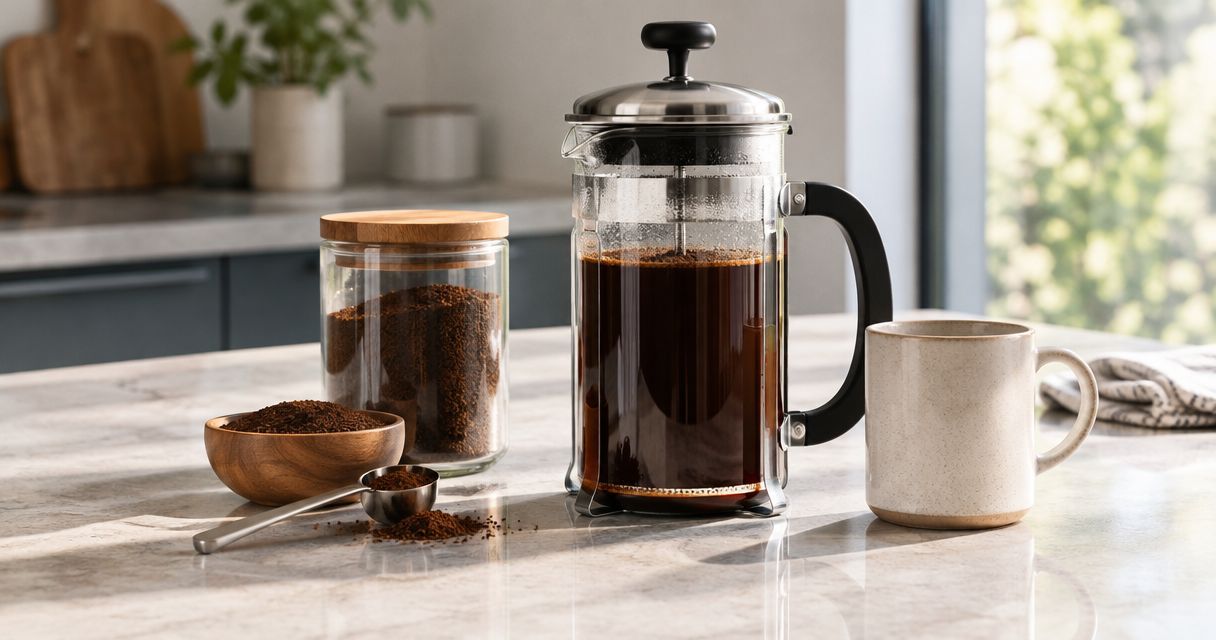
Use 30 grams of coffee for 500 milliliters of water in a French press, following a starting recipe of 60 grams per liter. The grounds retain some water, so your finished drink will measure less than the water you pour in. This 2026 guide shows you how to scale that recipe, choose a grind, and adjust strength without guessing.
- How much coffee do I need for a French press? Start with 30 grams per 500 milliliters of water.
- James Hoffmann’s French press recipe uses 60 grams per liter; scale the coffee to your actual water amount.
- Weigh coffee rather than counting scoops, and change one brewing variable at a time.
- Brew4ufresh coffee suits home drinkers seeking freshly roasted blends delivered; choose roast flavor separately from brew strength.
How much coffee do I need for a French press?
Start with 60 grams of ground coffee per liter of brewing water. This is the starting dose in James Hoffmann’s published French Press Technique, not a requirement to fill every press to its labeled capacity.
Use the water you actually intend to pour. A large French press can make a smaller batch, provided you follow the brewer’s operating instructions and leave enough space below the rim.
| Water added | Coffee at 60 grams per liter | Best for |
|---|---|---|
| 250 milliliters | 15 grams | A smaller individual brew |
| 350 milliliters | 21 grams | An individual brew with more water |
| 500 milliliters | 30 grams | A convenient baseline batch |
| 750 milliliters | 45 grams | Sharing a larger batch |
| 1 liter | 60 grams | A full-liter water recipe |
These are water-input measurements, not promised serving yields. Coffee grounds hold water after brewing, and some liquid remains with the sediment.
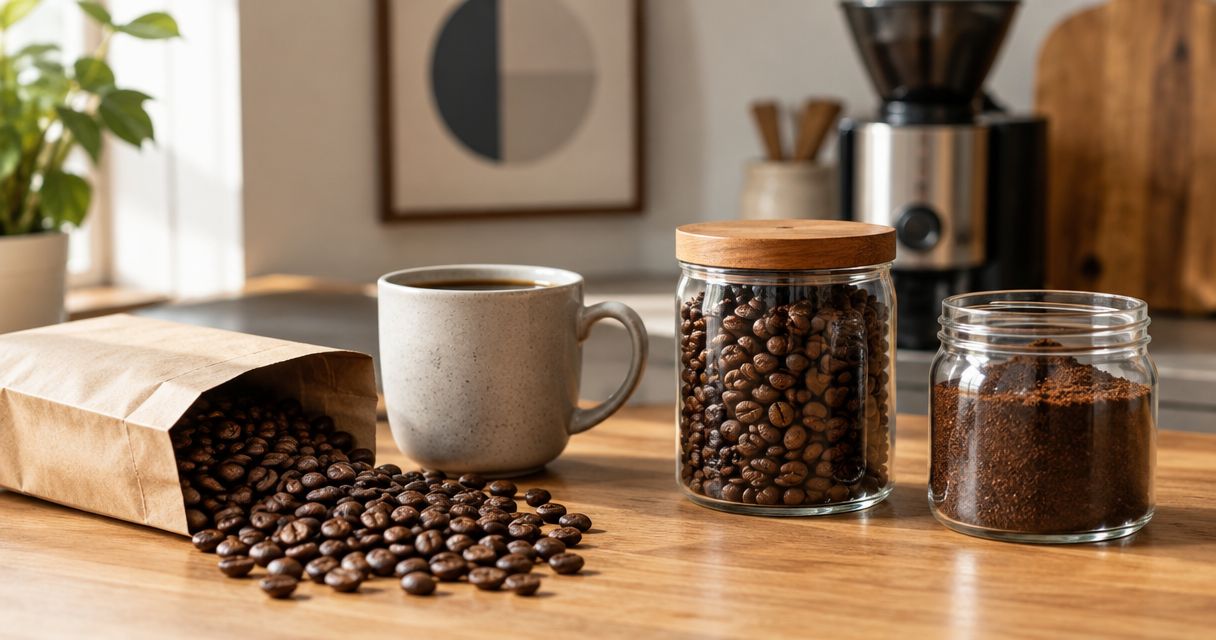
For a closer look at buying and grinding beans, read whether whole-bean coffee is better than pre-ground coffee. The dose stays measurable either way; the grind still needs to suit your brewing method.
Why this matters
A French press gives you control over coffee quantity, water quantity, grind, and steeping. That freedom also makes an unmeasured recipe difficult to repeat.
Adding another scoop does not tell you whether you corrected weak concentration or covered up poor extraction. A weighed recipe gives you a useful baseline. Once the water and coffee amounts stay consistent, you can judge the effect of changing the grind or brewing time.
For your 2026 brewing notes, record the coffee, water weight, grind setting, and result. Describe the cup plainly: thin, balanced, harsh, sweet, or muddy. Those observations are more useful than calling every disappointing brew “not strong enough.”
Smaller batch: 15 grams for 250 milliliters
Use 15 grams of coffee with 250 milliliters of water when you want a smaller brew. This keeps the same concentration as the larger recipes rather than making a deliberately weaker drink.
The advantage is less leftover coffee. The limitation is practical: check that your press works properly with the smaller fill and that the filter assembly operates as intended.
Do not assume the liquid will fill a particular mug. Mug capacity, retained water, and how much sediment you leave behind all affect the amount you serve.
Baseline batch: 30 grams for 500 milliliters
Use 30 grams of coffee with 500 milliliters of water as an easy recipe to remember. It is a useful starting batch because you can halve or double the measurements without changing the underlying ratio.
This recipe does not specify how many people it serves. Pouring small tasting cups and filling large breakfast mugs are different jobs.
If you want more brewed coffee, scale both ingredients. Adding water alone changes concentration rather than simply increasing the batch.
Larger batch: 60 grams for 1 liter
Use 60 grams of coffee with 1 liter of water when your press safely accommodates that amount plus the grounds. The vessel needs space for both ingredients, so its stated capacity is not permission to pour water to the rim.
The advantage is making coffee for sharing in one vessel. The drawback is that any coffee left against the grounds continues to change while you drink the first serving.
After brewing, pour the coffee you plan to keep into another suitable container. Do not leave a large batch sitting on the grounds throughout breakfast and expect the final cup to match the first.
How to calculate the coffee for any batch
Multiply your water amount in milliliters by 0.06 to find the coffee dose in grams. This is simply the arithmetic behind the 60-grams-per-liter recipe.
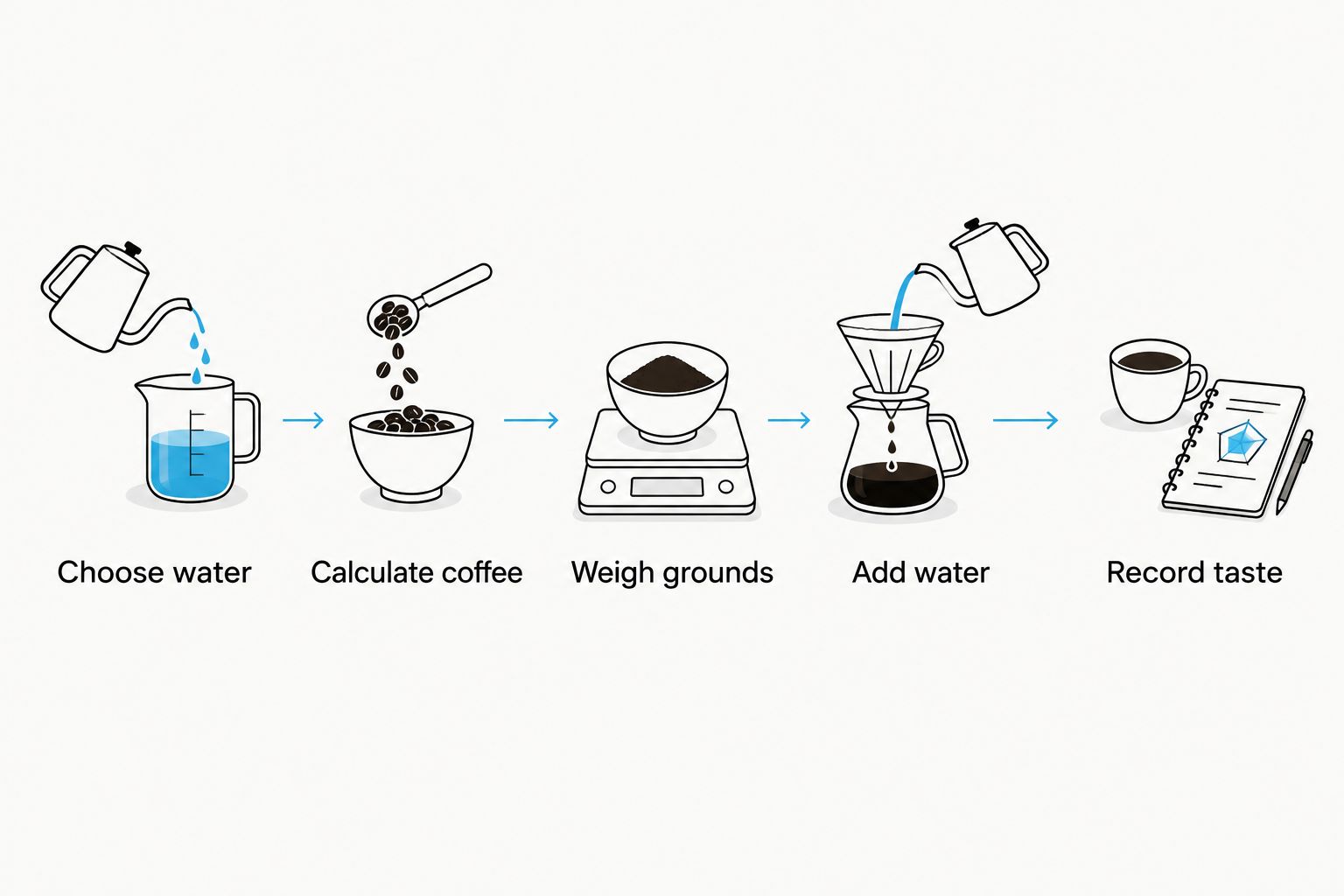
Follow this sequence:
- Choose water. Decide how much brewing water you want to use, within the press manufacturer’s fill instructions.
- Calculate coffee. Apply the recipe to that water amount rather than estimating from the vessel’s name.
- Weigh grounds. Measure the dry coffee before adding water.
- Add water. Measure the brewing water separately and record the amount.
- Record taste. Keep the recipe if you like the result; change one variable if you do not.
For example, 600 milliliters of water calls for 36 grams of coffee at this starting ratio. That calculation describes the ingredients, not the final volume in your cup.
A kitchen scale makes this process repeatable. Tare the empty container before measuring coffee, then tare again when measuring the water so the vessel’s weight does not enter your recipe.
Why the amount of coffee you need varies
The starting ratio stays useful, but the right batch and final adjustment depend on what you want to drink. Keep these factors separate:
- Water quantity: A larger water input needs a proportionally larger coffee dose to preserve the recipe.
- Preferred concentration: More coffee at the same water amount makes a more concentrated brew, although extraction also affects taste.
- Grind size: Different particle sizes extract differently; a disappointing cup does not automatically need more grounds.
- Roast flavor: A smoky dark roast tastes different from a brighter roast even when both use the same measured dose.
- Serving size: The number printed on a press does not establish the size of your household’s mugs.
- Brewing technique: Steeping, agitation, settling, and pouring affect what reaches your cup and how much sediment comes with it.
Adjust for the problem you actually taste. A gritty cup needs a different correction from a clean but watery cup.
Should you measure French press coffee with tablespoons?
Grams are the better choice for repeatable French press coffee. Tablespoons measure volume, while the recipe measures mass.
A heaped spoon and a level spoon do not contain the same quantity. Bean density, roast, and grind also change how much coffee fits into a spoon, so a universal tablespoon conversion gives false precision.
If you only have a scoop, use the same scoop and fill it consistently. Treat that as a temporary household method, not an exact translation of the gram-based recipe.
For a repeatable 2026 routine, weigh your usual scoop when you have access to a scale. You will then know what that particular scoop and coffee combination contains, without assuming every coffee weighs the same.
Does a stronger French press need more coffee?
More coffee increases concentration when the water amount stays fixed. It does not automatically fix sourness, bitterness, or sediment.
Before changing the dose, decide which description fits your cup:
| What you taste | What to check first | Trade-off to remember |
|---|---|---|
| Clean but watery | Coffee and water measurements | Increasing the dose uses more coffee per batch |
| Sour and thin | Grind and extraction technique | More grounds alone do not correct every extraction problem |
| Harsh or bitter | Roast choice and brewing method | A stronger dose can intensify an unwanted flavor |
| Muddy or gritty | Fine particles and pouring technique | Less sediment can mean leaving more liquid behind |
Keep the 30-gram, 500-milliliter baseline while checking the method. Once the cup tastes properly extracted but still feels too light, increase the coffee dose and write down the result.
The point is not to find a universal strongest recipe. It is to make the cup you enjoy reproducibly.
Which coffee should you use with the measured recipe?
Brew4ufresh coffee is best for home drinkers who want freshly roasted blends delivered. For this French press recipe, choose between a balanced medium-roast profile and a darker profile according to the flavor you enjoy, not an assumed difference in required dose.
These Brew4ufresh blends offer different starting directions. Neither removes the need to measure your ingredients or use an appropriate grind.
| Coffee | Best for | Supported flavor direction | Trade-off |
|---|---|---|---|
| House Blend Medium Roast Coffee | Everyday medium-roast drinkers | Balanced, versatile everyday coffee | Not the clearest match if you specifically want a dark-roast profile |
| French Roast Dark Roast Coffee | Drinkers who prefer smoky roast depth | Bold, smoky dark-roast character | Not the first choice if you want delicate flavor notes |
Start either coffee at the same measured ratio before deciding that one needs a different dose. This makes the roast comparison useful rather than mixing a coffee change with a recipe change.


How much coffee do I need for two French press mugs?
30 grams of coffee works with 500 milliliters of water, but whether that fills two mugs depends on their size and the water retained by the grounds. Measure the water for your intended servings, then calculate the dose rather than relying on a “two-cup” label.
How much coffee do I need for a full French press?
60 grams of coffee works with 1 liter of water, provided your press can safely hold that recipe. For a different safe water fill, scale the coffee proportionally and leave room for the grounds.
Can I use the same amount for light and dark roast?
30 grams per 500 milliliters is a useful starting recipe for either roast. Weigh the grounds, compare the flavors, and adjust only after tasting; a darker flavor is not proof that you used more coffee.
FAQ
How much coffee do I need for a French press in 2026?
Start with 30 grams of coffee for 500 milliliters of water, equivalent to 60 grams per liter. Adjust after tasting, keeping track of both the coffee dose and water amount.
How many grams of coffee should I use for a small French press?
Use 15 grams of coffee for 250 milliliters of water at the starting recipe. Check that your press operates properly at that fill level.
Should I measure water before or after brewing French press coffee?
Measure the water you add before brewing. The finished drink contains less liquid because the grounds retain water and some coffee remains with the sediment.
Can I make half a batch in a large French press?
You can make a smaller batch if the press operates correctly at that fill level. Scale both coffee and water together and follow the manufacturer’s instructions.
Is a coffee scoop accurate enough for a French press?
A scoop is less repeatable than weighing because it measures volume rather than mass. Use a scale when you want to reproduce a recipe or compare different coffees.
Should I add more grounds if my French press tastes bitter?
Do not add more grounds as the first fix for bitterness. Check the roast profile and brewing technique, then change one variable at a time.
Does dark-roast French press coffee have more caffeine?
Dark roast alone does not establish the caffeine in your French press. Bean composition, dose, and brewing conditions also affect the result, so taste intensity is not a caffeine measurement.
One last thing
The water poured into a French press is not the coffee volume poured out. That distinction explains why a correctly measured recipe sometimes leaves your favorite mug short.
Keep a simple 2026 recipe note beside your brewer: water added, coffee weighed, and whether the finished batch filled your usual mugs. If you need a larger serving, increase both ingredients together rather than weakening a recipe you already enjoy.