Yes, you can drink loose leaf tea without an infuser: steep the leaves directly in a heat-safe vessel, then strain or carefully pour the tea into your cup. The main drawback is that leaves left in the water keep steeping, which can make the drink stronger or more bitter. This 2026 guide explains which kitchen tools work, how to keep leaves out of your mouth, and when drinking directly from the brewing cup makes sense.
- Can you drink loose leaf tea without an infuser? Yes—steep freely, then separate the leaves before drinking.
- A fine-mesh kitchen strainer gives loose leaf tea room to expand and catches leaves during pouring.
- Direct mug brewing uses fewer tools, but leaves keep steeping while you sip.
- Brew4ufresh offers loose leaf tea, including Earl Grey, for home brewing.
Can you drink loose leaf tea without an infuser?
You do not need an infuser to brew loose leaf tea. You need a way to control steeping and, preferably, separate the leaves afterward. An infuser simply holds the leaves together while water moves through them; brewing directly in a vessel lets the leaves spread freely.
For a repeatable routine, follow the loose leaf tea brewing workflow. The essential sequence stays the same whether you use a basket, kitchen strainer, or separate pouring cup.
- Choose a heat-safe vessel. Use a mug, teapot, or measuring jug intended for hot liquids.
- Add the tea. Follow the package directions rather than assuming every leaf needs the same scoop.
- Add water at the recommended temperature. Tea type matters more than whether you own an infuser.
- Time the steep. Taste and adjust future brews rather than leaving leaves immersed indefinitely.
- Separate and serve. Pour through a strainer, use a suitable filter, or carefully decant above settled leaves.
Keep your receiving cup on a stable surface. Hot water, a loose filter, and an unsupported strainer are an awkward combination.
Why this matters
A missing infuser should not stop you from using loose leaf tea. The bigger difference is whether your brewing method lets you stop extraction when the cup tastes right.
Leaves sitting in a mug keep releasing soluble compounds as you drink. Separating the tea from the leaves gives you more control, especially when you prefer a mild cup or drink slowly.
For your 2026 kitchen setup, start with what you already own. A clean kitchen strainer and a second cup solve the immediate problem without requiring another dedicated tea accessory.
Which no-infuser method works best?
A fine-mesh kitchen strainer is the best starting point if you want a leaf-free cup without a tea infuser. It lets you brew in one vessel and serve into another, though very small particles can pass through the mesh.
Choose by leaf size, cleanup, and the tools on hand—not by the assumption that every substitute filters equally well.
| Method | Best for | Main advantage | Main drawback |
|---|---|---|---|
| Fine-mesh strainer | Most loose leaf tea | Separates leaves after unrestricted steeping | Fine particles can pass through |
| Paper coffee filter | Small fragments and sediment | Catches finer material than coarse mesh | Drains slowly and needs support |
| Direct mug brewing | Larger leaves and minimal equipment | Requires only a heat-safe cup | Leaves remain in contact with water |
| French press | Brewing and pouring a larger serving | Built-in screen holds back larger leaves | Coffee residue can affect tea flavor |
| Spoon-assisted pouring | An occasional improvised cup | Uses common kitchen utensils | Leaves and fragments escape easily |
These methods replace an infuser, not the tea's brewing directions. Use the same package guidance regardless of how you eventually separate the leaves.
Fine-mesh strainer: best for a separate serving cup
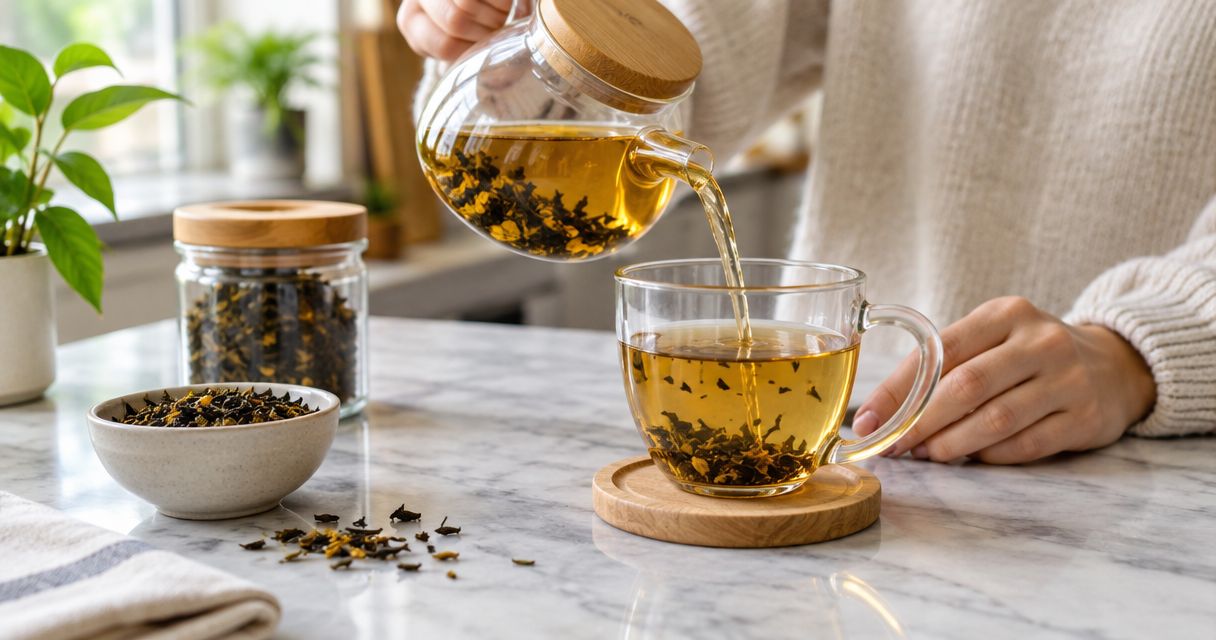
Put the tea and hot water in a heat-safe jug or teapot. When steeping finishes, position a clean strainer over your cup and pour slowly.
Leave enough space beneath the strainer so it does not sit in the collected drink. If the mesh catches the leaves but misses fine sediment, let the sediment settle rather than repeatedly pouring the tea back and forth.
Choose this method when you want straightforward brewing and easy removal of the leaves. Its limitation is filtration: a kitchen sieve with large openings is not the same as fine mesh.
Paper coffee filter: best for finer particles
Steep the tea in a separate vessel, then pour it through a plain, food-use paper coffee filter held in a compatible dripper or other stable filter holder. Rinse the paper first if it contributes a noticeable paper taste.
Do not balance a wet filter across a mug rim and expect it to hold the liquid's weight. Paper becomes fragile when wet, and a filter without proper support can collapse.
Choose paper filtration when sediment bothers you. Expect slower draining, and do not squeeze a hot, leaf-filled filter with your hands.
Direct mug brewing: best for minimal equipment
Add larger leaves directly to a heat-safe mug and brew according to the package directions. Let the leaves settle, then sip carefully from above them.
Settling is not guaranteed. Some leaves float or remain suspended, so direct brewing works better when you tolerate an occasional leaf and do not mind flavor changing as you drink.
Choose direct mug brewing for simplicity, not precise steeping control. If the tea becomes too strong, pour the remaining liquid into another cup instead of continuing to leave it on the leaves.
French press: best for separating a larger brew
A clean French press can hold tea leaves below its screen while you pour. Add tea and water, steep, lower the plunger gently, and transfer the brewed tea out of the press.
The plunger does not stop extraction while liquid remains in contact with the leaves. Do not press hard to crush them, and check the screen and seals for lingering coffee oils before brewing delicate tea.
Choose a French press when you already own one and can clean it thoroughly. Its drawback is extra cleanup compared with a simple strainer.
Spoon-assisted pouring: best as a fallback
A spoon held near the pouring edge can restrain some larger leaves while you decant. It cannot catch fine fragments or make an unstable mug pour safely.
Use a vessel with a pouring lip when possible. If leaves keep escaping, stop and choose a supported filter instead.
Treat a spoon as a temporary workaround, not a reliable filter. Do not hold a narrow gap between two hot cups or use your fingers to block leaves.
Why results vary without an infuser
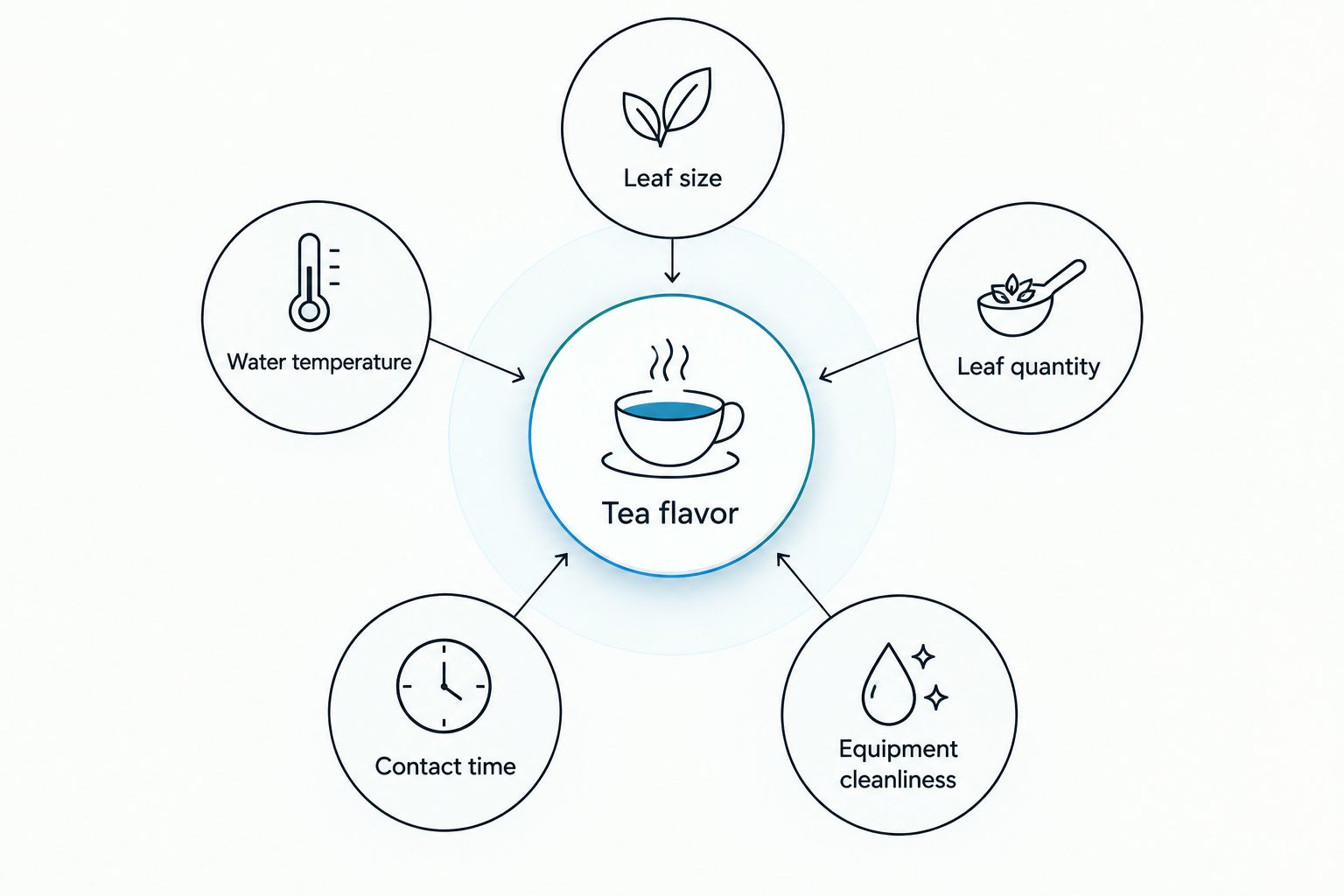
The missing accessory is rarely the main reason a cup tastes wrong. For repeatable results in 2026, pay attention to these brewing factors:
- Leaf size: Larger leaves are easier to restrain or decant around; broken leaves require finer filtration.
- Tea type: Green, black, and herbal teas do not all respond to the same temperature and steeping time.
- Water temperature: Hotter water changes extraction; follow the package's guidance for the specific tea.
- Leaf quantity: More leaves change the intensity, even if the mug and steeping time stay the same.
- Contact time: Leaves continue steeping until you separate them from the water.
- Equipment cleanliness: Coffee oils, detergent residue, and a dirty filter can change the flavor.
Change one factor at a time when troubleshooting. If you change the leaf amount, temperature, and steeping time together, you will not know which adjustment helped.
What temperature should you use without an infuser?
The temperature should suit the tea, not the filtering method. As general category starting points, delicate green tea often uses water around 175°F, while many black teas use water near 212°F; package instructions take priority.
A black tea steep of about 3 minutes is a starting point, not a rule for every blend. Taste the result and adjust the next brew to your preference.
These brewing basics remain useful in 2026 because an improvised filter does not change the leaves themselves. Avoid using hotter water simply because you are brewing without a basket.
If your tea tastes harsh, first check whether the leaves stayed immersed too long. Filtering out visible fragments afterward does not remove the compounds already dissolved in the drink.
Which tea should you choose for this method?
Choose a tea you enjoy, then match your separation method to its leaf size. Black tea and green tea both work without an infuser; powder-style tea follows a different preparation method.
Brew4ufresh tea suits home drinkers who want loose leaf options for everyday brewing. Earl Grey Loose Leaf Tea offers bergamot's citrus character, while Jasmine Green Tea Multiple Steepings offers a floral green tea profile.
| Tea | Best for | Flavor described in the product information | Brewing consideration |
|---|---|---|---|
| Earl Grey Loose Leaf Tea | Drinkers who enjoy citrus aroma | Floral complexity and bergamot citrus | Separate the leaves when steeping finishes |
| Jasmine Green Tea Multiple Steepings | Drinkers who enjoy floral green tea | Sweet jasmine and a smooth profile | Use green-tea brewing guidance rather than black-tea defaults |
Neither tea removes the need to manage temperature and contact time. Choose by flavor preference, then use a strainer or supported paper filter if you want the leaves removed before serving.


Can you leave loose tea leaves in your cup while drinking?
You can leave loose tea leaves in your cup, but the tea continues steeping while the leaves remain wet. Larger leaves are easier to sip around; fine fragments make this method less comfortable.
If you want consistent flavor from the first sip to the last, separate the leaves before drinking. Adding water can dilute the drink, but it does not undo the extraction that already happened.
Is matcha brewed the same way as loose leaf tea?
Matcha is whisked into water and consumed as a suspension rather than steeped and strained like loose leaves. A paper filter would retain much of the powder instead of producing the intended drink.
For your 2026 tea routine, identify the format before choosing the equipment. Loose leaves need steeping and optional separation; matcha needs thorough mixing.
FAQ
Can I make loose leaf tea with just a mug?
Yes, you can steep loose leaf tea directly in a heat-safe mug. Larger leaves are easier to sip around, but the tea keeps steeping until you separate the liquid from the leaves.
What's the best substitute for a tea infuser?
A fine-mesh kitchen strainer is the best starting point for most loose leaf tea. Steep in a separate heat-safe vessel, then pour through the strainer into your serving cup.
Can I use a coffee filter for loose leaf tea?
Yes, a plain paper coffee filter can separate brewed tea from small leaf fragments. Support it in a suitable holder and expect slower draining than with mesh.
Do I have to swallow the tea leaves?
No, brewing without an infuser does not require swallowing the leaves. Strain the tea, carefully decant it, or leave settled leaves behind in the brewing vessel.
Does a French press stop tea from getting stronger?
No, lowering a French press plunger does not stop extraction while the tea remains in contact with the leaves. Pour the brewed tea into another vessel when steeping finishes.
Can I brew Brew4ufresh Earl Grey without an infuser?
Yes, Earl Grey Loose Leaf Tea can be steeped in a heat-safe vessel and poured through a kitchen strainer. Follow the package directions and separate the leaves when brewing finishes.
Why are there still tiny particles after I strain my tea?
Tiny particles can pass through mesh openings even when larger leaves are trapped. Use a supported paper coffee filter if you want finer filtration, accepting the slower pour.
One last thing
Stopping the steep matters more than owning a particular accessory. A second cup often gives you more control than sipping slowly from a mug that still contains the leaves.
For your next Brew4ufresh tea, set out the receiving cup before adding hot water. That small preparation makes it easier to pour promptly when the flavor is right.