Loose leaf tea is not automatically stronger than tea bags: finely broken leaves in bags often extract faster, while loose leaves give you more control over how much tea you brew. Flavor strength and caffeine are different measures, and neither format guarantees more of either. This guide explains the difference and how to get the cup you want.
- Is loose leaf tea stronger than tea bags? No—leaf size, dose, water temperature, and steeping determine strength.
- Tea bags often extract quickly; loose leaf tea lets you adjust the amount of leaf more easily.
- Bitter tea is not proof of higher caffeine or better quality.
- Brew4ufresh offers loose leaf tea options, but packaging format alone does not establish strength.
Is loose leaf tea stronger than tea bags?
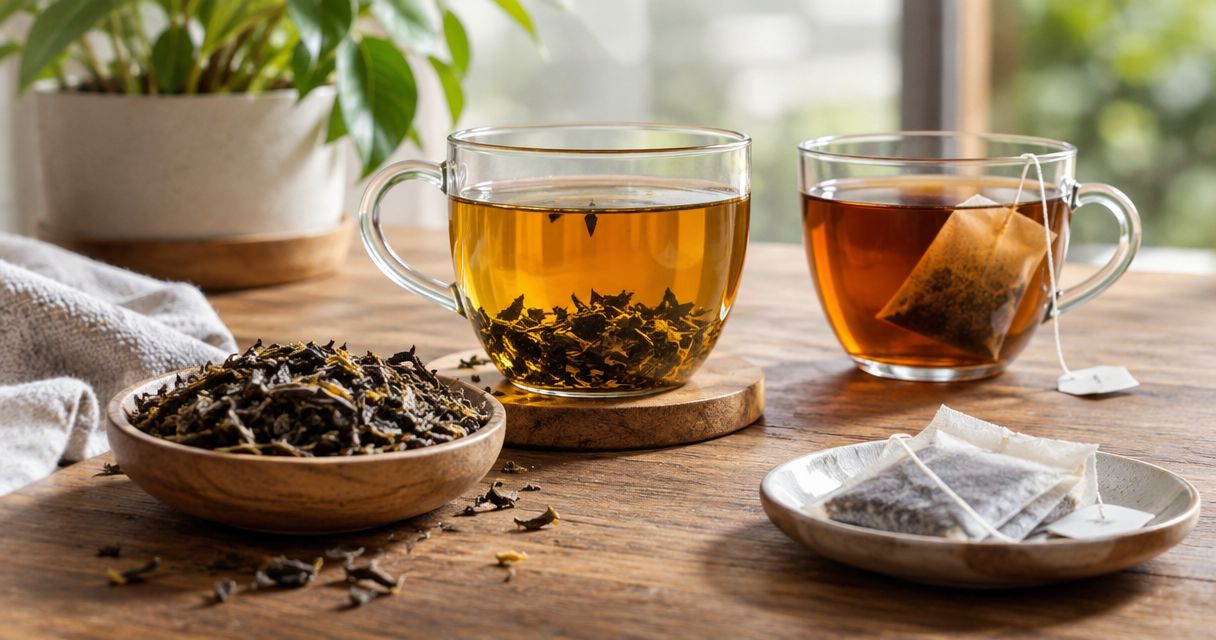
Loose leaf tea gives you control, not a guaranteed stronger drink. A bag containing small leaf particles can produce a dark, assertive cup quickly. Larger loose leaves generally take longer to release their flavor, especially when tightly rolled.
For brewing instructions beyond this 2026 comparison, use the loose leaf tea brewing workflow. Start with preparation before deciding that either format tastes weak.
| What you compare | Loose leaf tea | Tea bags | What matters most |
|---|---|---|---|
| Speed of extraction | Larger leaves generally extract more slowly | Fine particles generally extract faster | Actual leaf size, not the package alone |
| Control over strength | You can adjust the leaf dose directly | A prefilled bag has a fixed dose | Tea relative to water |
| Flavor | Depends on tea, processing, freshness, and brewing | Depends on the same factors | The tea inside |
| Caffeine | Not automatically higher | Not automatically lower | Tea composition and extraction |
| Convenience | Requires measuring and straining | Easy to portion and remove | Your daily routine |
| Best for | Drinkers who want brewing control | Drinkers who want quick preparation | Your preferred trade-off |
| Main drawback | More preparation and cleanup | Less control over a prefilled portion | Whether convenience outweighs flexibility |
Not every loose tea contains whole leaves, and not every bag contains fine particles. Spacious sachets can hold larger leaves. Compare what is inside rather than treating all bags as one category.
Why this matters
Buying loose tea will not fix every disappointing cup. If your mug contains too much water for the tea dose, changing the packaging leaves the underlying problem untouched. The same applies when the water temperature or steeping method does not suit the tea.
The useful buying question in 2026 is not which format sounds more refined. It is which format gives you your preferred flavor with an acceptable amount of preparation.
Choose loose leaf tea for adjustment; choose tea bags for convenience. Either format can make a satisfying cup when the tea and preparation suit your taste.
Strong flavor does not mean high caffeine
People use strong to describe several different experiences. Separating them makes your next adjustment much easier.
- Concentration: How much extracted tea is present relative to the water. A concentrated cup tastes fuller because the brew contains more dissolved material.
- Bitterness: A taste that becomes more noticeable with certain teas and brewing conditions. It is not a caffeine measurement.
- Astringency: The drying sensation you feel in your mouth. A puckering cup is not necessarily a flavorful one.
- Aroma: The scent released by the tea and any added ingredients. A fragrant cup can smell intense without tasting heavy.
- Caffeine: A compound naturally present in tea from the tea plant. You cannot reliably determine its amount by tasting the cup.
For example, bergamot gives Earl Grey a distinctive citrus aroma. That aroma does not establish whether the cup contains more caffeine than an unflavored black tea. A mint blend creates another sensory impression without making packaging a useful caffeine guide.
When comparing tea in 2026, describe what you want before changing the brew. “More body without a drying finish” gives you a clearer target than “stronger.”
Loose leaf tea: best for control over your cup
Loose leaf tea makes it straightforward to change the amount of leaf without committing to another prefilled portion. You can also select an infuser that gives the leaves room to open. This flexibility is useful when you brew different mug sizes or want to refine a favorite tea.
The drawback is practical. You need a strainer, basket, or teapot, and you must empty the wet leaves afterward. A small infuser packed tightly with leaves also works against the flexibility you bought loose tea to get.
Best for: Home tea drinkers who want to adjust concentration and preparation. Loose leaf tea is a good fit when you enjoy the brewing process, not just the finished drink.
Do not assume that larger leaves must produce a more intense flavor. Leaf size changes extraction speed; the tea itself still determines which flavors are available to extract.
Tea bags: best for simple preparation
Tea bags keep preparation contained. You do not need to measure loose leaves or clean a separate strainer, and removing the bag ends contact between most of the leaf material and the water.
Fine particles expose more surface area to water, so many conventional bags develop color and flavor quickly. That speed is useful when you want a straightforward morning cup. It also means leaving the bag in indefinitely is a poor substitute for choosing an appropriate dose.
Best for: Tea drinkers who prioritize convenience and easy cleanup. The trade-off is a fixed portion that does not automatically match your mug.
A large mug can dilute the result from a bag intended for a smaller serving. Before rejecting the tea, check the preparation directions and the amount of water you actually poured.
Why tea strength varies
The following factors explain more about your finished cup than a loose-leaf-versus-bag label. Use this checklist when choosing or brewing tea in 2026.
- Tea dose: More leaf relative to water generally makes a more concentrated infusion. Comparing unequal amounts of tea is not a fair test of format.
- Water volume: A large mug dilutes the same dose more than a small cup. Mug capacity and the amount you pour are not always the same.
- Leaf size: Smaller particles generally extract faster. Whole, broken, and rolled leaves do not release flavor at identical rates.
- Water temperature: Hotter water generally speeds extraction, but the right temperature depends on the tea. Follow tea-specific directions rather than using the same setting for everything.
- Steeping time: Longer contact changes what you extract. More time can add bitterness and astringency rather than the balanced fullness you wanted.
- Tea composition: Variety, growing conditions, processing, and blend ingredients affect flavor and caffeine. A bag and loose tea from unrelated blends do not isolate packaging as the cause.
These factors interact. Adding leaf while also extending the steep and increasing water temperature makes it difficult to identify which change helped—or which one made the cup unpleasant.
How to compare loose leaf tea and tea bags fairly
A useful home comparison controls the preparation instead of rewarding whichever cup contains more tea. Treat this as a tasting exercise, not a laboratory caffeine test.
- Match the tea. Compare similar tea styles. An unflavored black tea and a floral green tea answer different taste questions, regardless of their packaging.
- Match the dose. Use the same dry tea weight when the bag's contents are stated or measurable. Spoonfuls are less reliable because leaf shapes occupy different amounts of space.
- Match the water. Use the same water source and volume in similar cups. Do not compare a nearly full oversized mug with a smaller serving.
- Match the brew. Keep temperature and steeping time consistent for a format comparison. Remove the bag and strain the loose tea when the steep ends.
- Taste and adjust. Compare aroma, body, bitterness, and the drying finish separately. Then adjust each tea toward your preferred cup.
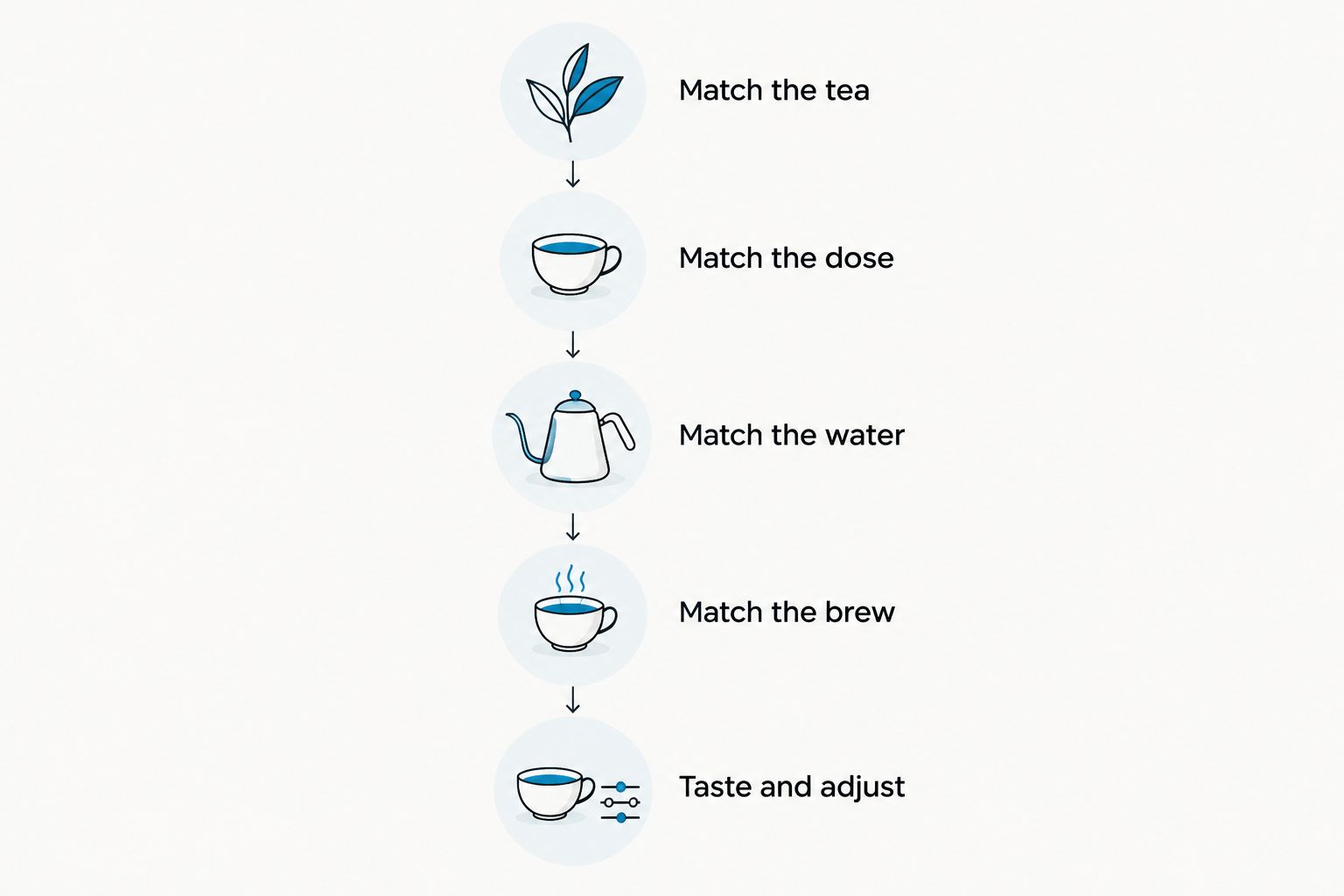
Matching conditions shows how the teas behave under the same preparation. It does not mean identical settings produce the best possible cup from both. After the comparison, follow each tea's directions and refine from there.
For a familiar black-tea reference, boiling water at sea level is 212°F, or 100°C, and a common steeping guideline is 3–5 minutes. These are general brewing references, not universal settings for green tea, herbal blends, or every black tea.
How do you make tea stronger without making it bitter?
Increase the tea-to-water ratio before extending an already adequate steep. Add more tea or use less water, then keep the other brewing conditions steady. This targets concentration more directly than leaving leaves in the cup indefinitely.
If the cup already tastes harsh, do not add more steeping time. Follow the tea's recommended temperature and remove the leaves when brewing ends. Taste the result before deciding whether it needs more leaf.
Milk changes the comparison, too. If you always drink tea with milk, evaluate the finished drink that way rather than choosing a tea solely on how it tastes plain.
Does loose leaf tea have more caffeine than tea bags?
Loose leaf tea does not inherently contain more caffeine than tea bags. The amount in your cup depends on the tea, the dose, and how much caffeine the brewing process extracts. Packaging does not provide a reliable ranking.
A bitter or dark-colored infusion is not a home caffeine test. Added flavors also complicate sensory comparisons: a vivid aroma can make a drink seem intense without telling you its caffeine content.
If caffeine is your priority in 2026, look for information about the specific tea rather than a general claim about loose leaves. For a related example, read about caffeine in Earl Grey loose leaf tea.
Choosing a loose leaf tea for home brewing
Brew4ufresh tea is best for home drinkers who want loose leaf choices they can measure and steep themselves. Its Earl Grey and jasmine green tea offer different flavor directions; neither product's format proves that it is stronger than a tea bag.
| Tea | Stated flavor direction | Best for | Selection trade-off |
|---|---|---|---|
| Earl Grey Loose Leaf Tea | Floral complexity and bergamot citrus | Drinkers who enjoy aromatic black tea | Bergamot is not the right choice if you want unflavored tea |
| Jasmine Green Tea Multiple Steepings | Sweet jasmine and floral character | Drinkers who enjoy floral green tea | Jasmine is not the right choice if you dislike floral aromas |
Brew4ufresh describes the jasmine tea as suitable for multiple infusions. That is a preparation feature, not a promise that every infusion will taste identical or remain equally strong.
Choose between these Brew4ufresh loose leaf tea options by flavor preference first. Then use the preparation directions to adjust your cup.


FAQ
Is loose leaf tea stronger than tea bags?
Loose leaf tea is not automatically stronger than tea bags. Dose, water volume, leaf size, temperature, and steeping time determine the strength of the infusion.
Why does my tea bag taste stronger than my loose leaf tea?
Your tea bag can taste stronger because smaller leaf particles extract faster or because the bag contains more tea relative to your water. Compare dry tea amounts and brewing conditions before judging the format.
Does a darker cup of tea contain more caffeine?
A darker cup does not reliably indicate more caffeine. Tea type, processing, and brewing affect color, so appearance is not a caffeine measurement.
Should I steep loose leaf tea longer to make it stronger?
Do not automatically steep loose leaf tea longer to make it stronger. If the current steep already produces balanced flavor, increase the tea dose or reduce the water instead.
Is loose leaf tea always better quality than bagged tea?
Loose leaf tea is not always better quality than bagged tea. Evaluate the actual tea, its condition, and its brewing results rather than using packaging as a quality guarantee.
Can I use loose leaf tea more than once?
Some loose leaf teas suit repeated infusions, but results depend on the tea and preparation. Expect flavor and intensity to change rather than treating each infusion as an identical cup.
Are tea bags better for a busy morning?
Tea bags are better for a busy morning when your priority is simple preparation and cleanup. Loose leaf tea offers more direct dose control but requires measuring and straining.
One last thing
Check your mug before replacing your tea. An oversized serving can make a familiar dose taste weak, even when the leaves are good and the steep is appropriate. Your most useful adjustment in 2026 starts with the balance of tea and water—not a decision that all bags or all loose leaves are better.